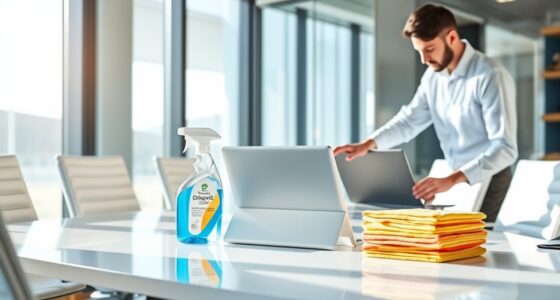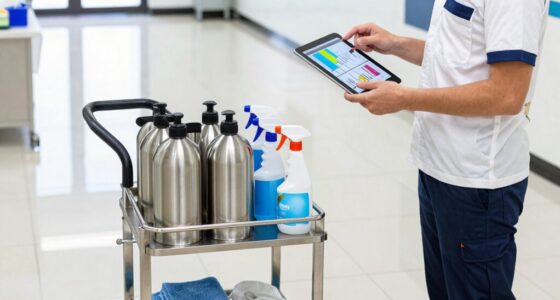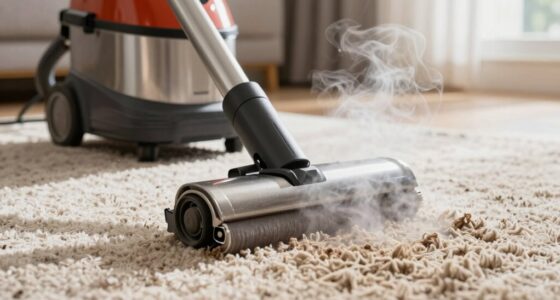
To prevent slips, trips, and falls through cleaning, make sure you keep floors clean, dry, and free of debris. Regular sweeping, mopping, and prompt spill cleanup are essential. Use absorbent mats at entrances and wear slip-resistant footwear, especially in wet areas. Inspect surfaces regularly for hazards like cracks or loose tiles, and add warning signs when needed. Keep safety and maintenance in check to create a safer environment—you’ll discover more effective strategies as you continue to learn.
Key Takeaways
- Implement regular cleaning routines, including sweeping and mopping, to remove debris, liquids, and dust that can cause slips.
- Use absorbent mats at entrances and ensure floors are dry and free of spills promptly.
- Apply appropriate anti-slip treatments or textured coatings to enhance floor traction, especially on polished surfaces.
- Enforce proper footwear policies with slip-resistant shoes to improve footing and reduce fall risks.
- Conduct routine inspections for hazards like cracks or loose tiles and display warning signs during cleaning or hazard remediation.
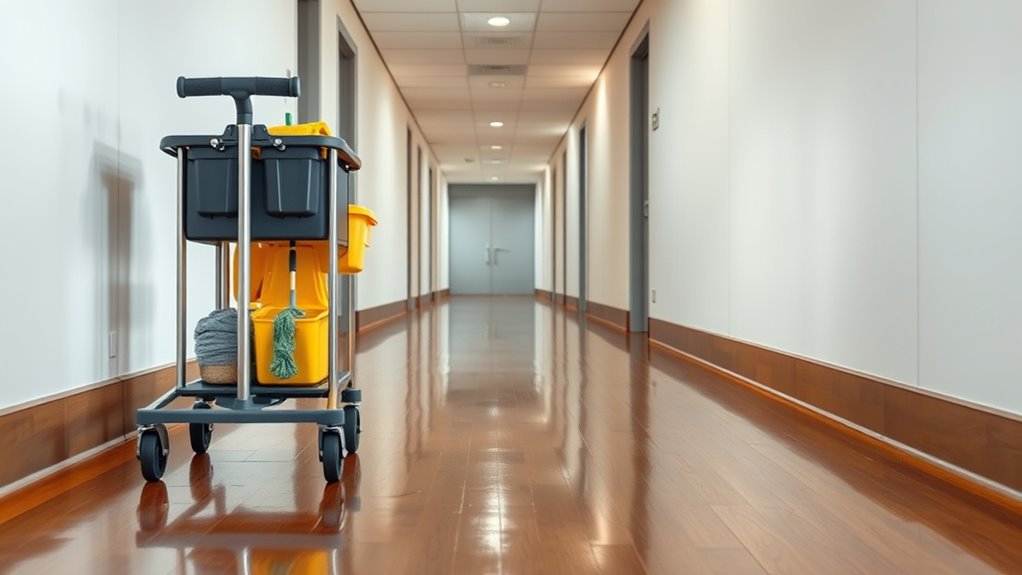
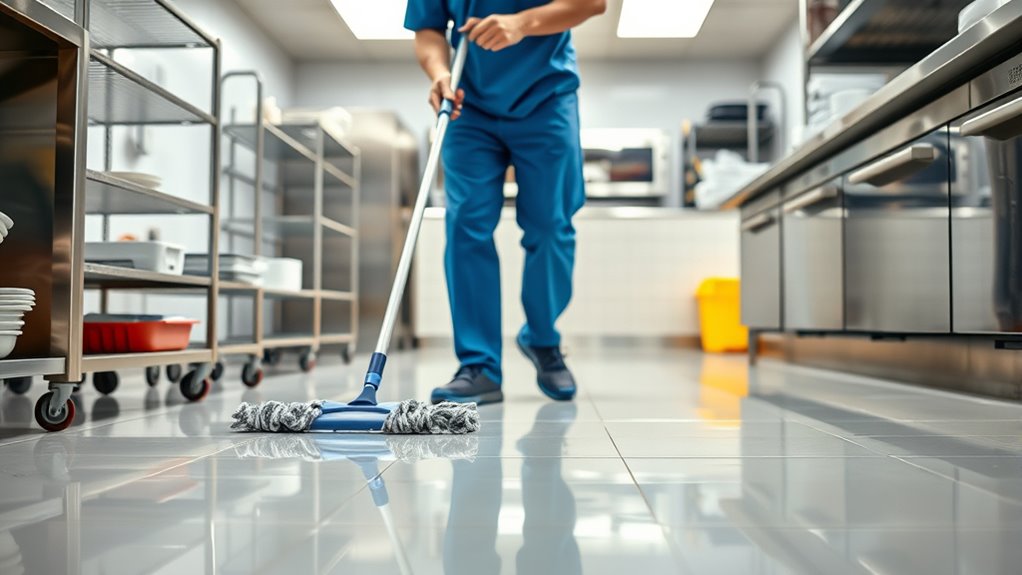
Slip, trips, and falls are common accidents that can cause serious injuries, but many of them are preventable with simple precautions. One of the most effective ways to minimize these risks is through proper cleaning routines that maintain good floor traction. When floors are kept clean and dry, you reduce the likelihood of slipping, especially in high-traffic areas or places prone to spills. Regularly sweeping, mopping, or vacuuming helps remove debris, dust, and liquids that can make surfaces slick. Using absorbent mats at entrances can catch moisture and dirt before it spreads, preserving safe floor conditions throughout your space.
Beyond cleaning, paying attention to floor traction is essential. Different flooring materials require different maintenance methods to guarantee they stay slip-resistant. For example, polished tiles might need textured coatings or anti-slip treatments to enhance grip. When cleaning, avoid harsh chemicals or waxes that can make floors slick; instead, choose appropriate cleaning agents designed for your specific flooring type. Consistent upkeep prevents buildup of residues that can compromise traction, ensuring your floors remain safe for walking.
Footwear safety also plays an important role in preventing slips and falls. When you wear shoes with good tread and slip-resistant soles, you improve your footing, especially on surfaces that might be slightly oily or wet. Avoid shoes with smooth soles or heels that can easily slide. If you’re responsible for cleaning or walking through areas prone to moisture, investing in footwear with slip-resistant features can make a significant difference. Remember, even the most meticulous cleaning routine won’t fully protect you if your footwear isn’t appropriate for the environment.
It’s also important to address any potential hazards promptly. If a spill occurs, clean it up immediately, and place warning signs if cleaning takes time. Regularly inspect floors for cracks, uneven patches, or loose tiles that could cause tripping. These small issues, if overlooked, can turn into bigger accidents. Encourage everyone in your space to report hazards and practice good footwear safety habits to minimize risks. Incorporating proper signage and regular inspections can further enhance safety and prevent accidents.

Amazon Basics Microfiber Cleaning Cloths, Ultra Absorbent, Lint Free, Streak Free, Non-Abrasive, Reusable and Washable, 16" x 12", Blue/White/Yellow, Pack of 24
- Size: 16 x 12 inches
- Quantity: 24-pack
- Material: Microfiber
As an affiliate, we earn on qualifying purchases.
Frequently Asked Questions
How Often Should High-Risk Areas Be Cleaned to Prevent Slips?
You should clean high-risk areas daily to effectively prevent slips. Regular floor maintenance is essential, especially in spots prone to spills or moisture. Make hazard monitoring a routine part of your cleaning schedule, checking for hazards like wet floors or debris. Consistent cleaning and vigilant hazard monitoring help keep floors safe, reducing slip risks, and ensuring a safer environment for everyone.
What Cleaning Products Are Safest for Slippery Floor Prevention?
You should use eco-friendly disinfectants that are safe for flooring and won’t leave slippery residues. Look for products labeled as slip-resistant or designed for high-traffic areas. Applying slip-resistant coatings on floors adds an extra layer of safety, reducing the risk of slips. Always follow manufacturer instructions, and regularly maintain these products to guarantee your floors stay safe and slip-free, especially in high-risk zones.
How Can We Train Staff to Recognize Slip Hazards Effectively?
Think of hazard awareness like a lighthouse guiding ships safely. To train staff effectively, you should use engaging training techniques that include visual aids, real-life examples, and hands-on practice. Encourage them to identify potential slip hazards during routine inspections. Reinforce the importance of staying alert and proactive. By fostering a safety-first mindset, you help your team recognize hazards early, reducing slip risks and creating a safer environment for everyone.
Are There Specific Footwear Recommendations for Slip Prevention?
You should recommend proper footwear, specifically slip-resistant shoes, to reduce fall risks. Make certain your staff wears shoes with slip-resistant soles designed for your work environment. These shoes provide better grip on wet or slippery surfaces, lowering the chances of slips and falls. Regularly inspect footwear for wear and tear, and encourage employees to replace them when soles become worn down to maintain ideal safety.
What Role Do Mats Play in Slip and Trip Prevention?
Mats play a vital role in slip and trip prevention by providing traction on slippery surfaces. Proper mat placement guarantees high-traffic areas stay safer, while regular mat maintenance keeps them effective—cleaning and repositioning as needed. When you strategically place mats at entrances and trouble spots, you reduce moisture and debris, minimizing fall risks. Consistent upkeep maximizes their safety benefits, helping you maintain a safer environment for everyone.
Conclusion
By keeping your environment clean, you hold the key to safety’s door. Every spotless floor and clear pathway acts as a shield, symbolizing your commitment to protection. Remember, prevention isn’t just about avoiding falls; it’s about creating a space where safety shines as brightly as your efforts. When you prioritize cleaning, you’re not just removing dirt—you’re illuminating the path to a safer, more secure environment for everyone.