For commercial disinfectant application, I’d choose the EvaClean Protexus Cordless Electrostatic Backpack Sprayer as the best overall option for teams covering large areas, while the Smith Performance Sprayers 190447 suits routine work with a familiar 2-gallon pump format. The Chapin 1046 is a more compact choice for targeted applications, and the Victory Innovations VP200ESK offers a handheld cordless alternative. The main tradeoff is between powered coverage and the simpler upkeep of manual sprayers, along with tank capacity, chemical compatibility, and how much ground staff cover per shift. A larger tank can reduce refills but adds weight, while smaller bottles are easier to handle but demand more frequent replenishment. Read on for the full comparison and guidance on matching a sprayer to your facility’s disinfectant and workflow.

Get cleaning gear delivered free with Prime
- Fast, free delivery on millions of items
- Prime Video, Amazon Music and more included
- Member-only deals all year
Complete the kit


Key Takeaways
- Powered coverage favors larger spaces: The EvaClean backpack and Victory handheld stand apart from the manual models when cordless application and faster area coverage matter.
- A 2-gallon tank is the practical middle ground: Several Smith, B&G, SOLO, and Chapin models offer more working capacity than the 32-ounce bottles without moving to a powered system.
- Bleach compatibility is not universal: Bleach-focused Smith, Zep, and Chapin options address a specific chemical need, but buyers still need to confirm compatibility with the exact disinfectant label and sprayer materials.
- Small formats solve different problems: The Zep bottles and Chapin 1046 are easier to carry for touch-ups, while their lower capacity means more refills during larger jobs.
- Ranking depends on workflow: The top pick prioritizes commercial area coverage; lower-ranked compact and manual options can be a better fit where simplicity, targeted use, or a smaller budget matters more.
| EvaClean Protexus Cordless Electrostatic Backpack Sprayer | 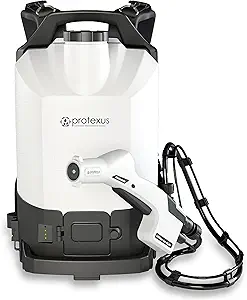 | Best for Large Commercial Spaces | Battery: 16.8V rechargeable lithium-ion | Battery runtime: Up to 4 hours | Tanks per charge: 20 to 80 | VIEW ON AMAZON | See Our Full Breakdown |
| Smith Performance Sprayers 190447 2 Gallon Bleach Sprayer |  | Best for Frequent Bleach Applications | Capacity: 2 gallons | Wand length: 21 inches | Wand material: Stainless steel with poly lining | VIEW ON AMAZON | See Our Full Breakdown |
| Zep Bleach-Resistant Professional Sprayer Bottles, 32 oz, Pack of 2 |  | Best for Tight Spaces and Spot Work | Capacity: 32 oz per bottle | Pack size: 2 | Chemical resistance: Bleach-resistant for up to 1 year | VIEW ON AMAZON | See Our Full Breakdown |
| B&G DuraSpray V Chemical-Resistant Plastic Sprayer, 2 Gallon |  | Best for Field Repairability | Capacity: 2 gallons | Body material: High-density polyethylene | Seals and gaskets: Viton | VIEW ON AMAZON | See Our Full Breakdown |
| Chapin 22274 1-Gallon Bleach Sprayer, 2-Pack |  | Best for Paired Cleaning Stations | Capacity: 1 gallon | Pack size: 2 | Hose length: 40 inches | VIEW ON AMAZON | See Our Full Breakdown |
| Chapin 1046 48-Oz Industrial Hand Pump Sprayer |  | Best for Small-Batch Chemical Application | Capacity: 48 oz | Tank material: Chemical-resistant poly | Nozzle: Adjustable brass | VIEW ON AMAZON | See Our Full Breakdown |
| Zep Bleach-Resistant Professional Sprayer Bottle, 32 oz |  | Best for Angled Reach | Capacity: 32 oz | Spray range: Up to 30 ft | Bleach resistance: Components designed to resist bleach for up to 1 year | VIEW ON AMAZON | See Our Full Breakdown |
| Victory Innovations Cordless Electrostatic Handheld Sprayer (VP200ESK) |  | Best Cordless Coverage | Model: VP200ESK | Tank capacity: 33.8 fl oz (34 oz) | Coverage area: Up to 2,800 sq ft | VIEW ON AMAZON | See Our Full Breakdown |
| SOLO 430-2G 2-Gallon Handheld Sprayer |  | Best for Adjustable Spray Patterns | Capacity: 2 gallons (256 fl oz) | Maximum pressure: 45 psi | Wand length: 28 in | VIEW ON AMAZON | See Our Full Breakdown |
| Smith Multi-Use 2-Gallon Bleach Sprayer |  | Best for Commercial Cleaning Versatility | Capacity: 2 gallons | Hose: Heavy-duty, kink-resistant | Wand: Poly | VIEW ON AMAZON | See Our Full Breakdown |
| Chapin 26021XP ProSeries 2-Gallon Heavy-Duty Compression Sprayer |  | Best for Adjustable Coverage | Tank capacity: 2 gallons | Tank material: Translucent poly | Tank opening: 4 inches | VIEW ON AMAZON | See Our Full Breakdown |
| sprayer for disinfectant application commercial | Capacity |
|---|---|
| EvaClean Protexus Cordless Ele | — |
| Smith Performance Sprayers 190 | 2 gallons |
| Zep Bleach-Resistant Professio | 32 oz per bottle |
| B&G DuraSpray V Chemical-Resis | 2 gallons |
| Chapin 22274 1-Gallon Bleach S | 1 gallon |
| Chapin 1046 48-Oz Industrial H | 48 oz |
| Zep Bleach-Resistant Professio | 32 oz |
| Victory Innovations Cordless E | — |
| SOLO 430-2G 2-Gallon Handheld | 2 gallons (256 fl oz) |
| Smith Multi-Use 2-Gallon Bleac | 2 gallons |
| Chapin 26021XP ProSeries 2-Gal | — |
More Details on Our Top Picks
EvaClean Protexus Cordless Electrostatic Backpack Sprayer
The EvaClean Protexus is the most coverage-focused choice here: its electrostatic spray is designed to reach undersides and other hard-to-access surfaces, while the cordless backpack format suits large facilities where moving between rooms matters. Its up to four-hour runtime and stated coverage of up to 23,000 square feet per tank make it a different kind of tool from the Smith Performance Sprayers 190447, which relies on manual pumping and is better suited to localized chemical application. A 60-micron nozzle is intended to produce a fine spray, but buyers should still follow the disinfectant label for application and coverage requirements. The tradeoffs are practical: charging takes four hours, and the provided data does not state tank capacity or filled weight, so planning refills and judging the backpack load is harder.
Pros:- Electrostatic spray is designed to reach undersides and hard-to-access areas
- Cordless backpack format supports movement across large spaces
- Up to four hours of stated battery runtime
- Adjustable straps and a precision headlight support extended or low-light work
Cons:- Four-hour charging time can interrupt work between shifts
- Tank capacity and filled weight are not specified in the supplied data
- Electrostatic coverage may be more equipment than needed for small, targeted jobs
Best for: Janitorial teams treating large commercial interiors that benefit from cordless movement and electrostatic coverage
Not ideal for: Small teams needing a clearly specified tank size or a simple handheld sprayer for spot cleaning
- Battery:16.8V rechargeable lithium-ion
- Battery runtime:Up to 4 hours
- Tanks per charge:20 to 80
- Coverage per tank:Up to 23,000 sq ft
- Nozzle:60-micron
- Charging time:4 hours
- Features:LED charge indicators, trigger lock, precision headlight, adjustable shoulder straps
Our verdict“Choose the EvaClean Protexus for large commercial areas where cordless electrostatic application matters more than simple spot spraying.”
Smith Performance Sprayers 190447 2 Gallon Bleach Sprayer
For crews applying bleach-based solutions, the Smith Performance Sprayers 190447 puts chemical resistance and reduced pumping effort ahead of powered coverage. Its Viton seals and poly-lined stainless steel wand are specified for harsh cleaning chemicals, while the pump is described as requiring 25% fewer pumps per gallon than competitors. That makes it a more task-oriented choice than the EvaClean Protexus: Smith offers a two-gallon manual setup for targeted work, whereas EvaClean is built around cordless electrostatic treatment across larger areas. The in-line filter and tool-free pump seal replacement can help limit clogging delays and simplify upkeep. Its limits are the manual operation and smaller stated capacity compared with the 2-gallon B&G DuraSpray V only in durability details: Smith provides less information about spray adjustment, and it is not a substitute for broad powered coverage.
Pros:- Viton seals and poly-lined wand are suited to harsh cleaning chemicals
- Pump is specified to require 25% fewer pumps per gallon than competitors
- In-line filter helps reduce clogging
- Tool-free pump seal replacement can reduce maintenance downtime
Cons:- Manual pumping takes effort over extended jobs
- Two-gallon capacity may require frequent refills on broad coverage work
- Supplied product details do not specify an adjustable nozzle or spray pattern
Best for: Maintenance crews applying bleach or other compatible harsh cleaners in focused areas and wanting a serviceable manual pump
Not ideal for: Teams covering very large floor areas who need powered application or a specified adjustable spray pattern
- Capacity:2 gallons
- Wand length:21 inches
- Wand material:Stainless steel with poly lining
- Seal material:Viton
- Pump efficiency:Requires 25% fewer pumps per gallon than competitors, as described
- Filter:In-line filter
- Model number:190447
Our verdict“Pick the Smith 190447 for repeated bleach application in manageable areas when chemical resistance and straightforward service matter.”
Zep Bleach-Resistant Professional Sprayer Bottles, 32 oz, Pack of 2
The two-bottle Zep 32 oz set is the most compact option in this group for small, targeted disinfectant jobs. Each bottle can spray at any angle, including upside down, which helps when treating awkward undersides or reaching around equipment. The high-output trigger delivers more than 3 cubic centimeters per pull and can stream up to 30 feet, giving it more reach than the Chapin 22274 1-Gallon Sprayer’s wand-based format for quick spot tasks. Graduated markings also make dilution and refilling easier to manage. Still, these bottles hold only 32 ounces each, so they are a poor fit for whole-building rounds that call for the EvaClean Protexus’s backpack capacity and powered coverage. Zep describes bleach resistance for up to one year, but ongoing compatibility depends on the specific solution and use conditions.
Pros:- Sprays at any angle, including upside down
- Two bottles allow separate solutions or a ready spare
- Graduated side markings support measured refills
- High-output trigger can stream up to 30 feet
Cons:- 32-ounce capacity per bottle limits continuous commercial coverage
- Hand-trigger operation can be tiring over repeated large-area use
- Bleach resistance is described for up to one year, not as unlimited chemical compatibility
Best for: Facility staff who need portable bottles for small disinfectant applications around fixtures, equipment, or hard-to-reach surfaces
Not ideal for: Crews treating large areas who would spend too much time refilling small bottles
- Capacity:32 oz per bottle
- Pack size:2
- Chemical resistance:Bleach-resistant for up to 1 year
- Spraying angle:Any angle, including upside down
- Output:More than 3 cubic centimeters per pull
- Maximum stream distance:Up to 30 feet
- Measurements:Graduated side markings
- Compatible liquids:Bleach, disinfectants, cleaners, degreasers, glass and floor cleaners, fabric sprays, and concentrates
Our verdict“Choose the Zep pair for portable, precise spot application where angle flexibility matters more than tank capacity.”
B&G DuraSpray V Chemical-Resistant Plastic Sprayer, 2 Gallon
The B&G DuraSpray V is aimed at commercial users who want a manual two-gallon sprayer they can adjust and repair in the field. Its pin-to-cone tip shifts from a targeted pattern toward broader application, while the Viton seals and reinforced hose suit many chemical jobs. Included repair parts and a tool-free repairable design give it a maintenance advantage over the Chapin 22274, whose supplied details emphasize refilling and clog control instead. The all-polyethylene body keeps the construction lightweight, but B&G’s stated uses also include pest control and garden spraying, so its disinfectant fit is less specifically defined than the bleach-focused Smith 190447. Compatibility may vary by solution; buyers should check the chemical manufacturer’s guidance. This is a flexible utility sprayer, though the 12-inch extension may feel short for some commercial reach needs.
Pros:- Adjustable pin-to-cone tip supports targeted and wider spray patterns
- Viton seals and gaskets suit many commercial chemicals
- Lightweight high-density polyethylene construction
- Included repair parts and tool-free repairs support field maintenance
Cons:- Chemical compatibility can vary and is not defined for every disinfectant
- 12-inch extension may limit reach compared with longer-wand options
- Manual pumping is less suited to sustained large-area coverage than the cordless EvaClean Protexus
Best for: Facilities and pest-control crews needing an adjustable, repairable manual sprayer for compatible chemicals
Not ideal for: Buyers who need explicitly documented compatibility with a specific disinfectant or a long-reach wand
- Capacity:2 gallons
- Body material:High-density polyethylene
- Seals and gaskets:Viton
- Hose:Reinforced braided, chemical-resistant
- Extension:12-inch poly extension
- Spray tip:Adjustable pin-to-cone
- Included components:Spray tips and repair parts
- Model number:12012150
Our verdict“Choose the DuraSpray V when adjustability and field repair matter across a range of compatible chemical tasks.”
Chapin 22274 1-Gallon Bleach Sprayer, 2-Pack
The Chapin 22274 two-pack makes sense when a crew wants matching one-gallon sprayers at separate stations or needs to keep solutions apart. Its bleach-resistant seals, built-in anti-clog filter, and funnel-top opening are practical for repeated refills; the adjustable nozzle switches between a fine mist and a stream for different application tasks. Compared with the compact Zep 32 oz bottles, Chapin holds more per unit and adds a wand and hose, while the Zep bottles are easier to maneuver at any angle. The Chapin’s 40-inch hose can help keep the tank away from the immediate work area, but the one-gallon capacity still means more refills than the two-gallon Smith 190447. The supplied information does not state filled weight or confirm compatibility with every disinfectant, so check the product label and chemical guidance before use.
Pros:- Two sprayers support separate stations or separate solutions
- Adjustable nozzle switches from fine mist to stream
- Anti-clog filter helps maintain steady flow
- Funnel-top opening and bleach-resistant seals suit repeated refills
Cons:- One-gallon capacity requires more refills than the Smith 2-gallon sprayer
- Manual pressurizing is less convenient for prolonged large-area jobs
- Specific disinfectant compatibility is not detailed in the supplied information
Best for: Commercial cleaning teams setting up two bleach-compatible stations for routine, moderate-area work
Not ideal for: Crews needing high-capacity continuous spraying or verified compatibility with a particular disinfectant formulation
- Capacity:1 gallon
- Pack size:2
- Hose length:40 inches
- Hose material:PVC
- Wand:12-inch poly
- Nozzle:Adjustable, fine mist to stream
- Filter:Built-in anti-clog
- Seals:Bleach-resistant
Our verdict“Pick the Chapin two-pack for moderate commercial cleaning where paired stations and easy refilling are useful.”
Chapin 1046 48-Oz Industrial Hand Pump Sprayer
The Chapin 1046 suits cleaning teams that need a refillable hand sprayer for targeted disinfectant or degreaser application. Its chemical-resistant poly tank and in-tank filter help with routine use where residue or particles could clog the nozzle, while the wide opening makes refilling and rinsing easier between solutions. Compared with the Smith Multi-Use 2-Gallon Bleach Sprayer, it carries far less liquid and lacks multiple included nozzles, so it is a better fit for spot work than covering large areas. The adjustable brass nozzle gives some control over the spray pattern, but the plastic tank may not hold up as well as heavier construction under rough commercial handling. Its 48-ounce capacity also means frequent refills on longer jobs.
Pros:- Chemical-resistant tank is suited to cleaners and degreasers
- Wide mouth simplifies filling and rinsing
- In-tank filter helps reduce nozzle clogs
- Adjustable brass nozzle supports spray-pattern changes
Cons:- Small capacity calls for frequent refills on extended jobs
- Plastic tank may be less durable than metal alternatives
Best for: Cleaning staff who need a compact hand sprayer for spot treatment, small rooms, or frequent solution changes
Not ideal for: Teams covering large floor areas or applying disinfectant continuously, since the 48-ounce tank requires frequent refills
- Capacity:48 oz
- Tank material:Chemical-resistant poly
- Nozzle:Adjustable brass
- Filter:In-tank filter
- Tank opening:Wide mouth
- Origin:Made in the USA with global materials
- Warranty:2-year limited
Our verdict“Choose the Chapin 1046 for portable, small-batch disinfectant application where easy cleaning matters more than tank capacity.”
Zep Bleach-Resistant Professional Sprayer Bottle, 32 oz
The Zep 32-ounce sprayer stands out for reaching awkward surfaces: it can spray at any angle, including upside down, which helps when treating undersides, tight corners, or equipment. Its high-output trigger dispenses more than 3 cc per pull, and the stream can reach up to 30 feet, giving it more reach than the compact Chapin 1046 for targeted application. The graduated markings also make solution dilution easier to repeat across refills. This is still a trigger bottle, not a pressurized tank sprayer, so it suits smaller touch-up jobs better than broad coverage. Its components are specified to resist bleach for up to one year; teams using bleach frequently should factor that stated service window into replacement planning.
Pros:- Sprays at any angle, including upside down
- High-output trigger dispenses more than 3 cc per pull
- Stream can reach up to 30 feet
- Graduated markings aid repeatable refills
Cons:- Bleach resistance is specified for up to one year
- Small bottle is less suited to sustained, large-area application
Best for: Janitorial staff treating elevated, underside, or hard-to-reach surfaces with bleach-compatible cleaning solution
Not ideal for: Facilities needing high-volume application across large areas, since a 32-ounce trigger bottle requires repeated pulls and refills
- Capacity:32 oz
- Spray range:Up to 30 ft
- Bleach resistance:Components designed to resist bleach for up to 1 year
- Spray orientation:Any angle, including upside down
- Output:More than 3 cc per pull
- Model:ZUPRO2
- Recommended use:Cleaning
Our verdict“Pick the Zep when angled access and a forceful stream matter more than the capacity of a pump sprayer.”
Victory Innovations Cordless Electrostatic Handheld Sprayer (VP200ESK)
For teams that want to apply disinfectant across surfaces without dragging a cord or repeatedly pumping a tank, the Victory Innovations VP200ESK offers a different approach: its electrostatic technology is designed to charge droplets for 360-degree coverage. The 34-ounce tank is listed to cover up to 2,800 square feet per charge, making it more suited to room-to-room work than the hand-pumped Chapin 1046. An adjustable three-in-one stainless steel nozzle provides more application choice than a basic trigger bottle. The tradeoff is battery dependence: listed use ranges from 20 to 80 tanks per charge, a broad span that makes runtime harder to predict. Its one-year limited warranty is also shorter than the two-year coverage listed for the Chapin and SOLO models.
Pros:- Cordless design supports movement between rooms
- Electrostatic technology is designed for 360-degree coverage
- 34-ounce tank is listed to cover up to 2,800 square feet per charge
- Adjustable three-in-one stainless steel nozzle
Cons:- Battery use varies widely, from 20 to 80 tanks per charge
- One-year limited warranty is shorter than the listed coverage on some manual alternatives
Best for: Commercial cleaning crews treating multiple rooms who value cordless movement and electrostatic surface coverage
Not ideal for: Teams needing predictable runtime, long warranty coverage, or a simple manual sprayer that does not depend on a battery
- Model:VP200ESK
- Tank capacity:33.8 fl oz (34 oz)
- Coverage area:Up to 2,800 sq ft
- Battery life:20–80 tanks per charge
- Nozzle:Adjustable 3-in-1
- Nozzle material:Stainless steel
- Warranty:1-year limited
Our verdict“Choose the VP200ESK for cordless, electrostatic application across multiple rooms if variable battery runtime fits your workflow.”
SOLO 430-2G 2-Gallon Handheld Sprayer
The SOLO 430-2G gives operators four nozzle choices, from a flat fan to a jet stream, so the same two-gallon tank can handle different application patterns. Its 45 psi piston pump and 28-inch wand support directed spraying without requiring the user to hold the tank near every target. Compared with the Smith Multi-Use 2-Gallon Bleach Sprayer, it includes fewer nozzles and its listed use centers on garden spraying, while the Smith is explicitly described for commercial cleaning and sanitizing. That makes the SOLO a more adaptable general-purpose option, but buyers focused on disinfectant application should confirm that the intended solution is compatible with its materials and use instructions. The pressure relief valve and Viton seals are useful practical features; the tradeoff is that manual pumping takes effort over long sessions.
Pros:- Two-gallon capacity reduces refill frequency compared with handheld bottles
- Four interchangeable nozzles support varied spray patterns
- Viton seals are chemical resistant
- Pressure relief valve supports controlled tank opening
Cons:- Manual pumping can add effort during long application sessions
- Recommended use is garden spraying, so disinfectant suitability should be confirmed
- Includes fewer nozzles than the Smith Multi-Use 2-Gallon Bleach Sprayer
Best for: Facilities or grounds crews needing a two-gallon manual sprayer with interchangeable patterns for varied, compatible solutions
Not ideal for: Disinfection teams seeking a sprayer explicitly positioned for commercial cleaning or a powered system for lengthy coverage runs
- Capacity:2 gallons (256 fl oz)
- Maximum pressure:45 psi
- Wand length:28 in
- Seals:Viton
- Nozzles included:Adjustable, flat fan, jet stream, hollow cone
- Pressure relief:Pressure relief valve
- Warranty:2 years
- Recommended use:Garden spraying
Our verdict“Choose the SOLO 430-2G when multiple spray patterns and a pressure relief valve matter, after confirming compatibility with your disinfectant.”
Smith Multi-Use 2-Gallon Bleach Sprayer
The Smith Multi-Use 2-Gallon Bleach Sprayer is the clearest match here for crews applying disinfectants and sanitizers: its description names commercial cleaning, and Viton seals in both pump and shut-off suit work with harsh chemicals. Six included nozzles, including a foaming option and several fan patterns, let operators change application style without buying separate tips. That gives it more cleaning-specific flexibility than the SOLO 430-2G, which has four nozzles and is listed for garden spraying. The Smith also adds an in-line filter, lock-on shut-off, kink-resistant hose, and pressure release valve. Its two-gallon capacity still means refills on larger facilities, and the supplied details do not specify tank material or warranty, so buyers should verify those points against their intended chemical and service needs.
Pros:- Designed for commercial cleaning, sanitizing, and harsh chemical applications
- Viton seals in pump and shut-off
- Six nozzles include fan, jet, and foaming options
- Kink-resistant hose, in-line filter, and pressure release valve
Cons:- Two-gallon capacity requires refills during extended large-area jobs
- Provided product data does not specify tank material
- Provided product data does not list a warranty
Best for: Commercial janitorial and sanitation crews needing a manual two-gallon sprayer with multiple patterns for compatible cleaning solutions
Not ideal for: Teams covering very large facilities without refill breaks, or buyers who need confirmed tank-material and warranty details before selection
- Capacity:2 gallons
- Hose:Heavy-duty, kink-resistant
- Wand:Poly
- Seals:Viton seals in pump and shut-off
- Nozzles included:6: brass adjustable, low, high and max volume fans, jet stream, foaming
- Shut-off:Lock-on
- Other features:In-line filter and pressure release valve
Our verdict“Choose the Smith for commercial cleaning crews who need chemical-resistant seals and a broad set of application patterns in a manual sprayer.”
Chapin 26021XP ProSeries 2-Gallon Heavy-Duty Compression Sprayer
The Chapin 26021XP earns its place for commercial users who want a manually operated sprayer with several ways to shape coverage. Its three included nozzles let the operator switch between adjustable brass, cone, and fan patterns, while the 20-inch wand helps reach plants and surfaces without bringing the tank as close. Compared with the Smith Performance Sprayers 190447, this model emphasizes nozzle variety and a translucent tank for checking fluid at a glance. The tradeoff is that it still needs manual pumping, so it is less suited to long, uninterrupted spray sessions than the cordless EvaClean Protexus. Its lawn and garden positioning also means buyers should confirm compatibility with their specific disinfectant before use. Warranty details conflict in the supplied product information, so I would verify coverage with the seller or manufacturer.
Pros:- Translucent 2-gallon tank makes remaining liquid easy to monitor
- Three nozzle types provide options for different coverage patterns
- Chemical-resistant seals and an in-tank filter support routine chemical spraying
- 20-inch extension wand and 48-inch hose extend reach away from the tank
Cons:- Manual pumping adds effort during repeated or extended spray work
- Designed for lawn and garden use, so compatibility with a specific disinfectant should be checked
- Warranty information is inconsistent: the description states five years, while product information lists one year
Best for: Facilities or grounds crews handling smaller, varied spray jobs who want visible fluid levels and multiple spray patterns.
Not ideal for: Teams disinfecting large areas for extended periods, or buyers who need confirmed compatibility with a particular disinfectant and a clearly established warranty term.
- Tank capacity:2 gallons
- Tank material:Translucent poly
- Tank opening:4 inches
- Extension wand:20 inches
- Hose:48-inch PVC
- Included nozzles:Adjustable brass, adjustable poly cone, and poly fan tip
- Shut-off:Cushioned grip with lock-on feature
- Recommended uses:Pest control, watering, and weed control
- Warranty:Conflicting supplied information: 5-year limited warranty in description; 1 year in product information
Our verdict“Choose the Chapin 26021XP for smaller commercial jobs that benefit from adjustable spray patterns and visible tank levels, provided manual pumping fits the workload.”

How We Picked
I compared these sprayers around the demands of commercial disinfectant application: coverage per fill, application method, handling, chemical compatibility, construction, and routine upkeep. I gave more weight to fit for recurring facility work than to a feature that only helps in a narrow scenario. Powered cordless units ranked higher for teams covering broad areas, while manual compression sprayers earned consideration for their simpler operation and lack of battery charging.
The ranking reflects the tradeoffs across the full lineup. The EvaClean backpack leads for large-area work; the Victory handheld offers powered application in a smaller format. Among manual options, 2-gallon models offer a useful balance of capacity and portability, while 1-gallon and bottle formats make more sense for spot work. Chemical resistance claims matter, but I treat them as a starting point: the disinfectant label and sprayer manufacturer’s compatibility guidance should decide whether a particular solution is appropriate.
Factors to Consider When Choosing Sprayer For Disinfectant Application Commercial
I’d start with the work pattern and disinfectant, then choose the sprayer format. A sound match reduces interruptions and helps staff apply the product according to its label.
Match the application method to the disinfectant label
A sprayer’s ability to atomize or distribute liquid does not establish that it is approved for a particular disinfectant or surface. Check the disinfectant label for permitted application methods, dilution instructions, required wet contact time, and any personal protective equipment directions. Some products may call for wiping or another application method instead of spraying. Fine droplets can drift beyond the target area, so room ventilation and nearby occupants also affect whether spraying is suitable. Confirm the sprayer’s seals, tank, hose, and nozzle are compatible with the actual solution, including any diluted bleach. If the label and sprayer guidance do not clearly support the combination, choose another approved application method or obtain clarification from the manufacturer.
Estimate coverage before choosing tank size
Tank capacity is useful only when it matches the area and application rate required by the product label. Estimate how much solution the job consumes per room or shift, then account for travel to refill stations and time spent mixing. A larger tank can reduce refill breaks, but the full unit becomes heavier and may be harder to maneuver through stairs, narrow aisles, or occupied rooms. Small bottles are convenient for individual touch-ups, though repeated refilling can slow a route. For larger facilities, consider whether staff can safely transport a filled unit and whether refill points are accessible. Avoid selecting by nominal capacity alone: nozzle output and the required coverage pattern affect how far each fill goes.
Choose powered or manual operation around shift demands
Cordless powered sprayers can reduce repetitive pumping and may help teams cover broad, recurring routes, but they add batteries, charging schedules, and equipment checks. Manual compression models avoid charging and have a simpler operating setup, though the user must pump and manage pressure during work. For short tasks or intermittent use, that simplicity may outweigh the speed benefits of a powered unit. For a multi-room route, labor time and staff fatigue deserve more weight. Consider who will operate and maintain the equipment across all shifts, not just the person making the purchase. A faster sprayer does not replace following the required application rate or contact time.
Treat chemical compatibility as a maintenance requirement
“Bleach-resistant” or “chemical-resistant” descriptions narrow the search, but they do not guarantee compatibility with every disinfectant, concentration, or cleaning routine. Verify the exact product, dilution, and component materials against manufacturer guidance before filling the tank. Residue can affect seals and nozzles, so follow the sprayer’s cleaning and storage instructions after use. Do not leave solution in a unit longer than its instructions permit. Build rinsing, inspection, and replacement of worn seals into the facility’s maintenance routine. Keeping a record of which solutions are used in each sprayer can also reduce accidental chemical mixing.
Plan for drift, surfaces, and room access
Spray pattern and droplet size influence where disinfectant lands, but the room and surfaces determine whether that pattern is appropriate. Open floors, crowded workstations, electronics, and sensitive materials all present different overspray concerns. A backpack may make a large route easier to cover, while a handheld sprayer can offer more control around confined areas; neither makes spraying suitable for every surface. Check whether the product label requires wiping, rinsing, or a specific wet contact period after application. Staff should be able to reach all required surfaces without directing spray toward people or areas that should remain untreated. Trial the planned workflow in a controlled area and adjust equipment or method before adopting it facility-wide.
Account for training and equipment ownership
Commercial use involves more than the initial choice of tank and nozzle: staff need clear instructions for filling, dilution, safe handling, cleaning, and storage. A powered unit may call for battery checks and charging responsibility, while manual equipment still needs seal and nozzle inspection. Standardizing on fewer sprayer types can simplify training and spare-part management, though one format may not suit every task. Decide who checks equipment at shift changes and how damaged or poorly functioning units are removed from service. Keep disinfectant instructions available where the solution is mixed and applied. A sprayer that fits the workflow on paper can become a poor choice if the team cannot maintain it consistently.
Frequently Asked Questions
Can I use any disinfectant in a bleach-resistant sprayer?
No. A bleach-resistance claim does not establish compatibility with every disinfectant or concentration. I would check both the disinfectant label and the sprayer maker’s guidance for the exact solution and dilution. Pay attention to seals, hoses, and nozzle materials as well as the tank. If guidance is unclear, ask the manufacturer before filling the unit.
Is an electrostatic sprayer the right choice for every commercial facility?
No, the powered format is most compelling when staff repeatedly cover broad areas and the application method is permitted by the disinfectant label. A smaller facility or a team doing occasional targeted work may get more practical value from a manual sprayer. Electrostatic capability does not replace surface coverage requirements, contact time, or label directions. Compare the added charging and maintenance needs with the labor saved on the actual route.
Should I choose a 2-gallon sprayer or smaller bottles for a cleaning crew?
Choose based on the route, not crew size alone. A 2-gallon unit can reduce refills on sustained work, but its filled weight may complicate movement between floors or through tight spaces. Smaller bottles are easier to carry and direct for spot applications, but they interrupt longer routes more often. A mixed setup can make sense when crews handle both broad-area coverage and touch-ups, provided each solution is labeled and stored correctly.
What should I check before spraying disinfectant around electronics or occupied rooms?
Read the disinfectant label for permitted application surfaces and methods, and check the equipment instructions for spray pattern and use. Electronics, sensitive finishes, ventilation, and nearby people can make overspray a concern. A handheld format may give staff more control, but it does not make an unapproved application method safe for a surface. Follow site procedures for clearing or protecting areas, and use wiping or another label-approved method when spraying is unsuitable.
How much maintenance should I expect from a commercial disinfectant sprayer?
Plan for cleaning and inspection after use according to the sprayer maker’s instructions, with extra attention to the nozzle, seals, and any parts exposed to the solution. Manual models need checks for leaks, pressure retention, and clogs; cordless models also add battery and charging routines. The exact work depends on the chemical, concentration, and use frequency. Assigning maintenance to a shift or role helps prevent residues and faults from carrying into the next job. Follow the manufacturer’s procedure rather than improvising a rinse or storage method.
Conclusion
For large, recurring routes, I’d choose the EvaClean Protexus Cordless Electrostatic Backpack Sprayer as the best overall pick, assuming its application method matches the disinfectant label and facility workflow. For a premium powered handheld option, the Victory Innovations VP200ESK is the more compact alternative. Buyers who want a practical manual format can compare the Smith Performance Sprayers 190447 with other 2-gallon options for routine capacity; the Chapin 1046 makes more sense for beginners handling smaller, targeted jobs. Choose the Zep 32-ounce bottles for touch-ups where easy handling matters more than capacity, and look to bleach-focused models when the exact solution is confirmed compatible. The right choice comes down to coverage needs, chemical guidance, and the upkeep your team can sustain.