A pure water filtration system for window cleaning removes minerals that can leave spots after water dries, making it useful for water-fed pole work. My best overall pick is the XERO Pure MAX Pure Water System for its focused, standalone system design; the Unger HydroPower Ultra 3-Stage System stands out for a staged filtration approach, while the XERO package with a 30-foot Pro Pole suits buyers who want filtration and reach together. The main tradeoffs are system capacity, portability, filtration configuration, and whether you need to buy a pole separately. Read on for the full breakdown and guidance on matching a setup to your water source, work scale, and cleaning routine.

Get cleaning gear delivered free with Prime
- Fast, free delivery on millions of items
- Prime Video, Amazon Music and more included
- Member-only deals all year
Complete the kit


Key Takeaways
- The XERO Pure MAX is the strongest general-purpose starting point in this lineup, while the MAX Plus is a separate option for shoppers comparing configurations within the same system family.
- Complete pole packages reduce setup guesswork: the XERO 30-foot and 50-foot packages bundle reach with filtration, but the longer pole is not automatically the better fit for every site.
- Three-stage systems and DI-focused units serve different priorities; filtration layout should be matched to local water conditions and expected workload, not chosen by stage count alone.
- Portability is a meaningful dividing line: compact carts and portable RO/DI designs better suit mobile work, while larger systems may make more sense for repeated or higher-volume jobs.
- There is no single best configuration for every buyer: beginners may prefer a bundled kit, while experienced cleaners may favor a standalone system that fits poles and workflow they already own.
| XERO Pure MAX Pure Water System for Window Cleaning | 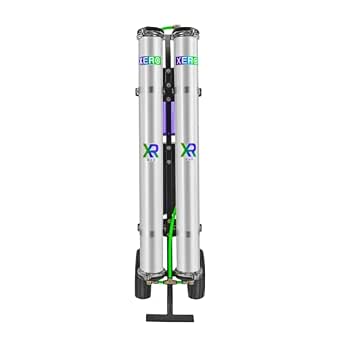 | Best for Two-Pole Crews | Purification method: Reverse osmosis | Maximum flow rate: 1 gallon per minute | Maximum supported water TDS: 10 ppm | VIEW ON AMAZON | See Our Full Breakdown |
| XERO Pure MAX Plus Water Purification System for Window Cleaning |  | Best for Lower-Maintenance RO/DI | Purification method: Reverse osmosis | Maximum flow rate: 1 gallon per minute | Maximum supported water TDS: 300 ppm | VIEW ON AMAZON | See Our Full Breakdown |
| Unger HydroPower Ultra 3-Stage System, UHP03 |  | Best for Soft-Water Routes | Filtration: Three-stage | Purification method: Deionization | Power source: Hydraulic-powered | VIEW ON AMAZON | See Our Full Breakdown |
| XERO Pure Water-Fed Window Cleaning Package with 30-Foot Pro Pole |  | Best Complete Starter Package | Purification stages: Three | Operating modes: RO/DI, RO-only and DI-only | Pole length: 30 feet | VIEW ON AMAZON | See Our Full Breakdown |
| Dust-Free Deionized Water Filtration System for Window Cleaning |  | Best for High-Volume Fixed Setups | Brand and model: TKJBHGPK | Processing technology: Reverse osmosis | Stated capacity: 1000 liters per hour | VIEW ON AMAZON | See Our Full Breakdown |
| XERO Pure ATOM Water System for Window Cleaning |  | Best Compact RO/DI System | Filtration stages: 3 | Membranes: Two 21-inch membranes | Purification method: Ion exchange | VIEW ON AMAZON | See Our Full Breakdown |
| XERO Pure Water System for Window Cleaning |  | Best for Higher-TDS Incoming Water | Purification stages: 3: carbon, reverse osmosis, and deionization | Purification method: Reverse osmosis and deionization | Maximum supported water TDS: 300 ppm | VIEW ON AMAZON | See Our Full Breakdown |
| IPC Pulex HydroCart Jr DI Window Cleaning System |  | Best Simple DI Cart | Model number: JR-DI | Purification method: Deionization | Power source: Tap pressure | VIEW ON AMAZON | See Our Full Breakdown |
| IPC Pulex HydroCart Compact 3-Story Window Cleaning Kit |  | Best Complete Kit for Three-Story Reach | Filtration: 3-stage reverse osmosis and deionization | Pole length: 35 feet | Stated reach: Up to 3 stories | VIEW ON AMAZON | See Our Full Breakdown |
| Oceanic Water Systems Portable RO/DI Spot-Free Window Cleaning System |  | Best for Multi-Surface Cleaning | Model: WWROS | Purification stages: 3 | Filtration: Carbon filter, RO membrane, and DI filter | VIEW ON AMAZON | See Our Full Breakdown |
| Unger HydroPower Ultra Small Deionization Tank for Window Cleaning |  | Best Compact DI Tank | Brand: Unger | Model: UHP01 | Purification method: Deionization | VIEW ON AMAZON | See Our Full Breakdown |
| XERO Pure Water-Fed Window Cleaning Package with 50-Foot Pro Pole |  | Best Complete Package for High-Reach Commercial Work | Manufacturer: XERO | System: Three-stage pure water system | Pole: 50-foot XERO Pro pole | VIEW ON AMAZON | See Our Full Breakdown |
| pure water filtration system for window cleaning | Dimensions | Purification method | Weight |
|---|---|---|---|
| XERO Pure MAX Pure Water Syste | 18 × 14.5 × 57 inches | Reverse osmosis | — |
| XERO Pure MAX Plus Water Purif | 16 × 13.5 × 52 inches | Reverse osmosis | — |
| Unger HydroPower Ultra 3-Stage | 12.5 × 13.4 × 30 inches | Deionization | 49.9 pounds |
| XERO Pure Water-Fed Window Cle | — | — | — |
| Dust-Free Deionized Water Filt | 134 × 38 × 42 cm | — | 27 kg |
| XERO Pure ATOM Water System fo | 18 × 15 × 43 in | Ion exchange | 52 lb |
| XERO Pure Water System for Win | 15.5 × 12 × 51.75 in | Reverse osmosis and deionization | 51 lb |
| IPC Pulex HydroCart Jr DI Wind | — | Deionization | — |
| IPC Pulex HydroCart Compact 3- | 18.5 × 13.5 × 50.5 in | — | — |
| Oceanic Water Systems Portable | 17 × 14 × 48 in | — | 44 lb |
| Unger HydroPower Ultra Small D | — | Deionization | — |
| XERO Pure Water-Fed Window Cle | — | — | 110 pounds |
More Details on Our Top Picks
XERO Pure MAX Pure Water System for Window Cleaning
The XERO Pure MAX is the strongest fit here for crews that need one filtration unit to serve two water-fed poles. Its carbon prefilter, dual RO membranes and DI stage produce water below 10 ppm, while the stated flow rate reaches 1 gallon per minute. That two-pole capability sets it apart from the Unger HydroPower Ultra 3-Stage, which relies on deionization and is recommended for soft-water areas. The tradeoff is a substantial 72-pound frame, so this is better suited to a regular work location or a vehicle setup than frequent carrying. Its 20 °C maximum supported water temperature also calls for attention to source-water conditions. I’d choose it for shared-pole throughput, not for a compact or lightweight setup.
Pros:- Can supply two water-fed poles at once
- Carbon, dual RO and DI stages target low-TDS output
- Flow rate reaches 1 gallon per minute
- Includes a TDS meter and filter wrenches
Cons:- At 72 pounds, it is difficult to move often
- Listed maximum supported water temperature is 20 °C
- Its 57-inch height takes dedicated storage space
Best for: Professional crews running two water-fed poles from a regular worksite or vehicle setup who want RO and DI filtration with TDS monitoring.
Not ideal for: Solo cleaners who need a light, frequently carried system, or users whose source water exceeds the listed 20 °C maximum.
- Purification method:Reverse osmosis
- Maximum flow rate:1 gallon per minute
- Maximum supported water TDS:10 ppm
- Filtration stages:Carbon filter, dual RO membranes and DI housing
- Installation type:Countertop or freestanding
- Power source:Hydraulic
- Dimensions:18 × 14.5 × 57 inches
- Weight and material:72 pounds; stainless steel
- Included components:Pure water system, TDS meter, filter wrenches and instruction manual
Our verdict“Choose the XERO Pure MAX if two-pole capacity and RO/DI filtration matter more than portability.”
XERO Pure MAX Plus Water Purification System for Window Cleaning
The XERO Pure MAX Plus pairs dual RO filtration with a refillable 21-inch DI cartridge, giving crews a way to reduce how often they replace resin while retaining a stated flow rate of 1 gallon per minute. Its sediment and chloramine filters add source-water treatment that is not specified for the standard XERO Pure MAX. Both systems can run two poles, but the Plus lists a maximum supported TDS of 300 ppm, while the standard MAX specifies output below 10 ppm; those figures describe different measures, so I would not treat them as interchangeable performance claims. This freestanding stainless-steel unit is still 52 inches tall, and resin and filters remain consumables. It makes the most sense when a large refillable DI cartridge and chloramine filtration matter more than compact storage.
Pros:- Dual RO system has a stated flow rate of 1 gallon per minute
- Can run two water-fed poles at once
- Refillable 21-inch DI cartridge can reduce resin replacement frequency
- Includes sediment and chloramine filters plus a TDS meter
Cons:- At 52 inches tall, it needs substantial storage space
- Filters and DI resin require replacement over time
- The listed maximum supported TDS is not directly comparable to the standard MAX’s below-10-ppm output figure
Best for: Window-cleaning crews seeking a dual-RO system with a large refillable DI cartridge and sediment and chloramine filtration.
Not ideal for: Cleaners with limited vertical storage, or buyers who need a clearly stated output TDS target rather than a maximum supported source-water TDS specification.
- Purification method:Reverse osmosis
- Maximum flow rate:1 gallon per minute
- Maximum supported water TDS:300 ppm
- Filtration components:Dual RO, sediment and chloramine filters, refillable 21-inch DI cartridge
- Installation type:Freestanding
- Dimensions:16 × 13.5 × 52 inches
- Material:Stainless steel
- Model number:209-21-17
- Included components:TDS meter, small and large filter wrenches, RO Guardian and lubricant
Our verdict“Pick the MAX Plus for its refillable large DI cartridge and added sediment and chloramine filtration, provided you have room for a tall freestanding unit.”
Unger HydroPower Ultra 3-Stage System, UHP03
The Unger HydroPower Ultra 3-Stage is the lineup’s dedicated deionization choice: its resin-based system produces water for spot-free rinsing without the RO setup used by the XERO Pure MAX models. That simpler distinction matters most for operators whose supply is already soft, since Unger recommends the system for soft-water areas. Its high-capacity design supports longer cleaning runs, and the included TDS meter helps identify when output quality has changed. FastLock access and resin bags also make resin changes more straightforward than dealing with loose resin alone. The tradeoff is ongoing resin replacement, and hard-water users may find a DI-only approach less suitable than an RO/DI system. I’d choose this for a soft-water route, not as a universal fit for every supply.
Pros:- Three-stage deionization is designed for spot-free window rinsing
- High-capacity resin design supports extended cleaning operations
- TDS meter provides water-quality monitoring
- FastLock access and resin bags simplify resin replacement
Cons:- Recommended for soft-water areas, limiting its fit for some supplies
- Requires ongoing resin replacement
- Does not specify an RO stage or a flow rate in the supplied product data
Best for: Professional window cleaners working in soft-water areas who want a dedicated DI system with TDS monitoring and simplified resin changes.
Not ideal for: Operators with hard water or uncertain source-water quality who would rather use an RO/DI system such as the XERO Pure MAX.
- Filtration:Three-stage
- Purification method:Deionization
- Power source:Hydraulic-powered
- Container type:Bags
- Dimensions:12.5 × 13.4 × 30 inches
- Weight:49.9 pounds
- Included components:Resin, TDS meter, resin bags, storage tank and FastLock Opening components
- Special features:FloWater Technology, high-capacity resin design and KeyLock resin bags
Our verdict“Choose the Unger HydroPower Ultra for extended DI cleaning on soft-water routes where easy resin access is useful.”
XERO Pure Water-Fed Window Cleaning Package with 30-Foot Pro Pole
Unlike the standalone XERO Pure MAX systems, this package includes the tools to start water-fed cleaning: a three-stage purifier, 30-foot Pro Pole, brush and hose. That makes it a practical route into purified-water window work for buyers who do not already own pole equipment. Its three modes—RO/DI, RO-only and DI-only—let users choose a filtration approach for their water and task, and the system works without electricity. The listed setup can stand upright or lie horizontally, which offers placement flexibility. The tradeoff is that the supplied pole reaches 30 feet, so it is less suited to jobs that call for the separate 50-foot XERO package. DI-only mode may also use resin faster. I’d favor this bundled kit when pole and filtration equipment need to be bought together.
Pros:- Includes a 30-foot pole, brush and hose alongside the purifier
- Offers RO/DI, RO-only and DI-only operating modes
- Runs without electricity
- Compatible with non-proprietary filters and can be positioned upright or horizontally
Cons:- The 30-foot pole may not reach jobs suited to the 50-foot XERO package
- DI-only operation may consume resin faster
- The supplied data does not state a maximum flow rate or output TDS
Best for: New water-fed pole users who need a purifier, 30-foot pole, brush and hose in one package and want several filtration modes.
Not ideal for: Cleaners who already own pole equipment, need the reach of the 50-foot XERO package, or plan to use DI-only mode heavily and want to conserve resin.
- Purification stages:Three
- Operating modes:RO/DI, RO-only and DI-only
- Pole length:30 feet
- Power:No electricity required
- Positioning:Upright or horizontal
- Included cleaning equipment:Pro Pole, Hybrid Brush and pole hose
- Included system accessories:Fast Lock adapter, fittings, TDS meter, filter wrenches, lubrication packet and instruction manual
- Filter compatibility:Compatible with non-proprietary filters
Our verdict“Choose this package if you need both a water-fed pole setup and a three-mode purifier, rather than filtration alone.”
Dust-Free Deionized Water Filtration System for Window Cleaning
This RO DI Car Wash Water Filter is the high-throughput, commercial-scale option in this group, with a stated capacity of 1000 liters per hour and a stainless-steel shell. That capacity is far above the 1-gallon-per-minute figures listed for the XERO Pure MAX systems, though the supplied details do not specify a comparable flow test or the resulting TDS, so I would verify those requirements before relying on it for a particular window-cleaning route. At 27 kg and 134 cm long, it is better suited to a planned installation than a cleaner who moves equipment between jobs. The included hose helps with connection, but the description gives less setup detail than the complete XERO package with pole and brush. I’d shortlist it for high-volume use where space and movement are less of a concern.
Pros:- Stated capacity of 1000 liters per hour suits high-volume operation
- Reverse osmosis processing is specified
- 404 stainless-steel RO shell
- Includes a blue hose for connection
Cons:- Weighs 27 kg, making frequent relocation difficult
- Large 134 × 38 × 42 cm dimensions limit placement options
- Supplied details do not state output TDS, included DI resin or pole equipment
Best for: Commercial operators planning a fixed or semi-permanent water-treatment setup who need the stated high hourly capacity and a stainless-steel housing.
Not ideal for: Solo window cleaners or mobile crews who need a compact, easily carried system, or buyers who require a clearly specified output-TDS target.
- Brand and model:TKJBHGPK
- Processing technology:Reverse osmosis
- Stated capacity:1000 liters per hour
- Weight:27 kg
- Dimensions:134 × 38 × 42 cm
- Material:404 stainless-steel RO shell
- Membrane:4040 ULP/LP
- Included accessory:Blue hose
Our verdict“Consider this system for a space-ready commercial setup where high stated capacity matters more than portability or bundled window-cleaning tools.”
XERO Pure ATOM Water System for Window Cleaning
The XERO Pure ATOM is the space-conscious choice among these larger filtration systems: its 18 × 15-inch footprint is narrower than the XERO Pure Water System, while its three-stage filtration and two 21-inch membranes offer a more involved setup than the single-stage IPC Pulex HydroCart Jr DI. A built-in TDS meter helps you track when the resin needs attention; the stated replacement threshold is above 10 ppm. That gives window cleaners a clear purity check, but it also means ongoing resin replacement is part of ownership. Despite the compact footprint, the ATOM weighs 52 pounds, so it is not especially easy to carry between jobs. I’d choose it for a fixed or frequently used work area where floor space matters more than portability, not for crews that need a light system to load in and out each day.
Pros:- Three-stage filtration with two 21-inch membranes
- Built-in TDS meter makes it easier to monitor output purity
- Compact 18 × 15-inch footprint compared with taller, wider cart-style systems
- Filter wrenches are included for servicing
Cons:- At 52 pounds, it is cumbersome to lift or carry regularly
- Resin replacement is needed when the TDS reading exceeds 10 ppm
Best for: Window cleaners who want a compact-footprint, three-stage system with a built-in purity monitor for a regular work location.
Not ideal for: Solo cleaners who frequently carry equipment between sites or want to avoid monitoring and replacing DI resin.
- Filtration stages:3
- Membranes:Two 21-inch membranes
- Purification method:Ion exchange
- Maximum supported water TDS:10 ppm
- Dimensions:18 × 15 × 43 in
- Weight:52 lb
- Material:Stainless steel
- Installation and power:Countertop; hydraulic
Our verdict“Choose the ATOM if you need a compact-footprint filtration unit and can accommodate its weight and ongoing resin monitoring.”
XERO Pure Water System for Window Cleaning
The XERO Pure Water System is the more suitable XERO pick when incoming water is less forgiving: its listed maximum supported TDS is 300 ppm, compared with the ATOM’s 10 ppm threshold. Carbon, reverse osmosis, and deionization create a three-stage treatment path, so this is a more complete filtration setup than the single-stage IPC Pulex HydroCart Jr DI. It arrives with no assembly required and includes a built-in TDS meter and RO guardian, which gives buyers useful monitoring tools without a build step. The tradeoff is bulk: at 51 pounds and 51.75 inches tall, it is still a substantial countertop unit, not a genuinely easy carry-around system despite the portable description. I’d favor it over the ATOM for higher-TDS feed water, but skip it if compact storage or frequent manual lifting is the priority.
Pros:- Carbon, reverse osmosis, and deionization provide three treatment stages
- Listed for incoming water TDS up to 300 ppm, higher than the ATOM’s stated limit
- No assembly required
- Includes a built-in TDS meter, RO guardian, and filter wrenches
Cons:- The 51-pound weight makes frequent lifting inconvenient
- At 51.75 inches tall, it may be awkward to store in a low-clearance area
Best for: Window-cleaning crews whose incoming tap water can reach 300 ppm TDS and who want a ready-to-use three-stage system.
Not ideal for: Cleaners who need a lightweight, frequently hand-carried unit or have very limited storage height.
- Purification stages:3: carbon, reverse osmosis, and deionization
- Purification method:Reverse osmosis and deionization
- Maximum supported water TDS:300 ppm
- Dimensions:15.5 × 12 × 51.75 in
- Weight:51 lb
- Material:Brass and stainless steel
- Installation and power:Countertop; hydraulic
- Included monitoring:Built-in TDS meter and RO guardian
Our verdict“Pick this XERO system over the ATOM when higher incoming TDS and a no-assembly setup matter more than easy carrying.”
IPC Pulex HydroCart Jr DI Window Cleaning System
The IPC Pulex HydroCart Jr DI keeps the setup straightforward: tap pressure feeds a single-stage deionization system, and the wheeled cart comes with a 50-foot hose. That makes it less involved than the three-stage XERO Pure Water System, but it also has a narrower operating fit: the product is intended for incoming water below 200 ppm TDS. Its specified 1 gpm maximum flow rate sets a clear pace for work, so crews with high-volume demands may prefer a different configuration. The 59-pound cart is heavier than the XERO systems listed here, yet its wheels make it easier to roll around a site than to lift. I’d choose this for residential and low-rise jobs where tap water meets the TDS limit and a ready hose matters more than multi-stage filtration or faster flow.
Pros:- Wheeled alloy-steel cart is easier to roll across a job site than a bare unit
- Includes a 50-foot hose
- Runs on tap water pressure without a listed powered pump
- Single-stage DI setup keeps the filtration approach simple
Cons:- Intended for incoming water below 200 ppm TDS
- Maximum flow rate is 1 gpm
- At 59 pounds, lifting the cart into a vehicle may take effort
Best for: Residential and low-rise window cleaners with tap water below 200 ppm TDS who want a wheeled DI cart and included hose.
Not ideal for: Crews working with higher-TDS source water, needing flow above 1 gpm, or looking for RO filtration.
- Model number:JR-DI
- Purification method:Deionization
- Power source:Tap pressure
- Maximum supported water TDS:200 ppm
- Maximum flow rate:1 gpm
- Capacity:106 gallons
- Hose length:50 feet
- Dimensions and weight:23 × 15.5 × 41.5 in; 59 lb
Our verdict“Choose the HydroCart Jr DI for low-rise work with compliant tap water when a wheeled cart and long hose beat multi-stage filtration.”
IPC Pulex HydroCart Compact 3-Story Window Cleaning Kit
The IPC Pulex HydroCart Compact 3-Story Kit is the standout when the purchase needs to cover both water treatment and access. Its three-stage reverse-osmosis and deionization setup is paired with a 35-foot carbon-fiber pole, brush, gooseneck, and TDS meter, making it a more ready-to-work package than the Oceanic WWROS, which does not include hoses or other accessories. The stated reach is up to three stories, reducing the need to work from a ladder for suitable jobs. Its listed 1.25-gallon capacity is modest, and the electric pump is an optional add-on; buyers should not assume the base kit includes powered water delivery. Compared with the simpler HydroCart Jr DI, this is a more complete and taller-reaching setup, but also a more involved purchase that suits cleaners who specifically need a pole system.
Pros:- Includes a 35-foot carbon-fiber telescopic pole for stated reach up to three stories
- Three-stage RO/DI filtration produces mineral-free rinsing water
- Kit includes an 8-inch gooseneck, 14-inch brush, and TDS meter
- Wheeled design supports movement around a job site
Cons:- Electric pump is an optional add-on rather than a listed included component
- The 1.25-gallon stated capacity may limit uninterrupted work
- Requires a water-fed pole setup, which may be unnecessary for buyers who only need a filtration unit
Best for: Window cleaners who want filtration and a water-fed pole kit for ground-based work on buildings up to three stories.
Not ideal for: Buyers who already own a pole setup, need a larger stated capacity, or expect an electric pump to come included.
- Filtration:3-stage reverse osmosis and deionization
- Pole length:35 feet
- Stated reach:Up to 3 stories
- Included tools:Telescopic water-fed pole, 8-inch gooseneck, 14-inch brush
- Water purity measurement:TDS meter
- Capacity:1.25 gallons
- Dimensions:18.5 × 13.5 × 50.5 in
- Materials and model:Alloy steel and carbon fiber; HCC-3
Our verdict“Choose this kit if you need a three-story pole and filtration package together, but check the pump requirements before buying.”
Oceanic Water Systems Portable RO/DI Spot-Free Window Cleaning System
The Oceanic Water Systems WWROS makes sense for operators who want one RO/DI setup for windows as well as vehicles, boats, RVs, and solar panels. Its three-stage carbon, reverse-osmosis, and DI filtration resembles the XERO Pure Water System’s treatment approach, while its 44-pound build is lighter than that XERO model and the IPC Pulex HydroCart Jr DI. Large pneumatic tires are a practical advantage on uneven job sites, though they do not remove the need to load and secure the unit for transport. The system requires some assembly, and hoses and other accessories are not included, so the complete working setup may require separate purchases. Its stated cleaning reach—about 30 feet—depends on incoming water pressure. I’d choose it for cross-surface utility and mobility, not for buyers seeking a fully outfitted window-cleaning kit.
Pros:- Three-stage carbon, RO, and DI filtration supports spot-free rinsing
- Suitable for windows, vehicles, boats, RVs, and solar panels
- At 44 pounds, it is lighter than the XERO Pure Water System and IPC Pulex HydroCart Jr DI
- Pneumatic tires can help move it across rougher job-site surfaces
Cons:- Hoses and other accessories are not included
- Some assembly is required
- Stated reach of about 30 feet depends on incoming water pressure
Best for: Mobile cleaning operators who want an RO/DI system for windows and other rinse-cleaned surfaces and can supply their own hoses.
Not ideal for: Window cleaners who need included hoses, a ready-to-use pole package, or a reach that does not depend on source-water pressure.
- Model:WWROS
- Purification stages:3
- Filtration:Carbon filter, RO membrane, and DI filter
- Weight:44 lb
- Dimensions:17 × 14 × 48 in
- Frame and housing:Powder-coated steel frame; stainless-steel housing
- Wheels:Two large pneumatic tires
- Stated cleaning reach:About 30 feet with good incoming water pressure
Our verdict“Choose the WWROS if you want a lighter, multi-surface RO/DI unit and are prepared to assemble it and provide the hoses.”
Unger HydroPower Ultra Small Deionization Tank for Window Cleaning
The Unger HydroPower Ultra Small is the compact, transportable choice for window cleaners who already have a water-fed pole and want a dedicated source of spot-free rinse water. Its deionization process removes minerals that can leave residue, while FloWater Technology is specified to increase pure-water output by up to 30%. The FastLock opening and KeyLock resin bag system make resin changes less involved than maintaining a larger multi-stage setup such as the Unger HydroPower Ultra 3-Stage System. The tradeoff is that this is a DI tank, not a complete pole-and-system package, and resin replacement depends on feed-water hardness and usage. Its compact format suits mobile work, but buyers handling long commercial routes may prefer a larger system with more capacity information. Choose it for portability and straightforward DI maintenance, not an all-in-one kit.
Pros:- Deionization produces rinse water intended to dry without mineral residue
- Compact design is easier to transport and store than a full package system
- FloWater Technology is specified to increase pure-water output by up to 30%
- FastLock access and KeyLock resin bags simplify tank access and resin installation
Cons:- Resin bags require replacement according to water hardness and cleaning volume
- The tank does not include a water-fed pole or a complete set of cleaning accessories
- The supplied product data does not state tank capacity or expected resin life
Best for: Window cleaners who already own a compatible water-fed pole and need a compact DI tank for mobile residential or light commercial work
Not ideal for: New buyers seeking a complete pole-and-hose package, or high-volume crews that need clearly specified capacity and longer runs between resin changes
- Brand:Unger
- Model:UHP01
- Purification method:Deionization
- Item weight:21.9 pounds
- Material:Resin
- Special features:FastLock opening, FloWater Technology, pressure release valve, self-locking mechanism
- Included components:Filter
- Spare part availability:1 year
Our verdict“Choose this compact DI tank if you already have pole equipment and value portability over a complete commercial cleaning package.”
XERO Pure Water-Fed Window Cleaning Package with 50-Foot Pro Pole
This XERO package pairs a three-stage pure-water system with a 50-foot Pro pole, making it the lineup’s clearest fit for commercial cleaners who need equipment for elevated windows in one purchase. The included hybrid brush, hose, fast-lock adapter, TDS meter, and filter tools provide a more complete starting setup than the Unger HydroPower Ultra Small, which is a compact DI tank rather than a pole-and-system package. The extended pole reach can reduce the need to reposition for upper-level glass, but the package weighs 110 pounds and measures 18 x 15 x 52 inches, so transport and storage need planning. The product data also does not specify water capacity, making it harder to judge how well it fits long, uninterrupted routes. It suits established crews with transport space better than occasional or compact residential work.
Pros:- Combines a three-stage pure-water system and 50-foot pole in one package
- Includes a hybrid brush, hose, fast-lock adapter, and TDS meter
- Filter wrenches and lubricant support routine system maintenance
- Long pole reach is suited to elevated commercial windows
Cons:- At 110 pounds, the package is heavy to move and store
- System water capacity is not stated in the supplied product data
- The 50-foot pole and full package may be excessive for ground-level or occasional jobs
Best for: Commercial window-cleaning crews that need a long-reach pole, a three-stage system, and core accessories in one package
Not ideal for: Solo residential cleaners with limited storage or transport capacity, and buyers who need a stated system capacity to plan long work sessions
- Manufacturer:XERO
- System:Three-stage pure water system
- Pole:50-foot XERO Pro pole
- Included accessories:TDS meter, filter wrenches, lubrication packet, instruction manual, hybrid brush, XERO hose, fast-lock adapter
- Weight:110 pounds
- Product dimensions:18 x 15 x 52 inches
- ASIN:B0BRTBR8GB
Our verdict“Pick this package for commercial high-reach work if you have room to handle its weight and do not need capacity details before buying.”

How We Picked
I compared these 12 options for the specific task of producing low-residue water for water-fed window cleaning. The main criteria were filtration format, how readily the system could fit a home or professional workflow, portability, whether a pole or cart was included, and the practical implications of maintaining the setup. I also looked at how clearly each product serves a distinct buyer, from someone starting with a complete pole package to a cleaner who needs a compact DI cart or portable RO/DI configuration.
The ranking favors systems that appear broadly useful without forcing a narrow use case, then gives specialized options credit when their format solves a clear problem. Bundled packages rank well for convenience, but they are not automatically above standalone filtration systems: pole length, storage, and whether the buyer already owns compatible equipment matter. The lineup includes several XERO models and packages, so I distinguish them by role rather than treating brand similarity as a reason to rank them together. Product details supplied here do not establish exact output capacity or water-quality performance, so I avoid unsupported claims and frame selection around configuration and intended fit.
| pure water filtration system for window cleaning | Purification method |
|---|---|
| XERO Pure MAX Pure Water Syste | Reverse osmosis |
| XERO Pure MAX Plus Water Purif | Reverse osmosis |
| Unger HydroPower Ultra 3-Stage | Deionization |
| XERO Pure Water-Fed Window Cle | — |
| Dust-Free Deionized Water Filt | — |
| XERO Pure ATOM Water System fo | Ion exchange |
| XERO Pure Water System for Win | Reverse osmosis and deionization |
| IPC Pulex HydroCart Jr DI Wind | Deionization |
| IPC Pulex HydroCart Compact 3- | — |
| Oceanic Water Systems Portable | — |
| Unger HydroPower Ultra Small D | Deionization |
| XERO Pure Water-Fed Window Cle | — |
Factors to Consider When Choosing Pure Water Filtration System For Window Cleaning
Before choosing a system, match its setup to the water you have, the windows you clean, and how often you will move or maintain the equipment. A filter that suits a compact residential route may feel limiting on larger jobs, while a bundled pole kit can add gear you do not need if you already have a water-fed pole.
Start With Your Water Source and Filtration Needs
Tap water varies by location, and the amount of dissolved mineral content affects how a pure-water setup performs and how often its consumables need attention. Check your local water report or use an appropriate meter to understand the starting point before selecting a system. Do not assume that a product with more filtration stages is always the right choice; filtration stages and media type matter in relation to the incoming water and the system design. RO/DI configurations can suit users planning for a particular treatment sequence, while DI-focused systems may appeal to buyers who want a simpler arrangement. Ask the manufacturer what maintenance intervals and replacement media apply to your water conditions. This step can prevent buying a system that is more involved than your work requires or poorly matched to your supply.
Choose Pole Length for the Sites You Actually Clean
A longer pole can reduce ladder use and reach higher glass, but added reach also changes storage, transport, and handling. The 30-foot and 50-foot XERO packages make pole length a clear purchase decision: choose based on the height and access of your regular jobs, not occasional exceptions. A residential cleaner working around obstacles may get more day-to-day use from a manageable pole than from maximum reach. Conversely, a commercial route with taller windows may justify a longer package if the pole is suited to the work. Check the pole’s compatibility with your preferred brush and hose arrangement before buying a bundle. If you already own a suitable pole, a standalone filtration unit can avoid paying for redundant equipment.
Decide Whether Portability Beats On-Site Capacity
Moving between houses, navigating tight access, and loading a vehicle can make compact carts or portable systems more useful than a larger fixed setup. Portability is not only about overall size; consider how the unit rolls, how it connects to a water supply, and whether its components can be secured during transport. A smaller DI cart may simplify short jobs, but buyers should check whether its operating and maintenance demands fit their route. A larger or more involved system may be a better match when the equipment stays near a regular work area. Do not choose a compact model solely because it is easier to store if your workload requires repeated long sessions. Think through where the system will sit during cleaning as well as where it will be stored afterward.
Compare Complete Kits With Standalone Systems
A bundled filtration-and-pole package can make a first purchase easier by putting the main components together, but a bundle is only convenient when its parts suit your needs. Beginners may value having a coordinated kit rather than sourcing a pole and filtration unit separately. Experienced cleaners should compare the included pole, fittings, and hose setup with equipment already on hand. Buying standalone can offer more flexibility, though it puts the burden on the buyer to confirm compatibility. Check what the package includes instead of assuming that every accessory needed for a complete working setup is present. The practical tradeoff is convenience now versus the freedom to assemble a system around your existing tools.
Plan for Consumables and Routine Maintenance
Pure-water systems require ongoing attention to filtration media, connections, and water-quality checks; the purchase decision should include that routine, not just initial setup. Find out which media are replaceable, how the manufacturer recommends checking output, and whether replacement parts are readily identified. A system that looks straightforward can still become inconvenient if its maintenance steps do not fit your schedule. Keeping records of water readings and media changes can help you spot declining performance before it affects cleaning results. Buyers who clean only occasionally may prefer a simpler arrangement, while frequent users may accept more upkeep for a setup suited to repeated work. Confirm maintenance guidance with the manufacturer because actual service intervals depend on source water and usage.
Match the System to Your Workload, Not a Spec Label
Professional use and occasional home cleaning place different demands on a filtration system. Route frequency, window area, access to water, and time spent moving between sites all matter more than a single headline feature. A portable RO/DI unit may make sense for a mobile operator who values a particular treatment format, while a compact DI cart may better suit jobs where easy movement is the priority. Someone beginning with a few accessible windows may find a pole bundle easier to plan around than a separate equipment build. Avoid sizing up solely for future work that is uncertain, but leave room for realistic growth if you already have regular demand. The best fit is the system whose maintenance, mobility, and equipment package align with the jobs you expect to repeat.
Frequently Asked Questions
Should I buy a system with a pole included or choose filtration only?
Choose a bundle if you are starting without a compatible water-fed pole and want the main equipment selected together. The XERO 30-foot and 50-foot packages make reach part of the decision, so pick the pole length around your usual buildings and storage limits. If you already own a pole, brush, or hose, a standalone filtration system may avoid duplicate equipment. Before ordering, check which fittings and accessories are included and confirm compatibility with your existing tools. A bundle is convenient, but it is not automatically the better value for an equipped cleaner.
Is a three-stage filtration system always better than a DI system?
No; stage count alone does not tell you whether a system fits your water supply or workload. The Unger HydroPower Ultra 3-Stage has a different filtration presentation from the DI-focused compact options, but the right choice depends on the treatment design and incoming water. Check local water conditions and consult the manufacturer’s specifications for the intended operating range and maintenance needs. Also compare replacement media and upkeep, since a more elaborate layout may add steps that are not useful for every buyer. Treat configuration as a matching question, not a simple ranking of stage counts.
How should I choose between the XERO 30-foot and 50-foot pole packages?
Base the choice on the tallest windows you clean regularly, along with the space and access available at those properties. A 50-foot pole can reach higher areas, but its extra length may be harder to transport and manage around trees, narrow paths, or overhead obstructions. A 30-foot package may be easier to store and handle for many residential jobs. Consider whether taller work is frequent enough to justify carrying the longer pole on every route. If you are unsure, compare the pole specifications and handling guidance directly before committing.
What should I check before taking a portable system to different job sites?
Confirm how the unit connects to the available water supply, how it is moved, and whether its parts can be secured in your vehicle. Portable formats such as the IPC Pulex HydroCart Jr and the Oceanic portable RO/DI system suggest different equipment approaches, so check dimensions, fittings, and setup instructions rather than relying on the word portable. Ask how water conditions affect media life when moving between locations with different supplies. Plan where the system will sit during a job and how hoses will reach the work area. These checks can reveal whether compactness translates into a smoother route or just a smaller footprint.
How can I tell when the filtration media needs attention?
Follow the manufacturer’s water-quality monitoring guidance and use a suitable meter if the system calls for one. A change in measured output can indicate that media needs replacement or that the setup requires inspection, but the correct threshold depends on the system and its instructions. Track readings alongside media changes and the water source so you can identify patterns across jobs. Do not rely on glass appearance alone, since drying conditions and cleaning technique can affect spotting. Before purchase, check that the system’s monitoring and replacement process is clear enough for your routine.
Conclusion
For the broadest fit, I would start with the XERO Pure MAX as the best overall standalone choice. The best value for a first setup is the XERO package with a 30-foot Pro Pole when its reach and included equipment match your jobs; the package is less compelling if you already own a pole. For a premium-style bundled setup with more reach, consider the 50-foot Pro Pole package, provided you can manage and store the longer pole. Beginners who want filtration and pole equipment together should compare the two XERO packages, while buyers prioritizing a staged system should look at the Unger HydroPower Ultra 3-Stage. For compact or mobile needs, compare the IPC Pulex HydroCart Jr DI, the HydroCart Compact 3-Story Kit, and the Oceanic portable RO/DI by their setup and maintenance requirements. The right choice comes down to matching filtration format, reach, and portability to the work you actually take on.