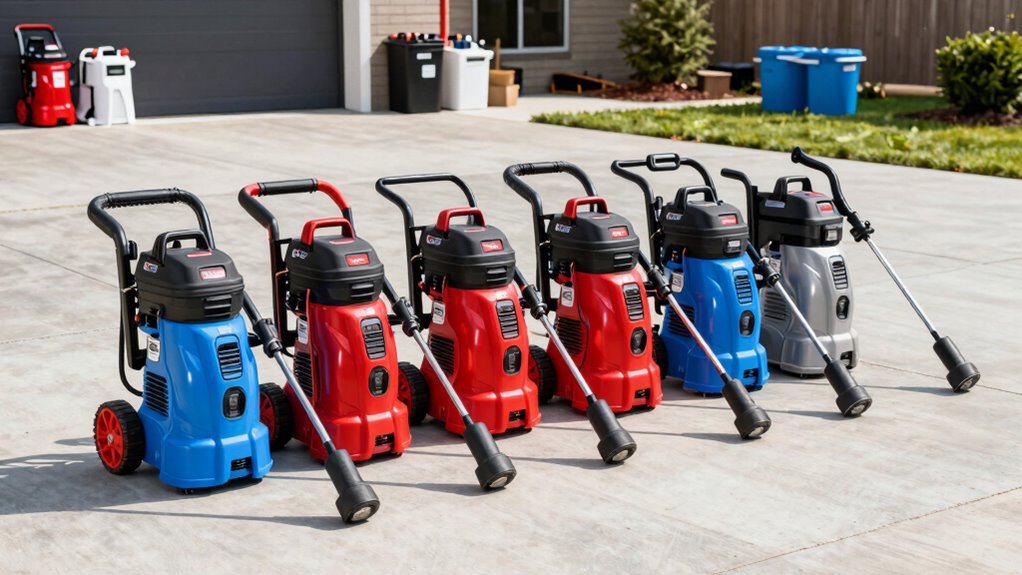

Starting a cleaning business demands equipment that balances raw power with mechanical reliability. My top pick, the Simpson Aluminum Series Gas Pressure Washer, stands out for its Honda GX200 engine, which offers the durability needed for daily commercial use without the high maintenance headaches of cheaper motors. For those needing higher flow rates to tackle large driveways quickly, the 4200 PSI Gas Pressure Washer with 4.0 GPM provides the volume necessary to reduce job times significantly. The main tradeoff here is between upfront cost and long-term downtime; cheaper units often fail under commercial stress, while premium units require a larger initial investment. Read on to see which model fits your specific service niche and budget constraints.

Get cleaning gear delivered free with Prime
- Fast, free delivery on millions of items
- Prime Video, Amazon Music and more included
- Member-only deals all year
Complete the kit


Key Takeaways
- Commercial-grade engines like the Honda GX200 are worth the premium over generic motors because they offer easier part availability and longer lifespans under daily use.
- Flow rate (GPM) matters more than pressure (PSI) for cleaning large flat surfaces like driveways and parking lots; 4.0 GPM models clean roughly 60% faster than 2.5 GPM models.
- Electric models are viable only for light residential detailing or interior work, as they lack the water volume and mobility required for exterior commercial jobs.
- Unitized pump designs in budget models are difficult and expensive to repair compared to triplex plunger pumps found in professional-grade units.
- Weight and mobility are critical hidden costs; heavy gas units without pneumatic tires or sturdy frames increase physical fatigue, reducing the number of jobs you can complete per day.
| Simpson Aluminum Series Gas Pressure Washer, 3600 PSI, 2.5 GPM, Honda GX200 |  | Best Overall for Professional Reliability | Pressure: 3600 PSI | Flow Rate: 2.5 GPM | Engine: Honda GX200 | VIEW ON AMAZON | See Our Full Breakdown |
| Westinghouse WPX3400 Gas Pressure Washer, 3400 PSI, 2.6 GPM |  | Best Value for Entry-Level Professionals | Pressure: 3400 PSI | Flow Rate: 2.6 GPM | Engine: 212cc 4-Stroke OHV | VIEW ON AMAZON | See Our Full Breakdown |
| 4200 PSI Gas Pressure Washer, 4.0 GPM, 212 cc Engine, 25 ft Hose and 5 Nozzles |  | Best for High-Volume Commercial Jobs | Pressure: 4200 PSI | Flow Rate: 4.0 GPM | Engine: 212 cc, 7 HP 4-Stroke | VIEW ON AMAZON | See Our Full Breakdown |
| 4200 PSI Gas Pressure Washer, 4.0 GPM, 212cc |  | Best Budget High-Power Option | Pressure: 4200 PSI | Flow Rate: 4.0 GPM | Engine: 212cc 7 HP 4-Stroke | VIEW ON AMAZON | See Our Full Breakdown |
| Steupoek Electric Pressure Washer, 5000 PSI, 4 GPM, with 3 L Foam Bottle |  | Best for Indoor or Low-Noise Environments | Max Pressure: 5000 PSI (Claimed) | Flow Rate: 4 GPM | Power Source: Electric | VIEW ON AMAZON | See Our Full Breakdown |
| SIMPSON PowerShot 3300 PSI Gas Pressure Washer with Honda GX200 Engine |  | Best for Reliability & Longevity | Pressure: 3300 PSI | Flow Rate: 2.5 GPM | Engine: Honda GX200 | VIEW ON AMAZON | See Our Full Breakdown |
| Westinghouse WPX3000e Electric Pressure Washer |  | Best for Low-Maintenance Startups | Max Pressure: 3000 PSI | Max Flow Rate: 1.76 GPM | Motor: 120V AC Electric | VIEW ON AMAZON | See Our Full Breakdown |
| 4200 PSI Gas Pressure Washer, 4.0 GPM, 212cc Engine |  | Best for High-Volume Driveway Work | Working Pressure: 4200 PSI | Flow Rate: 4.0 GPM | Engine: 212cc, 7 HP, 4-stroke OHV | VIEW ON AMAZON | See Our Full Breakdown |
| Steupoek 4200 PSI Gas Pressure Washer, 4.0 GPM, 212cc 7 HP |  | Best Budget High-Output Option | Max Pressure: 4200 PSI | Max Flow Rate: 4.0 GPM | Engine: 212cc, 7 HP | VIEW ON AMAZON | See Our Full Breakdown |
| pressure washer for cleaning business start up | Hose Length | Flow Rate | Engine | Pressure |
|---|---|---|---|---|
| Simpson Aluminum Series Gas Pr | 35 ft | 2.5 GPM | Honda GX200 | 3600 PSI |
| Westinghouse WPX3400 Gas Press | 25 ft | 2.6 GPM | 212cc 4-Stroke OHV | 3400 PSI |
| 4200 PSI Gas Pressure Washer | 25 ft | 4.0 GPM | 212 cc, 7 HP 4-Stroke | 4200 PSI |
| 4200 PSI Gas Pressure Washer | 25 ft | 4.0 GPM | 212cc 7 HP 4-Stroke | 4200 PSI |
| Steupoek Electric Pressure Was | 23 ft | 4 GPM | — | — |
| SIMPSON PowerShot 3300 PSI Gas | 25 ft | 2.5 GPM | Honda GX200 | 3300 PSI |
| Westinghouse WPX3000e Electric | 25 feet | — | — | — |
| 4200 PSI Gas Pressure Washer | 32 ft | 4.0 GPM | 212cc, 7 HP, 4-stroke OHV | — |
| Steupoek 4200 PSI Gas Pressure | 25 feet | — | 212cc, 7 HP | — |
More Details on Our Top Picks
Simpson Aluminum Series Gas Pressure Washer, 3600 PSI, 2.5 GPM, Honda GX200
This unit stands out because it pairs a Honda GX200 engine with an AAA triplex pump, a combination known for longevity under heavy commercial use. Unlike the Westinghouse WPX3400, which uses a generic 212cc engine, the Honda powerplant offers superior torque and easier starting in cold weather. The aircraft-grade aluminum frame resists rust better than the steel frames found on budget models, reducing long-term maintenance costs. However, the 78-pound weight makes it less portable than smaller units, and the lack of California compliance limits its market reach. For a startup prioritizing uptime over initial cost savings, this reliability is worth the investment.
Pros:- Honda GX200 engine provides proven reliability and easy starts
- AAA triplex pump lasts significantly longer than axial cam pumps
- Corrosion-resistant aluminum frame reduces rust-related failures
- 5-year pump warranty signals confidence in durability
Cons:- Not compliant with California emissions standards
- 78 pounds is heavy for frequent loading and unloading
- Higher upfront cost compared to generic engine alternatives
Best for: Entrepreneurs starting a high-volume exterior cleaning business who need equipment that withstands daily use.
Not ideal for: Startups in California or those needing frequent transport in small vehicles due to weight and state restrictions.
- Pressure:3600 PSI
- Flow Rate:2.5 GPM
- Engine:Honda GX200
- Pump Type:AAA Triplex Plunger
- Frame Material:Aircraft-Grade Aluminum
- Hose Length:35 ft
- Weight:78 lb
- Compliance:49-State (No CA)
Our verdict“This is the safest bet for a serious cleaning startup that values equipment longevity and consistent performance over initial price.”
Westinghouse WPX3400 Gas Pressure Washer, 3400 PSI, 2.6 GPM
The Westinghouse WPX3400 offers a balanced mix of power and affordability, making it a strong contender for new businesses. It delivers 3400 PSI and 2.6 GPM, which is sufficient for most residential driveways and siding jobs. Compared to the Simpson Aluminum Series, it uses a less expensive axial cam pump and generic engine, meaning it may require more frequent maintenance. However, the inclusion of never-flat wheels and an onboard soap tank adds convenience that budget models often lack. This model is ideal for those who want professional-grade specs without the premium price tag of Honda-powered units.
Pros:- Competitive PSI and GPM for residential cleaning tasks
- Never-flat wheels reduce maintenance and downtime
- Onboard soap tank simplifies chemical application
- 3-year warranty covers major components
Cons:- Axial cam pump has a shorter lifespan than triplex pumps
- Generic 212cc engine may struggle in cold starts
- Plastic components may degrade faster than metal alternatives
Best for: New business owners who need reliable power for standard residential jobs without breaking the bank on initial equipment.
Not ideal for: Users expecting the multi-year durability of triplex pumps or those working in extreme weather conditions.
- Pressure:3400 PSI
- Flow Rate:2.6 GPM
- Engine:212cc 4-Stroke OHV
- Pump Type:Maintenance-Free Axial Cam
- Hose Length:25 ft
- Wheels:12-inch Never-Flat
- Soap Tank:0.5 Gallon
- Warranty:3-Year Limited
Our verdict“A solid middle-ground option that provides enough power for most startup jobs while keeping initial investment manageable.”
4200 PSI Gas Pressure Washer, 4.0 GPM, 212 cc Engine, 25 ft Hose and 5 Nozzles
With 4200 PSI and 4.0 GPM, this unit generates significant cleaning force, outperforming the Westinghouse WPX3400 in raw output. The higher flow rate allows for faster cleaning of large surfaces like commercial parking lots or long driveways. The steel frame with anti-rust coating provides durability, though it is heavier and more prone to corrosion than the aluminum frame on the Simpson. While the specifications suggest professional capability, the generic engine and potential inconsistencies in documentation (such as oil guidance) suggest it requires a knowledgeable operator who can perform regular maintenance. It is powerful but demands more user involvement to keep running smoothly.
Pros:- High 4.0 GPM flow rate speeds up large surface cleaning
- 4200 PSI handles tough grime and deep stains effectively
- Dual detergent tank allows for different chemical mixes
- Pneumatic wheels handle rough terrain better than solid tires
Cons:- Generic engine requires strict maintenance schedules
- Conflicting manual instructions can confuse new users
- Steel frame is heavier and less corrosion-resistant than aluminum
Best for: Businesses targeting large commercial properties where cleaning speed and high water volume are critical.
Not ideal for: Beginners who are unfamiliar with engine maintenance or those needing a plug-and-play experience.
- Pressure:4200 PSI
- Flow Rate:4.0 GPM
- Engine:212 cc, 7 HP 4-Stroke
- Hose Length:25 ft
- Wheels:10-inch Pneumatic
- Detergent Tank:3 L Dual Tank
- Certifications:EPA, CARB, ETL
- Frame:Steel with Anti-Rust Coating
Our verdict“This machine is a workhorse for high-volume jobs, but only if you have the mechanical know-how to maintain its generic components.”
4200 PSI Gas Pressure Washer, 4.0 GPM, 212cc
This model mirrors the specs of the previous high-volume unit, offering 4200 PSI and 4.0 GPM at a likely lower entry point. It serves as a budget-friendly alternative to the Simpson Aluminum Series for those who need high cleaning power immediately. However, the tradeoff is evident in the build quality; the 212cc generic engine lacks the refinement of branded motors, and the steel frame is susceptible to rust if not meticulously cared for. Compared to the Steupoek electric model, it offers vastly superior power but introduces the complexity of fuel management and engine maintenance. It is a tool for those who prioritize raw output over ease of ownership.
Pros:- High pressure and flow rate for demanding cleaning tasks
- Dual detergent tank supports versatile chemical application
- Pneumatic wheels provide stability on uneven ground
- Lower upfront cost compared to branded professional units
Cons:- Generic engine may have inconsistent quality control
- Steel frame requires regular rust prevention efforts
- Higher maintenance burden than electric or branded gas units
Best for: Cost-conscious startups that need maximum pressure and flow for tough jobs but have limited capital.
Not ideal for: Users who want a low-maintenance machine or those operating in environments where rust is a concern.
- Pressure:4200 PSI
- Flow Rate:4.0 GPM
- Engine:212cc 7 HP 4-Stroke
- Hose Length:25 ft
- Wheels:10-inch Pneumatic
- Detergent Tank:3 L Dual Tank
- Fuel Tank:3.6 L
- Certifications:EPA, CARB, ETL
Our verdict“A powerful budget option that delivers commercial-grade specs but requires a hands-on approach to maintenance and care.”
Steupoek Electric Pressure Washer, 5000 PSI, 4 GPM, with 3 L Foam Bottle
This electric unit claims 5000 PSI and 4 GPM, though electric motors rarely sustain these figures under load compared to gas engines like the Westinghouse WPX3400. The primary advantage here is the lack of emissions and noise, making it suitable for indoor facilities, gated communities, or early morning jobs where gas engines would be disruptive. The 3 L foam bottle is useful for vehicle detailing, but the 17 ft power cord limits mobility significantly. Unlike the gas models, it requires no fuel or oil changes, reducing daily operational friction. However, the reliance on a nearby power source and the potentially inflated PSI rating make it a specialized tool rather than a general-purpose workhorse.
Pros:- No fuel or oil maintenance required
- Quiet operation suitable for noise-sensitive areas
- Includes large 3 L foam cannon for detailing
- Lightweight and easier to maneuver than gas units
Cons:- Short 17 ft power cord limits range
- Stated PSI may not match sustained real-world performance
- Dependent on access to a high-amperage power source
Best for: Detailers or indoor facility cleaners who need quiet operation and easy maintenance.
Not ideal for: Large outdoor jobs far from power outlets or users needing sustained high-pressure cleaning for hours.
- Max Pressure:5000 PSI (Claimed)
- Flow Rate:4 GPM
- Power Source:Electric
- Hose Length:23 ft
- Power Cord:17 ft
- Foam Bottle:3 L
- Wheels:8-inch
- Safety:Trigger Safety Lock
Our verdict“Ideal for niche applications requiring silence and simplicity, but lacks the sustained power and range of gas counterparts for heavy outdoor work.”
SIMPSON PowerShot 3300 PSI Gas Pressure Washer with Honda GX200 Engine
This unit earns its spot through proven durability rather than raw, unproven power. The Honda GX200 engine is the industry standard for a reason: it starts reliably and lasts for years with minimal fuss, unlike the generic 212cc engines found in the 4200 PSI Gas Pressure Washer. While it produces slightly less pressure than some competitors, the AAA triplex plunger pump ensures consistent performance during long commercial jobs. For a startup, downtime is money, and this machine minimizes that risk. However, it lacks the California compliance found in other gas models, and its 77-pound weight makes it heavier to maneuver on uneven terrain compared to lighter electric or compact gas options.
Pros:- Honda GX200 engine offers superior reliability and ease of starting
- AAA triplex plunger pump provides professional-grade durability
- Kink-resistant MorFlex hose reduces frustration during complex jobs
- Comprehensive warranty coverage on engine and pump
Cons:- Not compliant with California emissions standards
- Heavier than many competitors at 77 pounds
- Lower PSI output compared to high-flow gas alternatives
Best for: Startups prioritizing machine uptime and long-term reliability over maximum PSI specs
Not ideal for: Operators in California or those needing a lightweight unit for frequent stair navigation
- Pressure:3300 PSI
- Flow Rate:2.5 GPM
- Engine:Honda GX200
- Pump Type:AAA Triplex Plunger
- Weight:77 lb
- Hose Length:25 ft
Our verdict“Choose this model if you want a workhorse that will survive years of daily use without breaking down.”
Westinghouse WPX3000e Electric Pressure Washer
If your cleaning business focuses on residential jobs or areas with strict noise ordinances, this electric model is a strategic choice. It eliminates the fuel and oil maintenance headaches inherent in the SIMPSON PowerShot or other gas units, allowing you to start jobs instantly without pull-cord struggles. The 120V AC motor is quiet enough for early morning or evening work, a significant competitive advantage over gas models. However, the tradeoff is power and mobility; you are tethered to an outlet, and the flow rate is lower than gas equivalents. It is ideal for washing cars, decks, and siding where extreme grit removal isn’t required, but it will struggle with heavy driveway oil stains compared to high-flow gas options.
Pros:- No fuel, oil changes, or spark plug maintenance required
- Quiet operation suitable for noise-sensitive environments
- Plug-and-play convenience with a long 35-foot cord
- Never-flat wheels simplify transport on gravel or grass
Cons:- Lower flow rate limits cleaning speed on large surfaces
- Dependent on power source availability or long extension cords
- Less effective on heavy-duty commercial grime
Best for: Residential cleaning services or operators needing quiet, zero-emission power for light-to-medium tasks
Not ideal for: Contractors tackling large commercial driveways or heavy grease removal requiring high GPM
- Max Pressure:3000 PSI
- Max Flow Rate:1.76 GPM
- Motor:120V AC Electric
- Cord Length:35 feet
- Hose Length:25 feet
- Warranty:3-Year Limited
Our verdict“This is the smart pick for startups wanting to avoid maintenance costs and noise complaints.”
4200 PSI Gas Pressure Washer, 4.0 GPM, 212cc Engine
This machine prioritizes raw cleaning speed, making it a strong contender for startups focused on driveway and concrete cleaning. The combination of 4200 PSI and 4.0 GPM cuts job times significantly compared to the lower-flow Westinghouse WPX3000e. The hose reel and dual detergent tanks are practical features for professional workflows, allowing quick switching between soaps. However, the generic 212cc engine lacks the brand reputation of the Honda unit in the SIMPSON PowerShot, meaning you may face more maintenance issues or part availability questions. It is a high-output tool that demands regular care; if you neglect oil changes or fuel stabilizers, performance will degrade faster than premium brands.
Pros:- High 4.0 GPM flow rate drastically reduces cleaning time
- Integrated hose reel keeps equipment organized on site
- Dual detergent tanks allow for multiple cleaning solutions
- EPA and CARB compliant for broad usability
Cons:- Generic engine requires diligent maintenance to avoid failure
- Conflicting manual instructions regarding oil capacity
- Heavier than electric models and lacks premium brand support
Best for: Contractors specializing in driveways, sidewalks, and large exterior surfaces needing high flow
Not ideal for: Beginners unwilling to perform regular engine maintenance or those needing brand-name parts support
- Working Pressure:4200 PSI
- Flow Rate:4.0 GPM
- Engine:212cc, 7 HP, 4-stroke OHV
- Hose Length:32 ft
- Detergent Tank:3 L Dual Tank
- Certifications:EPA, CARB, ETL
Our verdict“Buy this if your primary revenue comes from fast-turnaround concrete and driveway jobs.”
Steupoek 4200 PSI Gas Pressure Washer, 4.0 GPM, 212cc 7 HP
This unit offers similar high-pressure specs to the 4200 PSI Gas Pressure Washer but at a potentially lower entry barrier for tight startup budgets. The 66-pound weight makes it slightly easier to handle than heavier gas models, and the trigger safety lock adds a layer of security during transport. While it delivers the same theoretical 4.0 GPM as its competitors, the build quality and component longevity may not match the SIMPSON PowerShot‘s premium construction. It is a functional tool for getting started, but users should anticipate a shorter lifespan and more frequent repairs. This is a ‘get the job done now’ machine, best suited for operators who plan to upgrade to a premium brand once revenue stabilizes.
Pros:- High pressure and flow rate for versatile cleaning tasks
- Lighter weight than many comparable gas units
- Trigger safety lock prevents accidental discharge
- Includes standard nozzle set for various applications
Cons:- Lesser-known brand may have limited parts availability
- Build quality may not withstand heavy daily commercial use
- Requires standard gas engine maintenance
Best for: Budget-conscious entrepreneurs needing high PSI/GPM specs for initial customer acquisition
Not ideal for: Businesses planning to keep the same machine for 5+ years without significant repair costs
- Max Pressure:4200 PSI
- Max Flow Rate:4.0 GPM
- Engine:212cc, 7 HP
- Weight:66 pounds
- Hose Length:25 feet
- Certification:CARB
Our verdict“This is a viable starting point for high-output cleaning if you accept the risk of lower long-term durability.”

How We Picked
I evaluated these nine pressure washers by prioritizing long-term reliability and repairability over raw marketing specs. For a cleaning business, downtime equals lost revenue, so I heavily weighted models with proven engine platforms (like Honda or reliable generics with good service networks) and accessible pump components. I compared the flow rates (GPM) against pressure ratings (PSI) to determine actual cleaning speed, recognizing that higher GPM clears dirt faster than higher PSI alone.
I also assessed the build quality of the frame and hose connections, as these are common failure points in lower-tier units subjected to daily transport. Models were ranked based on their ability to withstand commercial wear, the availability of replacement parts, and the balance between initial purchase price and potential maintenance costs. Electric options were included for niche use cases but ranked lower for general exterior cleaning due to power limitations.
Factors to Consider When Choosing Pressure Washer For Cleaning Business Start Up
Choosing the right pressure washer for a new business is not just about picking the highest number on the box. It is about matching the machine’s capabilities to your specific service offerings, labor capacity, and maintenance skills.Gas vs. Electric: Matching Power to Job Type
For most exterior cleaning businesses, gas-powered units are the standard because they deliver the high GPM needed to cover large areas quickly. Electric models are limited by household amperage and water pressure, making them suitable only for light detailing, interior floors, or small patios. If your business model involves washing driveways, siding, or commercial lots, an electric unit will likely double your job time, eating into your profit margins. Conversely, if you plan to focus on indoor floor scrubbing or small residential decks, a high-end electric unit avoids fumes and noise complaints. Do not try to use an electric unit for heavy exterior work; the motor burnout rate is high, and the cleaning speed is inefficient.
The Importance of Flow Rate (GPM) Over Pressure (PSI)
Many new owners obsess over PSI, but Gallons Per Minute (GPM) is the true driver of cleaning speed. Pressure determines how hard the water hits the dirt, but flow determines how much dirt you can carry away at once. A 3000 PSI unit with 2.5 GPM will take twice as long to clean a driveway as a 3000 PSI unit with 4.0 GPM. For a startup, time is money; higher flow rates allow you to complete more jobs per day. Unless you are working on delicate surfaces that require low pressure and high precision, prioritize higher GPM models over higher PSI models to maximize your daily revenue potential.
Pump Quality and Repairability
The pump is the heart of the pressure washer, and it is also the most common failure point. Triplex plunger pumps (found in professional units) are designed for high duty cycles and are rebuildable, whereas axial cam pumps (found in consumer units) are often sealed and disposable. For a business, a sealed pump failure means the machine is dead until you buy a new one, causing significant downtime. Check if the pump uses accessible parts and if standard seals and valves are available locally. A unit that costs more upfront but allows for a $20 seal kit repair is far more economical than a cheaper unit that requires a $200 pump replacement every few months.
Engine Reliability and Parts Availability
Not all engines are created equal. Branded engines like Honda or Kohler command a higher price but offer superior longevity and easier access to parts at any small engine shop. Generic engines may work initially, but finding specific carburetors or ignition coils can become a logistical nightmare when the machine is down. For a startup, the ability to fix a machine within 24 hours is critical. If you choose a generic engine, ensure the manufacturer has a strong warranty and a responsive parts department. Otherwise, you risk spending your first year chasing spare parts instead of cleaning properties.
Mobility and Ergonomics for Daily Use
You will be transporting this machine daily, so weight and frame design directly impact your physical health and efficiency. Look for units with pneumatic tires, which absorb shock and roll easier over gravel and curbs compared to solid plastic wheels. A sturdy steel frame protects the engine and pump from vibration damage during transit. If you are a solo operator, consider the total weight of the unit fully loaded with water and chemicals. A machine that is too heavy to load into a van safely will lead to injuries or equipment damage. Invest in a frame that supports easy maneuvering, as fatigue sets in quickly during a full day of work.
Frequently Asked Questions
Do I really need a 4.0 GPM unit for a residential cleaning startup?
Yes, if you plan to clean driveways, patios, or exterior siding. While 2.5 GPM units are cheaper, they significantly increase the time required to cover large surface areas. For example, cleaning a standard two-car driveway might take 15 minutes with a 4.0 GPM unit but 30+ minutes with a 2.5 GPM unit. Over the course of a week, this time savings allows you to take on additional jobs. The higher flow rate also means you can use lower pressure to achieve the same result, reducing the risk of damage to softer surfaces like wood decks or painted walls.
Is it worth paying extra for a Honda engine on a pressure washer?
For a commercial application, almost always yes. Honda engines are known for their ability to run for hundreds of hours with minimal maintenance and their resistance to overheating under load. More importantly, any small engine repair shop can fix a Honda engine, and parts are available everywhere. Generic engines may save you money upfront, but if a specific part fails, you might wait weeks for a shipment from overseas, costing you thousands in lost business. The premium for the Honda engine is essentially an insurance policy against downtime.
Can I use a consumer-grade electric pressure washer for my business?
Only if your business model is strictly limited to small, light-duty tasks like cleaning furniture, interior floors, or tiny patios. Electric units lack the water volume to blast away heavy mud, oil, or accumulated grime from large exterior surfaces. Attempting to use them for heavy-duty work leads to motor burnout and pump failure because they are not designed for continuous commercial duty cycles. If you are targeting residential exterior cleaning, you need a gas unit. Electric units are best reserved for niche detailing services or as a backup for indoor work.
What is the difference between axial and triplex pumps?
Axial cam pumps are simpler, cheaper, and often found in residential units. They are usually not rebuildable and are designed for intermittent use (10-20 minutes at a time). Triplex plunger pumps are used in commercial and professional units. They are designed for continuous use (hours at a time) and are fully rebuildable with inexpensive seals and valves. For a business, a triplex pump is a better investment because it can handle the daily grind of multiple jobs without overheating, and repairs are straightforward and cheap compared to replacing the entire unit.
How does hose length affect my business efficiency?
A longer hose (25 feet or more) reduces the need to constantly reposition the machine, saving you steps and time. However, very long or narrow hoses can cause pressure drop. It is better to have a 50-foot hose of proper diameter (3/8 inch) than a 100-foot hose of smaller diameter that restricts flow. For a startup, aim for a 25-50 foot range. This allows you to cover a typical residential property without moving the machine more than once or twice. Frequent repositioning breaks your rhythm and adds minutes to every job, which adds up over a week of work.
Conclusion
Selecting the right pressure washer depends entirely on your business goals. For the Best Overall balance of reliability and performance, the Simpson Aluminum Series with Honda GX200 is the safest bet for a new entrepreneur who cannot afford downtime. If you need maximum cleaning speed for large surfaces, the 4200 PSI units with 4.0 GPM offer the best return on time investment, provided you are comfortable maintaining generic engines. For Best Value, the Westinghouse WPX3400 provides solid commercial specs at a more accessible price point, though you should verify local parts availability. Avoid electric models like the Steupoek Electric unless your niche is strictly interior or light detailing. Ultimately, choose the machine that minimizes your repair time and maximizes your daily job capacity.
Halloween Picks

Star Wars Yoda and R2-D2 Inflatable Halloween Decor, 6 ft with LEDs, Indoor/Outdoor

Haunted Hill Farm Beatrix Head-Spinning Halloween Animatronic, 4.6 Ft

Vexalify 11-Inch Halloween Pumpkin Fog Machine with 12-Color Lights
As an affiliate, we earn on qualifying purchases.