If you’re shopping for premium graphics cards for gaming rigs, the short answer is this: the ASUS TUF Gaming RTX 5090 OC Edition is the best overall pick thanks to its raw 4K performance, 32GB of GDDR7 memory, and a cooler that keeps it quiet under load. Close behind, the RTX 5080 Founders Edition delivers flagship-class frame rates in a compact two-slot design, while the ASUS Prime RX 9070 XT undercuts the NVIDIA options as the strongest value play. The main tradeoffs in this category come down to price versus frame rate, power supply and case requirements, and whether features like DLSS 4 multi-frame generation matter more than raw rasterization. Below, I break down all 11 cards, who each one is for, and who should skip it.

Get cleaning gear delivered free with Prime
- Fast, free delivery on millions of items
- Prime Video, Amazon Music and more included
- Member-only deals all year
Complete the kit


Key Takeaways
- The ASUS TUF RTX 5090 OC Edition led the lineup on pure performance, but its 575W-plus power draw and massive physical footprint make it practical only for high-wattage, full-tower builds.
- Two cards filled the same RTX 5080 slot very differently: the Founders Edition is the pick for compact cases, while the MSI SUPRIM Liquid SOC wins for overclockers willing to deal with a 240mm radiator.
- AMD’s RX 9070 XT cards (ASUS Prime and GIGABYTE Gaming OC) were the clearest value picks, trading some ray tracing and upscaling maturity for a much friendlier price-to-frame-rate ratio at 1440p and 4K.
- The RTX 4090, RTX 3090, and RTX 4080 remain capable but are harder to justify in 2026 unless found well below current-generation pricing, since the 5080 matches or beats the 4090 with far better efficiency.
- VRAM capacity separated the field more than raw clock speeds: 12GB on the RTX 5070 is the practical floor for premium 4K gaming, while the 5090’s 32GB and the 9070 XT’s 16GB age far better in texture-heavy titles.
- AIB partner cooling quality, not the underlying chip, decided several rankings — the ASUS TUF and GIGABYTE Gaming OC triple-fan designs ran quieter and cooler than reference-style boards at similar pricing.
| NVIDIA GeForce RTX 3090 Founders Edition Graphics Card |  | Best for High-Memory Workloads | Chipset: NVIDIA GeForce RTX 3090 | Video memory: 24GB GDDR6X | Memory interface: 384-bit | VIEW ON AMAZON | See Our Full Breakdown |
| ASUS TUF Gaming GeForce RTX 5090 32GB GDDR7 OC Edition Graphics Card |  | Best for No-Compromise Gaming | Graphics processor: NVIDIA GeForce RTX 5090 | Memory: 32GB GDDR7 | Boost clock: Up to 2580 MHz in OC mode; 2550 MHz default | VIEW ON AMAZON | See Our Full Breakdown |
| NVIDIA GeForce RTX 4080 16GB GDDR6X Graphics Card |  | Best for Established PCIe Builds | GPU: NVIDIA GeForce RTX 4080 | Graphics memory: 16GB GDDR6X | Boost clock: 2.51 GHz | VIEW ON AMAZON | See Our Full Breakdown |
| NVIDIA GeForce RTX 5080 Founders Edition |  | Best for Blackwell Features in a Founders Edition | Architecture: NVIDIA Blackwell | AI features: Tensor Cores, FP4, DLSS 4 | Latency technology: NVIDIA Reflex 2 with Frame Warp | VIEW ON AMAZON | See Our Full Breakdown |
| MSI Gaming RTX 5080 16G SUPRIM Liquid SOC Graphics Card |  | Best for Liquid-Cooled Builds | Chipset: NVIDIA GeForce RTX 5080 | Architecture: NVIDIA Blackwell | Video memory: 16GB GDDR7 | VIEW ON AMAZON | See Our Full Breakdown |
| ASUS TUF Gaming GeForce RTX 5080 16GB GDDR7 OC Edition Graphics Card |  | Best for Heavy-Duty Builds | GPU: NVIDIA GeForce RTX 5080 | Architecture: NVIDIA Blackwell | Memory: 16GB GDDR7 | VIEW ON AMAZON | See Our Full Breakdown |
| ASUS TUF Gaming GeForce RTX 5070 12GB GDDR7 OC Edition Graphics Card |  | Best for a More Modest NVIDIA Build | GPU: NVIDIA GeForce RTX 5070 | Memory: 12GB GDDR7 | Boost clock: 2640 MHz OC mode; 2610 MHz default mode | VIEW ON AMAZON | See Our Full Breakdown |
| GIGABYTE GeForce RTX 5080 Gaming OC 16G Graphics Card (GV-N5080GAMING OC-16GD) |  | Best Alternative RTX 5080 | GPU: NVIDIA GeForce RTX 5080 | Memory: 16GB GDDR7 | Memory interface: 256-bit | VIEW ON AMAZON | See Our Full Breakdown |
| ASUS Prime Radeon RX 9070 XT OC Edition 16GB Graphics Card |  | Best for a Slimmer AMD Build | GPU: AMD Radeon RX 9070 XT | Memory: 16GB GDDR6 | Edition: OC | VIEW ON AMAZON | See Our Full Breakdown |
| GIGABYTE Radeon RX 9070 XT Gaming OC 16G Graphics Card, 16GB GDDR6 |  | Best for RGB AMD Builds | GPU: AMD Radeon RX 9070 XT | Memory: 16GB GDDR6 | GPU clock speed: 3060 MHz | VIEW ON AMAZON | See Our Full Breakdown |
| ASUS ROG Strix GeForce RTX 4090 Gaming Graphics Card | 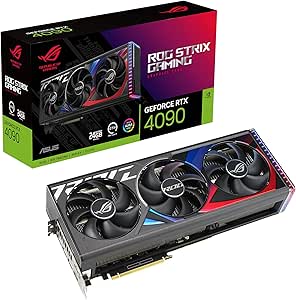 | Best for 4K Workhorse Builds | GPU: NVIDIA GeForce RTX 4090 | Memory: 24 GB GDDR6X | Interface: PCI Express 4.0 | VIEW ON AMAZON | See Our Full Breakdown |
| premium graphics cards for gaming rig | Cooling | Memory | GPU | Boost clock |
|---|---|---|---|---|
| NVIDIA GeForce RTX 3090 Founde | — | — | — | — |
| ASUS TUF Gaming GeForce RTX 50 | 3 Axial-tech fans; Quiet and Performance BIOS modes | 32GB GDDR7 | — | Up to 2580 MHz in OC mode; 2550 MHz default |
| NVIDIA GeForce RTX 4080 16GB G | — | — | NVIDIA GeForce RTX 4080 | 2.51 GHz |
| NVIDIA GeForce RTX 5080 Founde | — | — | — | — |
| MSI Gaming RTX 5080 16G SUPRIM | Liquid | — | — | Up to 2760 MHz |
| ASUS TUF Gaming GeForce RTX 50 | Three Axial-tech fans; phase-change GPU thermal pad | 16GB GDDR7 | NVIDIA GeForce RTX 5080 | 2730 MHz OC mode; 2700 MHz default mode |
| ASUS TUF Gaming GeForce RTX 50 | Three Axial-tech fans; phase-change GPU thermal pad | 12GB GDDR7 | NVIDIA GeForce RTX 5070 | 2640 MHz OC mode; 2610 MHz default mode |
| GIGABYTE GeForce RTX 5080 Gami | WINDFORCE, three fans | 16GB GDDR7 | NVIDIA GeForce RTX 5080 | — |
| ASUS Prime Radeon RX 9070 XT O | Axial-tech fans; phase-change GPU thermal pad | 16GB GDDR6 | AMD Radeon RX 9070 XT | Up to 3030 MHz OC mode; up to 3010 MHz default mode |
| GIGABYTE Radeon RX 9070 XT Gam | WINDFORCE with Hawk fans | 16GB GDDR6 | AMD Radeon RX 9070 XT | — |
| ASUS ROG Strix GeForce RTX 409 | 3x Axial-tech fans, vapor chamber | 24 GB GDDR6X | NVIDIA GeForce RTX 4090 | — |
More Details on Our Top Picks
NVIDIA GeForce RTX 3090 Founders Edition Graphics Card
The RTX 3090 Founders Edition earns its place for buyers who need unusually large graphics memory as well as high-end gaming capability. Its 24GB of GDDR6X gives demanding games, high-resolution assets, and creative workloads more memory headroom than the RTX 4080’s 16GB. That capacity does not make it the strongest choice for every gaming rig: the newer RTX 5090 brings 32GB of GDDR7 and Blackwell features, while this card’s older generation and high power draw make it a less compelling pick for a gaming-first build. The 384-bit interface and HDMI 2.1 output suit bandwidth-heavy setups and modern displays, but the large card needs a roomy case and robust power planning. I’d choose it when memory capacity is the priority and the rest of the system can accommodate its demands.
Pros:- 24GB of GDDR6X provides substantial memory capacity for high-resolution gaming and creative workloads.
- 384-bit memory interface supports high memory bandwidth.
- HDMI 2.1 and three DisplayPort 1.4a outputs support modern multi-display setups.
- Three-year NVIDIA India manufacturer warranty.
Cons:- High power consumption calls for careful power supply and system planning.
- Large physical size can rule out smaller PC cases.
- Older generation than the Blackwell-based RTX 5080 and RTX 5090 options in this roundup.
Best for: Enthusiast gamers and creators who need 24GB of graphics memory for high-resolution assets, demanding games, or mixed gaming and creative workloads.
Not ideal for: Builders seeking the newest architecture, lower power demands, or a compact card; the RTX 5090 offers newer features, and this Founders Edition is large and power hungry.
- Chipset:NVIDIA GeForce RTX 3090
- Video memory:24GB GDDR6X
- Memory interface:384-bit
- Display outputs:3x DisplayPort 1.4a, 1x HDMI 2.1
- Warranty:3 years (NVIDIA India)
- Cooling design:Founders Edition
Our verdict“Choose the RTX 3090 Founders Edition if 24GB of graphics memory matters more to your build than newer-generation features and power efficiency.”
ASUS TUF Gaming GeForce RTX 5090 32GB GDDR7 OC Edition Graphics Card
For a buyer building around the highest-end gaming hardware, the ASUS TUF RTX 5090 OC is the most feature-rich option in this five-card batch. Its 32GB of GDDR7, Blackwell GPU, and DLSS 4 support give it more memory and newer-generation tools than either RTX 5080 entry. The dual BIOS is a practical bonus: I can favor the Performance profile for demanding sessions or Quiet for lighter play. Its 2.5-slot design is relatively restrained for this class, though the card still measures 13.7 inches, so case clearance remains a real constraint. The RTX 4080 is a less demanding alternative for 4K gaming, while the RTX 5090 makes sense for buyers who want more headroom and accept the larger build requirements. It also requires a compatible PCIe x16 desktop system.
Pros:- 32GB of GDDR7 provides the highest stated graphics memory capacity in this batch.
- Blackwell architecture and DLSS 4 support newer gaming features than the RTX 3090 and RTX 4080.
- Quiet and Performance BIOS modes let builders tune the card for light use or demanding play.
- Three DisplayPort 2.1a and two HDMI 2.1b outputs offer broad display connectivity.
Cons:- 13.7-inch length can exceed the clearance of many cases.
- Requires a desktop with a compatible PCIe x16 slot.
- Its high-end feature set is more than many gaming builds need compared with the RTX 5080 options.
Best for: Enthusiasts assembling a spacious, high-end desktop who want 32GB of next-generation graphics memory, DLSS 4, and selectable cooling profiles.
Not ideal for: Compact-PC builders or buyers whose gaming needs are met by an RTX 5080 or RTX 4080; its 13.7-inch length and PCIe x16 requirement narrow system compatibility.
- Graphics processor:NVIDIA GeForce RTX 5090
- Memory:32GB GDDR7
- Boost clock:Up to 2580 MHz in OC mode; 2550 MHz default
- AI performance:772 AI TOPS
- Interface:PCI Express x16; PCIe 5.0
- Video outputs:3x DisplayPort 2.1a, 2x HDMI 2.1b
- Cooling:3 Axial-tech fans; Quiet and Performance BIOS modes
- Maximum resolution:7680 x 4320 pixels
- Dimensions:13.7 x 5.7 inches
Our verdict“Pick this TUF RTX 5090 for a spacious flagship rig where maximum memory capacity and newer gaming features matter more than broad case compatibility.”
NVIDIA GeForce RTX 4080 16GB GDDR6X Graphics Card
The RTX 4080 suits buyers who want a high-end card for 4K gaming and ray tracing without stepping up to the RTX 5090’s 32GB memory configuration. Its 16GB of GDDR6X is less than the RTX 3090’s 24GB, but the stated 2.51 GHz boost clock and 9,728 CUDA cores make this a capable option for a gaming-focused system. It also lists compatibility with PCIe 3.0 systems, which may help owners keep an established platform in service. The tradeoff is that it lacks the newer Blackwell and DLSS 4 details listed for the RTX 5080 Founders Edition and ASUS TUF RTX 5090. The product data does not identify exact output counts or cooling behavior, so I would verify the card’s specific board and case fit before choosing it over a better-documented alternative.
Pros:- 16GB of GDDR6X supports demanding gaming workloads.
- Supports resolutions up to 3840 × 2160.
- Dedicated ray tracing, DirectX 12 Ultimate, and Vulkan RT support.
- Listed as compatible with PCIe 3.0 systems as well as PCIe 4.0.
Cons:- Has less graphics memory than the RTX 3090 Founders Edition and RTX 5090.
- Does not list the Blackwell architecture or DLSS 4 features stated for the RTX 5080 and RTX 5090 entries.
- Exact display output configuration and cooling details are not provided.
Best for: 4K gamers upgrading an established PCIe 3.0 or PCIe 4.0 desktop who want ray tracing support and 16GB of graphics memory.
Not ideal for: Buyers who want Blackwell and DLSS 4 features, more than 16GB of memory, or confirmed cooler and output details before selecting a card.
- GPU:NVIDIA GeForce RTX 4080
- Graphics memory:16GB GDDR6X
- Boost clock:2.51 GHz
- CUDA cores:9,728
- Interface:PCI Express 4.0; compatible with PCI Express 3.0
- Video outputs:DisplayPort, HDMI
- Maximum resolution:3840 × 2160
- Number of fans:2
- Dimensions:11.97 × 4.84 inches
Our verdict“Choose the RTX 4080 if you want a 16GB 4K gaming card for an existing PCIe system and do not need the newer features listed for the RTX 5080.”
NVIDIA GeForce RTX 5080 Founders Edition
The RTX 5080 Founders Edition is the direct choice for gamers who want NVIDIA’s Blackwell feature set without selecting the RTX 5090. Its listed Tensor Cores, FP4, and DLSS 4 add AI-based rendering tools, while Reflex 2 with Frame Warp targets lower perceived latency and neural rendering extends its ray tracing approach. That makes its appeal more about current graphics and responsiveness features than memory capacity: the product data does not state memory size, clock speed, outputs, or dimensions. By comparison, the MSI RTX 5080 SUPRIM Liquid supplies concrete 16GB GDDR7 and a 2760 MHz boost clock, plus liquid cooling. I’d favor the Founders Edition when its listed NVIDIA technologies are the deciding factor, but would verify the board specifications and case fit before planning a build.
Pros:- Blackwell architecture brings a newer feature set than the RTX 4080.
- DLSS 4 and Tensor Core features support AI-based rendering tools.
- Reflex 2 with Frame Warp targets responsive gameplay.
- Full ray tracing with neural rendering is listed.
Cons:- Memory capacity and type are not stated in the provided product data.
- The listing does not specify clock speed, display outputs, cooling, or dimensions.
- Compared with the MSI RTX 5080 SUPRIM Liquid, the available information gives less detail for planning a build.
Best for: Gamers prioritizing Blackwell, DLSS 4, Reflex 2 with Frame Warp, and neural rendering in a premium NVIDIA-based rig.
Not ideal for: Builders who need confirmed memory capacity, clock speed, port layout, cooling type, or physical dimensions before choosing a card.
- Architecture:NVIDIA Blackwell
- AI features:Tensor Cores, FP4, DLSS 4
- Latency technology:NVIDIA Reflex 2 with Frame Warp
- Graphics technology:Full ray tracing with neural rendering
- Product type:Video card
- Product series:NVIDIA GeForce RTX 5080
Our verdict“Choose the RTX 5080 Founders Edition if its listed Blackwell gaming features are your priority and you can confirm the remaining board specifications before buying.”
MSI Gaming RTX 5080 16G SUPRIM Liquid SOC Graphics Card
The MSI RTX 5080 SUPRIM Liquid SOC stands apart from the RTX 5080 Founders Edition through its liquid cooling and stated 2760 MHz boost clock. That combination makes it the more specialized pick for a builder who wants a liquid-cooled premium card and is prepared to plan the installation around its cooling hardware. It keeps 16GB of GDDR7 on a 256-bit interface, while the RTX 5090 TUF offers 32GB and newer flagship positioning for buyers focused on maximum memory capacity. The MSI’s DisplayPort 2.1a and HDMI 2.1b connections and stated 8K maximum resolution suit advanced displays. The tradeoff is added case-space and installation planning for the liquid setup; this is less straightforward than choosing a conventional card. I’d pick it for a deliberately designed liquid-cooled gaming rig, not a simple drop-in upgrade.
Pros:- Liquid cooling differentiates it from the air-cooled style of the RTX 5080 Founders Edition.
- 16GB of GDDR7 on a 256-bit interface.
- Stated boost clock up to 2760 MHz.
- Three DisplayPort 2.1a outputs and one HDMI 2.1b output support modern displays.
Cons:- Liquid cooling can require additional case space and installation planning.
- 16GB memory is half the capacity listed for the RTX 5090 TUF.
- Specialized cooling makes it a less direct fit for a basic upgrade than an air-cooled card.
Best for: PC builders designing a liquid-cooled gaming rig who want an RTX 5080 with 16GB GDDR7, a stated 2760 MHz boost clock, and current display outputs.
Not ideal for: Buyers seeking a simple air-cooled replacement or maximum memory capacity; the liquid setup adds installation needs, and the RTX 5090 TUF lists 32GB.
- Chipset:NVIDIA GeForce RTX 5080
- Architecture:NVIDIA Blackwell
- Video memory:16GB GDDR7
- Memory interface:256-bit
- Boost clock:Up to 2760 MHz
- Cooling:Liquid
- Display outputs:3x DisplayPort 2.1a, 1x HDMI 2.1b
- Maximum resolution:7680 x 4320
Our verdict“Choose the MSI SUPRIM Liquid if your gaming rig is planned around liquid cooling and you want an RTX 5080 with a high stated boost clock.”
ASUS TUF Gaming GeForce RTX 5080 16GB GDDR7 OC Edition Graphics Card
The ASUS TUF RTX 5080 suits a premium gaming rig built around sustained high-resolution play and a roomy case. Its 16GB of GDDR7, Blackwell architecture, and DLSS 4 put it in the same performance class as the GIGABYTE RTX 5080 Gaming OC, while the phase-change thermal pad and three Axial-tech fans focus on heat management over long sessions. A protective PCB coating and included support bracket add practical reinforcement for a large, heavy card. The tradeoff is the build it demands: at 3.6 slots and 13.7 inches, it takes more space than the slimmer ASUS Prime RX 9070 XT, and it calls for an 850W supply with a 16-pin connector. Choose it for a robust NVIDIA setup; skip it if your case or power supply is already tight.
Pros:- 16GB GDDR7 and NVIDIA Blackwell with DLSS 4
- Three Axial-tech fans and a phase-change GPU thermal pad
- Protective PCB coating and included GPU support bracket
- Three DisplayPort 2.1a and two HDMI 2.1b outputs
Cons:- Its 3.6-slot thickness and 13.7-inch length rule out many smaller cases
- Requires an 850W minimum power supply and 16-pin connector
Best for: Builders with a large case and 850W-or-higher power supply who want an RTX 5080 with cooling and hardware reinforcement for extended gaming sessions.
Not ideal for: Compact-case builders or anyone without a compatible 16-pin power lead and room for a 3.6-slot, 13.7-inch card.
- GPU:NVIDIA GeForce RTX 5080
- Architecture:NVIDIA Blackwell
- Memory:16GB GDDR7
- Boost clock:2730 MHz OC mode; 2700 MHz default mode
- Cooling:Three Axial-tech fans; phase-change GPU thermal pad
- Power requirement:850W minimum; 16-pin 12V-2×6 (12VHPWR) connector
- Dimensions and thickness:13.7 x 5.7 inches; 3.6 slots
- Video outputs:3 x DisplayPort 2.1a; 2 x HDMI 2.1b
Our verdict“Choose the ASUS TUF RTX 5080 if your large gaming rig can accommodate its space and power demands and you want a reinforced, heavily cooled NVIDIA card.”
ASUS TUF Gaming GeForce RTX 5070 12GB GDDR7 OC Edition Graphics Card
This ASUS TUF RTX 5070 makes sense for a premium rig that needs current NVIDIA features without stepping up to the RTX 5080 cards elsewhere in this roundup. Blackwell and DLSS 4 bring the newer feature set, and its three-fan cooler with a phase-change thermal pad is designed to manage heat under sustained loads. The TUF protective details also suit a build intended to stay in service for years. Compared with the ASUS TUF RTX 5080, this card has 12GB rather than 16GB of memory, so it offers less headroom for demanding high-resolution textures. Its 13-inch length and 3.125-slot design still call for a careful case check; it is a lower tier, not a compact card. Pick it when NVIDIA features matter more than maximum memory capacity.
Pros:- Blackwell architecture with DLSS 4 support
- Three Axial-tech fans and phase-change GPU thermal pad
- Protective PCB coating and military-grade components
- Three DisplayPort 2.1a and two HDMI 2.1b outputs
Cons:- 12GB GDDR7 provides less memory headroom than the 16GB RTX 5080 options
- 3.125-slot thickness and 13-inch length limit case compatibility
Best for: NVIDIA-focused builders seeking Blackwell and DLSS 4 for a high-end gaming PC who do not need the 16GB capacity of an RTX 5080.
Not ideal for: Gamers targeting demanding high-resolution texture workloads or compact cases that cannot fit a 13-inch, 3.125-slot card.
- GPU:NVIDIA GeForce RTX 5070
- Memory:12GB GDDR7
- Boost clock:2640 MHz OC mode; 2610 MHz default mode
- Interface:PCIe 5.0, PCI-Express x16
- Cooling:Three Axial-tech fans; phase-change GPU thermal pad
- Form factor:3.125 slots
- Dimensions:13 x 5.5 inches
- Video outputs:3 x DisplayPort 2.1a; 2 x HDMI 2.1b
Our verdict“Pick this TUF RTX 5070 if you want current NVIDIA features in a premium build and can accept 12GB of memory and a large cooler.”
GIGABYTE GeForce RTX 5080 Gaming OC 16G Graphics Card (GV-N5080GAMING OC-16GD)
The GIGABYTE RTX 5080 Gaming OC offers another route to an RTX 5080 with 16GB of GDDR7 for a premium gaming rig. Its Blackwell GPU, DLSS 4 support, and enhanced RT and Tensor Cores align it with the ASUS TUF RTX 5080 for ray tracing and AI-assisted features. GIGABYTE’s WINDFORCE triple-fan cooler gives it a clear cooling focus, while its 13.46-inch length is slightly shorter than the ASUS TUF’s listed 13.7 inches. That small difference may help with clearance, but this remains a large card and still needs careful case planning. The listed data does not specify a power requirement or a detailed output count, so check those against the intended build. Choose it when you want the RTX 5080 tier in GIGABYTE’s cooling design.
Pros:- RTX 5080 GPU with 16GB GDDR7 on a 256-bit interface
- Blackwell architecture with DLSS 4 and enhanced RT and Tensor Cores
- WINDFORCE triple-fan cooling
- PCIe 5.0 interface
Cons:- 13.46-inch length and 5.59-inch width require case clearance
- Supplied product data does not state a power requirement or detailed video output count
Best for: Builders choosing an RTX 5080 for a spacious gaming rig who prefer GIGABYTE’s WINDFORCE cooler and want 16GB of GDDR7.
Not ideal for: Small-case builders or buyers who need confirmed power and output details before selecting a card.
- GPU:NVIDIA GeForce RTX 5080
- Memory:16GB GDDR7
- Memory interface:256-bit
- GPU clock speed:2.73 GHz
- Memory clock speed:30000 MHz
- Interface:PCIe 5.0, PCI-Express x16
- Cooling:WINDFORCE, three fans
- Dimensions:13.46 x 5.59 inches
Our verdict“Choose the GIGABYTE RTX 5080 Gaming OC for a spacious rig that wants 16GB Blackwell performance and WINDFORCE cooling.”
ASUS Prime Radeon RX 9070 XT OC Edition 16GB Graphics Card
The ASUS Prime RX 9070 XT stands out among these premium cards for pairing 16GB of GDDR6 with a 2.5-slot design. That makes it easier to fit than either ASUS TUF RTX 5080, which occupies 3.6 slots, or the TUF RTX 5070 at 3.125 slots. Its axial-tech fans, phase-change thermal pad, and dual BIOS with Quiet and Performance profiles give builders control over cooling behavior without requiring a thicker cooler. Compared with GIGABYTE’s RX 9070 XT Gaming OC, the Prime lists a narrower 2.5-slot format and quiet-mode features, while the GIGABYTE card lists RGB lighting. The tradeoff is that this is an AMD Radeon card with GDDR6 rather than the Blackwell and GDDR7 combination found in the NVIDIA options. Case clearance still needs checking.
Pros:- 16GB GDDR6 memory on an RX 9070 XT
- 2.5-slot design is slimmer than the TUF RTX cards in this batch
- Dual BIOS provides Quiet and Performance profiles
- 0dB technology supports quiet operation during light gaming
Cons:- Does not offer NVIDIA Blackwell or DLSS 4 features
- Still needs 2.5 slots of clearance in the case
Best for: AMD-focused builders who want 16GB of memory, selectable quiet or performance BIOS profiles, and a less bulky card than the RTX 5080 options.
Not ideal for: Buyers committed to NVIDIA Blackwell features or anyone who assumes a 2.5-slot card will fit without checking case clearance.
- GPU:AMD Radeon RX 9070 XT
- Memory:16GB GDDR6
- Edition:OC
- Boost clock:Up to 3030 MHz OC mode; up to 3010 MHz default mode
- Game clock:Up to 2480 MHz OC mode; up to 2460 MHz default mode
- Slot design:2.5 slots
- Cooling:Axial-tech fans; phase-change GPU thermal pad
- BIOS:Dual BIOS with Quiet and Performance profiles
Our verdict“Choose the ASUS Prime RX 9070 XT if you want an AMD card with 16GB memory and quiet-mode flexibility in a less bulky gaming build.”
GIGABYTE Radeon RX 9070 XT Gaming OC 16G Graphics Card, 16GB GDDR6
For a premium AMD gaming rig where the card’s look matters alongside its GPU, the GIGABYTE RX 9070 XT Gaming OC brings RGB lighting and WINDFORCE cooling with Hawk fans. It shares the RX 9070 XT and 16GB GDDR6 foundation of the ASUS Prime RX 9070 XT, so the choice between them is less about memory capacity and more about fit and listed extras. GIGABYTE’s card measures 11.34 inches long, shorter than the Prime’s listed 2.5-slot design suggests, though the Prime provides dual BIOS profiles and 0dB operation that favor quieter builds. This model’s supplied data does not list a thickness or power requirement, so confirm those for your case and supply. It is a distinctive AMD option, but its RGB appeal may add little in a closed case.
Pros:- RX 9070 XT with 16GB GDDR6
- WINDFORCE cooling system with Hawk fans
- RGB lighting for a visible showcase build
- Listed length of 11.34 inches
Cons:- Product data does not specify card thickness or power supply requirement
- Lacks the listed dual BIOS and 0dB quiet operation features of the ASUS Prime RX 9070 XT
Best for: AMD builders with a windowed gaming case who want an RX 9070 XT, triple-fan cooling, and RGB lighting.
Not ideal for: Quiet-build shoppers who prioritize selectable silent profiles, or anyone needing confirmed slot thickness and power details before checking compatibility.
- GPU:AMD Radeon RX 9070 XT
- Memory:16GB GDDR6
- GPU clock speed:3060 MHz
- Memory clock speed:2600 GHz, as listed
- Interface:PCIe x16
- Cooling:WINDFORCE with Hawk fans
- Maximum display resolution:7680 x 4320
- Dimensions:11.34 x 5.2 inches
Our verdict“Choose the GIGABYTE RX 9070 XT Gaming OC if you want an RGB-equipped AMD card for a windowed rig and can verify its fit and power needs.”
ASUS ROG Strix GeForce RTX 4090 Gaming Graphics Card
Among premium cards in this roundup, the ROG Strix RTX 4090 stands out as the raw performance anchor of a previous generation that still outmuscles newer mid-tier options. Compared with the ASUS TUF Gaming RTX 5070, its 24GB of GDDR6X memory gives it staying power for 4K ultra settings and heavy creative workloads, where 12GB cards start to choke. Where the NVIDIA RTX 4080 trades blows in raster performance, the 4090 pulls ahead decisively once ray tracing and AI upscaling come into play. The vapor chamber and 23% higher airflow from the Axial-tech fans translate directly into cooler, quieter sustained sessions. The tradeoff is physical: a 3.5-slot, 14-inch-long design demands a spacious case and a serious power supply.
Pros:- 24GB GDDR6X memory handles 4K ultra textures and heavy creative workloads that starve smaller cards
- Vapor chamber plus enlarged Axial-tech fans deliver cooler, quieter sustained performance
- Roughly 2x the performance and power efficiency of the prior generation, with excellent ray tracing via 3rd-gen RT Cores
- Robust diecast construction backed by a 3-year warranty
Cons:- Very large 3.5-slot, 14-inch design rules out most small and mid-sized cases
- High power requirements mean a premium PSU is mandatory
- Newer cards in the lineup, like the RTX 5080, offer better efficiency per watt and newer features
Best for: Enthusiasts building large ATX rigs who want maximum 4K gaming and content-creation headroom without paying current-generation flagship pricing
Not ideal for: Owners of compact or mid-tower cases — the 3.5-slot, 14-inch card simply will not fit, and modest PSUs cannot feed it
- GPU:NVIDIA GeForce RTX 4090
- Memory:24 GB GDDR6X
- Interface:PCI Express 4.0
- Memory Clock Speed:2520 MHz
- Video Outputs:DisplayPort 1.4a, HDMI 2.1a
- Form Factor:3.5-slot
- Dimensions (LxW):14.07″ x 5.9″
- Cooling:3x Axial-tech fans, vapor chamber
- Warranty:3 years
Our verdict“This is the pick for builders with a big case and big power supply who want proven flagship-grade 4K performance at a saner price than the newest flagships.”

How We Picked
I evaluated each card through the lens of a premium gaming build: real-world frame rates at 1440p and 4K, cooling and acoustic performance under sustained load, build quality, power efficiency, and feature support including ray tracing, upscaling (DLSS 4 and FSR), and VRAM headroom. Because these are enthusiast cards, I also weighed practical installation factors — card length, slot width, radiator requirements, and PSU demands — since a card that doesn’t fit or starves your power supply is a bad buy at any performance level.
The ranking logic prioritizes current-generation architectures first, since DLSS 4 multi-frame generation and improved efficiency give the RTX 50-series and RX 9000-series a genuine longevity advantage. Within each tier, better-cooled partner cards rank above reference models, and value-per-frame determined where the AMD options landed relative to their NVIDIA counterparts. Older cards like the RTX 4090 and 3090 were judged on whether they still earn their price in 2026, not on their launch reputation.
| premium graphics cards for gaming rig | Interface | GPU |
|---|---|---|
| NVIDIA GeForce RTX 3090 Founde | — | — |
| ASUS TUF Gaming GeForce RTX 50 | PCI Express x16; PCIe 5.0 | — |
| NVIDIA GeForce RTX 4080 16GB G | PCI Express 4.0; compatible with PCI Express 3.0 | NVIDIA GeForce RTX 4080 |
| NVIDIA GeForce RTX 5080 Founde | — | — |
| MSI Gaming RTX 5080 16G SUPRIM | — | — |
| ASUS TUF Gaming GeForce RTX 50 | — | NVIDIA GeForce RTX 5080 |
| ASUS TUF Gaming GeForce RTX 50 | PCIe 5.0, PCI-Express x16 | NVIDIA GeForce RTX 5070 |
| GIGABYTE GeForce RTX 5080 Gami | PCIe 5.0, PCI-Express x16 | NVIDIA GeForce RTX 5080 |
| ASUS Prime Radeon RX 9070 XT O | — | AMD Radeon RX 9070 XT |
| GIGABYTE Radeon RX 9070 XT Gam | PCIe x16 | AMD Radeon RX 9070 XT |
| ASUS ROG Strix GeForce RTX 409 | PCI Express 4.0 | NVIDIA GeForce RTX 4090 |
Factors to Consider When Choosing Premium Graphics Cards For Gaming Rigs
Before committing to a premium card, it helps to understand the factors that separate a satisfying purchase from an expensive regret. These are the considerations I’d weigh before clicking buy.Match the Card to Your Resolution, Not Your Ambitions
The most common mistake in this category is overbuying or underbuying relative to your monitor. A 1440p/165Hz display is well served by an RTX 5070 or RX 9070 XT, and pairing it with a 5090 wastes hundreds of dollars on frames you’ll never see. Conversely, a 4K/240Hz OLED panel genuinely needs the horsepower of a 5080 or 5090 to stay above refresh rate in demanding titles. Start from your display’s resolution and refresh rate, then pick the cheapest card that saturates it — resolution-first planning saves more money than any sale. Also remember that upscalers like DLSS 4 change the math: a card that renders at 1440p internally can output convincing 4K, which shifts value toward NVIDIA for high-resolution setups.
Power Supply and Case Fit Are Non-Negotiable
Premium GPUs in 2026 draw between 250W and 575W, and that dictates everything upstream of the card. A 5090 realistically wants an 850W to 1000W PSU with a 12V-2×6 connector, while a 5070 or 9070 XT is comfortable on a quality 750W unit. Physical dimensions matter just as much: many partner cards exceed 330mm in length and occupy 3.5 slots, which simply won’t fit mid-tower cases designed a few years ago. Measure your clearance — including space for cable bends at the card’s edge — before ordering, and check whether your case can host a 240mm radiator if you’re eyeing the liquid-cooled SUPRIM. Skimping on PSU headroom causes crashes under transient loads, even when the wattage math looks fine on paper.
VRAM Is a Longevity Investment
Memory capacity has become the single best predictor of how gracefully a card ages. Modern AAA titles with high-resolution texture packs already push past 12GB at 4K, and that trend is accelerating. The 5070’s 12GB is workable today but is the most likely spec to feel limiting within two or three years, whereas the 5090’s 32GB and the 16GB on the 5080 and 9070 XT have real headroom. If you keep cards for five-plus years, buying more VRAM than you currently need is one of the few upgrades that pays off. If you upgrade every two generations, this matters far less, and you can safely prioritize raw frame rate instead.
Ray Tracing and Upscaling Ecosystems Still Differ
AMD has closed much of the rasterization gap, but NVIDIA’s ecosystem remains stronger if you care about path tracing and heavy ray tracing workloads. DLSS 4’s multi-frame generation can double perceived frame rates in supported titles, and it’s exclusive to the RTX 50-series — a genuine reason to choose a 5080 over a similarly priced RX 9070 XT if you play games that support it. On the other hand, if you primarily play competitive or esports titles where upscaling and RT are off, AMD’s rasterization-per-dollar wins outright. Check the specific games you actually play rather than benchmark averages, because feature support varies title by title and that’s where the real difference shows up.
Cooling Design Affects More Than Temperature
Two cards with identical chips can behave very differently in a real build. Larger triple-fan coolers like the ASUS TUF and GIGABYTE Gaming OC designs run quieter and hold boost clocks longer, while compact Founders Edition cards trade some thermal headroom for case compatibility. Liquid-cooled options such as the SUPRIM Liquid move heat directly out of the case entirely, which helps whole-system thermals but adds pump noise and radiator placement constraints. Pay attention to cooling architecture as a buying criterion, not a footnote — it determines noise, sustained performance, and how much heat your other components absorb. Also verify the card’s default fan-stop behavior if a silent idle matters to you.
When Older Flagships Are Still Worth It
The RTX 4090, 4080, and 3090 can still deliver excellent frame rates, but the math in 2026 is unforgiving at original prices. The 5080 matches or exceeds 4090 performance while drawing far less power, and the 3090’s 24GB of VRAM — its one remaining advantage — no longer compensates for its power hunger and aging feature set. The case for older flagships exists only at a steep discount, or when you specifically need CUDA cores for content work alongside gaming. New-generation efficiency and upscaling support usually outweigh raw legacy specs, so treat last-gen cards as opportunistic buys, not default choices.
Frequently Asked Questions
Is the RTX 5090 overkill for 1440p gaming?
For most 1440p gamers, yes. The 5090 is built for 4K at high refresh rates and compute-heavy workloads, and a 1440p monitor can’t display the extra frames it produces — a 5070 or RX 9070 XT will feel nearly identical in games at a fraction of the cost and power draw. The exceptions are players planning a monitor upgrade to 4K within a year, or those who also run AI or content-creation workloads that benefit from 32GB of VRAM. If neither applies, redirecting the budget toward a better monitor or CPU will improve your experience more than the flagship GPU will.
Should I buy the RTX 5080 or the RX 9070 XT?
This comes down to which features your games use. The 5080 is faster overall and supports DLSS 4 multi-frame generation, which is transformative in supported titles and a real advantage for 4K high-refresh gaming. The 9070 XT counters with better price-to-performance in raw rasterization and strong 16GB VRAM, making it the smarter buy if you play mostly competitive titles or games without heavy ray tracing. If your library includes recent AAA releases with path tracing, the NVIDIA option justifies its premium. If it doesn’t, the 9070 XT delivers most of the experience for considerably less money.
Do I need a 1000W power supply for a premium card?
Only for the very top of the stack. A 5090 with its 575W draw genuinely warrants 1000W to handle transient spikes safely. The 5080 and 9070 XT are comfortable on a quality 850W unit, and the 5070 works fine on 750W. What matters as much as wattage is connector quality: modern cards need a native 12V-2×6 cable or the included adapter, and cheap daisy-chained adapters have caused real problems at these power levels. PSU quality and headroom matter more than the number on the box, so a well-built 850W beats a budget 1000W every time.
Is a liquid-cooled GPU like the MSI SUPRIM Liquid worth the hassle?
It depends on your case and priorities. The SUPRIM Liquid SOC sustains higher overclocks and dumps heat outside the case rather than into it, which helps CPU and memory temperatures too — genuinely valuable in small or airflow-limited builds. The tradeoffs are real: you need a free 240mm radiator mount, you add pump complexity to a component that otherwise has no moving failure points beyond fans, and resale or transfer to a new build is more involved. If you’re an enthusiast chasing maximum clocks, it makes sense. If you want plug-and-play simplicity, an air-cooled TUF or Gaming OC card delivers 95% of the performance with none of the plumbing.
How much does DLSS 4 multi-frame generation actually matter?
In supported titles, it can be the difference between 60fps and 120-plus fps perceived smoothness, particularly at 4K where raw rendering is expensive. It’s exclusive to RTX 50-series cards, which is a genuine differentiator when choosing between a 5080 and a last-gen 4090 or an AMD card. The caveats: it works best when base frame rates are already above 60fps, it adds a small latency penalty that competitive players may notice, and game support, while growing fast, isn’t universal. For single-player AAA gaming at 4K, it’s a major feature. For esports players running high frame rates natively, it’s largely irrelevant.
Conclusion
After comparing all 11 cards, the right choice maps cleanly to buyer type. For best overall, the ASUS TUF Gaming RTX 5090 OC Edition stands alone in performance and cooling — if your case and PSU can support it. For best value, the ASUS Prime RX 9070 XT delivers premium frame rates without flagship pricing, with the GIGABYTE 9070 XT a near-tie if you prefer its cooler design. For best premium among reasonable builds, the RTX 5080 Founders Edition offers flagship-class performance in a compact two-slot card, while the MSI SUPRIM Liquid SOC is the enthusiast pick for overclockers. For beginners building a first premium rig, the ASUS TUF RTX 5070 is the easiest fit — modest power demands, compact size, and current-generation features. And for compact builds specifically, the Founders Edition 5080 beats everything else here. Skip the RTX 3090 and 4080 unless heavily discounted; the 4090 remains a contender only for CUDA-dependent workloads. Whatever you choose, buy for the monitor you own and the case you’re building into — that discipline separates a great rig from an expensive mistake.
Fall Picks

eufy Security Essential 7-Piece Alarm System with HomeBase Mini
As an affiliate, we earn on qualifying purchases.