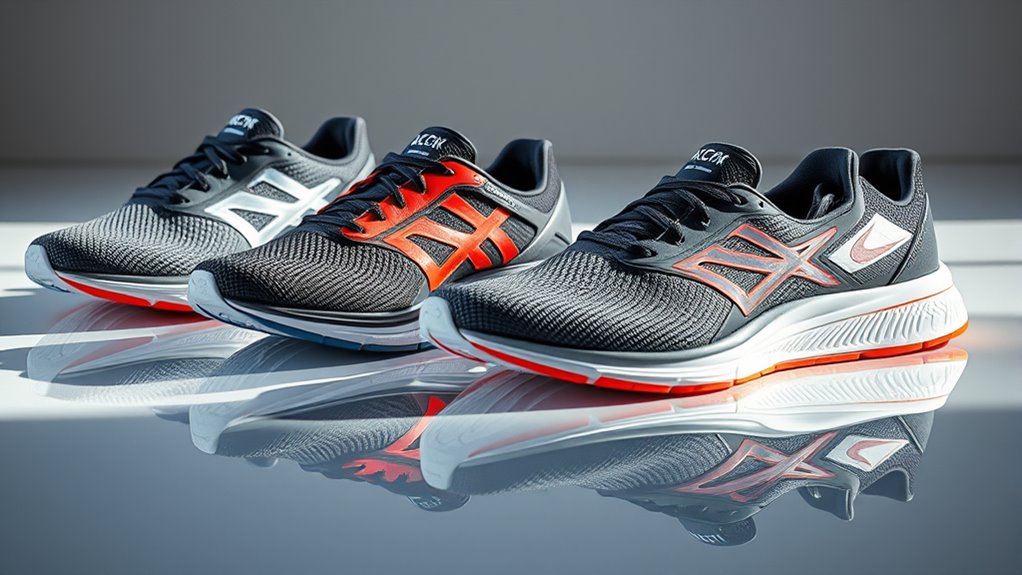

High-end running shoes can prioritize race-day speed, everyday comfort, stability, or trail protection, so the right choice depends on where and how you run. I rank the Nike Alphafly 3 as the best overall for road racers seeking a highly propulsive carbon-plated shoe, while the ASICS METASPEED Edge Tokyo and La Sportiva Prodigio Pro stand out for cadence-focused racing and demanding trails. The main tradeoff is specialization: race shoes can feel less suited to daily miles, while cushioned or supportive trainers may give up some speed. This lineup also includes more accessible training options, so a premium race shoe is not the only route to a capable setup. Read on for the full comparison, buying advice, and picks by runner type.

Get cleaning gear delivered free with Prime
- Fast, free delivery on millions of items
- Prime Video, Amazon Music and more included
- Member-only deals all year
Complete the kit


Key Takeaways
- The Alphafly 3 leads for road racing when propulsion and race-day performance matter more than versatility for everyday training.
- The two ASICS METASPEED models serve different racing styles: Edge Tokyo is geared toward cadence-focused runners, while SKY Tokyo suits runners who gain speed by lengthening their stride.
- Trail choices depend on conditions: the Prodigio Pro is the performance-oriented option, while the Cascadia 19 GTX adds waterproof coverage for wet and rough routes.
- Support and neutral cushioning are different priorities: the Adrenaline GTS 25 offers structured guidance, while shoes such as the Cloudmonster 2 emphasize a more energetic ride.
- The lineup spans race shoes and everyday trainers; the Anthem 8, Winflo 12, Revel Max, and Escalante 4 are more training-focused alternatives to carbon-plated racers.
| La Sportiva Men’s Prodigio Pro Trail Running Shoes |  | Best for Technical Ultrarunning | Weight: 255 g / 8.9 oz per shoe | Midsole: Xflow nitrogen-infused supercritical foam | Outsole: FriXion XF 2.0 rubber | VIEW ON AMAZON | See Our Full Breakdown |
| Brooks Men’s Cascadia 19 GTX Waterproof Trail Running Shoe |  | Best for Wet-Trail Protection | Waterproof technology: GORE-TEX Invisible Fit | Cushioning: DNA LOFT v3 | Outsole: TrailTack Green rubber | VIEW ON AMAZON | See Our Full Breakdown |
| Brooks Men’s Adrenaline GTS 25 Running Shoe |  | Best for Guided Road Support | Support system: GuideRails | Cushioning: Nitrogen-infused DNA LOFT v3 | Upper: Breathable engineered mesh | VIEW ON AMAZON | See Our Full Breakdown |
| Nike Men’s Air Winflo 12 Road Running Shoes |  | Best for Basic Road-Running Needs | Brand: Nike | Model: Air Winflo 12 | Intended use: Road running | VIEW ON AMAZON | See Our Full Breakdown |
| Nike Alphafly 3 Men’s Road Racing Shoes |  | Best for Marathon Racing | Weight: 218 g (men’s size 43) | Heel-to-toe drop: 8 mm | Midsole foam: ZoomX foam | VIEW ON AMAZON | See Our Full Breakdown |
| ASICS METASPEED Edge Tokyo Running Shoes |  | Best for Race-Day Speed | Upper: MOTION WRAP 3.0 technical engineered weave | Cushioning: FF LEAP and FF TURBO PLUS foam | Plate: Carbon plate | VIEW ON AMAZON | See Our Full Breakdown |
| Brooks Men’s Adrenaline GTS 25 Running Shoe |  | Best for Supportive Daily Miles | Support system: GuideRails | Cushioning: Nitrogen-infused DNA LOFT v3 | Upper: Breathable engineered mesh | VIEW ON AMAZON | See Our Full Breakdown |
| On Men’s Cloudmonster 2 Running Shoes |  | Best for Padded Comfort | Cushioning: Helion superfoam | Upper: Textile | Lining: Jersey | VIEW ON AMAZON | See Our Full Breakdown |
| Brooks Men’s Anthem 8 Running Shoe |  | Best for Everyday Road Running | Midsole: DNA LOFT v2 foam | Upper: Performance mesh | Outsole: RoadTack rubber | VIEW ON AMAZON | See Our Full Breakdown |
| Altra Men’s Escalante 4 Road Running Shoe |  | Best for a Roomy Toe Box | Upper: Engineered knit | Midsole: Altra EGO MAX foam | Cushioning: Altra Balanced Cushioning | VIEW ON AMAZON | See Our Full Breakdown |
| Brooks Men’s Revel Max Running Shoe |  | Best for Everyday Versatility | Upper: Engineered knit | Midsole: DNA LOFT v2 | Technology: GlideRoll rocker | VIEW ON AMAZON | See Our Full Breakdown |
| New Balance Men’s FuelCell SuperComp Elite V5 Running Shoes |  | Best for Road Racing | Midsole: FuelCell foam made with PEBA | Plate: Carbon fiber | Upper: FantomFit bonded support | VIEW ON AMAZON | See Our Full Breakdown |
| ASICS METASPEED SKY TOKYO Running Shoes |  | Best for Competitive Racing | Upper: MOTION WRAP 3.0 engineered woven material | Cushioning: FF LEAP and FF TURBO PLUS foam | Plate: Carbon plate | VIEW ON AMAZON | See Our Full Breakdown |
| highend running shoe | Upper | Sole material | Cushioning | Outer material |
|---|---|---|---|---|
| La Sportiva Men’s Prodigio Pro | Synthetic Power Wire | — | — | — |
| Brooks Men’s Cascadia 19 GTX W | Mesh | Rubber | DNA LOFT v3 | — |
| Brooks Men’s Adrenaline GTS 25 | Breathable engineered mesh | Rubber | Nitrogen-infused DNA LOFT v3 | — |
| Nike Men’s Air Winflo 12 Road | — | — | — | — |
| Nike Alphafly 3 Men’s Road Rac | Atomknit | — | — | — |
| ASICS METASPEED Edge Tokyo Run | MOTION WRAP 3.0 technical engineered weave | Rubber | FF LEAP and FF TURBO PLUS foam | Synthetic fiber |
| Brooks Men’s Adrenaline GTS 25 | Breathable engineered mesh | Rubber | Nitrogen-infused DNA LOFT v3 | Nylon |
| On Men’s Cloudmonster 2 Runnin | Textile | Rubber | Helion superfoam | Nylon |
| Brooks Men’s Anthem 8 Running | Performance mesh | Rubber | — | Nylon |
| Altra Men’s Escalante 4 Road R | Engineered knit | Rubber | Altra Balanced Cushioning | — |
| Brooks Men’s Revel Max Running | Engineered knit | Rubber | — | Nylon |
| New Balance Men’s FuelCell Sup | FantomFit bonded support | Rubber | — | Mesh |
| ASICS METASPEED SKY TOKYO Runn | MOTION WRAP 3.0 engineered woven material | Rubber | FF LEAP and FF TURBO PLUS foam | Synthetic fiber |
More Details on Our Top Picks
La Sportiva Men’s Prodigio Pro Trail Running Shoes
For long days on demanding trails, the Prodigio Pro pairs a 255 g build with nitrogen-infused Xflow foam, giving ultrarunners cushioning and energy return without the heft of a heavily protective shoe. Its 4 mm FriXion XF 2.0 lugs and stabilizing sidewalls suit technical ground better than the road-focused Nike Alphafly 3, whose racing plate and road setup are aimed at pavement. The wider fit and debris-resistant ankle collar also address comfort and trail grit over extended outings. The tradeoff is fit: it runs small, and the listed guidance recommends a full size up, so choosing the right size may take care. Its 6 mm drop and trail-specific grip make it a focused choice rather than an all-purpose road shoe.
Pros:- Xflow nitrogen-infused foam is designed to cushion long efforts and return energy.
- 4 mm lugs and FriXion XF 2.0 rubber target traction on technical terrain.
- Wider fit and stabilizing sidewalls support comfort and control.
- Lightweight upper and debris-resistant ankle collar suit extended trail outings.
Cons:- Runs small; the supplied fit guidance recommends ordering a full size larger.
- Trail-focused outsole and 6 mm drop may not suit runners seeking a dedicated road shoe.
Best for: Ultrarunners who want a light, cushioned shoe with grip and support for technical trails.
Not ideal for: Runners who need an easy, predictable fit or primarily run on roads; it runs small and its lugs are trail-oriented.
- Weight:255 g / 8.9 oz per shoe
- Midsole:Xflow nitrogen-infused supercritical foam
- Outsole:FriXion XF 2.0 rubber
- Lug depth:4 mm
- Stack height:34 mm
- Drop:6 mm
- Upper:Synthetic Power Wire
- Fit note:Runs small; recommended to order one full size larger
Our verdict“Choose the Prodigio Pro for lightweight cushioning and trail grip on technical ultraruns, provided you account for its small fit.”
Brooks Men’s Cascadia 19 GTX Waterproof Trail Running Shoe
The Cascadia 19 GTX makes the most sense for trail runners who want waterproof coverage built into a stable shoe. Its GORE-TEX Invisible Fit upper is designed to keep rain and trail moisture out while staying breathable, and the Trail Adapt System combines with a flexible Ballistic Rock Shield to help manage uneven ground. Compared with the La Sportiva Prodigio Pro, this Brooks pick puts more emphasis on weather protection and adaptable support than on a specified lightweight build and 4 mm lugs. DNA LOFT v3 cushioning adds a responsive ride, while the TrailTack Green outsole includes recycled content. The supplied details do not specify weight, drop, or lug depth, so runners comparing precise fit or ride geometry have less to go on.
Pros:- GORE-TEX Invisible Fit upper is designed for waterproof, breathable protection.
- Trail Adapt System and flexible Ballistic Rock Shield support stability on rugged trails.
- DNA LOFT v3 cushioning is described as responsive.
- TrailTack Green outsole contains 25% recycled content.
Cons:- Waterproof construction is a specialized choice for runners who do not need wet-weather protection.
- The supplied product data gives no weight, drop, or lug-depth figures for precise comparison.
Best for: Trail runners who regularly face wet conditions and want waterproof coverage with stability on varied terrain.
Not ideal for: Runners prioritizing a lightweight race shoe or comparing shoes by published weight, drop, and lug depth.
- Waterproof technology:GORE-TEX Invisible Fit
- Cushioning:DNA LOFT v3
- Outsole:TrailTack Green rubber
- Recycled outsole content:25%
- Stability system:Trail Adapt System with flexible Ballistic Rock Shield
- Upper:Mesh
- Sole material:Rubber
- Predecessor:Cascadia 18 GTX
Our verdict“Pick the Cascadia 19 GTX when waterproofing and adaptable trail stability matter more than a race-focused, lightweight build.”
Brooks Men’s Adrenaline GTS 25 Running Shoe
The Adrenaline GTS 25 is the lineup’s support-oriented road and walking option. GuideRails are designed to keep excess movement in check, while nitrogen-infused DNA LOFT v3 cushioning and an engineered mesh upper aim for a soft, breathable ride. That makes it a different proposition from the Nike Alphafly 3: the Alphafly is built around a carbon plate and race-day propulsion, while the Adrenaline focuses on guided support for regular running and walking. Smooth transitions add to its everyday appeal, and its listed diabetic-shoe certification and APMA Seal of Acceptance may matter to some buyers. It lacks the specialized trail grip of the La Sportiva Prodigio Pro and the supplied details give no weight or drop figures, limiting geometry comparisons.
Pros:- GuideRails technology is designed to help keep excess movement in check.
- Nitrogen-infused DNA LOFT v3 cushioning targets soft, lightweight comfort.
- Engineered mesh upper is designed to breathe and secure the fit.
- Designed for smooth transitions and certified as a PDAC A5500 diabetic shoe with APMA Seal of Acceptance.
Cons:- Support-focused design may not suit runners seeking an unstructured or race-oriented ride.
- The supplied data does not specify weight or heel-to-toe drop for fit and geometry comparisons.
Best for: Road runners and walkers who want cushioned comfort with GuideRails support to help manage excess movement.
Not ideal for: Racers seeking a carbon-plated shoe or trail runners needing lugs and trail-specific protection.
- Support system:GuideRails
- Cushioning:Nitrogen-infused DNA LOFT v3
- Upper:Breathable engineered mesh
- Sole material:Rubber
- Intended use:Running and walking
- Certification:PDAC A5500 Diabetic shoe
- Recognition:APMA Seal of Acceptance
- Predecessor:Adrenaline GTS 24
Our verdict“Choose the Adrenaline GTS 25 for supported road miles and walking, rather than trail grip or plated race speed.”
Nike Men’s Air Winflo 12 Road Running Shoes
The Nike Air Winflo 12 is the straightforward road-running pick in this group, but the supplied product information is sparse: it identifies the shoe as a men’s road-running model and offers no cushioning, weight, fit, or outsole details. That makes it difficult to judge its high-end credentials or compare its ride closely with the Brooks Adrenaline GTS 25, which at least lists GuideRails support and DNA LOFT v3 cushioning. It is also a less clearly defined race choice than the Nike Alphafly 3, whose ZoomX foam, Air Zoom units, and carbon-fiber plate point to marathon competition. The Winflo 12 may suit a buyer who wants a road model without the Alphafly’s specialized racing setup, but I cannot substantiate a particular performance advantage from the provided data.
Pros:- Identified as a men’s road-running shoe.
- Road focus separates it from trail-specific options such as the La Sportiva Prodigio Pro.
- Does not have a competition-only description like the Nike Alphafly 3 in the supplied information.
Cons:- The provided data does not describe cushioning, upper construction, outsole, fit, or weight.
- Its high-end performance advantages cannot be established from the available product details.
Best for: Road runners who want to consider a Nike men’s running shoe and do not need a documented trail or marathon-racing feature set.
Not ideal for: Buyers who need detailed specifications to compare cushioning, fit, weight, or high-performance features before choosing.
- Brand:Nike
- Model:Air Winflo 12
- Intended use:Road running
- Audience:Men
- Product type:Running shoes
- Closure:Not specified
Our verdict“Consider the Winflo 12 only if a basic road-running profile is enough and you can verify the missing fit and ride details before buying.”
Nike Alphafly 3 Men’s Road Racing Shoes
The Alphafly 3 is the clearest race-day specialist here: its ZoomX foam, forefoot Air Zoom units, and full-length carbon-fiber plate are designed to combine cushioning with forward propulsion over marathon distances. At 218 g in men’s size 43, it is also a clearly specified lightweight option. The ASICS METASPEED Edge Tokyo and SKY TOKYO are fellow racing shoes in this roundup, but their supplied details do not allow a direct feature comparison; the Alphafly’s stated construction gives buyers concrete performance cues. Compared with the Brooks Adrenaline GTS 25, it trades everyday support focus for a competition-oriented setup. That specialization is a real limitation: it is not water resistant, and runners seeking one shoe for routine training may prefer a less race-specific model.
Pros:- ZoomX foam and forefoot Air Zoom units are designed for responsive cushioning.
- Full-length carbon-fiber plate is built to support forward propulsion.
- Listed at 218 g in men’s size 43.
- Atomknit upper is designed for breathability.
Cons:- Not water resistant.
- Competition-focused construction may be less suited to everyday running.
- Specialized plate and cushioning setup may not match runners seeking guided support like the Brooks Adrenaline GTS 25.
Best for: Marathon racers seeking a lightweight road shoe with responsive cushioning and a carbon-fiber plate.
Not ideal for: Runners who need water resistance or one versatile shoe for daily training and casual use.
- Weight:218 g (men’s size 43)
- Heel-to-toe drop:8 mm
- Midsole foam:ZoomX foam
- Air units:Forefoot Air Zoom units
- Plate:Full-length carbon-fiber plate
- Upper:Atomknit
- Water resistance:Not water resistant
- Closure:Lace-up
Our verdict“Choose the Alphafly 3 for marathon competition if you want a lightweight plated ride and do not need water resistance or daily versatility.”
ASICS METASPEED Edge Tokyo Running Shoes
The METASPEED Edge Tokyo is the most competition-focused option in this group. Its carbon plate, curved sole, and responsive FF LEAP and FF TURBO PLUS cushioning are built to support forward propulsion and conserve energy when pace matters. Compared with the everyday comfort of the Brooks Men’s Adrenaline GTS 25, this ASICS is geared toward fast racing and demanding workouts, with less emphasis on all-day support. The technical woven upper and ASICSGRIP rubber outsole add a lightweight, traction-minded package. That focus narrows its appeal: the supplied details do not establish a fit profile or durability expectations, and its race-oriented setup may feel like more shoe than casual runners need. I’d shortlist it for runners prioritizing speed over versatility.
Pros:- Carbon plate and curved sole are designed to support forward propulsion
- FF LEAP and FF TURBO PLUS cushioning provide a responsive feel
- MOTION WRAP 3.0 technical woven upper supports a lightweight racing design
- ASICSGRIP rubber outsole is intended to provide traction on varied terrain
Cons:- Competition and intensive-training focus limits its versatility for easy daily runs
- Product details do not specify fit characteristics or expected durability
Best for: Experienced road racers and runners seeking a plated shoe for competitions or intensive speed sessions
Not ideal for: Newer runners or people seeking one comfortable shoe for walking and relaxed daily mileage; its design centers on racing and hard training
- Upper:MOTION WRAP 3.0 technical engineered weave
- Cushioning:FF LEAP and FF TURBO PLUS foam
- Plate:Carbon plate
- Outsole:ASICSGRIP rubber
- Sole material:Rubber
- Outer material:Synthetic fiber
- Inner material:Synthetic
- Origin:Imported
Our verdict“Choose the METASPEED Edge Tokyo for a race-focused, plated setup; pick the Adrenaline GTS 25 for steadier daily support.”
Brooks Men’s Adrenaline GTS 25 Running Shoe
The Adrenaline GTS 25 takes a stability-minded route to high-end running footwear. Its GuideRails support system is designed to help check excess movement, while nitrogen-infused DNA LOFT v3 cushioning and a breathable mesh upper suit regular runs and walks. This makes it a clear contrast to the plated, race-centered ASICS METASPEED Edge Tokyo: the Brooks prioritizes supported comfort and smooth transitions over a speed-session feel. Its diabetic-shoe certification and APMA Seal of Acceptance also set it apart for buyers who value those credentials. The tradeoff is a less specialized fit for runners chasing race-day propulsion, and the supplied details do not give specific weight or durability figures. I’d favor it for steady use where support matters more than a racing edge.
Pros:- GuideRails are designed to help limit excess movement
- Nitrogen-infused DNA LOFT v3 cushioning provides a soft ride
- Breathable engineered mesh upper is designed for a secure, flexible fit
- PDAC A5500 diabetic-shoe certification and APMA Seal of Acceptance
Cons:- Support-oriented design is less tailored to race-day speed than the METASPEED Edge Tokyo
- Provided product details do not specify shoe weight or durability expectations
Best for: Runners and walkers who want movement-guiding support for regular outings, especially buyers seeking a shoe with diabetic-shoe certification
Not ideal for: Road racers seeking a carbon-plated shoe and speed-focused ride like the ASICS METASPEED Edge Tokyo
- Support system:GuideRails
- Cushioning:Nitrogen-infused DNA LOFT v3
- Upper:Breathable engineered mesh
- Certification:PDAC A5500 diabetic shoe
- Seal:APMA Seal of Acceptance
- Sole material:Rubber
- Outer material:Nylon
- Predecessor:Adrenaline GTS 24
Our verdict“Pick the Adrenaline GTS 25 for supported daily running and walking, rather than a plated racing shoe.”
On Men’s Cloudmonster 2 Running Shoes
The Cloudmonster 2 puts comfort details front and center, pairing Helion superfoam with a padded collar and jersey lining. Those touches make it a compelling option for runners who want a cushioned-feeling shoe with a comfortable ankle opening. Compared with the more movement-guiding Brooks Men’s Adrenaline GTS 25, the On listing emphasizes padding and foam rather than a named support system. Reflective logo and text details add visibility cues, though no full reflective coverage is specified. The available information is relatively spare: it does not identify a plate, support feature, or a specific training purpose, so buyers seeking a clearly race-tuned package like the ASICS METASPEED Edge Tokyo have less to go on. I’d put this pick on the comfort-led side of the lineup.
Pros:- Helion superfoam is the standout cushioning feature
- Padded collar is designed to add comfort around the ankle
- Jersey lining provides a soft interior detail
- Reflective logo and text details add visibility accents
Cons:- Product details do not specify a plate or structured support system
- The provided description does not identify a particular training or racing use
Best for: Runners who prioritize a padded collar and foam cushioning for comfortable road outings
Not ideal for: Racers looking for a specified carbon plate and propulsion-focused design, or runners who need a documented support system
- Cushioning:Helion superfoam
- Upper:Textile
- Lining:Jersey
- Closure:Lace-up
- Sole material:Rubber
- Outer material:Nylon
- Collar:Padded
- Details:Reflective logo and text
Our verdict“Choose the Cloudmonster 2 if collar padding and Helion cushioning matter more than race-specific features.”
Brooks Men’s Anthem 8 Running Shoe
The Anthem 8 is the straightforward road-running choice here: DNA LOFT v2 foam softens impact, while a performance mesh upper and RoadTack rubber outsole suit everyday runs and casual fitness. Its stated focus on beginners and shorter outings makes it an accessible counterpart to the more supportive Brooks Men’s Adrenaline GTS 25, whose GuideRails provide a defined movement-control feature. The Anthem instead keeps the proposition simple, with breathable mesh and road traction. That simplicity also sets a ceiling: it is not presented as a specialized performance shoe like the ASICS METASPEED Edge Tokyo, and water resistance is not mentioned. I’d choose it for uncomplicated road miles and fitness use, while runners seeking substantial support or a race-oriented setup should look elsewhere in this lineup.
Pros:- DNA LOFT v2 foam is designed to soften impact
- Performance mesh upper supports breathability
- RoadTack rubber outsole is built for road and sidewalk traction
- Lace-up closure allows a familiar adjustable fit
Cons:- Positioned for short runs and everyday use rather than specialized performance
- Water resistance is not specified
Best for: Beginner road runners and casual fitness users who want a cushioned shoe for shorter everyday outings
Not ideal for: Runners seeking a carbon-plated racing shoe or the defined movement guidance of the Adrenaline GTS 25
- Midsole:DNA LOFT v2 foam
- Upper:Performance mesh
- Outsole:RoadTack rubber
- Sole material:Rubber
- Outer material:Nylon
- Closure:Lace-up
- Predecessor:Anthem 7
- Origin:Imported
Our verdict“Pick the Anthem 8 for approachable, cushioned road outings; choose the Adrenaline GTS 25 when added guidance is a priority.”
Altra Men’s Escalante 4 Road Running Shoe
The Escalante 4 stands apart through its FootShape toe box, which gives toes room to spread, paired with Altra Balanced Cushioning intended to support a low-impact running form. Its engineered knit upper and Altra EGO MAX midsole make it a comfort-oriented road shoe with a distinct fit and cushioning philosophy. Compared with the Brooks Men’s Anthem 8, which is framed as a beginner-friendly everyday option, the Altra puts more emphasis on toe space and balanced cushioning. That can suit runners who want those specific design choices, but they may not match every preferred fit or running style. The supplied details also do not name a plate or motion-control system, unlike the race-focused ASICS METASPEED Edge Tokyo and support-minded Adrenaline GTS 25. I’d pick it for its roomier forefoot concept over race specialization.
Pros:- FootShape toe box is designed to let toes spread
- Altra Balanced Cushioning supports the shoe’s low-impact running concept
- Altra EGO MAX foam is described as soft and responsive
- Engineered knit upper forms the shoe’s road-running build
Cons:- Its distinctive toe-box shape may not suit runners who prefer a conventional fit
- Product details do not specify a carbon plate or motion-control system
Best for: Road runners who prefer a FootShape toe box that lets their toes spread and want balanced cushioning
Not ideal for: Runners who prefer a more conventional toe-box feel or need a specified carbon plate or movement-guidance system
- Upper:Engineered knit
- Midsole:Altra EGO MAX foam
- Cushioning:Altra Balanced Cushioning
- Toe box:FootShape
- Sole material:Rubber
- Fabric:Synthetic and fabric
- Origin:Imported
Our verdict“Choose the Escalante 4 if toe room and balanced cushioning are your priorities; the Anthem 8 is the simpler everyday alternative.”
Brooks Men’s Revel Max Running Shoe
The Revel Max is the most adaptable pick in this group for runners who want one shoe for easy road miles, workouts, and daily wear. Its DNA LOFT v2 cushioning and GlideRoll rocker are aimed at soft, rolling steps, while the flexible knit upper allows airflow and moves with the foot. That broad use makes it a more practical choice for mixed routines than the race-focused New Balance FuelCell SuperComp Elite V5, whose carbon plate and PEBA foam prioritize speed. The tradeoff is a less specialized ride: the provided details do not identify a plate or race-specific construction, and they offer no fit or durability guidance. I’d choose it for versatility, while runners chasing a dedicated competition shoe should look to the plated options.
Pros:- DNA LOFT v2 cushioning is designed for a comfortable feel
- GlideRoll rocker supports rolling steps
- Breathable, flexible engineered knit upper
- Designed for running, workouts, and everyday wear
Cons:- No plate or race-focused features are listed
- Product details provide no sizing or fit guidance
- Durability information is not provided
Best for: Runners who want a cushioned road shoe for easy runs, workouts, and everyday wear
Not ideal for: Race-focused runners seeking a carbon-plated shoe built around speed and propulsion
- Upper:Engineered knit
- Midsole:DNA LOFT v2
- Technology:GlideRoll rocker
- Sole material:Rubber
- Outer material:Nylon
- Inner material:Nylon
- Origin:Imported
Our verdict“Choose the Revel Max if you want one cushioned shoe for varied daily use rather than a specialized racing model.”
New Balance Men’s FuelCell SuperComp Elite V5 Running Shoes
The FuelCell SuperComp Elite V5 is the clearest race-day choice here: its PEBA FuelCell foam and carbon fiber plate are designed to support propulsion and energy return, while the rocker profile helps smooth the roll from heel to toe. That focused setup separates it from the Brooks Revel Max, which is described as a versatile shoe for running and everyday wear rather than a plated racer. The bonded FantomFit mesh upper aims to keep support light, and the rubber outsole adds road traction. The tradeoff is specialization: runners seeking an all-purpose daily shoe may find the SuperComp’s race-oriented design less suited to their needs. The supplied details also leave fit and sizing unclear, so buyers cannot judge those aspects from this listing alone.
Pros:- PEBA FuelCell foam is designed for a propulsive feel and energy return
- Carbon fiber plate geometry supports a race-focused ride
- Rocker profile supports smooth heel-to-toe transitions
- FantomFit bonded mesh aims to provide lightweight support
Cons:- Race-oriented construction may not suit runners seeking an all-purpose daily shoe
- No sizing or fit details are provided
- The product information does not describe durability
Best for: Road racers and speed-focused runners looking for a lightweight shoe with a carbon plate and PEBA cushioning
Not ideal for: Runners seeking a clearly described everyday trainer or who need confirmed sizing and fit details before choosing
- Midsole:FuelCell foam made with PEBA
- Plate:Carbon fiber
- Upper:FantomFit bonded support
- Outer material:Mesh
- Inner material:Cotton
- Outsole:Solid rubber
- Sole material:Rubber
- Origin:Imported
Our verdict“Pick the SuperComp Elite V5 for road racing and speed sessions if its plated, PEBA-cushioned design matches your needs.”
ASICS METASPEED SKY TOKYO Running Shoes
The METASPEED SKY TOKYO targets runners who want a lightweight competition shoe with multiple elements working toward energy return: FF LEAP and FF TURBO PLUS foams, a carbon plate, and an engineered woven upper. Its ASICSGRIP outsole is designed to add traction, giving this model a stated grip focus alongside its race-oriented cushioning. Compared with the New Balance FuelCell SuperComp Elite V5, it specifies two foam types and names its outsole compound, while both use a carbon plate and rocker or speed-oriented design. The tradeoff is that the supplied description gives little guidance on fit, durability, or everyday comfort; its competition and intensive-training focus may also be excessive for casual miles. The solution-dyeing process is a distinct material detail, but it does not change the shoe’s specialized purpose.
Pros:- FF LEAP and FF TURBO PLUS foams are designed for responsive energy return
- Carbon plate supports a competition-focused design
- MOTION WRAP 3.0 woven upper is designed to secure the foot
- ASICSGRIP rubber outsole is designed for traction on varied terrain
Cons:- Competition and intensive-training focus may be excessive for casual running
- No sizing or fit details are provided
- Durability information is not included
Best for: Competitive road runners seeking a lightweight plated shoe for races and intensive training
Not ideal for: Casual runners looking for a clearly described everyday trainer or buyers who need fit and durability information
- Upper:MOTION WRAP 3.0 engineered woven material
- Cushioning:FF LEAP and FF TURBO PLUS foam
- Plate:Carbon plate
- Outsole:ASICSGRIP rubber
- Sole material:Rubber
- Outer material:Synthetic fiber
- Inner material:Synthetic fiber
- Sockliner dyeing process:Solution dyeing; reduces water usage by approximately 33% and carbon emissions by approximately 45% compared with conventional dyeing
- Origin:Imported
Our verdict“Choose the METASPEED SKY TOKYO if your priority is a lightweight, plated shoe for competitive running and intensive training.”

How We Picked
I compared these shoes around the decisions that shape a high-end purchase: intended terrain, ride and cushioning, stability, upper and weather protection, and how well each shoe fits a specific training or racing role. A premium label alone did not earn a higher place; a shoe needed a clear performance or usability advantage that mattered to its intended runner, along with tradeoffs a buyer should understand.
The ranking favors options with a strong, distinct case for their role. The Alphafly 3 leads for road-race propulsion, while the ASICS racers rank highly for their specialized stride profiles. Trail shoes are judged against trail demands rather than road speed, and supportive or general training models are included for runners who need daily usability. The Brooks Adrenaline GTS 25 appears twice in the supplied lineup, so I treat it as one distinct model rather than implying two separate recommendations.
| highend running shoe | Cushioning | Outer material |
|---|---|---|
| La Sportiva Men’s Prodigio Pro | — | — |
| Brooks Men’s Cascadia 19 GTX W | DNA LOFT v3 | — |
| Brooks Men’s Adrenaline GTS 25 | Nitrogen-infused DNA LOFT v3 | — |
| Nike Men’s Air Winflo 12 Road | — | — |
| Nike Alphafly 3 Men’s Road Rac | — | — |
| ASICS METASPEED Edge Tokyo Run | FF LEAP and FF TURBO PLUS foam | Synthetic fiber |
| Brooks Men’s Adrenaline GTS 25 | Nitrogen-infused DNA LOFT v3 | Nylon |
| On Men’s Cloudmonster 2 Runnin | Helion superfoam | Nylon |
| Brooks Men’s Anthem 8 Running | — | Nylon |
| Altra Men’s Escalante 4 Road R | Altra Balanced Cushioning | — |
| Brooks Men’s Revel Max Running | — | Nylon |
| New Balance Men’s FuelCell Sup | — | Mesh |
| ASICS METASPEED SKY TOKYO Runn | FF LEAP and FF TURBO PLUS foam | Synthetic fiber |
Factors to Consider When Choosing Highend Running Shoes
Before choosing a high-end shoe, start with the job it needs to do. A shoe built to race on pavement may be a poor match for wet trails or most easy runs, and paying for specialized performance only helps when it fits your training.
Match the shoe to your running surface
Road shoes and trail shoes solve different problems, even when both are designed for performance. Road models usually prioritize a smooth ride and efficient movement over pavement, while trail shoes need grip, protection, and a secure feel on uneven ground. Waterproofing can help in wet weather, but it may feel warmer and is not a substitute for a well-fitting shoe or suitable traction. A common mistake is choosing a trail shoe by its name or appearance without considering the terrain you actually cover. If your routes mix surfaces, decide which surface accounts for most of your miles and whether one shoe can reasonably handle the rest. Dedicated shoes make more sense when the demands of your road and trail routes differ sharply.
Separate race-day performance from daily training
Carbon-plated racing shoes are designed around fast running, and their feel may not suit relaxed mileage or every runner. A lively race-day ride can be appealing, but it is not automatically the most comfortable choice for easy runs, where a stable and predictable fit may matter more. Consider how many runs the shoe will serve and whether your training already includes a daily trainer. Buying a specialized racer as your only shoe can leave you with fewer comfortable options for recovery days. If you race occasionally, a versatile trainer may bring more value across your schedule. If race performance is the goal, reserve the specialist for workouts and events that benefit from its design.
Choose support by fit and running needs
Stability features can provide a more guided ride, but they should feel natural rather than corrective or restrictive. Neutral cushioning works for many runners, yet that does not mean every neutral shoe will feel stable under every stride. Try shoes with the socks you run in and check for heel movement, toe pressure, and rubbing through the midfoot. Do not assume that more structure always means better support; shape and fit can matter as much as a shoe’s category. Runners who already know they prefer guidance should compare supportive models with neutral shoes in motion, if possible. A comfortable fit is a stronger reason to choose a shoe than a label that does not match how it feels on your foot.
Treat cushioning as a ride preference, not a quality score
More cushioning can soften impact and create a distinct ride, but it does not guarantee that a shoe will feel comfortable or efficient for you. Some runners prefer a more energetic, substantial platform; others favor a lighter, more flexible feel. Consider the pace and distance where you will use the shoe, since a ride that feels appealing for a short workout may feel different over a long run. A common buying mistake is to select the softest-looking midsole without checking stability and fit. Think about how the shoe responds when you change pace and whether the platform feels predictable. If possible, compare similar options on a short run rather than judging by specifications alone.
Pay for specialization only when you will use it
High-end materials and race-focused construction are most useful when they solve a real need in your running. A racer may make sense for a runner targeting road events, while a trail specialist can be the better investment for regular technical routes. If you run casually or are building consistency, comfort, dependable fit, and versatility may matter more than a shoe’s most advanced feature. Check whether the model’s purpose matches your training calendar before treating premium construction as an upgrade. Buyers can also build a useful rotation gradually instead of purchasing a race shoe, trail shoe, and daily trainer at once. Put your first choice toward the gap in your current setup that most affects your runs.
Account for fit changes across long runs
Feet can swell during a run, so a shoe that feels snug during a quick try-on may become uncomfortable over longer distances. Leave room in front of the toes while keeping the heel and midfoot secure enough to prevent sliding. Upper materials, lacing, and the shape of the toe box all affect comfort beyond the nominal size. Do not size up automatically: excess space can cause movement, rubbing, or an insecure feel on descents. Try shoes later in the day or after activity when practical, and pay attention to pressure points. For race shoes especially, confirm that a close fit remains comfortable at the pace and distance you plan to run.
Frequently Asked Questions
Should I use a carbon-plated shoe for every run?
Not necessarily. The Alphafly 3 and ASICS METASPEED models are specialized road racers, so their design may make more sense for races and selected faster workouts than for every easy run. A daily trainer can offer a more versatile feel for relaxed miles and recovery days. Choose based on how the shoe feels during your normal training, not on the assumption that race-focused construction is always an upgrade. If you are building a rotation, assign each shoe a clear role.
How do I choose between the ASICS METASPEED Edge Tokyo and SKY Tokyo?
The lineup distinguishes them by running style: the Edge Tokyo is positioned for runners who increase speed through cadence, while the SKY Tokyo is intended for runners who lengthen their stride. That difference matters more than choosing by name or appearance. If you are unsure which description fits your stride, try both at a faster pace and compare which feels more natural. Fit, comfort, and stability should still decide between them. Neither model is the default choice for every runner.
Is a waterproof trail shoe right for year-round running?
A waterproof option such as the Cascadia 19 GTX can suit wet routes and weather, but waterproofing may feel warmer when conditions are mild. It also does not replace grip suited to the surface or prevent water from entering over the collar in deep water. Think about how often you run in persistent rain, mud, or wet vegetation before making weather protection a priority. For mostly dry routes, a less weather-focused trail shoe may feel more comfortable. Match the shoe to your usual conditions rather than occasional worst-case weather.
Can one pair cover road races, daily runs, and trails?
One pair can cover varied use if your routes are predictable and you accept compromises, but the lineup shows why specialists differ. Road racers prioritize pavement performance, while trail models are built around uneven surfaces and protection. A versatile trainer may handle daily road miles better than either extreme, yet it will not offer the same focused race or trail design. Consider how frequently you run each type of route and whether switching shoes would solve a recurring problem. A small rotation is useful when the surfaces and purposes are distinct.
Is the Brooks Adrenaline GTS 25 a better choice than a neutral trainer?
It may be a better fit for runners who prefer a guided, supportive feel, while a neutral trainer may suit runners who want less structured support. Neither category is universally better, and the right choice depends on comfort and how the shoe feels during your stride. Compare the Adrenaline with a neutral option at an easy pace and pay attention to pressure, stability, and natural movement. The supplied roundup lists the Adrenaline twice, but it is one model and should count as a single distinct choice. Choose based on fit and ride preference rather than the repeated listing.
Conclusion
For a road racer seeking the strongest all-around race-day case in this lineup, I recommend the Nike Alphafly 3 as best overall. The Brooks Anthem 8 is my best value-oriented training pick for runners who want a straightforward road option, while the ASICS METASPEED SKY Tokyo is the best premium choice for runners whose speed comes from a longer stride. Beginners should start with a comfortable, versatile trainer such as the Nike Winflo 12 rather than a specialized carbon racer. For specific needs, choose the Adrenaline GTS 25 for guided support, the Cascadia 19 GTX for wet trail coverage, or the Prodigio Pro for performance-focused trail running. Let your terrain, fit, and intended use settle the final choice.
Halloween Picks
halloween
As an affiliate, we earn on qualifying purchases.