High-end home theater projectors differ most in black-level performance, brightness, setup flexibility, and how much image processing they offer. My best overall pick is the JVC DLA-NZ500 for a dedicated cinema room where contrast and native 4K detail matter most. The Sony BRAVIA Projector 7 is a strong alternative for buyers who want a current Sony laser model, while the Epson LS11000 suits rooms that benefit from flexible placement and bright laser output. The tradeoff is that reference-grade contrast and processing can cost you setup simplicity, brightness headroom, or value. Read on for the full breakdown of all 13 picks and guidance on matching a projector to your room.

Get cleaning gear delivered free with Prime
- Fast, free delivery on millions of items
- Prime Video, Amazon Music and more included
- Member-only deals all year
Complete the kit


Key Takeaways
- Room conditions shape the ranking: The JVC DLA-NZ500 leads for a light-controlled theater, while bright-room buyers may prefer the Epson LS11000 or a triple-laser model.
- Native 4K and pixel-shifting are not the same proposition: The Sony and JVC native-4K options prioritize source detail, while Epson’s 4K PRO-UHD models trade native panel resolution for a different balance of brightness and flexibility.
- Laser models dominate the newer premium choices: Sony BRAVIA, JVC NZ500, and Epson LS11000 options avoid routine lamp replacement, but their purchase and installation decisions still depend on room fit.
- The lineup includes meaningful value tiers: Epson Home Cinema 3800 and 5050UB offer alternatives to the newest premium models, while the renewed Sony XW5000ES adds condition and warranty questions buyers should check.
- Not every projector here is a dedicated-theater match: The ViewSonic LS740HD is a 1080p laser option with a different priority set, so buyers seeking the finest 4K film detail should favor the native-4K or 4K-focused models.
| Valerion VisionMaster Max 4K Triple-Laser Projector |  | Best Feature-Rich All-Rounder | Native resolution: 3840 × 2160 | Display type: DLP RGB triple laser | Brightness: 3,500 ISO lumens | VIEW ON AMAZON | See Our Full Breakdown |
| Epson Home Cinema 5050UB 4K PRO-UHD 3-Chip 3LCD Projector |  | Best for Color-Forward Movie Rooms | Projection technology: 4K PRO-UHD with pixel shifting | Display type: 3-chip LCD | Native resolution: 4096 × 2160 pixels (as listed) | VIEW ON AMAZON | See Our Full Breakdown |
| Sony BRAVIA Projector 7 Native 4K HDR Laser Home Theater Projector (VPL-XW5100ES), White |  | Best for Native 4K Gaming | Model: VPL-XW5100ES | Native resolution: 3840 × 2160 | Display type: Laser | VIEW ON AMAZON | See Our Full Breakdown |
| Sony BRAVIA Projector 9 4K HDR Laser Home Theater Projector (VPL-XW8100ES), Black |  | Best Premium Bright-Room Sony | Model: VPL-XW8100ES | Resolution: 3840 × 2160 (native 4K) | Brightness: Up to 3,400 lumens | VIEW ON AMAZON | See Our Full Breakdown |
| Sony VPL-XW5000ES Native 4K HDR Laser Home Theater Projector (Renewed) |  | Best Renewed Native-4K Entry | Model: VPL-XW5000ES | Native resolution: 3840 × 2160 | Display type: LCoS | VIEW ON AMAZON | See Our Full Breakdown |
| JVC DLA-NZ500 Native 4K Laser Projector |  | Best for HDR Film Detail | Native resolution: 4096 × 2160 | Brightness: 2,000 lumens | Native contrast ratio: 40,000:1 | VIEW ON AMAZON | See Our Full Breakdown |
| Sony VPL-VW295ES Native 4K HDR Home Theater Projector |  | Best Lamp-Based Native 4K Pick | Resolution: 4096 × 2160, native 4K | Brightness: 1,500 lumens | Display type: LCoS | VIEW ON AMAZON | See Our Full Breakdown |
| Epson Home Cinema 3800 4K PRO-UHD 3-Chip 3LCD Projector |  | Best for Bright, Flexible Rooms | Projection technology: 3-chip 3LCD | Resolution: 3840 × 2160, 4K PRO-UHD with pixel shifting | Brightness: 3,000 lumens | VIEW ON AMAZON | See Our Full Breakdown |
| Sony VPL-XW5000ES Native 4K HDR Laser Home Theater Projector |  | Best for 4K Gaming and Laser Longevity | Native resolution: 3840 × 2160 | Brightness: 2,000 lumens | Display type: LCoS | VIEW ON AMAZON | See Our Full Breakdown |
| ViewSonic LS740HD 1080p Laser Projector |  | Best for Large, Bright Utility Screens | Native resolution: 1920 × 1080 | Brightness: 5,500 ANSI lumens | Image size: 30–300 inches | VIEW ON AMAZON | See Our Full Breakdown |
| Sony BRAVIA Projector 8 4K HDR Laser Home Theater Projector (VPL-XW6100ES), Black | 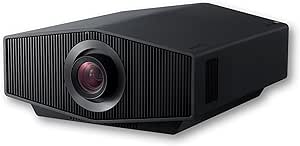 | Best for Format-Switching Home Theaters | Model: VPL-XW6100ES | Native resolution: 3840 × 2160 | Display type: Laser | VIEW ON AMAZON | See Our Full Breakdown |
| XGIMI TITAN Noir Pro 4K RGB Triple Laser Projector |  | Best for Bright, Gaming-Ready Rooms | Native resolution: 3840 × 2160 | Display type: DLP | Light source: RGB triple laser | VIEW ON AMAZON | See Our Full Breakdown |
| Epson Home Cinema LS11000 4K HDR Laser Projector |  | Best for Flexible Installation and HDR Sources | Display technology: 4K, 3-chip 3LCD | Light source: Laser | Color and white brightness: 2,500 lumens | VIEW ON AMAZON | See Our Full Breakdown |
| highend home theater projector | Brightness | Native resolution | Display type |
|---|---|---|---|
| Valerion VisionMaster Max 4K T | 3,500 ISO lumens | 3840 × 2160 | DLP RGB triple laser |
| Epson Home Cinema 5050UB 4K PR | 2,600 lumens | 4096 × 2160 pixels (as listed) | 3-chip LCD |
| Sony BRAVIA Projector 7 Native | 2,200 lumens | 3840 × 2160 | Laser |
| Sony BRAVIA Projector 9 4K HDR | Up to 3,400 lumens | — | — |
| Sony VPL-XW5000ES Native 4K HD | 2,000 lumens | 3840 × 2160 | LCoS |
| JVC DLA-NZ500 Native 4K Laser | 2,000 lumens | 4096 × 2160 | — |
| Sony VPL-VW295ES Native 4K HDR | 1,500 lumens | — | LCoS |
| Epson Home Cinema 3800 4K PRO- | 3,000 lumens | — | — |
| Sony VPL-XW5000ES Native 4K HD | 2,000 lumens | 3840 × 2160 | LCoS |
| ViewSonic LS740HD 1080p Laser | 5,500 ANSI lumens | 1920 × 1080 | — |
| Sony BRAVIA Projector 8 4K HDR | 2,700 lumens | 3840 × 2160 | Laser |
| XGIMI TITAN Noir Pro 4K RGB Tr | 6,000 lumens | 3840 × 2160 | DLP |
| Epson Home Cinema LS11000 4K H | — | — | — |
More Details on Our Top Picks
Valerion VisionMaster Max 4K Triple-Laser Projector
The VisionMaster Max is the most flexible feature mix here: its triple-laser light source, 3,500 ISO lumens, and support for Dolby Vision, HDR10+, IMAX Enhanced, and 3D give a home theater several ways to handle modern content. Optical zoom and substantial vertical lens shift also make it easier to fit a large image around room constraints than the tabletop-focused Sony BRAVIA Projector 7. For gaming, the 4 ms mode at 240 Hz is a standout capability, while Google TV and casting support reduce dependence on an external streamer. The tradeoff is that its headline contrast and rainbow-effect claims are manufacturer specifications, not independent guarantees. Its 300-inch ceiling also calls for a room with generous throw distance; buyers with a smaller setup may get more practical placement from another model.
Pros:- Triple-laser 4K projection with 3,500 ISO lumens
- Supports Dolby Vision, HDR10+, IMAX Enhanced, and 3D
- Optical zoom and ±105% vertical lens shift aid room placement
- Google TV and a 4 ms at 240 Hz gaming mode add versatility
Cons:- Large images require substantial room and throw distance
- The stated 50,000:1 contrast ratio is a manufacturer claim
- Triple-laser color performance may not suit viewers sensitive to rainbow artifacts
Best for: Home theater buyers who want broad HDR format support, flexible installation, built-in streaming, and a projector that can also serve as a high-refresh gaming display.
Not ideal for: Buyers with a short or space-constrained room, or viewers who want to base a purchase on independently verified contrast performance.
- Native resolution:3840 × 2160
- Display type:DLP RGB triple laser
- Brightness:3,500 ISO lumens
- Contrast ratio:50,000:1 (claimed)
- Throw ratio:0.9–1.5:1
- Vertical lens shift:±105%
- Maximum image size:300 inches
- Light source life:30,000 hours
- Smart features:Google TV, AirPlay 2, Chromecast, Miracast
Our verdict“Choose the VisionMaster Max if you want one flexible projector for premium-format movies, streaming, and fast gaming, and have the space to place it well.”
Epson Home Cinema 5050UB 4K PRO-UHD 3-Chip 3LCD Projector
The Home Cinema 5050UB makes its case with 3-chip 3LCD imaging, which presents the full RGB color signal in each frame rather than relying on a single-chip color sequence. That design, paired with 2,600 lumens of both color and white brightness and 10-bit HDR processing, suits viewers who prioritize smooth color and tonal gradation on a large screen. Its pixel-shifted 4K PRO-UHD approach differs from the native-4K panels in the Sony BRAVIA Projector 7; Sony is the more direct pick for native 4K detail and high-refresh input, while Epson emphasizes color output and HDR processing. The 5050UB can project up to 300 inches, but it is not a native 4K model, and HDR depends on compatible external equipment. Buyers should also check the listed resolution details carefully before comparing it with native-4K alternatives.
Pros:- 3-chip 3LCD design displays the full RGB signal in each frame
- Provides up to 2,600 lumens of color and white brightness
- Full 10-bit HDR processing supports smoother tonal gradation
- Supports screen sizes up to 300 inches
Cons:- Uses pixel shifting for enhanced 4K rather than native 4K imaging
- HDR performance requires compatible third-party devices
- HDMI is the only connectivity type listed in the supplied specifications
Best for: Movie-focused buyers who value full-frame RGB color, HDR gradation, and a very large projected image more than native 4K panels or high-refresh gaming.
Not ideal for: Buyers who specifically require native 4K imaging, 4K 120 Hz input, or a projector with built-in streaming features.
- Projection technology:4K PRO-UHD with pixel shifting
- Display type:3-chip LCD
- Native resolution:4096 × 2160 pixels (as listed)
- Maximum display resolution:1920 × 1080p
- Brightness:2,600 lumens
- HDR:Full 10-bit HDR processing
- Contrast ratio:Up to 1,000,000:1
- Maximum image size:300 inches
- Throw distance:1.35–2.84 meters
Our verdict“Pick the 5050UB for a color-focused movie room and a large screen if pixel-shifted 4K is an acceptable trade for its 3LCD design.”
Sony BRAVIA Projector 7 Native 4K HDR Laser Home Theater Projector (VPL-XW5100ES), White
The BRAVIA Projector 7 suits buyers who want native 4K detail and responsive play without moving to the larger, brighter BRAVIA Projector 9. It accepts 4K input at up to 120 Hz and lists input lag under 12 ms at that signal, while Motionflow targets smoother motion for sport and action films. Sony’s XR image processing and up to 95% DCI-P3 color coverage make it a more cinema-oriented alternative to the gaming-focused refresh claims of the Valerion VisionMaster Max, which reaches 240 Hz in its specified gaming mode and offers more installation adjustment. The Sony’s 2,200-lumen output is lower than Valerion’s stated 3,500 ISO lumens, so a darkened room is a better fit. Its tabletop form factor and limited listed throw range also leave less placement flexibility.
Pros:- Native 3840 × 2160 resolution
- Accepts 4K input at up to 120 Hz with under 12 ms listed lag
- Laser light source rated for up to 20,000 hours
- Up to 95% DCI-P3 color gamut and Motionflow processing
Cons:- 2,200-lumen brightness trails the Valerion VisionMaster Max and BRAVIA Projector 9
- Tabletop mounting and the listed throw range limit placement options
- HDMI is the only connectivity type specified
Best for: Dedicated theater owners who want native 4K movies, 4K 120 Hz gaming, and Sony image processing in a controlled-light room.
Not ideal for: Buyers needing high brightness for ambient-light viewing, broad lens placement flexibility, or a projector designed for ceiling installation.
- Model:VPL-XW5100ES
- Native resolution:3840 × 2160
- Display type:Laser
- Brightness:2,200 lumens
- 4K input:Up to 120 Hz
- Input lag:Under 12 ms at 4K 120 Hz; under 21 ms at 4K 60 Hz
- Color gamut:Up to 95% DCI-P3
- Light source operating life:20,000 hours
Our verdict“Choose the BRAVIA Projector 7 if native 4K and 120 Hz gaming matter more than maximum brightness or flexible installation.”
Sony BRAVIA Projector 9 4K HDR Laser Home Theater Projector (VPL-XW8100ES), Black
The BRAVIA Projector 9 is the premium Sony choice in this group for buyers who need native 4K and up to 3,400 lumens in the same installation. That added brightness gives it more headroom than the 2,200-lumen BRAVIA Projector 7 when the screen is large or the room is not fully darkened. It also covers 95% of DCI-P3 and stores lens positions for up to three screen formats, making it useful for owners who switch between aspect ratios. Compared with the Valerion VisionMaster Max, Sony lists a lower brightness figure but offers a clear screen-memory advantage; Valerion adds specified gaming and smart-TV features that are not listed here. The BRAVIA 9’s tabletop mounting and short listed throw-distance range may constrain installation, and no detailed gaming or smart-platform specifications are provided.
Pros:- Native 3840 × 2160 resolution
- Up to 3,400 lumens for additional image brightness
- Laser light source rated for up to 20,000 hours
- Picture position memory stores lens settings for three screen formats
Cons:- Tabletop mounting may not suit installations that require other mounting options
- The listed throw-distance range is limited
- The supplied specifications do not list smart features or gaming performance
Best for: High-end theater owners who want native 4K, stronger stated brightness than the BRAVIA Projector 7, and saved lens positions for multiple screen formats.
Not ideal for: Buyers who need extensive installation flexibility, built-in streaming, or published high-refresh gaming specifications.
- Model:VPL-XW8100ES
- Resolution:3840 × 2160 (native 4K)
- Brightness:Up to 3,400 lumens
- Light source:Laser
- Light source operating life:Up to 20,000 hours
- Color gamut:95% DCI-P3
- Picture position memory:Stores lens settings for up to three screen formats
- Mounting type:Tabletop
- Connectivity:HDMI
Our verdict“Choose the BRAVIA Projector 9 for a premium native-4K Sony setup where brightness and saved screen-format settings matter more than listed smart or gaming features.”
Sony VPL-XW5000ES Native 4K HDR Laser Home Theater Projector (Renewed)
The renewed Sony VPL-XW5000ES offers a direct route to native 4K laser projection, with SXRD imaging, X1 Ultimate processing, and a stated 95% DCI-P3 gamut. It is less bright on paper than the BRAVIA Projector 7 and BRAVIA Projector 9, so it makes more sense in a controlled-light room than in a space where ambient light is hard to manage. Its laser light source is rated for up to 20,000 hours, and the listing specifies under 21 ms input lag at 4K 60 Hz. The biggest distinction is condition: this is a renewed unit with a 90-day limited warranty, unlike the new projector options in this selection. That shorter coverage and the 2,000-lumen output call for a buyer comfortable with a more cautious purchase and a darker theater.
Pros:- Native 3840 × 2160 resolution with SXRD display technology
- Laser light source rated for up to 20,000 hours
- 95% DCI-P3 color gamut and X1 Ultimate processing
- Under 21 ms input lag at 4K 60 Hz is listed
Cons:- Renewed condition and a 90-day limited warranty provide less purchase coverage
- 2,000-lumen brightness is lower than the BRAVIA Projector 7 and Projector 9
- The supplied gaming specification covers 4K 60 Hz, not 4K 120 Hz
Best for: Theater owners seeking native 4K laser projection and Sony color processing who are comfortable buying a renewed unit with a short listed warranty.
Not ideal for: Buyers who want a new projector, a longer warranty, more brightness for ambient light, or specified 4K 120 Hz gaming.
- Model:VPL-XW5000ES
- Native resolution:3840 × 2160
- Display type:LCoS
- Brightness:2,000 lumens
- Light source life:Up to 20,000 hours
- Color gamut:95% DCI-P3
- Contrast ratio:100,000:1
- Input lag:Under 21 ms at 4K 60 Hz
- Condition and warranty:Renewed; 90-day limited warranty
Our verdict“Consider this renewed Sony if native 4K and laser projection suit your dark theater and you accept the shorter warranty and renewed condition.”
JVC DLA-NZ500 Native 4K Laser Projector
The JVC DLA-NZ500 is the pick for a dedicated theater where native 4K, strong native contrast, and scene-by-scene HDR handling matter more than sheer brightness. Its 40,000:1 native contrast ratio and frame-by-frame tone mapping are suited to revealing shadow detail across changing movie scenes, while motorized zoom, focus, and lens shift make a fixed installation easier to align. Compared with the Sony VPL-XW5000ES, it offers more listed HDR format support, including HDR10+ and HLG; Sony, by contrast, specifies 2K at 120 Hz and low input lag for gaming. The JVC’s 2,000-lumen output is less compelling for rooms with substantial ambient light, and its ceiling-mount-oriented design is not a portable solution. I’d choose it for controlled-light movie viewing, not bright multipurpose spaces.
Pros:- Native 4096 × 2160 resolution for 4K source material
- Frame-by-frame HDR tone mapping and support for HDR10, HDR10+, and HLG
- Motorized zoom, focus, and lens shift simplify ceiling-mounted alignment
- Laser light source rated for approximately 20,000 hours
Cons:- 2,000 lumens is a less suitable match for rooms with substantial ambient light
- Stationary design favors a permanent installation rather than flexible room-to-room use
Best for: Dedicated-theater owners prioritizing native 4K movies, HDR tone mapping, and motorized installation adjustments.
Not ideal for: Buyers projecting in a bright multipurpose room or seeking a portable projector; its 2,000-lumen output and stationary installation favor a controlled, fixed setup.
- Native resolution:4096 × 2160
- Brightness:2,000 lumens
- Native contrast ratio:40,000:1
- Light source:BLU-Escent laser phosphor
- Light source life:Approximately 20,000 hours
- HDR formats:HDR10, HDR10+, HLG
- HDMI inputs:2; 4K/60p, HDCP 2.3
- Lens shift:70% vertical, 28% horizontal
Our verdict“Choose the DLA-NZ500 for a fixed, light-controlled theater where native 4K and HDR scene handling outweigh the need for high brightness or gaming-focused features.”
Sony VPL-VW295ES Native 4K HDR Home Theater Projector
The Sony VPL-VW295ES offers a straightforward route to native 4K projection and a very large screen for buyers who do not require a laser light source. Its 1,500-lumen rating and 60–200-inch image range suit a dedicated theater more than a bright living room, while Motionflow and Reality Creation provide image-processing options that the product data for the Epson Home Cinema 3800 does not emphasize. The Epson counters with 3,000 lumens and built-in speakers, making it a more flexible fit for casual or brighter-room use, but it relies on pixel shifting rather than native 4K. The VW295ES’s main compromise is its 225 W mercury lamp, unlike the laser engines in the JVC DLA-NZ500 and Sony VPL-XW5000ES. Buyers should also plan for a fixed installation and an eventual lamp replacement.
Pros:- Native 4096 × 2160 resolution
- Supports projected image sizes from 60 to 200 inches
- Motionflow and Reality Creation offer motion and detail-processing options
- Broad connection set includes HDMI, USB, LAN, RS-232C, IR input, and trigger
Cons:- 225 W high-pressure mercury lamp does not offer the long rated life of the laser models here
- 1,500-lumen brightness is a weak fit for rooms with substantial ambient light
- Ceiling-mounted installation is less convenient for buyers seeking a flexible setup
Best for: Movie fans setting up a dark, permanent theater who want native 4K and a screen size that can reach 200 inches.
Not ideal for: Buyers who want a long-life laser light source, high brightness for ambient-light viewing, or a projector for portable use.
- Resolution:4096 × 2160, native 4K
- Brightness:1,500 lumens
- Display type:LCoS
- Image size:60–200 inches
- Contrast ratio:100,000:1
- Lamp:225 W high-pressure mercury
- Lens shift:Vertical: +85% / -80%; horizontal: ±31%
- Connectivity:2 HDMI inputs, USB, LAN (RJ45), RS-232C, IR input, trigger
Our verdict“Pick the VW295ES if native 4K and a large screen matter more to your dark-room theater than laser longevity or bright-room performance.”
Epson Home Cinema 3800 4K PRO-UHD 3-Chip 3LCD Projector
The Epson Home Cinema 3800 is the practical choice here for viewers who need more brightness and easier everyday placement, rather than native 4K imaging. Its 3,000-lumen output helps it handle some ambient light better than the 1,500-lumen Sony VPL-VW295ES, and its three-chip 3LCD design avoids rainbow effects that can distract some viewers. The tradeoff is that its 4K PRO-UHD image uses pixel shifting, unlike the native 4K Sony and JVC options. Built-in stereo speakers and Bluetooth can simplify a casual setup, but they are not a substitute for a dedicated theater sound system. With a listed 300-inch maximum image size and tabletop mounting, it offers flexibility, though the large image potential should not be mistaken for native 4K precision or a purpose-built high-end laser theater.
Pros:- 3,000 lumens of color and white brightness suits brighter viewing conditions better than lower-output models
- Three-chip 3LCD design avoids rainbow effects
- Lens shift, Bluetooth, and tabletop mounting support flexible setup
- Built-in dual 10 W speakers can handle basic audio without extra equipment
Cons:- 4K PRO-UHD relies on pixel shifting rather than native 4K imaging
- Built-in speakers are limited for a dedicated home theater audio system
- Lamp-based specification does not provide the stated laser light-source life of the JVC or Sony laser models
Best for: Households wanting a bright, flexible projector for mixed movie and everyday viewing, especially if they are sensitive to rainbow artifacts or need tabletop placement.
Not ideal for: Dedicated-theater buyers who insist on native 4K resolution or want the long-life laser light source found in the JVC DLA-NZ500 and Sony VPL-XW5000ES.
- Projection technology:3-chip 3LCD
- Resolution:3840 × 2160, 4K PRO-UHD with pixel shifting
- Brightness:3,000 lumens
- Contrast ratio:100,000:1
- HDR:Full 10-bit HDR support
- Maximum image size:300 inches
- Built-in speakers:Dual 10 W stereo speakers
- Throw distance:1.32–2.15 meters
Our verdict“Choose the Epson 3800 for brightness and setup flexibility, but select a native 4K laser model if theater-grade resolution and long-term light-source life come first.”
Sony VPL-XW5000ES Native 4K HDR Laser Home Theater Projector
The Sony VPL-XW5000ES is the strongest fit in this group for buyers who want native 4K, laser operation, and responsive gaming modes in one fixed theater projector. Its 2,000-lumen output matches the JVC DLA-NZ500 on paper, while the Sony adds 2K at 120 Hz and specified input lag below 13 ms in that mode. That gives it a clearer gaming advantage than the JVC’s listed feature set, though the JVC provides more explicit HDR-format support and frame-by-frame tone mapping. The Sony’s 95% DCI-P3 gamut supports wide-color content, and its laser is rated for up to 20,000 hours. It remains a ceiling-mount-oriented unit and requires an external HDMI source; the 2,000-lumen rating also makes a darkened room a better match than an ambient-light space.
Pros:- Native 3840 × 2160 resolution with a laser light source
- Laser operating life rated for up to 20,000 hours
- Supports 2K at 120 Hz with input lag under 13 ms
- 95% DCI-P3 color gamut and 2,000-lumen brightness
Cons:- Stationary design favors a permanent ceiling-mounted installation
- Requires a separate HDMI-connected source device
- 2,000 lumens is not the best fit for rooms with substantial ambient light
Best for: Home theater owners who watch native 4K films and play games, particularly those who value 2K/120 Hz support and a laser light source.
Not ideal for: Buyers who need a portable all-in-one projector, more than 2,000 lumens for a bright room, or the JVC’s listed HDR10+ support and frame-by-frame tone mapping.
- Native resolution:3840 × 2160
- Brightness:2,000 lumens
- Display type:LCoS
- Light source:Laser, rated for up to 20,000 hours
- Color gamut:95% DCI-P3
- Input support:4K at 60 Hz; 2K at 120 Hz
- Input lag:Under 21 ms at 4K 60 Hz; under 13 ms at 2K 120 Hz
- Mounting type:Ceiling mount
Our verdict“Choose the Sony VPL-XW5000ES for a fixed native-4K theater that also serves as a responsive gaming setup.”
ViewSonic LS740HD 1080p Laser Projector
The ViewSonic LS740HD earns a place as a specialized option, not a direct rival to the native 4K home theater models. Its 5,500 ANSI lumens and 300-inch maximum image target rooms where brightness and scale matter more than fine 4K detail, such as a golf simulator or a multipurpose space with ambient light. Compared with the Epson Home Cinema 3800, it is much brighter on paper and offers flexible installation adjustments, including portrait mode and 360-degree projection, but the Epson provides 4K PRO-UHD processing and is more explicitly suited to home movie viewing. The ViewSonic is Full HD, not 4K, so buyers prioritizing detailed film imagery should favor the JVC DLA-NZ500 or Sony VPL-XW5000ES. Its fixed installation and presentation-oriented connections also make it a narrow fit for a premium movie-first theater.
Pros:- 5,500 ANSI lumens is well suited to brighter rooms and large projected images
- Projects images from 30 to 300 inches
- 1.3× optical zoom and image adjustments support varied installation layouts
- Laser light source rated for up to 30,000 hours in Dynamic Eco mode
Cons:- 1920 × 1080 resolution falls short of the native 4K JVC and Sony home theater models
- Presentation and simulation focus makes it less tailored to a movie-first theater
- Stationary, ceiling-mount-oriented design is not suited to portable use
Best for: Owners of large multipurpose rooms, golf simulators, or presentation spaces who prioritize high brightness and flexible mounting over 4K movie detail.
Not ideal for: Home theater buyers seeking native 4K resolution, cinematic detail, or a projector focused primarily on film playback.
- Native resolution:1920 × 1080
- Brightness:5,500 ANSI lumens
- Image size:30–300 inches
- Throw ratio:1.13–1.47
- Optical zoom:1.3×
- Light source life:Up to 30,000 hours in Dynamic Eco mode
- Connectivity:2 × HDMI 1.4, USB Type-A, RS232, 3.5 mm audio out
- Installation features:H/V keystone, 4-corner adjustment, portrait mode, 360° projection
Our verdict“Choose the LS740HD for bright, oversized utility projection, but skip it if native 4K movie detail is the priority.”
Sony BRAVIA Projector 8 4K HDR Laser Home Theater Projector (VPL-XW6100ES), Black
The Sony BRAVIA Projector 8 is the pick for a dedicated theater where native 4K detail and carefully tuned HDR matter more than gaming extras or installation flexibility. Its 95% DCI-P3 color gamut and XR image processing are aimed at rich, detailed film presentation, while the laser light source avoids the lamp replacement cycle. A particularly useful advantage is Picture Position Memory, which stores lens settings for up to three screen formats—handy for owners who switch between widescreen movies and other content. Compared with the Epson LS11000, this Sony offers a wider stated color gamut, while the Epson lists more HDR formats and motorized lens adjustments. The tradeoff is a 2,700-lumen output and a stationary tabletop form factor, so buyers wanting a brighter, gaming-focused feature set may prefer the XGIMI TITAN Noir Pro.
Pros:- Native 3840 × 2160 resolution delivers true 4K image detail.
- 95% DCI-P3 color gamut and XR processing target vivid HDR presentation.
- Laser light source is rated for up to 20,000 hours.
- Picture Position Memory stores settings for up to three screen formats.
Cons:- At 2,700 lumens, it has less stated brightness than the XGIMI TITAN Noir Pro’s 6,000 lumens.
- The listed tabletop mounting type may not suit installations that require flexible placement.
- The provided specifications list HDMI connectivity without detailing port count or gaming features.
Best for: Dedicated movie-room owners who want native 4K, wide-gamut HDR, and saved lens positions for multiple screen formats.
Not ideal for: Gamers prioritizing high refresh rates or buyers needing broad installation flexibility; the listed specs do not include the XGIMI TITAN Noir Pro’s gaming modes or the Epson LS11000’s stated lens-shift range.
- Model:VPL-XW6100ES
- Native resolution:3840 × 2160
- Display type:Laser
- Brightness:2,700 lumens
- Color gamut:95% DCI-P3
- Laser light source life:Up to 20,000 hours
- Connectivity:HDMI
- Mounting type:Tabletop
Our verdict“Choose the Sony BRAVIA Projector 8 for a native-4K film room that benefits from wide-gamut HDR and saved screen-format settings.”
XGIMI TITAN Noir Pro 4K RGB Triple Laser Projector
The XGIMI TITAN Noir Pro takes the most performance-forward approach here: its stated 6,000-lumen RGB triple-laser output, flexible optics, and unusually ambitious gaming specs make it suited to buyers who want one projector for movies and fast play. Optical zoom and substantial lens shift give installers more placement freedom than the Sony BRAVIA Projector 8, whose listed mounting type is tabletop. For games, 1 ms latency, up to 240 Hz, VRR, and AMD FreeSync set it apart from the Epson LS11000, which specifies up to 120 Hz and input lag below 20 ms. That versatility comes with a real power draw: the unit is rated at 360 watts. Its DLP engine and stated 8,000:1 contrast also make this less of a clearly film-first specification set than Sony’s wide-gamut, XR-processed option. Choose it for brightness, placement range, and gaming rather than a narrowly cinematic setup.
Pros:- RGB triple laser output is rated at 6,000 lumens.
- Optical zoom and wide horizontal and vertical lens shift support flexible placement.
- Gaming support includes 1 ms latency, up to 240 Hz, VRR, and AMD FreeSync.
- Supports image sizes from 40 to 300 inches.
Cons:- Rated power consumption is 360 watts.
- Its listed 8,000:1 contrast ratio is lower than the Epson LS11000’s stated dynamic contrast ratio.
- The high-refresh gaming capability may be unnecessary for buyers building a film-only theater.
Best for: Home theater and gaming enthusiasts with a large screen who need high stated brightness, flexible ceiling installation, and high-refresh-rate support.
Not ideal for: Buyers focused mainly on film presentation in a controlled room, or anyone trying to limit power consumption; its 360-watt rating and gaming-oriented feature set may be more than they need.
- Native resolution:3840 × 2160
- Display type:DLP
- Light source:RGB triple laser
- Brightness:6,000 lumens
- Contrast ratio:8,000:1
- Throw ratio:0.98–2.0:1
- Lens shift:Vertical ±130%; horizontal ±50%
- Gaming:Up to 240 Hz; 1 ms latency; VRR and AMD FreeSync
- Maximum image size:300 inches
Our verdict“Pick the TITAN Noir Pro if brightness, installation flexibility, and high-refresh gaming matter as much as big-screen movies.”
Epson Home Cinema LS11000 4K HDR Laser Projector
The Epson Home Cinema LS11000 makes the strongest case for a theater where setup flexibility and broad HDR compatibility are priorities. Its motorized lens provides shift, zoom, focus, and memory settings, making it easier to align the picture and save preferred configurations than the Sony BRAVIA Projector 8, whose supplied details emphasize memory for screen formats rather than a full motorized lens system. Support for HDR10, HDR10+, and HLG also gives it a broader stated format list than the Sony. Its 3-chip 3LCD engine, 2,500-lumen brightness, and up-to-120-Hz refresh rate suit mixed movie and gaming use, though the XGIMI TITAN Noir Pro goes much further for high-refresh gaming and lists substantially more brightness. This Epson’s strength is balance, not headline output: buyers should accept its 2,500-lumen rating in exchange for installation tools, multiple HDR formats, and a stated 2-year limited warranty.
Pros:- 3-chip 3LCD laser projection provides 2,500 lumens of both color and white brightness.
- Supports HDR, HDR10, HDR10+, and HLG formats.
- Motorized lens shift, zoom, focus, and memory settings simplify installation and repeat setup.
- Up to 120 Hz refresh rate and input lag below 20 ms suit gaming alongside movies.
Cons:- Its 2,500-lumen rating is well below the XGIMI TITAN Noir Pro’s stated 6,000 lumens.
- Its gaming specifications do not match the TITAN Noir Pro’s stated 240-Hz refresh rate and 1 ms latency.
- The provided product details do not specify built-in audio features.
Best for: Home theater owners who need motorized lens positioning, saved installation settings, and support for several HDR formats.
Not ideal for: Buyers seeking the highest stated brightness or the XGIMI TITAN Noir Pro’s 240-Hz gaming capability; this Epson is rated at 2,500 lumens and up to 120 Hz.
- Display technology:4K, 3-chip 3LCD
- Light source:Laser
- Color and white brightness:2,500 lumens
- Dynamic contrast ratio:1,200,000:1
- HDR formats:HDR, HDR10, HDR10+, HLG
- Lens shift:±47% horizontal, ±96% vertical
- Screen size support:Up to 300 inches
- Refresh rate and input lag:Up to 120 Hz; below 20 ms
- Warranty:2-year limited warranty
Our verdict“Choose the LS11000 if motorized setup, broad HDR support, and capable gaming matter more than maximum brightness or top-end refresh rates.”
How We Picked
I ranked these projectors by how well they serve a high-end home theater, not by headline specifications alone. The main criteria were image fidelity—including resolution, contrast potential, HDR handling, and color approach—alongside light output for the room, lens and installation flexibility, light-source upkeep, and overall usability. A projector that excels in a dark, fixed theater can be a poor fit for a bright multipurpose room, so room suitability is part of the ranking rather than an afterthought.
The order gives greater weight to performance for film and premium home viewing, then accounts for setup demands and buyer value. Native-4K laser models from JVC and Sony rank highly for buyers seeking a current dedicated-theater platform; Epson’s 3LCD options earn consideration through their distinct balance of brightness and installation flexibility. Older, renewed, or 1080p models sit lower because their limitations matter more to this particular search, even when they may fit a narrower budget or use case. Availability, bundled accessories, and exact regional specifications can vary, so buyers should confirm the version they plan to purchase.
Factors to Consider When Choosing Highend Home Theater Projectors
Choosing among high-end projectors starts with the room and screen, not the model name. Use these factors to decide which compromises will matter in your setup before comparing individual features.
Match Brightness to Room Light and Screen Size
A projector’s brightness needs rise with screen size and ambient light, but a larger output figure does not automatically create a better cinema image. In a fully dark room, excessive brightness can make highlights uncomfortable and weaken the sense of cinematic contrast unless the system is calibrated or the screen controls light. A multipurpose room with windows usually calls for more light output, effective light control, or a smaller screen. Buyers often plan around projector capability and forget that screen gain, wall color, and viewing distance also change the result. Decide how much light you can block and what screen size you will actually use before paying for extra brightness.
Treat Contrast and HDR as a Room-and-Content Match
Dark-scene contrast is especially visible in a dedicated theater, where black bars and shadow detail are not washed out by room light. In a living room, reflections from pale walls can lift blacks even when the projector itself has strong contrast. HDR performance also depends on tone mapping, screen size, and brightness available for highlights; a format label alone does not predict how convincing a film will look. A common mistake is to chase HDR compatibility while overlooking the room’s ability to preserve dark detail. If you watch mostly films in a dark space, prioritize contrast and tone mapping; for mixed daytime viewing, room control and brightness may matter more.
Check Throw Distance, Lens Shift, and Mounting Before Buying
Projector placement can narrow your choices more quickly than image features. Measure the distance from the planned lens position to the screen and confirm that the image size falls within the projector’s throw range. Lens shift can make alignment easier when the mount cannot sit directly on the screen’s centerline, while keystone correction may alter image geometry and should not be treated as a substitute for correct placement. Ceiling height, joist location, cable routes, and access for future service all affect the installation. Verify these dimensions before purchase; a strong projector is a poor fit if it cannot produce the desired image from your room’s fixed mounting position.
Choose the Light Source With Ownership in Mind
Laser models avoid scheduled lamp changes, which can suit frequent viewing or a permanently installed theater, but they still have a finite light-source life and may require service if a fault occurs. Lamp-based designs can remain appealing when their image performance and purchase value fit the buyer, though lamp replacement and gradual brightness loss belong in the ownership plan. Do not compare only the initial hardware: include replacement parts, installation, calibration, and the cost of a suitable screen. A renewed projector adds another layer, since warranty coverage, return terms, and the condition of the unit matter as much as its original specification. Buy the light source that fits your expected hours and maintenance tolerance.
Budget for the Whole Theater, Not Just the Projector
A premium projector cannot compensate for a poor screen, uncontrolled reflections, or an undersized sound system. Screen material affects perceived brightness and viewing angle, while dark wall and ceiling finishes can improve perceived contrast without changing the projector. Plan for a mount, long-run video cabling, ventilation clearance, and any calibration needs alongside the projector itself. Buyers sometimes spend heavily on a flagship model while using a screen or room that hides its advantages. If the theater is still being built, compare the cost of improving the room with the cost of moving up one projector tier; the room upgrade may have the larger visible effect.
Prioritize Features You Will Use, Not Specification Count
Native resolution, pixel-shifting, gaming support, smart functions, and multiple laser colors each address different needs. Film-focused buyers may value fine detail and motion handling more than built-in apps, while a family room may benefit from simple setup and a bright image that works across varied content. Triple-laser color systems can appeal to viewers seeking a wider color presentation, but they do not remove the need to check placement, noise, and compatibility with the room. Make a short list of your main content sources and viewing habits before comparing feature sheets. Paying for capabilities you will rarely use can be a worse choice than selecting a less elaborate model that fits the installation cleanly.
Frequently Asked Questions
Is native 4K worth choosing over Epson 4K PRO-UHD for movies?
Native 4K can be appealing when you sit close to a large screen and want the projector to resolve fine detail directly. Epson’s 4K PRO-UHD approach can still deliver a detailed image, so the difference is not always obvious from ordinary seating distances or mixed-quality sources. Contrast, lens quality, focus uniformity, and the room can matter as much as pixel count. Compare the models using your screen size and viewing distance rather than assuming the resolution label settles the decision. For a dedicated theater built around 4K films, native 4K is a persuasive priority; for a more flexible room, weigh it against brightness and installation needs.
Should I choose a laser projector if I watch films only a few nights a week?
Laser light sources are convenient because they avoid routine lamp replacement, but light-source longevity is only one part of the choice. Occasional viewers may find that a lamp-based projector remains a sensible fit if its image, setup, and ownership costs suit the room. Frequent use makes the reduced lamp-maintenance burden more valuable, especially in a fixed installation. Also check how the projector handles brightness settings and whether replacement or service options are available in your region. Pick based on total ownership and image needs rather than treating laser as an automatic upgrade.
Can a high-end projector work in a living room with windows?
It can, but daylight reduces perceived contrast and can make dark scenes look flat even on a capable projector. Window coverings, a screen chosen for the room, and a manageable screen size can help more than simply buying the most powerful model. If you cannot control light, prioritize practical brightness and accept that a dedicated dark-room image may not be possible during the day. A projector designed for cinema performance may show its strengths after sunset, when reflections are lower. Plan around your actual viewing hours instead of judging the setup only in ideal conditions.
Is a renewed Sony VPL-XW5000ES a safe choice compared with the new version?
A renewed unit can make sense for a buyer who wants the XW5000ES platform and is comfortable checking its condition carefully. The main differences are not just the model’s features: warranty length, return window, seller support, hours of prior use, and included accessories can change the ownership risk. Ask whether the unit has been inspected and whether any light-source or optical issues are covered. The new XW5000ES is the simpler choice if clear warranty support matters more than securing a renewed unit. Compare the actual terms and condition of the specific listing before deciding.
Do I need a 4K projector for a screen larger than 100 inches?
A large screen makes resolution differences easier to notice, especially from a close seat with high-quality 4K sources. Still, seating distance, focus uniformity, lens quality, and source quality affect perceived detail. If you sit farther back or mostly stream compressed video, a strong 1080p image may remain satisfying, though this roundup’s ViewSonic LS740HD is better understood as a distinct-use option than a reference 4K theater pick. Measure your viewing distance and screen width, then compare detail from your normal seat. Choose 4K when its added detail matters to your viewing habits, not simply because the screen crosses a particular size.
Conclusion
For a dark, dedicated cinema room, I would start with the JVC DLA-NZ500 as the best overall fit in this lineup. Buyers seeking a premium Sony laser experience should compare the BRAVIA Projector 9 and BRAVIA Projector 8, while the BRAVIA Projector 7 is the more restrained entry into Sony’s current range. For value, the Epson Home Cinema 5050UB and Home Cinema 3800 deserve attention if their lamp-based ownership and 4K PRO-UHD approach suit your priorities. Beginners should favor the model that fits their throw distance and installation plan cleanly, rather than paying for features they will not use; Epson’s flexible 3LCD options are natural candidates to compare. For a bright or multipurpose room, look closely at the Epson LS11000 and triple-laser options, while buyers focused on native 4K detail should compare the Sony and JVC models. The ViewSonic LS740HD is for buyers who prioritize a 1080p laser setup over reference-grade 4K film detail.