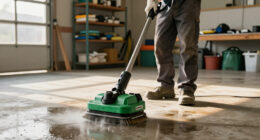
For driveway cleaning, I would start with two questions: how much cleaning power do you need, and how much control do you want over the surface? The Westinghouse WPX3400 is my best overall pick for routine driveway care, pairing 3400 PSI with a more moderate 2.6 GPM flow rate and a useful set of five tips. The 4200 PSI, 4.0 GPM gas washer is the high-output choice for large or heavily soiled areas, where greater water flow can help move through broad cleaning jobs faster. The tradeoff is that higher output calls for more care: it can be less forgiving on vulnerable concrete edges, joints, coatings, and nearby surfaces.

Get cleaning gear delivered free with Prime
- Fast, free delivery on millions of items
- Prime Video, Amazon Music and more included
- Member-only deals all year
Both machines are gas-powered, have 25-foot hoses, axial cam pumps, and five quick-connect nozzle options. Neither is a substitute for a dedicated driveway surface cleaner, and both require the fuel, oil checks, noise, and upkeep that come with a gas engine. I rank the Westinghouse first because its stated output is a more balanced fit for the typical homeowner cleaning a driveway, while the 4200 PSI model makes more sense when the extra flow is a priority and the operator is comfortable managing a stronger spray.
Complete the kit


Key Takeaways
- The Westinghouse WPX3400 is the balanced pick for routine driveway cleaning, with 3400 PSI, 2.6 GPM, and five nozzle tips.
- The 4200 PSI model offers the highest stated output in this pair at 4.0 GPM, making it better suited to large, demanding cleaning jobs.
- Both washers include a 25-foot hose and five quick-connect nozzles, but neither listing includes a dedicated driveway surface cleaner.
- Higher pressure is not automatically better for concrete: start with a wider spray, test an inconspicuous patch, and keep the nozzle moving.
- Choose Westinghouse for a more controlled all-around setup; choose the 4200 PSI washer when higher water flow and heavy-duty capacity outweigh its oil-instruction ambiguity.
| Westinghouse WPX3400 Gas Pressure Washer, 3400 PSI, 2.6 GPM |  | Best Overall for Routine Driveway Cleaning | Power source: Gas | Maximum pressure: 3400 PSI | Flow rate: 2.6 GPM | VIEW ON AMAZON | See Our Full Breakdown |
| Gas Pressure Washer, 4200 PSI, 4.0 GPM, 212cc |  | Best High-Output Choice for Large, Tough Driveways | Power source: Gas | Maximum pressure: 4200 PSI | Flow rate: 4.0 GPM | VIEW ON AMAZON | See Our Full Breakdown |
| gas pressure washer for driveway cleaning | Power source | Maximum pressure | Flow rate | Engine |
|---|---|---|---|---|
| Westinghouse WPX3400 Gas Press | Gas | 3400 PSI | 2.6 GPM | 212cc 4-stroke OHV |
| Gas Pressure Washer | Gas | 4200 PSI | 4.0 GPM | 212cc, 7 HP, 4-stroke OHV |
More Details on Our Top Picks
Westinghouse WPX3400 Gas Pressure Washer, 3400 PSI, 2.6 GPM
The WPX3400 is my first choice for the typical homeowner who wants one gas washer for a driveway and occasional outdoor jobs. Its stated 3400 PSI and 2.6 GPM offer substantial cleaning capacity without matching the far higher flow listed for the other pick. That makes this a more measured all-purpose option in this pair: it can tackle grimy concrete, while its output is less demanding than the 4200 PSI, 4.0 GPM machine. Technique still matters, since even a broad-capacity washer can leave marks when a narrow nozzle is held too close.
Its five quick-connect tips span 0°, 15°, 25°, 40°, and soap. For driveway work, I would favor a wider tip and a test patch rather than beginning with the narrowest spray; the soap setting can help apply detergent where the cleaning task calls for it. The 25-foot hose gives workable reach around a car or across part of a driveway, though large areas may require moving the unit more than once. A half-gallon onboard soap tank is convenient for general cleaning, but it is not a substitute for a dedicated surface-cleaner attachment when the goal is fast, even coverage over a broad slab.
Compared with the 4200 PSI model, the Westinghouse trades maximum output for a less aggressive specification and simpler mobility details: its 12-inch never-flat wheels avoid the need to maintain pneumatic tire pressure. The 212cc four-stroke engine, one-gallon fuel tank, and maintenance-free axial cam pump make it a substantial gas appliance rather than a lightweight, plug-in tool. Buyers must plan for fuel and engine care, and the product information notes that residual oil or fuel odor may be present on arrival. I rank it first because its combination of power, nozzle range, and transport features is the more balanced match for ordinary driveway upkeep.
Pros:- 3400 PSI and 2.6 GPM provide a capable, comparatively balanced specification for household driveway work.
- Five quick-connect tips offer choices for rinsing, detergent application, and different cleaning tasks.
- The 0.5-gallon onboard soap tank and 25-foot hose support general outdoor cleaning.
- 12-inch never-flat wheels simplify moving the unit without tire-pressure upkeep.
Cons:- Its 2.6 GPM flow is lower than the 4.0 GPM listed for the other washer, so broad, demanding jobs may take longer.
- The gas engine requires fuel, oil checks, and ongoing maintenance.
- The product may arrive with a residual oil or fuel odor, according to the supplied product information.
Best for: Homeowners who want a capable gas washer for a residential driveway, plus decks and other outdoor surfaces, without prioritizing the highest output in this comparison.
Not ideal for: Buyers with very large or heavily soiled paved areas who want the highest stated flow, or anyone seeking a low-maintenance electric-style tool or an included surface-cleaner attachment.
- Power source:Gas
- Maximum pressure:3400 PSI
- Flow rate:2.6 GPM
- Engine:212cc 4-stroke OHV
- Pump:Maintenance-free axial cam
- Hose:25 ft
- Nozzles:Five quick-connect tips: 0°, 15°, 25°, 40°, and soap
- Fuel and soap tanks:1-gallon fuel tank; 0.5-gallon soap tank
- Wheels:12-inch never-flat
Our verdict“I recommend the WPX3400 as the more balanced driveway pick for homeowners who want strong cleaning capacity and useful mobility without choosing the highest-output option.”
Gas Pressure Washer, 4200 PSI, 4.0 GPM, 212cc
If the driveway is large, has stubborn buildup, or is only one part of a heavy outdoor-cleaning workload, this model has the strongest stated output in the matchup: 4200 PSI and 4.0 GPM. Its higher flow separates it most clearly from the Westinghouse. It may suit buyers who want to move more water through demanding jobs, but that added capacity does not make it the automatic choice for every slab. On older, patched, coated, or cracked concrete, I would use a wide spray, keep the tip moving, and test first. A concentrated stream can damage vulnerable surfaces regardless of the machine’s driveway-friendly intent.
The package includes five quick-connect nozzles, a 25-foot high-pressure hose, and a dual detergent tank with 3 L capacity. Those features give it a useful setup for outdoor work beyond pavement, though the supplied description does not identify the exact angles of its tips. The 212cc, 7 HP four-stroke engine and axial cam pump put it in the same broad gas-powered category as the WPX3400, while 10-inch pneumatic wheels are designed for maneuverability. Unlike the Westinghouse’s never-flat wheels, pneumatic tires can require attention to pressure, and their smaller stated diameter may feel different when rolling over rough ground.
I place this second for routine driveway cleaning because the higher output can be unnecessary for a modest, well-maintained driveway, and the listing has an extra setup concern: its oil quantity instructions are inconsistent. I would verify the correct oil quantity in the manufacturer’s manual before operating it rather than guessing from conflicting product information. Its 3.6 L fuel tank and dual detergent arrangement may appeal to people handling longer jobs, but buyers should account for gas-engine noise, fuel storage, and maintenance. Choose it over the Westinghouse when higher stated flow is the priority; skip it if straightforward setup and a more moderate output profile matter more.
Pros:- The highest stated output in this comparison: 4200 PSI and 4.0 GPM.
- Five quick-connect nozzles and a 3 L dual detergent tank support varied outdoor cleaning tasks.
- A 25-foot hose and 10-inch pneumatic wheels support outdoor mobility.
- Its gas-powered design does not require an electrical outlet at the cleaning location.
Cons:- The supplied product information gives inconsistent oil quantity instructions; verify the manual before use.
- Higher pressure and flow require careful nozzle choice and distance, especially on older or vulnerable concrete.
- The gasoline engine requires fuel, oil checks, and routine maintenance; pneumatic wheels may also need pressure checks.
Best for: Owners of larger or heavily soiled driveways who want higher stated pressure and water flow, and who are prepared to check the oil instructions and manage a gas engine.
Not ideal for: People cleaning a small or delicate driveway who do not need 4.0 GPM, buyers who want clear oil setup information out of the box, or anyone seeking a quieter, low-maintenance washer.
- Power source:Gas
- Maximum pressure:4200 PSI
- Flow rate:4.0 GPM
- Engine:212cc, 7 HP, 4-stroke OHV
- Pump:Axial cam
- Hose:25 ft high-pressure hose
- Nozzles:Five quick-connect nozzles
- Tanks:3.6 L fuel tank; 3 L dual detergent tank
- Wheels and certifications:10-inch pneumatic wheels; EPA, CARB, ETL
Our verdict“I would choose this model over the Westinghouse for larger, tougher cleaning jobs where its 4.0 GPM output matters and the oil setup can be confirmed.”

How We Picked
I ranked these two machines for the specific job in the title: cleaning a residential driveway, not simply generating the largest pressure figure. My comparison focuses on the stated pressure and flow, included nozzle choices, hose reach, mobility, detergent capacity, and the practical demands of a gasoline engine. On concrete, pressure can help loosen grime, but flow rate also affects how much water the washer delivers while rinsing. The best fit depends on the driveway’s size, soil, surface condition, and the operator’s ability to keep a suitable distance.
I gave the Westinghouse the lead because its 3400 PSI and 2.6 GPM specification set a comparatively balanced starting point for household cleaning. It also lists a half-gallon soap tank and 12-inch never-flat wheels, useful details for a homeowner who wants a versatile machine that can move around the property. The 4200 PSI model ranks second for general driveway use, not because its output is weak, but because its 4.0 GPM flow and higher pressure are more than some routine jobs require, while its listing gives inconsistent oil quantity instructions. That model becomes the stronger choice for buyers who specifically want higher stated output and can verify setup details before operation.
I have not treated advertised maximum pressure as a promise of identical cleaning results on every driveway. Actual performance depends on nozzle selection, distance, technique, surface condition, and water supply. A narrow tip can concentrate force in a way that marks concrete or damages joints, so I favor adjustable use and careful testing over choosing a machine solely by its highest number. Neither product description lists a surface-cleaner attachment; buyers seeking uniform, efficient coverage should check whether a compatible attachment is available separately. I also weighed the unavoidable gas-engine needs—fuel, oil, outdoor operation, and routine upkeep—because they shape whether either model is a convenient choice.
| gas pressure washer for driveway cleaning | Pump | Nozzles |
|---|---|---|
| Westinghouse WPX3400 Gas Press | Maintenance-free axial cam | Five quick-connect tips: 0°, 15°, 25°, 40°, and soap |
| Gas Pressure Washer | Axial cam | Five quick-connect nozzles |
Factors to Consider When Choosing Gas Pressure Washer For Driveway Cleaning
I would choose a driveway washer by matching its output and handling to the surface and the size of the job, rather than shopping by pressure alone. These two gas models share several conveniences, but their output and setup tradeoffs point to different buyers.Pressure and flow are different parts of the job
PSI describes pressure, while GPM describes water flow. Pressure can help loosen stuck-on grime; flow affects how much water is moving through the cleaning and rinsing process. The WPX3400 is rated at 3400 PSI and 2.6 GPM, compared with 4200 PSI and 4.0 GPM for the other model. Those specifications make the second washer the higher-output option, but not necessarily the better choice for every driveway. Surface condition, nozzle, distance, and technique all shape the result.
For ordinary household cleaning, I favor the Westinghouse’s more moderate stated output. For large areas or tougher jobs, the higher flow of the 4200 PSI model may be more appealing. If the concrete has a coating, loose patches, delicate joints, or signs of wear, prioritize gentle technique and a test patch instead of assuming that more pressure is an advantage.
Choose a nozzle and technique for the concrete
The WPX3400 lists specific tip angles: 0°, 15°, 25°, 40°, and soap. The other model lists five quick-connect tips but does not give their angles in the supplied details. A narrow tip concentrates the spray; a wider tip spreads it over more area. For driveway cleaning, I would begin with a wider tip, hold the wand at a consistent distance, and test an inconspicuous patch. Keep the spray moving rather than lingering in one spot, particularly near cracks, joints, and edges.
Neither product description includes a dedicated surface cleaner. That attachment can be useful for covering broad pavement more evenly than a handheld wand, so check compatibility and whether it is sold separately if uniform driveway passes are a priority. Detergent can help with suitable grime, but it does not remove the need to rinse thoroughly or follow the cleaner’s instructions.
Think about driveway size and hose reach
Both machines include a 25-foot hose, which offers a workable starting reach for residential outdoor cleaning. The length does not mean a large driveway can be washed from one stationary position: you may need to move the washer and manage the hose around vehicles, steps, or landscaping. A longer hose can reduce repositioning, but neither listing promises one.
The 4200 PSI model’s 4.0 GPM rating makes it the more compelling option for buyers focused on higher water flow over substantial jobs. The WPX3400’s lower stated flow is a sensible match for many routine cleaning tasks, though large paved areas may take more time. For a compact driveway, the 4200 PSI model’s extra capacity may not deliver a useful benefit for the added setup and maintenance demands.
Compare wheels, tanks, and other practical details
The Westinghouse has 12-inch never-flat wheels; the other machine uses 10-inch pneumatic wheels. Never-flat wheels avoid tire-pressure checks, while pneumatic wheels may need inflation and can have a different feel on uneven ground. Both are designed for outdoor movement, but neither product’s wheel style makes the machine as simple to handle as a small electric washer.
Tank arrangements also differ. Westinghouse lists a half-gallon soap tank and one-gallon fuel tank. The 4200 PSI model lists a 3 L dual detergent tank and 3.6 L fuel tank. Those figures help distinguish their listed capacities, but they do not tell you how long each machine will run under a particular load. The higher-output washer also comes with inconsistent oil quantity information in the supplied details; check the manufacturer’s manual before filling or starting it.
Account for the gas-engine commitment
Both picks need gasoline and routine engine care, and both are louder and more hands-on than many electric washers. I would choose gas when the work location lacks convenient electrical access or when an outdoor cleaning workload justifies a larger machine. If a quiet unit, quick storage, or minimal maintenance matters most, neither is an especially close fit.
Before use, follow the manufacturer’s instructions for fuel, oil, water connection, ventilation, and operation. Use eye protection and keep the spray away from people, pets, electrical equipment, and surfaces that can be damaged. Do not operate a gas engine in an enclosed area. These precautions matter for both machines, and the more powerful model deserves particularly careful control at the wand.
Frequently Asked Questions
Which of these gas pressure washers is better for a typical concrete driveway?
I would choose the Westinghouse WPX3400 for a typical residential driveway because its 3400 PSI and 2.6 GPM provide a more balanced specification than the 4200 PSI, 4.0 GPM model. It still has substantial stated output, five named nozzle options, and never-flat wheels. The higher-output washer is a better fit when a larger or tougher job makes extra flow a priority, rather than a default upgrade for every driveway.
Does higher PSI mean the driveway will be cleaned faster?
Not by itself. PSI is pressure, while GPM is flow, and actual cleaning time also depends on the soil, nozzle, distance, technique, and area being covered. The 4200 PSI model has higher figures for both pressure and flow, but that added output calls for careful handling. For wide, even coverage, a compatible surface-cleaner attachment may matter more than choosing a pressure washer by its maximum PSI figure alone.
Which nozzle should I use on concrete?
Start with a wider spray tip and test an inconspicuous section of the driveway. The Westinghouse lists tip angles, including 25° and 40°; its 0° tip is a narrow, concentrated option and should not be the starting point for general concrete cleaning. The second washer’s supplied details do not name the angles for its five tips, so check its nozzle markings and manual. Keep the wand moving and avoid holding a concentrated spray close to one spot.
Do either of these products include a driveway surface cleaner?
No surface-cleaner attachment is listed in the product information provided for either washer. Both descriptions mention quick-connect spray nozzles, which are different from a surface cleaner designed for broad pavement coverage. If you want more uniform passes across a large driveway, check whether a compatible attachment is available and confirm its connection requirements before buying.
What should I know before operating the 4200 PSI model?
The supplied product details give inconsistent oil quantity instructions, so I would verify the correct amount in the manufacturer’s manual before filling or starting the engine. Also follow the operating instructions for fuel, water supply, nozzle selection, and ventilation. Use the washer outdoors, wear suitable eye protection, and test a broad spray on a small area first. Its higher stated pressure and flow make controlled wand handling especially important.
Conclusion
For most homeowners cleaning a standard driveway, I recommend the Westinghouse WPX3400. Its 3400 PSI and 2.6 GPM balance strong stated output with a useful selection of named nozzle tips, a soap tank, and never-flat wheels. It is the better fit if driveway cleaning is one part of routine home upkeep and you do not need the highest flow in this pair.
Choose the 4200 PSI, 4.0 GPM model if your driveway is large or heavily soiled, you want the higher-output specification, and you are comfortable checking the oil instructions before setup. Its extra capacity is a reason to choose it for demanding jobs, not a guarantee that it will be gentler or faster on every surface. If your driveway is delicate, small, or best cleaned quietly with little maintenance, I would look beyond these gas models. Whichever you choose, start with a wider spray, test a discreet patch, and consider a compatible surface cleaner for even coverage.
Fall Picks
fall essentials
As an affiliate, we earn on qualifying purchases.