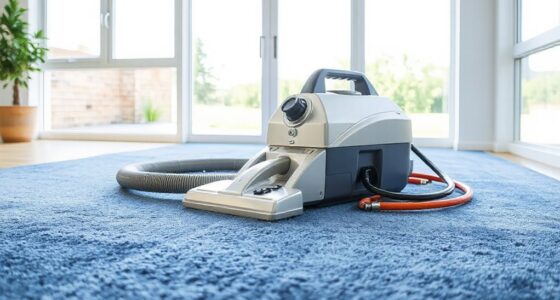
A dust extractor vacuum with auto filter cleaning solves the single most annoying problem in workshop dust collection: a filter that clogs mid-job and kills your suction. After comparing ten models, the Bosch VAC140AH stands out as the best overall pick for its 14-gallon capacity paired with reliable pulse cleaning and a certified HEPA filter. If budget matters more than capacity, the DEWALT DWV010 delivers genuine automatic filter cleaning in a compact 8-gallon body, while the Starmix Powerhouse XL is the heavy-duty choice for full-time shops. The main tradeoff in this category is capacity and motor quality versus price and portability, plus the difference between true pulsed filter cleaning and simpler manual-shake systems. Keep reading for the full breakdown.

Get cleaning gear delivered free with Prime
- Fast, free delivery on millions of items
- Prime Video, Amazon Music and more included
- Member-only deals all year
Complete the kit


Key Takeaways
- Capacity was the clearest dividing line: 8-gallon units (DEWALT DWV010, ECOMAX, Dapper Supply) suit single-tool bench work, while the Bosch VAC140AH and Starmix Powerhouse XL only make sense for continuous, multi-tool shop use.
- Several 8-gallon models in this lineup look nearly identical on paper, but tool-activated start and the quality of the auto-clean mechanism, not tank size, are what actually separate the strong picks from the weak ones.
- The Bosch VAC090AH hits a middle ground the others skip, trading the VAC140AH’s capacity for easier mobility without giving up the automatic filter cleaning system.
- L-Class certification on the 8-Gallon L-Class model matters only for specific materials like softwoods and plaster; buyers working with hardwoods or concrete should pay more for full HEPA-rated units.
- Automatic filter cleaning delivers the biggest benefit during fine-dust tasks like drywall sanding and MDF cutting; for coarse debris collection alone, cheaper models without the feature represent better value.


| dust extractor vacuum with auto filter cleaning | Capacity | Airflow | Filter cleaning |
|---|---|---|---|
| Dapper Supply 8-Gallon Wet/Dry | 8 gallons | Up to 140 CFM | — |
| ECOMAX 8-Gallon HEPA Shop Vac | 8 gallons | — | — |
| Starmix Powerhouse XL HEPA Wet | 13.2 gallons (50 L) | 157 CFM | Automatic electromagnetic |
| Bosch VAC140AH Portable 14-Gal | 14 gallons | Up to 150 CFM | Automatic, every 15 seconds |
| Bosch VAC090AH 9-Gallon Dust E | 9 gallons | Up to 150 CFM | Automatic, every 15 seconds |
| 8-Gallon Wet/Dry Dust Extracto | 8 gallons | Up to 140 CFM | — |
| 8-Gallon L-Class Dust Extracto | 8 gallons | 150 CFM | — |
| Dapper Supply 10-Gallon Wet/Dr | 10 gallons | 151 CFM | Automatic, every 20 seconds |
| DEWALT DWV010 HEPA Dust Extrac | 8 gallons | 150 CFM | Automatic pulses every 30 seconds |
| ECOMAX 8-Gallon HEPA Wet/Dry D | 8 gallons | — | — |
More Details on Our Top Picks
Dapper Supply 8-Gallon Wet/Dry Dust Extractor with HEPA Filter and Tool-Activated Start
This extractor stands out for hitting the sweet spot most buyers actually need: automatic HEPA filter cleaning every 25 seconds, a genuine 1200W motor with 140 CFM of airflow, and a tool-activated outlet that starts the vacuum the moment you pull the trigger on your sander or saw. The 84.3-inch water lift gives it strong suction for fine silica dust, while the wet/dry capability means one machine handles shop spills and drywall sanding alike. Compared with the Bosch VAC090AH, you get a longer 19.7-foot cord and 13.1-foot hose for less tethering to outlets. The tradeoff is the 5.5A limit on the tool outlet, which rules out most table saws and larger routers — so heavy tool users should look at the Bosch or Starmix units instead. For remodelers and mid-size workshops, though, this is the most balanced package here.
Pros:- Automatic HEPA filter cleaning every 25 seconds maintains suction without stopping work
- Tool-activated outlet starts and stops the vacuum with your power tool
- Long 19.7 ft cord and 13.1 ft hose cover a large work area
- Wet/dry capability with a rolling base for easy jobsite mobility
Cons:- Tool outlet only supports tools up to 5.5A
- 20 kPa suction trails the Bosch and Starmix extractors for the toughest caked-on debris
Best for: Remodelers and home workshop owners who want one machine for tool dust collection and general wet/dry cleanup
Not ideal for: Contractors running high-amperage tools like table saws, since the tool outlet caps out at 5.5A
- Capacity:8 gallons
- Motor:1200W
- Airflow:Up to 140 CFM
- Suction:20 kPa
- Static water lift:84.3 inches
- Filter:HEPA with automatic cleaning every 25 seconds
- Tool outlet support:Up to 5.5A
- Warranty:2 years, parts and labor
Our verdict“The most versatile all-around pick for woodworkers and remodelers who want automatic filter cleaning, wet/dry flexibility, and long reach without paying industrial prices.”
ECOMAX 8-Gallon HEPA Shop Vac and Dust Extractor
For buyers who want dust-extractor functionality on a shop-vac budget, this ECOMAX is the smartest entry point. You still get power tool activation, a HEPA filter, and semi-automatic filter cleaning — a step down from the fully automatic systems on the Dapper Supply or Bosch VAC140AH, but far better than the manual filter shaking on traditional shop vacuums. The accessory bundle is generous: extension wands, floor nozzle, crevice tool, disposable bags, and a anti-static hose that the Dapper unit doesn’t include. Real tradeoffs exist. The 10-foot hose is the shortest in this lineup, and at 75 dB it’s noticeably louder than the 69 dB Starmix, which matters in a basement shop. The drain port is a genuine plus for wet pickup — something the dry-only Bosch VAC090AH can’t do at all.
Pros:- Automatic start when a connected power tool switches on
- HEPA filtration plus semi-automatic filter cleaning at a lower tier of the market
- Anti-static hose and extensive accessory kit included
- Drain port simplifies emptying liquids and debris
Cons:- Semi-automatic filter cleaning requires more operator involvement than fully automatic rivals
- 75 dB noise level is loud for enclosed or residential workshops
Best for: Budget-conscious DIYers and hobbyist woodworkers upgrading from a basic shop vac who want tool activation and HEPA filtration
Not ideal for: Quiet-space users or anyone with a large shop, given the 75 dB noise level and short 10-foot hose
- Capacity:8 gallons
- Motor power:6.5 HP
- Filter type:HEPA
- Amperage:15 A
- Hose length:10 feet
- Noise level:75 dB
- Special features:Power tool activation, semi-automatic filter cleaning, anti-static hose, drain port
Our verdict“The best-value route into tool-activated dust extraction if you can accept a shorter hose and a louder motor.”
Starmix Powerhouse XL HEPA Wet/Dry Industrial Vacuum Cleaner, 13.2 Gallons
Where the Bosch VAC140AH handles jobsite silica dust well, the Starmix Powerhouse XL is built for a different league: environments where fine or hazardous dust is the norm, not the exception. Its dual HEPA filters with automatic electromagnetic cleaning mean double the filtration surface, so cleaning cycles restore suction more effectively than single-filter systems — and the 69 dB noise level makes it the quietest machine here by a wide margin. Add a 26-foot cord and 17-foot hose, and you get jobsite coverage the 10-foot ECOMAX hose can’t touch. This capacity for autonomy comes at a cost: premium pricing, a 40-pound body that’s awkward to lift into trucks despite its four wheels, and a single power level with none of the variable suction control Bosch offers on the VAC140AH. For daily professional use, those compromises are reasonable; for weekend warriors, they’re overkill.
Pros:- Automatic electromagnetic cleaning of two HEPA filters keeps suction consistent with minimal operator input
- Quiet 69 dB operation, best in this lineup
- Extra-long 26 ft cord and 17 ft hose maximize reach across job sites
- Double-walled container and wet/dry capability for demanding environments
Cons:- At 40 lbs, it’s the heaviest extractor here and awkward to transport solo
- Only one power level — no variable suction dial for delicate tasks
Best for: Professional contractors and restoration crews who regularly handle fine or hazardous dust and need long-duty-cycle filtration
Not ideal for: Hobbyists and occasional users who won’t justify premium pricing or wrestle a 40-pound machine around a small shop
- Capacity:13.2 gallons (50 L)
- Airflow:157 CFM
- Filter type:HEPA (2 filters)
- Filter cleaning:Automatic electromagnetic
- Noise level:69 dB(A)
- Cord length:26 ft
- Hose length:17 ft
- Weight:40 lbs
Our verdict“The industrial-grade choice when hazardous dust compliance and all-day suction matter more than price or portability.”
Bosch VAC140AH Portable 14-Gallon Dust Extractor with Automatic Filter Cleaning and HEPA Filter
The VAC140AH earns its spot through capacity and compliance support. Its 14-gallon tank is the largest in this batch, meaning fewer mid-job emptying stops — a real advantage over the Dapper Supply 8-gallon when you’re grinding concrete or sanding drywall all day. The automatic filter cleaning every 15 seconds is more aggressive than the Dapper’s 25-second interval, and the Power Broker suction dial lets you dial back airflow for tasks like finish sanding, something the single-speed Starmix can’t do. Bosch also designs this into its PRO+GUARD system, aimed at moving users toward OSHA Silica Table 1 compliance — a framework the ECOMAX and Dapper units don’t address. The flip side: it’s dry-only extraction, so wet spill pickup is off the table, and the large tank makes it less maneuverable in tight interior work. It’s a jobsite workhorse, not a garage do-everything machine.
Pros:- Largest capacity in this lineup at 14 gallons for fewer emptying stops
- Automatic filter cleaning every 15 seconds keeps suction consistent during heavy dust loads
- Power Broker dial provides variable suction control for delicate tasks
- PRO+GUARD system supports moving toward OSHA Silica Table 1 compliance
Cons:- Dry-only — no wet pickup like the Dapper Supply or Starmix units
- Large footprint makes it cumbersome in tight interior spaces
Best for: Concrete and drywall contractors who need maximum tank capacity, aggressive filter cleaning, and a path toward OSHA silica compliance
Not ideal for: Buyers who want one vacuum for wet spills too, since this is a dry-only extractor
- Capacity:14 gallons
- Filter cleaning:Automatic, every 15 seconds
- Filter:HEPA; captures 99.97% of particles 0.3 microns or larger
- Airflow:Up to 150 CFM
- Static water lift:Up to 97 inches
- Power tool activation:Compatible
- Suction control:Power Broker dial
Our verdict“The high-capacity jobsite pick for dust-heavy trades that value compliance support and fine suction control over wet capability.”
Bosch VAC090AH 9-Gallon Dust Extractor with Automatic Filter Cleaning
Think of the VAC090AH as the VAC140AH’s smaller sibling: identical 150 CFM airflow, 97-inch water lift, 15-second automatic filter cleaning, and HEPA filtration — just in a 9-gallon body that’s easier to load into a van and move between rooms. That makes it the strongest choice for finish carpenters, floor installers, and anyone whose work happens inside occupied homes, where a 14-gallon tank is a liability rather than a benefit. The included fleece filter bag is a thoughtful touch for dry dust, keeping fine debris contained during disposal — an area where bagless options like the ECOMAX can get messy. Two honest caveats: capacity fills faster on high-volume jobs, so it suits intermittent tool use rather than continuous grinding, and Bosch describes silica compliance as a path toward OSHA requirements, not a guarantee — crews should verify their full setup. For mobile trades, it nails the power-to-size ratio.
Pros:- Pro-grade 150 CFM airflow and 97-inch water lift in a compact 9-gallon body
- Automatic filter cleaning every 15 seconds maintains suction
- HEPA filtration captures 99.97% of particles 0.3 microns or larger
- Fleece filter bag keeps fine dust contained during disposal
Cons:- Smaller tank requires more frequent emptying on dust-heavy jobs
- OSHA silica compliance is described as a step toward, not a guarantee of, meeting requirements
Best for: Finish carpenters and floor installers working inside occupied homes who need pro-grade suction in a van-friendly size
Not ideal for: Full-day concrete grinding or high-volume demolition work, where the 9-gallon tank fills too quickly
- Capacity:9 gallons
- Airflow:Up to 150 CFM
- Static water lift:Up to 97 inches
- Filter cleaning:Automatic, every 15 seconds
- Filtration:HEPA; captures 99.97% of particles 0.3 microns or larger
- Power tool activation:Compatible
- Included accessories:Fleece filter bag
Our verdict“The best power-to-portability ratio here for mobile pros who bring dust extraction into customers’ homes.”
8-Gallon Wet/Dry Dust Extractor Vacuum with HEPA Filter
This model earns its spot by being the most versatile cleanup machine in this batch. Where the DEWALT DWV010 is squarely a dry jobsite extractor, this unit handles wet spills and dry debris with a 72.3-inch static water lift, which makes it a better fit for contractors who deal with both slurry and sawdust on the same job. The tradeoff sits squarely with the filter cleaning: instead of the fully automatic pulsing cycles on the Dapper Supply 10-gallon, this one uses a semi-automatic cleaning button you press yourself, so suction recovery depends on you remembering to act. The 5.5A tool outlet ceiling also rules out high-draw tools, though it matches or beats most rivals here.
Pros:- Handles wet spills and dry debris with 72.3 in. water lift
- Tool-activated outlet starts the vacuum automatically with connected tools
- Air tool connector adds pneumatic compatibility
- Complete accessory set for jobsite and general cleanup
Cons:- Filter cleaning requires manual button activation rather than full automation
- Tool outlet limited to 5.5A tools
Best for: Contractors and workshops needing one vacuum for liquid spills, jobsite debris, and tool dust collection
Not ideal for: Set-and-forget woodworkers who want hands-free filter cleaning — the manual button demands attention
- Capacity:8 gallons
- Motor power:1200W
- Airflow:Up to 140 CFM
- Vacuum pressure:18 kPa
- Static water lift:72.3 in.
- Filter type:HEPA with manual cleaning button
- Hose length:7.5 feet
- Warranty:2 years
Our verdict“Buy this if wet and dry versatility matters more to you than fully automatic filter maintenance.”
8-Gallon L-Class Dust Extractor with Automatic HEPA Clean
For serious woodshop dust control, this option stands out for its fully automatic HEPA cleaning cycle every 20 seconds, twice as frequent as the DEWALT DWV010’s 30-second pulses, which keeps suction steadier during long sanding and routing sessions. The 96-inch water lift also outmuscles most 8-gallon rivals, pulling fine wood dust through long hose runs without bogging down. The remote control is a differentiator none of the other picks offer, letting you kill the unit from across a cluttered shop. The compromise: cleaning cycles can interrupt continuous workflow, and the 5A tool ceiling is actually lower than the 5.5A outlets on the wet/dry models in this roundup, so check your tool draw before committing.
Pros:- Automatic 20-second filter cleaning maintains consistent suction without intervention
- Auto-start synchronizes vacuum operation with connected power tools
- Remote control operation improves safety in cluttered workspaces
- 96 in. H2O static pressure handles heavy-duty fine dust loads
Cons:- Periodic cleaning cycles may interrupt continuous workflow
- Tool connection limited to 5A maximum
Best for: Woodworkers running high-output dust jobs like sanding and routing who need sustained suction
Not ideal for: Users with high-amperage power tools — the 5A outlet limit excludes some larger saws and grinders
- Capacity:8 gallons
- Filter class:L Class HEPA
- Motor power:1200 watts
- Airflow:150 CFM
- Static pressure:96 in. H2O
- Filter cleaning interval:Every 20 seconds, automatic
- Tool connection max:5A
Our verdict“This is the pick for woodworkers who prioritize nonstop suction over wet capability or high-amp tool support.”
Dapper Supply 10-Gallon Wet/Dry Dust Extractor with HEPA Filter
If tank capacity drives your decision, this 10-gallon unit beats every other pick here by two gallons, meaning fewer emptying stops on drywall and concrete jobs. Its 23 kPa suction is the strongest in this batch — well above the 18 kPa of the 8-gallon wet/dry extractor — and the four operating modes plus automatic 20-second filter cleaning give it more control and less maintenance than the ECOMAX’s semi-automatic approach. The pneumatic tool connector and overload protection round out a genuinely jobsite-ready package with a 2-year parts and labor warranty. The catch is cost of ownership: the remote control is optional and sold separately, where the L-Class extractor includes one, and the 5.5A tool cap still limits bigger equipment.
Pros:- Largest tank in this batch at 10 gallons for fewer emptying stops
- 23 kPa suction outperforms every other model here
- Four operating modes plus automatic 20-second filter cleaning
- 2-year parts and labor warranty with overload protection
Cons:- Remote control sold separately
- Power tools limited to 5.5A maximum amperage
Best for: Drywall, concrete, and remodeling contractors who fill tanks fast and need maximum suction
Not ideal for: Buyers wanting remote operation out of the box — it’s an add-on purchase here
- Capacity:10 gallons
- Motor:15A brushless
- Suction:23 kPa
- Airflow:151 CFM
- Filter cleaning:Automatic, every 20 seconds
- Operating modes:4
- Warranty:2 years, parts and labor
Our verdict“Choose this when raw capacity and suction matter more than included conveniences like a remote.”
DEWALT DWV010 HEPA Dust Extractor with Automatic Filter Cleaning, 8-Gallon
This model makes the most sense for buyers who value a proven, jobsite-hardened platform. Compared with the boutique brands in this lineup, the DWV010 brings heavy-duty wheels and casters built for abuse, a 15-foot anti-static hose that’s double the reach of the Dapper Supply and generic 8-gallon units, and a 30-second automatic filter pulse that keeps dry extraction flowing. The standout for renovation contractors is EPA RRP compliance for lead-safe work when paired with DWV9330 filters — something no other product here advertises. The tradeoffs are real though: compliance depends on buying the correct filter, the tool actuation and 8-gallon tank are matched rather than exceeded by cheaper rivals, and airflow at 150 CFM doesn’t top the Dapper’s 151 CFM with less suction pressure.
Pros:- EPA RRP compliant for lead-safe renovation work with DWV9330 filters
- 15 ft anti-static hose doubles the reach of most rivals here
- Automatic 30-second filter pulses for continuous operation
- Power tool actuation controls vacuum on/off automatically
Cons:- EPA compliance requires specific DWV9330 filters
- Specs matched rather than exceeded by lower-cost alternatives
Best for: Renovation and lead-abatement contractors who need EPA RRP compliance and jobsite-tough construction
Not ideal for: Budget-focused buyers — equivalent specs exist cheaper, and RRP compliance requires separately specified filters
- Capacity:8 gallons
- Motor:15 amp
- Airflow:150 CFM
- Filter cleaning:Automatic pulses every 30 seconds
- Hose:15 ft, 1.25 in. anti-static with swivel connector
- Compliance:EPA RRP with DWV9330 filters
Our verdict“This is the choice when regulatory compliance and durability outrank saving money on specs you can get cheaper elsewhere.”
ECOMAX 8-Gallon HEPA Wet/Dry Dust Extractor with Power Tool Activation
This option wins on what’s in the box. Where the DEWALT DWV010 ships as a bare platform, the ECOMAX arrives with two extension wands, a floor nozzle, crevice tool, round brush, three disposable bags, and both HEPA and foam filters — essentially a complete cleaning kit with no add-on purchases. The stainless steel tank and built-in drain port make wet pickup and cleanup more practical than the plastic-drum alternatives, and the dust-full indicator is a convenience none of the other picks list. But be clear-eyed about the filter: cleaning is semi-automatic, not fully automatic, so it sits closer to the generic 8-gallon wet/dry unit than to the L-Class extractor’s hands-free 20-second cycles. The shorter 6.5 HP rating and corded-only design also limit sustained extraction muscle.
Pros:- Complete accessory bundle including wands, nozzles, bags, and dual filters
- Stainless steel tank with drain port for easy wet cleanup
- Automatic power tool activation for dust extraction
- Dust-full indicator and 10 ft anti-static hose
Cons:- Semi-automatic filter cleaning requires manual intervention
- Corded design with modest extraction power limits heavy continuous use
Best for: Homeowners and small shops who want a complete wet/dry and dust extraction kit without buying attachments separately
Not ideal for: Users running continuous high-output extraction — semi-automatic filter cleaning and modest power won’t keep pace
- Capacity:8 gallons
- Motor power:6.5 HP
- Filter type:HEPA, semi-automatic cleaning
- Tank material:Stainless steel with drain port
- Hose:10 ft anti-static
- Power tool activation:Yes
- Dimensions:15.6 × 15.2 × 24.8 inches
Our verdict“Buy this if you want everything included on day one; skip it if fully automatic filter cleaning is your priority.”

How We Picked
I judged every model in this lineup against the same core question: does the automatic filter cleaning actually maintain suction during sustained fine-dust work? That meant prioritizing models where the pulse or clean-down mechanism is genuinely automatic rather than a manual shaker dressed up in marketing language. From there, I weighed filtration certification (true HEPA versus L-Class versus unspecified), tank capacity relative to intended use, tool-activated start for workflow convenience, wet/dry versatility, and overall build quality.
Ranking then came down to fit. Pro-grade machines like the Bosch VAC140AH and Starmix Powerhouse XL earned top positions because their cleaning systems and motors are built for all-day use, while value-oriented 8-gallon units were judged on whether they deliver the auto-clean promise at a lower price without fragile components. Models with ambiguous filter specifications or cleaning systems that rely heavily on operator intervention were ranked lower regardless of other strengths, because in this category that feature is the entire point.
| dust extractor vacuum with auto filter cleaning | Filter cleaning |
|---|---|
| Dapper Supply 8-Gallon Wet/Dry | — |
| ECOMAX 8-Gallon HEPA Shop Vac | — |
| Starmix Powerhouse XL HEPA Wet | Automatic electromagnetic |
| Bosch VAC140AH Portable 14-Gal | Automatic, every 15 seconds |
| Bosch VAC090AH 9-Gallon Dust E | Automatic, every 15 seconds |
| 8-Gallon Wet/Dry Dust Extracto | — |
| 8-Gallon L-Class Dust Extracto | — |
| Dapper Supply 10-Gallon Wet/Dr | Automatic, every 20 seconds |
| DEWALT DWV010 HEPA Dust Extrac | Automatic pulses every 30 seconds |
| ECOMAX 8-Gallon HEPA Wet/Dry D | — |
Factors to Consider When Choosing Dust Extractor Vacuum With Auto Filter Cleaning
Before settling on a specific model, it helps to understand what actually drives performance and long-term satisfaction in this category. These are the factors that separated the winners from the also-rans in my comparison.How the Auto Filter Cleaning Actually Works
Not every product labeled automatic filter cleaning uses the same approach, and the difference shows up in real suction over a long workday. The best systems, like those on the Bosch VAC140AH and Starmix Powerhouse XL, use bursts of reverse air flow that knock packed fine dust off the filter without stopping your work. Simpler designs vibrate or mechanically shake the filter on a timer, which works adequately for lighter dust loads but struggles with drywall or concrete slurry. A common buyer mistake is assuming any auto-clean feature is equal, then discovering suction drops after twenty minutes of sanding. Check whether the cleaning is truly continuous, intermittent, or manually triggered, because that single detail affects day-to-day performance more than tank size or motor wattage.
Filter Class and What Your Materials Demand
Filtration class determines which dust the machine is legally and practically suited to handle, and it is where cheap units cut corners. L-Class extraction, like the dedicated 8-gallon L-Class model in this lineup, covers lower-risk dusts such as softwood and plaster. M-Class handles hardwood, MDF, and most construction dust, while certified HEPA units capture the finest particles including silica-containing concrete dust. If you mostly cut plywood in a home shop, L-Class is adequate; if you renovate older homes or grind concrete, anything less than HEPA is a health gamble. Match the class to your worst material, not your average one, because upgrading a filter class later often means buying a different machine entirely.
Tank Capacity Versus Mobility
Capacity seems like a simple bigger-is-better spec, but it directly trades against weight, storage footprint, and how easily you move the machine between sites. A 14-gallon unit like the Bosch VAC140AH can run through a full day of sanding without emptying, which matters if you hate interruptions. But at roughly double the bulk of an 8-gallon extractor, it becomes a burden if you work in tight rooms or haul gear up stairs. The sweet spot for most hobbyists and single-tool setups sits at 8 to 10 gallons, which covers a full session of typical workshop dust. Buy large capacity only when you genuinely run continuous fine-dust jobs; otherwise you are paying for and pushing around empty air.
Tool-Activated Start and Hose Compatibility
Tool-activated start, present on models like the Dapper Supply 8-gallon and ECOMAX power-tool variant, turns the extractor on and off automatically with your sander or saw. This is one of those features that feels optional until you have it, after which manual switching feels archaic. What buyers frequently overlook is hose diameter and tool compatibility: fine-dust extraction wants a smaller-diameter high-velocity hose, while chip-heavy work wants a wide one, and some extractors force a compromise. Also check the amp rating of the outlet, because high-draw tools like table saws can exceed what a compact extractor’s receptacle supports. These integration details decide whether the machine becomes part of your workflow or an obstacle next to it.
Wet/Dry Versatility and Real Ownership Costs
Most models here advertise wet/dry capability, but the practical value depends on how you work. If you ever drill into masonry with water suppression or mop up spills, a wet-rated machine with a float valve saves you from buying a second vacuum. The hidden cost trap in this category is consumables: replacement HEPA filters and bags vary widely in price and availability between brands, and auto-clean systems extend filter life but never eliminate replacement. A cheaper extractor with expensive proprietary bags can cost more over two years than a pricier machine with affordable standard consumables. Before buying, price out two filter replacements and a year of bags, then add that to your comparison.
Frequently Asked Questions
Does automatic filter cleaning mean I never have to clean or replace the filter?
No, and this is the most common misconception in the category. Automatic cleaning knocks loose, dry dust off the filter surface so suction stays consistent during a job, but it cannot remove embedded particles, moisture-laden dust, or fine particulate that has bonded to the pleats. Expect to inspect the filter periodically and replace it on the manufacturer’s schedule, especially if you work with drywall or concrete dust. What the feature genuinely saves you is the mid-task shutdowns that plague extractors without it, where suction fades and you have to stop, open the tank, and manually clean the filter. Think of it as maintaining performance rather than eliminating maintenance. Budgeting for at least one replacement filter per year of regular use is a realistic starting point.
Is an 8-gallon extractor enough, or should I pay more for 14 gallons?
For most hobbyist and single-tool workflows, 8 gallons is genuinely sufficient, because fine dust from sanding and sawing packs down slowly and the tank rarely fills before you finish a session. Capacity starts to matter when you run continuous, multi-hour fine-dust jobs, connect the extractor to multiple tools, or work commercially where stopping to empty a tank costs money. The Bosch VAC140AH and Starmix Powerhouse XL also pair their larger tanks with heavier-duty motors, so part of what you pay for is durability, not just volume. Remember that a 14-gallon machine is considerably heavier when full and harder to move between rooms or vehicles. If you hesitate between the two, mobility needs should break the tie more often than capacity math.
What is the difference between L-Class and HEPA filtration, and which do I need?
L-Class covers coarser, lower-toxicity dusts like softwood shavings and plaster, and an L-Class machine such as the dedicated 8-gallon L-Class model is a reasonable choice for general hobby woodworking. HEPA-rated units, which include the Bosch, DEWALT, and most ECOMAX models here, capture a far higher percentage of sub-micron particles, including crystalline silica from concrete, tile, and stone work. The health distinction matters most if you cut masonry, sand drywall, or work in older buildings, where fine dust carries real long-term respiratory risk. HEPA filters also cost more to replace, so buying more filtration than your materials demand wastes money. A practical rule: match the filter class to the finest, most hazardous material you regularly process, not to the majority of your work.
Is tool-activated start worth having on a dust extractor?
For anyone using handheld tools like sanders, routers, or circular saws, yes, it is one of the highest-value conveniences in this category. The extractor powers up the instant your tool does and shuts down a few seconds after, capturing the dust burst at startup and avoiding the bad habit of skipping extraction because switching the vacuum separately feels like a chore. Models like the Dapper Supply 8-gallon with tool activation and the ECOMAX power-tool variant include this at a price point where it used to be a pro-only feature. The main caveat is amperage: check the draw rating of your tools, because high-wattage equipment like some table saws can exceed what the extractor’s built-in outlet handles. If you only connect the extractor to a stationary tool you switch on deliberately, the feature adds less value.
Can I use one of these extractors for both wet and dry work?
Most models in this roundup are wet/dry rated, including the Dapper Supply, ECOMAX, and Bosch units, but switching between modes takes a few steps you should not skip. For wet pickup you remove the paper bag and rely on a float valve that shuts off suction before water reaches the motor; for dry fine dust you reinstall the bag and HEPA filter. The mistake to avoid is leaving the filter saturated after wet use and then switching back to dry dust collection, which cakes the filter and defeats the auto-clean system. If your work is genuinely mixed, prioritize models where the wet-to-dry conversion is quick and the filter dries fast or is cheap to replace. If you almost never collect liquids, a dry-only focus with better dust filtration usually serves you better.
Conclusion
The right pick here depends less on specs and more on how much fine dust you actually generate. For best overall, the Bosch VAC140AH combines serious capacity, certified HEPA filtration, and one of the most dependable automatic filter cleaning systems in the lineup, making it the safest choice for frequent use. The Bosch VAC090AH earns best value among pro-grade options by keeping that same cleaning system in a more manageable 9-gallon body.
For best budget value, the DEWALT DWV010 delivers genuine automatic filter cleaning and HEPA filtration in an 8-gallon package that suits hobbyist workshops and job-site portability alike. The Starmix Powerhouse XL takes best premium for full-time shops and contractors who need industrial-duty components and 13.2 gallons of capacity. Beginners should start with the ECOMAX 8-gallon with power tool activation or the Dapper Supply 8-gallon, both of which keep the learning curve low without sacrificing the auto-clean feature that defines this category. Whatever you choose, resist the urge to buy capacity you will never fill, and match the filter class to your dustiest material rather than your cleanest.
Halloween Picks
halloween
As an affiliate, we earn on qualifying purchases.