For most commercial tile-floor cleaning, I’d start with the Sanitaire QuietClean SC9180D, a multi-surface upright that balances routine floor coverage with onboard tools. The Hoover Commercial PortaPower is a more compact choice for stairs, edges, and quick pickups, while the ProTeam Super Coach Pro 10 suits larger spaces where backpack mobility can cut down on pushing and turning. The main tradeoff is between efficient dry pickup and specialized equipment: uprights cover open areas, canisters and backpacks reach around obstacles, and wet/dry or washing machines handle different kinds of mess. Match the machine to your floor plan and cleaning routine, not just the word “commercial” on the label. Read on for how the ten options compare and which buyer each one fits best.

Get cleaning gear delivered free with Prime
- Fast, free delivery on millions of items
- Prime Video, Amazon Music and more included
- Member-only deals all year
Complete the kit


Key Takeaways
- The Sanitaire QuietClean SC9180D earns the lead for buyers who want a general-purpose upright; its multi-surface design is a better fit for mixed commercial areas than a tile-only specialty machine.
- Canisters and backpacks solve access problems, not every cleaning problem. The PortaPower and ProTeam Super Coach Pro 10 are more compelling for stairs, furniture, and obstructed layouts than for fast, uninterrupted runs across wide open floors.
- The Sanitaire HydroClean SC930A fills a separate role. A hard-floor washer is for wet cleaning tasks; it should not be treated as a direct replacement for a vacuum used for dry debris.
- The Farag Janitorial FJ-2000-II is a capacity-first outlier. Its 24-gallon wet/dry format points to heavier cleanup needs, but its size makes it a poor match for routine daily tile maintenance in tight spaces.
- Upright choices differ in convenience and format. The bagless Bissell Pro Cup avoids disposable bags, while the Sanitaire SC679K Tradition and Oreck Commercial XL use bagged designs; buyers should weigh debris handling and upkeep alongside floor coverage.
| Hoover Commercial PortaPower Lightweight Canister Vacuum Cleaner |  | Best for Portable Detail Cleaning | Weight: 8 lbs | Cord length: 33 ft | Capacity: 3.7 kg | VIEW ON AMAZON | See Our Full Breakdown |
| Sanitaire QuietClean Multi-Surface Upright Commercial Vacuum, SC9180D |  | Best for Large Tile-and-Carpet Routes | Model: SC9180D | Type: Corded upright commercial vacuum | Cord length: 50 ft | VIEW ON AMAZON | See Our Full Breakdown |
| Hoover Commercial Shoulder Vac Pro Bagged Backpack Vacuum Cleaner | 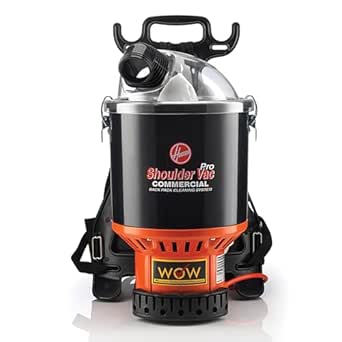 | Best for Quiet, Mobile Cleaning | Vacuum type: Bagged backpack | Filter: HEPA media | Cord length: 48 ft | VIEW ON AMAZON | See Our Full Breakdown |
| ProTeam Super Coach Pro 10 Commercial Backpack Vacuum with Two-Piece Wand Tool Kit |  | Best for Long Shifts and Larger Capacity | Model: 107304 | Capacity: 10 liters | Weight: 12.5 lbs | VIEW ON AMAZON | See Our Full Breakdown |
| Sanitaire Professional Compact Canister Vacuum Cleaner, SL3681A |  | Best for Simple, Light-Duty Cleaning | Model: SL3681A | Type: Corded electric canister vacuum | Weight: 10 lbs | VIEW ON AMAZON | See Our Full Breakdown |
| Bissell Commercial Pro Cup Bagless Upright Vacuum with On-Board Tools |  | Best Multi-Surface Upright | Model: BGU1937T | Type: Bagless upright vacuum | Cleaning path: 13.5 inches | VIEW ON AMAZON | See Our Full Breakdown |
| Farag Janitorial FJ-2000-II Wet/Dry Industrial Vacuum Cleaner, 24 Gallon |  | Best for Wet and Dry Cleanup | Model: FJ-2000-II | Type: Wet/dry canister vacuum | Tank capacity: 24 gallons | VIEW ON AMAZON | See Our Full Breakdown |
| Sanitaire SC679K Tradition Upright Commercial Bagged Vacuum |  | Best for Carpet-Heavy Facilities | Model: SC679K | Type: Upright commercial bagged vacuum | Weight: 12.2 pounds | VIEW ON AMAZON | See Our Full Breakdown |
| Sanitaire HydroClean Commercial Hard Floor Washer, SC930A |  | Best for Daily Sealed-Tile Washing | Model: SC930A | Type: Commercial hard-floor washer | Cleaning path: 11 inches | VIEW ON AMAZON | See Our Full Breakdown |
| Oreck Commercial XL Bagged Upright Vacuum Cleaner |  | Best Lightweight Pick for Long Routes | Type: Bagged upright vacuum | Weight: 9 pounds | Filter: HEPA | VIEW ON AMAZON | See Our Full Breakdown |
| commercial vacuum for tile floor | Weight | Power | Noise level | Model |
|---|---|---|---|---|
| Hoover Commercial PortaPower L | 8 lbs | 1200 W | 70 dB | — |
| Sanitaire QuietClean Multi-Sur | 20 lbs | 1,150 W | Below 70 dBA | SC9180D |
| Hoover Commercial Shoulder Vac | — | 600 W | 66 dBA | — |
| ProTeam Super Coach Pro 10 Com | 12.5 lbs | 1108 W | 66 dB | 107304 |
| Sanitaire Professional Compact | 10 lbs | 800 W | 71 dB | SL3681A |
| Bissell Commercial Pro Cup Bag | — | 960 watts | — | BGU1937T |
| Farag Janitorial FJ-2000-II We | 75 pounds | 2,000 W | — | FJ-2000-II |
| Sanitaire SC679K Tradition Upr | 12.2 pounds | — | 78 dB | SC679K |
| Sanitaire HydroClean Commercia | — | — | — | SC930A |
| Oreck Commercial XL Bagged Upr | 9 pounds | — | 80 dB | — |
More Details on Our Top Picks
Hoover Commercial PortaPower Lightweight Canister Vacuum Cleaner
The 8-pound canister is a flexible choice for tile routes that include stairs, counters, furniture, and narrow edges—not just open floor. Its 33-foot cord reduces outlet changes, while the shoulder strap and stretch hose make it easier to carry the vacuum while reaching around fixtures. Compared with the Sanitaire SC9180D, this PortaPower gives up upright-style floor coverage in favor of portability and a broader set of detail-cleaning tools. The built-in blower can also move loose debris from awkward spots, though it is not a substitute for collecting dust from the floor. Its single power level offers little adjustment for rugs or delicate surfaces, and the cord still ties work to an outlet. I’d choose it for mixed, close-up cleaning rather than long stretches of uninterrupted tile.
Pros:- Light 8-pound body can be carried by hand or shoulder strap
- 33-foot cord supports a useful working radius
- Stretch hose and varied tools suit edges and above-floor cleaning
- Built-in blower adds an option for moving debris from tight areas
Cons:- One power level limits adjustment across tile, rugs, and upholstery
- Canister format is less suited to covering broad floor areas quickly
- Corded operation requires access to outlets
Best for: Small commercial teams cleaning tile alongside stairs, upholstery, shelves, and tight areas that benefit from a carryable vacuum.
Not ideal for: Crews covering large, open tile floors who want upright-style floor cleaning and fewer passes with a specialized floor head.
- Weight:8 lbs
- Cord length:33 ft
- Capacity:3.7 kg
- Filter:Cloth
- Power:1200 W
- Noise level:70 dB
- Power source:Corded electric
- Notable features:Built-in blower, shoulder strap, stretch hose
Our verdict“Choose the PortaPower for portable, mixed-surface detail work; pick the Sanitaire SC9180D instead for more direct coverage of large tile areas.”
Sanitaire QuietClean Multi-Surface Upright Commercial Vacuum, SC9180D
For a site where tile rooms sit beside carpeted areas, the switchable brush roll makes this upright more adaptable than a hard-floor-only machine: turn the brush off for hard floors, then use it on carpet. The 50-foot cord and stated coverage of up to 7,800 square feet suit larger routes with fewer outlet changes. Compared with the Hoover PortaPower, the SC9180D is better positioned for repeated floor passes, while the Hoover is easier to carry into tight or elevated spaces. This Sanitaire includes a telescoping wand and retractable dusting brush for edges and above-floor tasks, but its 20-pound upright form is less convenient on stairs. Its cord still limits roaming, and buyers should check the listed 220-volt requirement against their facility’s power supply.
Pros:- Brush roll can be switched off for hard-floor cleaning
- 50-foot cord supports longer runs between outlets
- Telescoping wand and retractable dusting brush add above-floor reach
- Operates below 70 dBA
Cons:- 20-pound upright is less convenient to carry on stairs than the backpack and canister options
- Corded design limits movement to the outlet range
- Listed 220-volt specification may not suit every facility
Best for: Commercial cleaners maintaining broad mixed-floor areas who want an upright with a long cord and a brush-roll switch.
Not ideal for: Small offices with frequent stairs, tight storage, or outlets that do not match its listed 220-volt requirement.
- Model:SC9180D
- Type:Corded upright commercial vacuum
- Cord length:50 ft
- Dust capacity:4 quarts
- Weight:20 lbs
- Noise level:Below 70 dBA
- Power:1,150 W
- Voltage:220 V
- Cleaning area:Up to 7,800 sq ft
Our verdict“Pick the SC9180D for long, mixed carpet-and-tile routes; choose a lighter canister or backpack if portability matters more than upright floor coverage.”
Hoover Commercial Shoulder Vac Pro Bagged Backpack Vacuum Cleaner
The Shoulder Vac Pro suits tile routes that weave between desks, fixtures, and crowded rooms, where pulling a canister or steering an upright can slow the cleaner down. Its backpack format, 48-foot cord, and 60-inch hose combine mobility with reach, while the 66 dBA operation is quieter than the Sanitaire Professional Compact Canister’s listed 71 dB. A HEPA media filter is another distinction for teams seeking filtration beyond a basic cloth filter, as found on the Hoover PortaPower. The tradeoff is that the cleaner carries the unit throughout the shift, so harness fit matters, and the cord still defines the work radius. Capacity is listed as 10 pounds, which may not translate as neatly to bag-change planning as a volume figure. I’d favor it for quiet, obstacle-filled routes over simple open-floor runs.
Pros:- Backpack design supports movement around obstacles
- HEPA media filter captures dirt, dust, and pollen
- 48-foot cord offers a broad working radius
- 66 dBA noise level is comparatively quiet
Cons:- Wearable format may not suit operators who prefer wheeled equipment
- Corded operation still restricts range to available outlets
- Capacity is listed by weight rather than volume
Best for: Cleaning crews working around furniture and occupied spaces who value a wearable design, long cord, and HEPA media filtration.
Not ideal for: Operators who prefer not to carry equipment on their back or need a clearly stated container volume for collection planning.
- Vacuum type:Bagged backpack
- Filter:HEPA media
- Cord length:48 ft
- Capacity:10 pounds
- Noise level:66 dBA
- Hose length:60 inches
- Power:600 W
- Power source:Corded electric
Our verdict“Choose the Shoulder Vac Pro for quieter, obstacle-rich cleaning where a backpack is more useful than the ProTeam’s larger stated capacity.”
ProTeam Super Coach Pro 10 Commercial Backpack Vacuum with Two-Piece Wand Tool Kit
The Super Coach Pro 10 pairs a 10-liter capacity with a 12.5-pound backpack body, a useful combination for crews trying to reduce emptying interruptions while keeping the vacuum wearable. Its tool kit covers floors, crevices, dusting, and upholstery, so one machine can move from tile edges to nearby furniture. Compared with the Hoover Shoulder Vac Pro, this ProTeam gives a clearer volume rating and higher stated capacity; the Hoover, by contrast, lists quieter operation at 66 dBA, matching the ProTeam’s 66 dB. The articulating harness is designed for comfort, but fit remains personal, and the 10-liter capacity comes with a larger body than a compact canister. It is a practical pick for extended commercial routes, though corded use still requires outlet planning.
Pros:- 10-liter capacity can reduce interruptions for emptying
- Articulating harness is designed to support comfort during longer routes
- Tool kit includes a floor tool, crevice tool, dust brush, and upholstery tool
- 66 dB noise level
Cons:- Backpack format may be uncomfortable for some operators over a full shift
- Corded operation requires outlet planning
- The stated maximum suction figure of 150 feet is not an intuitive measure for comparing floor-cleaning performance
Best for: Janitorial teams covering extended tile and mixed-surface routes who want backpack mobility, a larger stated capacity, and a multi-tool kit.
Not ideal for: Small sites with short cleaning runs, limited storage, or operators who do not want to wear a 12.5-pound vacuum.
- Model:107304
- Capacity:10 liters
- Weight:12.5 lbs
- Noise level:66 dB
- Power:1108 W
- Voltage:120 V
- Maximum suction:150 feet
- Warranty:3 years on motor, labor, and parts; limited lifetime warranty on molded body parts
Our verdict“Choose the Super Coach Pro 10 for longer routes where its stated 10-liter capacity matters more than the Hoover Shoulder Vac Pro’s quieter listed noise level.”
Sanitaire Professional Compact Canister Vacuum Cleaner, SL3681A
The SL3681A is a straightforward canister for smaller commercial jobs where tile, area rugs, and carpet share the same cleaning route. At 10 pounds, it is easier to move and store than the 20-pound Sanitaire SC9180D, and its four included tools cover basic floor and detail tasks. The simpler setup can suit a small office or shop that does not need the backpack capacity of the ProTeam Super Coach Pro 10. Its limits matter, though: the 2.6-quart capacity is modest beside the ProTeam’s 10 liters, and the product is described as light-duty commercial rather than a choice for continuous, high-volume work. One power level also leaves little room to tailor suction. I’d choose it for occasional, modest-sized routes, not a demanding daily floor program.
Pros:- 10-pound weight is manageable for a canister
- Four tools cover bare floors, carpet, crevices, and dusting
- Suitable for bare floors, area rugs, and carpet
- Compact dimensions support storage in smaller supply areas
Cons:- 2.6-quart capacity is limited for longer cleaning routes
- Designed for light-duty commercial use
- Single power level offers little adjustment between surfaces
Best for: Small offices, studios, and shops needing a light canister for modest tile areas, area rugs, and occasional detail cleaning.
Not ideal for: Large facilities or crews running frequent, extended shifts who need higher capacity and more robust commercial-duty positioning.
- Model:SL3681A
- Type:Corded electric canister vacuum
- Weight:10 lbs
- Dust capacity:2.6 quarts
- Power:800 W
- Noise level:71 dB
- Power levels:1
- Warranty:1 year, parts and labor
Our verdict“Pick the SL3681A for smaller, light-duty jobs; the ProTeam Super Coach Pro 10 is a better fit when capacity and extended-route use take priority.”
Bissell Commercial Pro Cup Bagless Upright Vacuum with On-Board Tools
The Bissell BGU1937T is a practical pick for crews that need one upright for tile, carpet, and upholstery rather than a dedicated hard-floor washer. Its five height settings let operators adapt the head between surfaces, while the onboard tools make quick work of edges and furniture without fetching a separate kit. Compared with the Sanitaire HydroClean SC930A, it does not wash sealed tile or separate clean and dirty water; its advantage is broader surface coverage and simpler dry vacuuming. The bagless cup and washable filters cut down on disposable supplies, but the single power level limits control over delicate surfaces and noise. A 30-foot cord supports room-to-room work, though outlet placement still sets the cleaning radius.
Pros:- Five height settings support changes between bare floors and carpet
- Bagless dirt container and washable filters reduce disposable replacements
- Crevice, dusting, upholstery, and extension tools store onboard
- Replaceable cord supports maintenance without replacing the whole vacuum
Cons:- Corded operation ties the work area to available outlets
- One power level offers little adjustment for different tasks
- Does not scrub or wash tile the way the Sanitaire HydroClean SC930A does
Best for: Small commercial cleaning teams that need one upright for tile, rugs, and upholstery, with tools kept close at hand.
Not ideal for: Facilities that regularly clean liquid spills or need a dedicated sealed-floor wash cycle; the BGU1937T is a dry vacuum.
- Model:BGU1937T
- Type:Bagless upright vacuum
- Cleaning path:13.5 inches
- Power cord:30 feet
- Height settings:5
- Power:960 watts
- Dirt capacity:2
- Included tools:Crevice tool, combination dusting brush, upholstery tool, extension wand
Our verdict“Choose the Bissell if you want a versatile dry-cleaning upright for mixed floors and upholstery, not wet tile cleanup.”
Farag Janitorial FJ-2000-II Wet/Dry Industrial Vacuum Cleaner, 24 Gallon
For facilities where tile work includes spills, tracked-in water, or large wet messes, the FJ-2000-II fills a role the upright vacuums here cannot. Its 24-gallon tank and included front squeegee suit bigger cleanup jobs, while the 2,000-watt motor and accessory kit add capacity for routine hard-floor maintenance. Compared with the Sanitaire HydroClean SC930A, this is a much larger wet/dry collection machine rather than a vacuum-and-wash unit for daily sealed-floor care. That makes it better for bulk liquid pickup, but less nimble for ordinary room-by-room cleaning: it weighs 75 pounds and measures 38 inches long. The 24-foot cable and indoor-only design also limit where it can work, so I’d choose it for a janitorial closet serving broad indoor areas, not tight spaces.
Pros:- Wet/dry operation handles liquid spills as well as dry debris
- 24-gallon tank reduces interruptions for emptying during larger jobs
- Front squeegee is suited to gathering liquid from hard floors
- Accessory kit and four wheels support varied indoor cleanup tasks
Cons:- At 75 pounds, it is cumbersome to transport and reposition
- Its 24-foot cable offers less reach than the 30-foot cords on the Bissell and Sanitaire uprights
- Indoor-only use limits its suitability for outdoor cleanup
Best for: Janitorial teams in schools, kitchens, or commercial buildings that need to collect substantial wet and dry messes from hard floors.
Not ideal for: Solo operators or crews cleaning small, cluttered rooms; its 75-pound body and large dimensions are harder to maneuver than an upright such as the Bissell BGU1937T.
- Model:FJ-2000-II
- Type:Wet/dry canister vacuum
- Tank capacity:24 gallons
- Power:2,000 W
- Voltage:110 V
- Cable length:24 feet
- Weight:75 pounds
- Dimensions:38 × 21 × 21 inches
- Air flow:106 L/s
Our verdict“Pick the Farag for bulky indoor wet-and-dry cleanup, but choose a lighter upright for routine tile dust and debris.”
Sanitaire SC679K Tradition Upright Commercial Bagged Vacuum
The SC679K is a straightforward commercial upright for buildings where carpet is the main task and tile is only part of the route. Its 12.2-pound weight and 30-foot cord make it easier to carry between rooms than the 75-pound Farag FJ-2000-II, while the 18-quart shake-out bag offers generous capacity for dry debris. The brush roll and belt can be replaced without tools, which keeps basic upkeep accessible to in-house staff. Its tile-floor fit is narrower than the Bissell BGU1937T: the supplied surface recommendation is carpet, and it lacks the Bissell’s listed bare-floor and upholstery tools. The single power level also means less flexibility when moving between surfaces. I’d rank it as a carpet-first workhorse, not a specialist choice for frequent tile cleaning.
Pros:- Light 12.2-pound body is easier to transport than the Farag wet/dry canister
- 18-quart shake-out bag holds substantial dry debris
- Brush roll and belt can be replaced without tools
- 30-foot cord helps cover larger indoor areas
Cons:- Recommended for carpet, making it a less targeted choice for tile-heavy routes
- Single power level limits surface-specific adjustment
- Does not handle wet spills or wash hard floors
Best for: Commercial sites with long carpeted corridors and occasional tile sections that need a lightweight, serviceable upright.
Not ideal for: Facilities whose cleaning route is mostly tile; its carpet-focused recommendation and lack of listed hard-floor tools make the Bissell BGU1937T a more adaptable fit.
- Model:SC679K
- Type:Upright commercial bagged vacuum
- Weight:12.2 pounds
- Bag capacity:18 quarts
- Wattage:800 watts
- Power cord length:30 feet
- Noise level:78 dB
- Recommended surface:Carpet
Our verdict“Choose the SC679K for carpet-dominant commercial spaces that need a lightweight upright, rather than for tile-first cleaning.”
Sanitaire HydroClean Commercial Hard Floor Washer, SC930A
The HydroClean is the most tile-specific option in this group: it vacuums and washes sealed hard floors in one pass, so crews can pick up loose debris while applying cleaning solution. Separate clean- and dirty-water tanks keep recovered grime apart from the wash solution, and the self-cleaning brush roll helps with between-job maintenance. Compared with the Bissell BGU1937T, it is not a general-purpose upright for carpets and upholstery; its strength is a dedicated sealed-floor routine. The tradeoff is a more involved upkeep cycle: brush rolls and filters are recommended for replacement every three months. Its 11-inch cleaning path is also narrower than the Bissell’s 13.5-inch path, which can mean more passes across open areas. For daily tile washing, that specialization is the point.
Pros:- Combines debris pickup and floor washing in one pass
- Separate clean and dirty water tanks keep recovered liquid apart from solution
- Self-cleaning function helps maintain the brush roll
- 30-foot cord supports work across commercial rooms
Cons:- Limited to sealed hard floors rather than carpet or upholstery
- Brush rolls and filters are recommended for replacement every three months
- 11-inch cleaning path is narrower than the Bissell BGU1937T’s 13.5-inch path
Best for: Commercial cleaners responsible for frequent maintenance of sealed tile or other sealed hard floors who want vacuuming and washing in one step.
Not ideal for: Facilities with carpeted areas, unsealed floors, or crews looking for a dry-only vacuum; this machine is limited to sealed hard floors.
- Model:SC930A
- Type:Commercial hard-floor washer
- Cleaning path:11 inches
- Solution tank capacity:35 oz.
- Cord length:30 feet
- Power source:Corded electric
- Included brush rolls:2 microfiber brush rolls
- Included filters:2
Our verdict“Choose the HydroClean when routine sealed-tile washing matters more than carpet versatility or a wider dry-vacuum path.”
Oreck Commercial XL Bagged Upright Vacuum Cleaner
At 9 pounds, the Oreck XL is the easiest upright here to carry between floors or move through a building with frequent room changes. Its 35-foot cord reaches farther than the 30-foot cords on the Bissell BGU1937T and Sanitaire SC679K, reducing outlet changes across a long route. Automatic height adjustment and a HEPA filter add useful features for mixed carpet and hard-floor work, while side brushes help gather debris along edges. Still, this is a dry upright, not a tile washer like the Sanitaire HydroClean SC930A, and its single speed gives operators little control over the cleaning setting. The high-speed brush roll is helpful for embedded carpet debris but makes this less focused on delicate hard-floor tasks. I’d favor it where low carry weight and reach outrank wash capability.
Pros:- Nine-pound weight makes it easier to carry than the Bissell BGU1937T and Sanitaire SC679K
- 35-foot cord offers more reach than the other listed upright vacuums
- Automatic height adjustment supports carpet and hard-floor use
- Side brushes help collect debris along edges and corners
Cons:- Corded operation still requires access to outlets
- Single speed offers limited control for different surfaces
- Dry-vacuum design cannot wash floors or collect wet messes
Best for: Cleaning staff who carry an upright between floors or cover long indoor routes across carpet and hard floors.
Not ideal for: Tile-focused crews that need wet cleanup or adjustable power; the HydroClean SC930A is better suited to washing sealed floors.
- Type:Bagged upright vacuum
- Weight:9 pounds
- Filter:HEPA
- Capacity:9 quarts
- Cord length:35 feet
- Height adjustment:Automatic
- Wattage:870 watts
- Noise level:80 dB
Our verdict“Pick the Oreck XL for a light, long-reach upright across mixed flooring, but not for wet tile cleaning.”

How We Picked
I ranked these machines by how well their format and stated purpose align with commercial tile-floor work: routine dry debris pickup, coverage across open areas, access around obstacles, and suitability for the messes a vacuum can reasonably handle. I also weighed usability factors that affect daily work, including portability, onboard tools, collection design, and whether the machine is built for dry vacuuming, wet/dry cleanup, or washing hard floors.
The order favors versatile choices for common commercial routines, then options with more specialized strengths or narrower fit. That is why the QuietClean leads as a general-purpose upright, while the PortaPower and ProTeam backpack serve buyers who value maneuverability. The HydroClean and Farag wet/dry machine are not ranked as everyday dry-vacuum substitutes: their distinct cleaning roles matter more than raw capacity or specialization. I treat claims and product formats as selection cues, not proof of performance on every tile type; grout condition, debris, and cleaning procedures can change what works best.
Factors to Consider When Choosing Commercial Vacuum For Tile Floors
Choosing a commercial vacuum for tile floors starts with the work pattern, not the machine category. A roomy lobby, a restaurant with tight table spacing, and a facility that sees wet spills need different equipment even if all have tile. These factors can help you avoid paying for capacity or attachments your crew will rarely use.
Match the machine to the floor plan
Open corridors and broad rooms reward a machine that can cover long, clear runs without frequent repositioning. Tight aisles, stairs, and furniture-heavy areas place more value on a canister or backpack format that can reach around obstacles. A common mistake is choosing an upright for every space because it looks familiar, then discovering that constant maneuvering slows the route. Walk the cleaning path and note doorways, storage limits, stairs, and crowded zones before choosing a format. If the building has both open and congested areas, consider whether one versatile machine can handle the whole route or whether a second, more specialized unit is justified.
Separate dry vacuuming from wet cleanup
A vacuum for dust, crumbs, and tracked-in grit is not automatically suitable for liquid spills or scrubbing. Wet/dry machines and hard-floor washers serve tasks beyond ordinary dry pickup, but they bring different handling, cleanup, and storage demands. Using the wrong type can leave a mess unresolved or create maintenance work the crew did not plan for. Identify whether wet cleanup is occasional or part of the daily routine, then assign equipment accordingly. For mixed needs, keeping a dry vacuum for frequent debris and a wet-capable machine for specific incidents may be more practical than asking one machine to do both jobs.
Think about grout, grit, and floor finish
Tile is not one uniform surface: grout lines, textured finishes, and delicate coatings affect how debris collects and how cleaning tools should be used. Fine grit can settle into joints, while a smooth tile surface may need less aggressive contact than a rough commercial finish. Do not assume that a machine labeled multi-surface is automatically right for every tile and grout combination. Check the product’s intended surfaces and follow the facility’s flooring-care guidance before routine use. For unfamiliar finishes, start with a small, inconspicuous area and confirm that the cleaning method does not scratch, catch, or leave residue.
Plan for collection and maintenance
Bagged and bagless designs change the work after the floor is clean. Bags can make collected debris easier to contain during disposal, while bagless bins avoid replacement bags but require emptying and cleaning. In a busy facility, the relevant question is not simply which system costs less to operate; it is which routine your staff can follow consistently and hygienically. Check how often the collection area needs attention, how easy it is to access, and whether replacement supplies can be kept on hand. A machine that is harder to empty or maintain may spend more time out of service, even if its format looks convenient at purchase.
Choose capacity and portability for the route
Large capacity can reduce interruptions on long routes, but a bigger machine may be harder to move, store, and position in small rooms. Lightweight canisters and backpacks can reduce the burden of reaching remote areas, though they may not be the easiest choice for every worker or every long shift. Avoid treating a large tank or commercial label as a sign that a machine fits routine tile care. Estimate the size of the area, how often debris accumulates, and where the vacuum will be stored between shifts. The right capacity is the one that supports the route without creating a handling or storage problem.
Pay for specialization only when the job calls for it
Attachments, wet-cleaning capability, and industrial capacity can make a machine more useful for the right crew, but extra capability can also mean more equipment to maintain and train staff on. A backpack can be valuable in a crowded building; it may be unnecessary where open-floor coverage dominates. A wet/dry unit makes sense when liquid and heavy cleanup are recurring tasks, not merely because those messes could happen. Before paying for specialized equipment, list the tasks it would replace or improve and how often those tasks occur. If the answer is “rarely,” a straightforward dry vacuum may be the more sensible primary machine, with specialized equipment reserved for a separate need.
Frequently Asked Questions
Can I use a regular commercial vacuum on every kind of tile?
Not automatically. Tile may be smooth, textured, coated, or paired with grout that collects grit, and those differences can affect tool contact and debris pickup. Check the machine’s stated surface compatibility and your flooring-care instructions before setting a standard cleaning method. Avoid assuming that a general multi-surface label covers delicate finishes or every grout condition. If the surface is unfamiliar, test the setup in a discreet area before using it across the whole floor.
Should I choose a backpack vacuum or an upright for a large tiled building?
Choose based on the route rather than building size alone. An upright is often the more natural fit for broad, open areas where the crew can make long passes. A backpack can be easier to maneuver around furniture, tight aisles, and stairs, but comfort and fit matter during extended shifts. If the building combines open halls and crowded rooms, consider which area takes more staff time and whether one machine can serve both without slowing the route. A larger building does not by itself mean a backpack is the better choice.
Is a wet/dry vacuum a good primary machine for tile floors?
It can be the right primary machine when wet spills or heavier cleanup are regular parts of the job, but it is not automatically the best daily dry-debris vacuum. Wet/dry equipment has a different purpose and may add handling, storage, and cleanup steps. For routine dust and crumbs, a dedicated dry vacuum can be simpler to deploy and maintain. If both tasks occur often, compare the work involved in using one multipurpose machine with the practicality of keeping separate equipment for dry pickup and wet incidents.
Does bagless make more sense for a commercial cleaning crew?
Bagless designs avoid disposable bags, but staff still need to empty and clean the collection bin. Bagged machines can make debris disposal more contained, which some facilities may prefer for routine service. The better fit depends on who maintains the machine, how often it runs, and what disposal practices the site requires. Include replacement supplies, bin-cleaning time, and the crew’s preferred routine in the comparison. A format that fits the cleaning process is more useful than choosing by collection style alone.
When is a hard-floor washer worth choosing instead of a vacuum?
A hard-floor washer is worth considering when the cleaning plan calls for washing the floor, not just collecting dry debris. It fills a different role from a vacuum and should be judged by the facility’s wet-cleaning needs, handling procedures, and storage capacity. For everyday dust, grit, and crumbs, a dry vacuum remains the more direct tool. If the site needs both tasks, decide whether washing is frequent enough to justify dedicated equipment or whether it belongs in a separate periodic cleaning routine. Keep the products’ jobs distinct rather than expecting one type to replace the other.
Conclusion
For a general commercial tile-floor routine, I’d choose the Sanitaire QuietClean SC9180D as the best overall fit because it offers a multi-surface upright approach without narrowing the job to wet cleanup or specialized access. The Hoover Commercial PortaPower is my best value-style choice for buyers who prioritize a compact canister and onboard tools, while the ProTeam Super Coach Pro 10 is the best premium-format pick for crews that need backpack mobility across obstacle-heavy routes. Beginners should start with a straightforward upright such as the Sanitaire SC679K Tradition if bagged collection suits their maintenance routine. For specific needs, choose the Sanitaire HydroClean SC930A for hard-floor washing or the Farag Janitorial FJ-2000-II for large-capacity wet/dry cleanup; neither is my first pick for routine dry vacuuming. The right choice comes down to whether your daily route is open and dry, crowded and mobile, or built around wet cleanup.