For fine dust control, my best overall pick is the DEWALT DWV010, which pairs HEPA filtration with automatic filter cleaning for sustained cleanup in work areas. The MetroVac DataVac/3ESD is a better fit for electronics benches where ESD protection and a HEPA setup matter, while the Atrix Express Plus ESD-Safe offers a portable option for targeted service work. The main tradeoff is between workshop-scale dust collection and compact vacuums designed for sensitive equipment; a HEPA label alone does not make every model suitable for every fine-dust job. I compare capacity, portability, filtration, static control, and upkeep across all nine picks. Read on for the full breakdown and help matching a vacuum to your workspace.

Get cleaning gear delivered free with Prime
- Fast, free delivery on millions of items
- Prime Video, Amazon Music and more included
- Member-only deals all year
Complete the kit



Key Takeaways
- The DWV010 stands apart for workshop use: its 8-gallon capacity and automatic filter cleaning better suit ongoing dust collection than the smaller electronics-focused vacuums.
- ESD protection and fine-particle filtration solve different problems: electronics service users should look for both, rather than assuming a HEPA filter alone protects sensitive components.
- The 3ESD, MDV-1ESD, and DataVac ESD-Safe Pro Series target electronics cleanup with ESD-safe designs, but their compact formats are not substitutes for a larger shop extractor.
- The cordless DEWALT DCV501HB trades sustained capacity for mobility: it is easier to carry around a jobsite than a full-size extractor, but it is a different fit for long-duration dust collection.
- Atrix’s lineup spans distinct service needs: the Express Plus emphasizes portability, while the Omega Supreme models focus on HEPA fine-particle collection in a more dedicated vacuum format.
| DEWALT 20V Cordless Dry Hand Vacuum with HEPA Filter (DCV501HB) |  | Best Cordless Jobsite Pick | Voltage: 20V | Runtime: Up to 214 minutes per charge | Tank capacity: Up to 15 tank fills per battery charge | VIEW ON AMAZON | See Our Full Breakdown |
| MetroVac DataVac/3ESD ESD-Safe HEPA Vacuum and Blower |  | Best for Electronics Service | Model: DataVac/3ESD; model number 117-117261 | Filter and filtration: HEPA; quadruple filtration, captures 99.97% of particles as small as 0.3 microns | Motor power: 1.7 HP | VIEW ON AMAZON | See Our Full Breakdown |
| DEWALT DWV010 8-Gallon HEPA Dust Extractor with Automatic Filter Cleaning |  | Best for Continuous Workshop Dust Collection | Capacity: 8 gallons | Filter type: HEPA | Motor: 15 A | VIEW ON AMAZON | See Our Full Breakdown |
| Atrix Express Plus ESD-Safe Portable Vacuum |  | Best Lightweight Electronics Pick | Model: VACEXP-03 | Power: 120 V, 500 W | Airflow: 79 CFM | VIEW ON AMAZON | See Our Full Breakdown |
| Atrix Omega Supreme HEPA Electronic Fine Particle Vacuum, 120 V |  | Best Premium Fine-Particle Electronics Pick | Model: VACOMEGASLFH | Voltage and wattage: 120 V, 628 W | Filter type: HEPA | VIEW ON AMAZON | See Our Full Breakdown |
| MetroVac DataVac MDV-1ESD ESD-Safe HEPA Computer Vacuum and Blower |  | Best for HEPA-Focused Detail Cleaning | Model: MDV-1ESD | Motor power: 500 watts | Voltage: 120 volts | VIEW ON AMAZON | See Our Full Breakdown |
| SCS 497AJN Electronic Service Vacuum, 120 VAC | 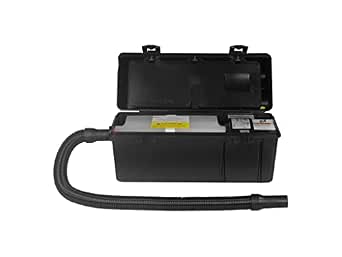 | Best for Dedicated Service-Bench Work | Model: 497AJN | Voltage: 120 VAC | Motor power: 1 horsepower | VIEW ON AMAZON | See Our Full Breakdown |
| Atrix Omega Supreme ESD-Safe Vacuum, 1 Gallon, Black |  | Best for Mobile Technician Organization | Capacity: 1 gallon | Voltage: 120 volts | Wattage: 628 watts | VIEW ON AMAZON | See Our Full Breakdown |
| MetroVac DataVac ESD-Safe Pro Series Computer Vacuum and Blower |  | Best Lightweight Vacuum-and-Blower Pick | Model: MDV-1ESD | Power: 120 V, 500 W | Amperage: 4.17 A | VIEW ON AMAZON | See Our Full Breakdown |
| anti static vacuum for fine dust control | Noise level | Model | Weight | Capacity |
|---|---|---|---|---|
| DEWALT 20V Cordless Dry Hand V | — | — | — | — |
| MetroVac DataVac/3ESD ESD-Safe | 78 dB | DataVac/3ESD; model number 117-117261 | 13.5 lb | — |
| DEWALT DWV010 8-Gallon HEPA Du | 80 dB | — | 22 lb | 8 gallons |
| Atrix Express Plus ESD-Safe Po | 79 dB | VACEXP-03 | 4 lb | 1 quart |
| Atrix Omega Supreme HEPA Elect | Less than 70 dB | VACOMEGASLFH | — | 12.5 pounds |
| MetroVac DataVac MDV-1ESD ESD- | 70 dB | MDV-1ESD | 4.7 pounds (listed) | — |
| SCS 497AJN Electronic Service | — | 497AJN | 12 pounds | 4 pounds |
| Atrix Omega Supreme ESD-Safe V | 69 dB | — | — | 1 gallon |
| MetroVac DataVac ESD-Safe Pro | 80 dB | MDV-1ESD | 3 pounds | 0.06 gallons |
More Details on Our Top Picks
DEWALT 20V Cordless Dry Hand Vacuum with HEPA Filter (DCV501HB)
The DEWALT DCV501HB is the strongest fit here for drywall and concrete dust cleanup away from an outlet. Its HEPA filter is specified for fine dust, and the cordless design avoids the tether that limits the DEWALT DWV010 and the electronics-focused MetroVac DataVac/3ESD. The listed runtime of up to 214 minutes per charge suits repeated spot cleanup, though actual use depends on the battery and conditions. A push-button canister release makes emptying simpler, but the supplied details do not describe ESD grounding or an anti-static hose, so this is not the pick for exposed circuit boards. The battery is sold separately, adding a required purchase for anyone without compatible 20V batteries. I’d choose it for portable general fine-dust pickup, not specialist static control.
Pros:- HEPA filtration is suited to capturing fine dust such as concrete and drywall.
- Cordless operation makes spot cleanup easier where outlets are inconvenient.
- Listed runtime is up to 214 minutes per charge.
- Push-button canister release simplifies emptying.
Cons:- Battery is sold separately.
- No ESD-safe grounding or anti-static hose is specified, limiting its fit for static-sensitive electronics.
- Handheld capacity and use case are less suited to sustained, tool-connected collection than the DEWALT DWV010.
Best for: Tradespeople and remodelers who need cordless HEPA-filtered pickup for dry concrete or drywall dust and already own compatible DEWALT 20V batteries.
Not ideal for: Electronics technicians who need documented ESD protection, or buyers without a compatible battery who want a ready-to-use cordless kit.
- Voltage:20V
- Runtime:Up to 214 minutes per charge
- Tank capacity:Up to 15 tank fills per battery charge
- Filter type:HEPA
- Power source:Cordless; battery sold separately
- Warranty:3-year limited
Our verdict“Choose this DEWALT for portable fine-dust cleanup if you have a compatible battery, but choose an ESD-rated model for electronics work.”
MetroVac DataVac/3ESD ESD-Safe HEPA Vacuum and Blower
For fine dust around computers and IT equipment, the DataVac/3ESD puts static control ahead of jobsite capacity. Its grounding wrist strap and HEPA system—rated to capture 99.97% of particles as small as 0.3 microns—make it a more targeted electronics choice than the general-purpose DEWALT DCV501HB. The two-speed motor also supports both vacuuming and blowing, useful for service work where debris needs to be loosened before collection. That flexibility comes with limits: it is corded, weighs 13.5 pounds, and has a listed noise level of 78 dB. Compared with the lighter Atrix Express Plus, the MetroVac offers a stated HEPA capture rating and blower function, while the Atrix is easier to carry and includes an ESD-safe hose. I’d favor this for equipped IT benches, not quiet or highly mobile cleaning.
Pros:- Grounding wrist strap helps reduce static discharge during electronics cleaning.
- HEPA filtration is rated to capture 99.97% of particles as small as 0.3 microns.
- Two motor speeds support vacuuming and blowing.
- Carry case and crevice tool are included.
Cons:- Corded operation restricts movement between work areas.
- At 13.5 pounds, it is heavier than the 4-pound Atrix Express Plus.
- Listed noise level is 78 dB.
Best for: IT technicians and electronics repair teams who need ESD-aware cleaning, HEPA filtration, and vacuum/blower functions at a powered workstation.
Not ideal for: Technicians who prioritize a lightweight carry-around unit, quiet operation, or cordless cleanup; this model is corded, 13.5 pounds, and listed at 78 dB.
- Model:DataVac/3ESD; model number 117-117261
- Filter and filtration:HEPA; quadruple filtration, captures 99.97% of particles as small as 0.3 microns
- Motor power:1.7 HP
- Power:Corded electric; 120 V, 900 W, 7.5 A
- Speeds:2
- Weight:13.5 lb
- Noise level:78 dB
- Hose length:1.8 m
- Included components:Crevice tool, HEPA filter, carry case
Our verdict“Pick the DataVac/3ESD for bench-based electronics cleaning when its ESD features and blower function matter more than low weight or cordless mobility.”
DEWALT DWV010 8-Gallon HEPA Dust Extractor with Automatic Filter Cleaning
The DWV010 is the lineup’s large-capacity choice for dust generated by power tools, rather than a small electronics vacuum. Its 8-gallon capacity, up to 155 CFM airflow, and power tool actuation make it better suited to longer workshop tasks than the handheld DEWALT DCV501HB. The included 15-foot anti-static hose directly addresses static buildup in the collection path, a useful distinction for fine-dust control. Filter-cleaning pulses every 30 seconds help manage filter loading during ongoing work, though this remains a corded, 22-pound machine with an 80 dB listed noise level. Compared with the MetroVac DataVac/3ESD, it prioritizes volume and tool connection over electronics-specific grounding and portability. I’d pick it for a workshop, not for cleaning individual circuit boards.
Pros:- Eight-gallon capacity supports larger dust-producing tasks than handheld options.
- Included 15-foot anti-static hose is directly relevant to static-conscious fine-dust collection.
- Automatic filter-cleaning pulses every 30 seconds help maintain filtration during extended work.
- Power tool actuation lets a connected tool control vacuum operation.
Cons:- Corded operation limits movement around a worksite.
- Listed noise level is 80 dB.
- Its size and workshop focus make it less convenient for detailed electronics cleaning than the MetroVac DataVac/3ESD.
Best for: Workshop users and contractors who need high-capacity HEPA dust extraction with an anti-static hose and power-tool actuation.
Not ideal for: Electronics technicians seeking a compact ESD vacuum, or anyone needing quiet or cordless cleanup; this extractor is corded, weighs 22 pounds, and is listed at 80 dB.
- Capacity:8 gallons
- Filter type:HEPA
- Motor:15 A
- Airflow:Up to 155 CFM
- Hose:15 ft long; 1.25 in diameter; anti-static
- Power source:Corded, 120 V
- Weight:22 lb
- Noise level:80 dB
- Warranty:1-year limited
Our verdict“Choose the DWV010 for tool-connected workshop dust collection and its anti-static hose, not for portable electronics service.”
Atrix Express Plus ESD-Safe Portable Vacuum
At just 4 pounds, the Atrix Express Plus is the easiest option here to carry between electronics workstations. Its ESD-safe hose and included brushes suit detail cleaning better than the larger DEWALT DWV010, while its 79 CFM airflow offers a compact corded setup for dust, debris, and toner. Its key compromise is filtration: the cartridge is listed at 88% efficiency at 0.3 microns, well below the 99.97% HEPA rating specified for the Atrix Omega Supreme and MetroVac DataVac/3ESD. A one-quart capacity also means more frequent emptying on bigger jobs. I’d choose it for light, targeted cleaning where low weight and accessories matter more than maximum fine-particle capture. For substantial dust loads or a stronger filtration specification, step up to a HEPA model.
Pros:- Four-pound weight makes it easy to carry between workstations.
- ESD-safe hose supports cleaning around static-sensitive equipment.
- Includes crevice, utility, and oval brush tools for detail work.
- Compact dimensions make storage simpler than with larger extractors.
Cons:- Cartridge filtration is rated at 88% at 0.3 microns, below the stated HEPA performance of the Atrix Omega Supreme.
- One-quart capacity can require frequent emptying during larger cleanup jobs.
- Corded operation and indoor-use design limit where it can be used.
Best for: Electronics technicians who need a very lightweight, ESD-safe vacuum for occasional detail work and small amounts of dust or toner.
Not ideal for: Buyers handling sustained fine-dust cleanup or seeking a high-efficiency HEPA specification; its cartridge is rated at 88% at 0.3 microns and capacity is one quart.
- Model:VACEXP-03
- Power:120 V, 500 W
- Airflow:79 CFM
- Filter:Cartridge; 88% efficiency at 0.3 microns
- Capacity:1 quart
- Weight:4 lb
- Dimensions:12 x 6 x 7 in
- Hose:6 ft ESD-safe stretch hose
- Noise level:79 dB
Our verdict“Pick the Express Plus for lightweight, ESD-aware detail cleaning, but choose the Atrix Omega Supreme when finer-particle filtration is the priority.”
Atrix Omega Supreme HEPA Electronic Fine Particle Vacuum, 120 V
The Omega Supreme is the most filtration-focused electronics option in this group. Its three-stage system and HEPA rating of 99.97% at 0.3 microns give it a stronger fine-particle specification than the Atrix Express Plus, whose cartridge is rated at 88% at the same particle size. ESD-safe grounding and an electronic line filter aimed at reducing EMI/RFI noise make the Omega better suited to sensitive equipment and technician workflows than the general-purpose DEWALT DCV501HB. Its listed noise level is under 70 dB, lower than the MetroVac DataVac/3ESD’s 78 dB. The tradeoffs are a 10-foot cord, single-speed operation, and corded power; it does not offer the DataVac’s two-speed vacuum-and-blower function. I’d favor it for controlled indoor electronics cleaning where filtration and electrical-noise considerations lead the decision.
Pros:- HEPA filtration is rated to capture 99.97% of particles at 0.3 microns.
- Three-stage filtration supports a fine-particle-focused cleaning setup.
- ESD-safe grounding is suited to static-sensitive equipment.
- Electronic line filter is designed to reduce EMI/RFI noise, and listed noise level is under 70 dB.
Cons:- Corded design and 10-foot power cord limit working range.
- Single-speed operation offers less control than the two-speed MetroVac DataVac/3ESD.
- Indoor-use design does not suit outdoor cleanup.
Best for: Electronics service technicians who want specified HEPA capture, ESD-safe grounding, and an electronic line filter for indoor fine-dust work.
Not ideal for: Users who need cordless reach, adjustable suction, or a blower function; this model is corded, single speed, and has a 10-foot power cord.
- Model:VACOMEGASLFH
- Voltage and wattage:120 V, 628 W
- Filter type:HEPA
- Filtration:3 stages; 99.97% at 0.3 microns
- Capacity:12.5 pounds
- Noise level:Less than 70 dB
- Power cord:10 ft, detachable
- Power source:Corded electric
- Usage:Indoor
Our verdict“Choose the Omega Supreme for indoor electronics work where HEPA capture and ESD-aware design matter more than cordless reach or variable speed.”
MetroVac DataVac MDV-1ESD ESD-Safe HEPA Computer Vacuum and Blower
I’d choose this compact ESD-safe vacuum and blower when fine dust around electronics calls for HEPA filtration and precise tool access. Its 70 CFM airflow, stretch hose, and micro-cleaning attachments suit vents, keyboards, and tight equipment spaces, while the included wrist strap supports static-aware work. Compared with the SCS 497AJN Electronic Service Vacuum, this MetroVac is lighter and includes HEPA filtration, but the SCS offers a longer hose and a larger, service-vacuum format. The tradeoff is mobility: this model is corded, and its listed weight is 4.7 pounds, despite a separate description citing 3 pounds. I’d favor it for bench or office cleanup, not for prolonged work far from an outlet or broad floor-dust collection.
Pros:- HEPA filtration is suited to capturing fine particles during equipment cleanup.
- ESD-safe design and included anti-static wrist strap support static-conscious servicing.
- Micro-tool kit, crevice tool, and dusting brush reach narrow electronics spaces.
- Compact body and shoulder strap make it easier to carry between workstations.
Cons:- Corded power restricts movement between equipment and work areas.
- The listed 4.7-pound weight conflicts with the description’s 3-pound claim.
- A small handheld format is less practical for collecting dust across floors or large benches.
Best for: Computer technicians and electronics hobbyists who need HEPA-filtered, ESD-aware cleanup with small-detail tools.
Not ideal for: Technicians who need cordless reach or buyers cleaning large areas of settled fine dust; its corded handheld format is better suited to equipment than rooms.
- Model:MDV-1ESD
- Motor power:500 watts
- Voltage:120 volts
- Airflow:70 CFM
- Filtration:HEPA
- Weight:4.7 pounds (listed)
- Hose length:1.8 meters
- Noise level:70 dB
Our verdict“Choose this MetroVac for portable, HEPA-filtered electronics detail work, but skip it if you need cordless reach or room-scale dust pickup.”
SCS 497AJN Electronic Service Vacuum, 120 VAC
The SCS 497AJN is the more service-oriented choice here: its dissipative hose, Type 2 cartridge filter, and ANSI/ESD S20.20 compliance suit regular toner and dust cleanup around business equipment. Its 7-foot hose gives more reach than the 1.8-meter hose on the MetroVac DataVac MDV-1ESD, though the MetroVac is lighter and explicitly lists HEPA filtration. At 12 pounds, the SCS is portable between work areas, but it is not the pick I’d want to carry continuously. Its stated 4-pound capacity and included wand and nozzles make it a better fit for a dedicated indoor service kit than tiny handheld jobs. The listed filter is Type 2, not HEPA, and the supplied information notes no manufacturer warranty, so buyers needing explicit HEPA performance or warranty coverage should look elsewhere.
Pros:- Meets ANSI/ESD S20.20 and includes a dissipative hose for static-conscious equipment cleanup.
- Seven-foot hose and corded operation offer useful reach around service benches.
- Type 2 cartridge filter and multiple nozzles support targeted toner and dust removal.
- Detachable power cord can simplify packing and setup.
Cons:- The listed Type 2 filter is not specified as HEPA filtration.
- At 12 pounds, it is heavier than the handheld MetroVac MDV-1ESD.
- No manufacturer warranty is listed, and the unit is intended for indoor use.
Best for: IT service teams and electronics repair shops that need a dedicated, ESD-compliant indoor vacuum for toner and equipment dust.
Not ideal for: Buyers who require documented HEPA filtration, a manufacturer warranty, or a lightweight vacuum for frequent carrying.
- Model:497AJN
- Voltage:120 VAC
- Motor power:1 horsepower
- Amperage:6 A
- Capacity:4 pounds
- Filter type:Cartridge (Type 2)
- Hose length:7 feet
- Weight:12 pounds
- Certification:cULus; meets ANSI/ESD S20.20
Our verdict“Pick the SCS for a compliant, dedicated indoor service setup with extra hose reach, but choose a HEPA-specified model if fine-particle filtration is your priority.”
Atrix Omega Supreme ESD-Safe Vacuum, 1 Gallon, Black
I’d put the Atrix Omega Supreme on a technician’s shortlist when organized transport matters as much as static-aware cleanup. Its one-gallon capacity, built-in accessory storage, shoulder strap, and ESD-safe tools make it more service-kit oriented than the handheld MetroVac DataVac ESD-Safe Pro Series. The Atrix also gives a specific filtration figure—88% at 0.3 microns—which is useful context, though it is not the HEPA claim offered by the MetroVac models in this group. A 1.8-meter hose and 69 dB rating suit indoor workstation use, while a single power level limits control over delicate tasks. I’d choose it for routine office equipment maintenance with non-hazardous particles, not for hazardous cleanup or buyers who need stated HEPA efficiency.
Pros:- ESD-safe grounding and included ESD-safe tools are designed for static-sensitive equipment.
- One-gallon capacity is larger than the MetroVac handheld models’ listed capacity.
- Built-in accessory storage and a shoulder strap help keep a mobile service kit organized.
- Filter performance is specified as 88% at 0.3 microns, with a 69 dB noise rating.
Cons:- The stated 88% efficiency at 0.3 microns is not equivalent to a HEPA specification.
- Only one power level is listed, limiting suction adjustment for delicate tasks.
- Designed for indoor use and non-hazardous particles rather than broad or hazardous dust collection.
Best for: Mobile office and IT technicians who want a one-gallon ESD-safe vacuum with stored accessories for routine equipment maintenance.
Not ideal for: Buyers requiring HEPA filtration, hazardous-material pickup, adjustable suction, or outdoor use.
- Capacity:1 gallon
- Voltage:120 volts
- Wattage:628 watts
- Amperage:5.23 A
- Filter efficiency:88% at 0.3 microns
- Hose length:1.8 meters
- Noise level:69 dB
- Power source:Corded electric
Our verdict“Choose the Atrix for organized, mobile ESD-safe office servicing, but favor a HEPA-specified option when fine-particle capture is the deciding requirement.”
MetroVac DataVac ESD-Safe Pro Series Computer Vacuum and Blower
For buyers who value low carry weight and two-way cleaning, the MetroVac DataVac ESD-Safe Pro Series is the most compact-feeling option in this group: it is listed at 3 pounds and works as both a vacuum and blower. Its 70 CFM airflow, grounded wrist strap, and fine-detail tools make it suited to dusting computer cases and equipment, while five disposable bags help contain collected debris. Unlike the Atrix Omega Supreme, it does not offer a one-gallon capacity or built-in accessory storage; its listed capacity is only 0.06 gallons. It also lists an 80 dB noise level and a single power setting. I’d pick it for short, targeted electronics jobs where portability matters more than capacity, variable control, or quiet operation.
Pros:- Listed 3-pound weight makes it easier to carry than the 12-pound SCS 497AJN.
- Vacuum-and-blower function supports both debris collection and directed dust removal.
- ESD-safe tools and grounded wrist strap are suited to static-sensitive equipment.
- Includes a micro-cleaning kit and five disposable bags for detailed work and debris containment.
Cons:- The 0.06-gallon capacity is small compared with the one-gallon Atrix Omega Supreme.
- At 80 dB, it is noisier on paper than the other products in this batch.
- Corded power and a single power level limit placement and suction control.
Best for: Computer repair technicians and electronics hobbyists who want a lightweight corded vacuum and blower for short, detailed cleaning sessions.
Not ideal for: Users cleaning large quantities of fine dust, seeking quiet operation, or needing adjustable suction and cordless movement.
- Model:MDV-1ESD
- Power:120 V, 500 W
- Amperage:4.17 A
- Airflow:70 CFM
- Capacity:0.06 gallons
- Weight:3 pounds
- Hose length:1.8 m (3–6 ft stretch hose)
- Noise level:80 dB
Our verdict“Choose this MetroVac for lightweight, detailed vacuum-and-blower work on electronics, but skip it for quiet, high-capacity, or variable-suction cleaning.”

How We Picked
I ranked these vacuums by how well their stated design fits fine dust control, not by treating every HEPA or ESD label as interchangeable. My main criteria were filtration, static-safe construction for electronics work, collection capacity, mobility, ease of maintenance, and the kind of cleanup each format can realistically handle. A large extractor earns priority for sustained workshop dust collection, while compact ESD-safe models rank higher for bench work and localized electronics cleanup.
The order reflects use-case fit and tradeoffs: the DWV010 leads for broad fine-dust cleanup, while the 3ESD and Express Plus serve more specialized portable tasks. The cordless DCV501HB, compact MetroVac models, SCS 497AJN, and Atrix Omega variants each have a narrower role or a capacity-versatility tradeoff. I do not treat ESD-safe construction as proof of HEPA performance, or HEPA filtration as proof of static safety; buyers should verify the exact model configuration and workplace requirements before purchase.
Factors to Consider When Choosing Anti Static Vacuum For Fine Dust Control
Choosing an anti-static vacuum starts with the dust source and the surface being cleaned. A woodworking or renovation workspace has different collection demands from a computer repair bench, and a mismatch can mean poor containment or unnecessary bulk. These factors help separate meaningful protection and capacity from features that sound similar on a product page.
Match Filtration to the Dust, Not Just the Label
Fine dust can escape through weak filtration or poorly sealed collection systems, so look beyond a filter name and check how the complete vacuum handles captured particles. A HEPA filter can be useful for fine-particle collection, but it does not by itself confirm that the body, seals, hose, and disposal method contain dust well. Buyers handling hazardous materials should follow the material’s safety guidance and use equipment rated for that application; a general-purpose HEPA vacuum is not automatically a hazardous-material extractor. A common mistake is choosing by filter specification alone while ignoring how often filters clog or how dust is emptied. For regular dusty work, a system designed for sustained collection and manageable filter maintenance may matter more than a compact vacuum’s headline filtration claim.
Decide Whether ESD Safety Is a Requirement
ESD-safe construction matters when cleaning around exposed circuit boards or other components that can be damaged by electrostatic discharge. It is a separate concern from fine-particle capture, so an ordinary HEPA vacuum may still be unsuitable for electronics service. Check whether the model is designed for static-safe use as a complete system, including its accessories, rather than assuming a conductive hose alone settles the question. If your work is confined to a computer bench, a specialized ESD vacuum can make more sense than a larger shop extractor. For general workshop floors or construction dust, prioritize dust containment and capacity unless your workflow also includes static-sensitive equipment.
Choose Capacity Around Cleanup Duration
Small canisters and handheld vacuums are easier to store and move, but they require more frequent emptying and may be less suited to extended dust collection. A larger extractor reduces interruptions during ongoing work and can better match tools that produce dust continuously. Capacity is not the only factor: a full container can add weight, and a bulky unit may be awkward to bring to a service bench. Estimate how much dust a typical task creates and how often you are willing to stop for emptying or filter care. Buying a large vacuum for occasional spot cleanup can add unnecessary bulk, while relying on a tiny unit for daily shop use can make maintenance tedious.
Balance Portability Against Runtime and Reach
Cordless designs and compact service vacuums are convenient when the work moves between rooms, vehicles, or benches. That mobility can come with limits in runtime, capacity, or continuous-duty suitability, so check the intended task rather than assuming portable means versatile. Corded models avoid battery changes during longer sessions, but their cords and larger bodies can restrict movement in crowded work areas. Hose length, nozzle selection, and the ability to reach crevices may affect actual cleanup more than a small difference in motor specifications. Choose the lightest format that can still handle the volume and duration of your usual jobs.
Plan for Filters, Bags, and Safe Disposal
Fine dust makes maintenance part of performance: clogged filters can reduce suction, and careless emptying can put captured particles back into the air. Before buying, check how filters are cleaned or replaced, whether collection bags or other consumables are needed, and how the dust container is emptied. Automatic filter cleaning can reduce interruptions on a larger extractor, while smaller units may need more frequent attention. For sensitive or hazardous dust, disposal procedures should follow the material’s safety requirements rather than relying on a vacuum’s convenience features. A model that is simple to maintain is often a better daily choice than one with stronger specifications but a cleanup routine you will avoid.
Separate Shop Dust Collection From Electronics Cleaning
A vacuum built for a workbench is not automatically a practical choice for collecting dust from a tool or a large floor area. Electronics vacuums are often compact and ESD-conscious, while workshop extractors emphasize greater capacity and sustained collection. Consider whether you need a vacuum to clean surfaces after work or to capture dust at its source while a tool operates; those are different jobs. Using a small service vacuum as a shop extractor can lead to frequent emptying and filter maintenance, while bringing a large extractor to delicate bench work can be cumbersome. If your workspace regularly includes both tasks, a dedicated unit for each role may be more effective than expecting one vacuum to do everything.
Frequently Asked Questions
Is a HEPA vacuum automatically safe for cleaning computer components?
No. HEPA filtration concerns particle capture, while ESD-safe design addresses the risk of electrostatic discharge near sensitive electronics. A vacuum can have fine-particle filtration without being designed for static-sensitive work. Check the exact model and included accessories for ESD-safe specifications, and follow the equipment maker’s cleaning guidance. For exposed components, choose a vacuum intended for electronics service rather than relying on a filter label alone.
Can an ESD-safe electronics vacuum replace a workshop dust extractor?
Usually not for sustained or high-volume dust collection. Compact electronics vacuums are suited to localized cleaning, while a larger extractor is better matched to longer sessions and greater quantities of dust. Using a small unit for shop cleanup can mean repeated emptying and more frequent filter attention. Check whether the vacuum is intended for tool-connected collection if you plan to capture dust at the source. A workshop extractor and a bench vacuum serve different jobs, even when both have fine-particle filtration.
Should I choose a cordless vacuum or a corded model for fine dust?
Choose based on how long and where you clean. Cordless models offer easier movement between locations, but battery runtime and collection capacity can limit extended work. A corded extractor can be a better fit for continuous cleanup, though its cord and larger body reduce convenience in tight spaces. Also compare the intended duty and maintenance needs rather than treating power source as a proxy for filtration quality. For brief, mobile cleanup, cordless can be practical; for repeated workshop dust collection, a corded format may fit better.
Does automatic filter cleaning mean I can ignore filter maintenance?
No. Automatic cleaning can help maintain airflow during use, but filters and collection systems still need inspection and care. Fine dust can accumulate in places the cleaning cycle does not address, and filters may still require replacement according to the manufacturer’s instructions. Buyers should check how the cycle works, what maintenance remains, and how dust is emptied without releasing it back into the room. Treat the feature as a way to reduce interruptions, not as a maintenance-free system.
What should I prioritize if I clean both electronics and workshop dust?
Start by deciding which task carries the greater risk and workload. If exposed electronics are a regular part of the job, static-safe construction should be a firm requirement for that cleaning. For larger quantities of workshop dust, prioritize capacity, filtration, and a design suited to sustained collection. One compact vacuum may handle occasional surface cleanup in both areas, but it may be inefficient for repeated shop use. If both tasks are frequent, separate specialized vacuums can provide a better fit than compromising on either role.
Conclusion
For most buyers seeking broad fine-dust cleanup, I recommend the DEWALT DWV010 as the best overall because its larger capacity and automatic filter cleaning suit sustained workshop work. The DEWALT DCV501HB is my best value-style pick for mobile cleanup when portability matters more than extended collection capacity, while the MetroVac DataVac/3ESD is the best premium-style choice for ESD-conscious electronics service. Beginners with a small, specific bench-cleaning task can start with the portable Atrix Express Plus ESD-Safe, provided they do not mistake it for a shop extractor. For dedicated fine-particle collection in a compact format, compare the Atrix Omega Supreme HEPA and the one-gallon ESD-safe Omega; for computer cleaning, the MetroVac MDV-1ESD and ESD-Safe Pro Series offer specialized alternatives, while the SCS 497AJN suits buyers seeking an electronic service vacuum. Match the pick to the dust volume and static-safety needs of your actual workspace, not to one feature in isolation.