The Roborock Qrevo S Pro is my best overall pick among these robot vacuum cleaners for shoppers who want both vacuuming and mopping with an automated dock. The Roborock Q7 M5+ is a strong alternative if self-emptying matters more than a full-service mop dock, while the eufy E25 suits homes focused on pet hair and mopping. The main tradeoffs are how much automation you need, how often you are willing to handle maintenance, and whether your floors call for a mop as well as a vacuum. Simpler models can cover routine cleaning with fewer dock features, but they leave more work for you. Continue reading for the full breakdown and my picks for different homes and priorities.

Get cleaning gear delivered free with Prime
- Fast, free delivery on millions of items
- Prime Video, Amazon Music and more included
- Member-only deals all year
Complete the kit


Key Takeaways
- Dock capability separates the most hands-off picks. The Roborock Qrevo S Pro and Qrevo 2 Pro offer a fuller vacuum-and-mop setup than models that mainly provide self-emptying or basic charging.
- Self-emptying and mop automation solve different chores. The Q7 M5+ and Shark models can reduce bin-emptying work, while a more advanced mop dock targets hands-on mop care.
- Strong suction figures are not the whole cleaning story. Brush design, navigation, floor layout, and upkeep all affect whether a robot can handle a home’s routine messes.
- Basic models make sense when simplicity is the priority. The eufy 11S Max, Lefant M210, and ILIFE V2 suit buyers who want a more straightforward vacuum, but they do not match the automation of the dock-equipped picks.
- Combo models involve a real maintenance tradeoff. The Tikom G8000 Max, Roborock Q7 L5, and ROPVACNIC S1 add mopping flexibility, but buyers should decide whether they are prepared to manage water tanks and mop pads.
| Shark AI Ultra Robot Vacuum, AV2511AE |  | Best for Pet Hair and Low-Maintenance Vacuuming | Model: AV2511AE | Surfaces: Carpets and hard floors | Navigation: 360° LiDAR mapping | VIEW LATEST PRICE | See Our Full Breakdown |
| Roborock Q7 M5+ Robot Vacuum and Mop with Self-Emptying Dock |  | Best Value for Mapped Vacuuming and Mopping | Suction power: 10,000 Pa | Dust bag capacity: 2.7 L | Battery life: 150 minutes | VIEW LATEST PRICE | See Our Full Breakdown |
| Roborock Qrevo S Pro Robot Vacuum and Mop |  | Best for Automated Mop Care | Suction power: 18,500 Pa | Dust bag capacity: 2.7 L | Battery life: 180 minutes | VIEW LATEST PRICE | See Our Full Breakdown |
| Roborock Qrevo 2 Pro Robot Vacuum and Mop |  | Best for Large Mixed-Floor Homes | Suction: 20,000 Pa | Battery life: 253 minutes | Navigation: LiDAR | VIEW LATEST PRICE | See Our Full Breakdown |
| Tikom G8000 Max Robot Vacuum and Mop Combo |  | Best Simple Combo for Short- and Medium-Pile Carpets | Model: G8000 Max | Suction power: 5,000 Pa | Dustbin capacity: 450 ml | VIEW LATEST PRICE | See Our Full Breakdown |
| iRobot Roomba 105 Vac Robot Vacuum |  | Best for Organized Room Cleaning | Cleaning system: 3-stage | Navigation: ClearView LiDAR | Suction levels: 4 | VIEW LATEST PRICE | See Our Full Breakdown |
| DREAME D20 Air Plus Robot Vacuum and Mop |  | Best for Deep Carpet Pickup and Longer Hands-Free Emptying | Suction: 20,000 Pa | Navigation: LiDAR | Battery life: 150 minutes | VIEW LATEST PRICE | See Our Full Breakdown |
| Lefant M210 Robot Vacuum Cleaner |  | Best Slim Pick for Hard Floors | Dimensions: 11 inches in diameter × 2.99 inches high | Runtime: Up to 120 minutes on low suction | Dustbin capacity: 500 ml | VIEW LATEST PRICE | See Our Full Breakdown |
| Shark Navigator Robot Vacuum with 30-Day Self-Emptying Base (AV2110S) |  | Best Bagless Self-Emptying Pick | Navigation: LiDAR SmartPath | Self-empty base: Bagless; holds up to 30 days of debris | Onboard dustbin capacity: 0.21 quarts | VIEW LATEST PRICE | See Our Full Breakdown |
| Roborock Q7 L5 Robot Vacuum and Mop Combo |  | Best for Multi-Level Homes | Suction: 8,000 Pa | Navigation: LiDAR | Water tank capacity: 270 ml | VIEW LATEST PRICE | See Our Full Breakdown |
| eufy 11S Max Robot Vacuum Cleaner | 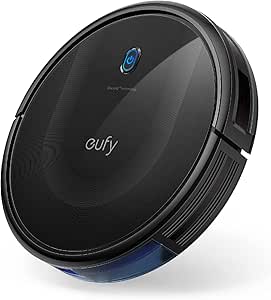 | Best for Quiet, App-Free Cleaning | Dimensions: 12.79 × 12.79 × 2.85 inches | Runtime: Up to 100 minutes | Dustbin capacity: 600 ml | VIEW LATEST PRICE | See Our Full Breakdown |
| eufy E25 Robot Vacuum and Mop for Pet Hair |  | Best for Pet Hair and Automated Floor Care | Maximum suction: 20,000 Pa | Runtime: Up to 125 minutes | Mop lift: 10.8 mm | VIEW LATEST PRICE | See Our Full Breakdown |
| Shark AV2501S AI Ultra Robot Vacuum with Matrix Clean and Self-Empty Base |  | Best for Mapped, Vacuum-Only Cleaning | Navigation: Matrix Clean with 360° LiDAR mapping | Surfaces: Carpets and hard floors | Self-empty base capacity: Up to 30 days of dirt and debris | VIEW LATEST PRICE | See Our Full Breakdown |
| ILIFE V2 Robot Vacuum Cleaner |  | Best for Simple, Scheduled Pet-Hair Pickup | Dimensions: 12.2 × 12.2 × 2.99 inches | Weight: 3.21 kg | Runtime: Up to 120 minutes | VIEW LATEST PRICE | See Our Full Breakdown |
| ROPVACNIC S1 Robot Vacuum and Mop Combo |  | Best for Flexible Controls on a Basic Mop Combo | Suction power: 5,200 Pa | Battery life: Up to 120 minutes | Surfaces: Hardwood floors and low-pile carpets | VIEW LATEST PRICE | See Our Full Breakdown |
| robot vacuum cleaner | Controls | Navigation | Surfaces | Battery life |
|---|---|---|---|---|
| Shark AI Ultra Robot Vacuum | SharkClean app, Amazon Alexa, and Google Assistant | 360° LiDAR mapping | Carpets and hard floors | — |
| Roborock Q7 M5+ Robot Vacuum a | App or voice control | PreciSense LiDAR | Wood, tile, marble, and carpet | 150 minutes |
| Roborock Qrevo S Pro Robot Vac | App, button, and voice | LiDAR | — | 180 minutes |
| Roborock Qrevo 2 Pro Robot Vac | App, button, and voice control | LiDAR | — | 253 minutes |
| Tikom G8000 Max Robot Vacuum a | App, remote, voice, and button | — | — | Up to 150 minutes |
| iRobot Roomba 105 Vac Robot Va | App, button, and voice | ClearView LiDAR | Carpet and hard floors | — |
| DREAME D20 Air Plus Robot Vacu | App, button, and voice | LiDAR | — | 150 minutes |
| Lefant M210 Robot Vacuum Clean | App, Alexa, and Google Assistant | — | Wood, hard floors, and low-pile carpet | — |
| Shark Navigator Robot Vacuum w | App, Amazon Alexa, and Google Voice | LiDAR SmartPath | Carpet and hard floors | 120 minutes |
| Roborock Q7 L5 Robot Vacuum an | — | LiDAR | — | Up to 150 minutes |
| eufy 11S Max Robot Vacuum Clea | Remote control and device buttons | — | Hard floors, tile, and medium-pile carpets | — |
| eufy E25 Robot Vacuum and Mop | — | — | — | — |
| Shark AV2501S AI Ultra Robot V | App and voice control | Matrix Clean with 360° LiDAR mapping | Carpets and hard floors | — |
| ILIFE V2 Robot Vacuum Cleaner | Remote control and one-touch button | — | — | — |
| ROPVACNIC S1 Robot Vacuum and | App, remote, touchpad, and voice | — | Hardwood floors and low-pile carpets | Up to 120 minutes |
More Details on Our Top Picks
Shark AI Ultra Robot Vacuum, AV2511AE
The Shark AI Ultra AV2511AE is a strong fit for homes where pet hair and routine vacuuming matter more than mopping. Its 360° LiDAR mapping helps it clean with a mapped route, while the self-cleaning brushroll is designed to pick up hair across carpets and hard floors. The bagless base holds up to 60 days of debris, reducing the need to buy replacement bags and handle the bin often. Compared with the Roborock Q7 M5+, this Shark focuses on vacuuming rather than adding a mop, and its stated runtime is shorter at up to 90 minutes versus 150. That makes it less suited to larger homes needing long cleaning runs, but a practical choice for pet owners who want mapping and hands-off emptying without a mop system.
Pros:- Self-cleaning brushroll is designed to handle pet hair on carpets and hard floors.
- Bagless self-emptying base holds up to 60 days of debris.
- 360° LiDAR mapping supports organized home navigation.
- App and voice controls include recharge-and-resume cleaning.
Cons:- Up to 90 minutes of runtime may limit coverage before recharging.
- Does not offer the vacuum-and-mop combination described for the Roborock Q7 M5+.
- Product information conflicts on whether this model is vacuum-only or also mops.
Best for: Pet owners in small- to medium-sized homes who want mapped vacuuming and a bagless self-emptying base.
Not ideal for: Buyers who want one robot to vacuum and mop, or who need longer uninterrupted cleaning for a large home.
- Model:AV2511AE
- Surfaces:Carpets and hard floors
- Navigation:360° LiDAR mapping
- Runtime:Up to 90 minutes
- Base:Bagless self-emptying base; holds up to 60 days of debris
- Dust capacity:0.27 gallons
- Controls:SharkClean app, Amazon Alexa, and Google Assistant
- Features:Self-cleaning brushroll, obstacle avoidance, smart mapping, recharge and resume
Our verdict“Choose the Shark AI Ultra if pet-hair pickup and a bagless self-emptying base matter more to you than mopping or extended runtime.”
Roborock Q7 M5+ Robot Vacuum and Mop with Self-Emptying Dock
The Roborock Q7 M5+ offers a useful middle ground: it combines vacuuming and mopping with LiDAR mapping and a self-emptying dock, without the more involved mop-washing setup of the Qrevo models. Its three water-flow settings give buyers some control over how much moisture reaches hard floors, while the 2.7-liter dust bag can reduce how often debris needs attention. Compared with the Roborock Qrevo S Pro, the Q7 M5+ has a simpler mop arrangement and less stated suction, but it still includes app scheduling, no-go zones, and dual anti-tangle brushes. The tradeoff is a more hands-on mop routine: the supplied description does not list automatic mop washing or drying. It also requires 2.4 GHz Wi-Fi, which may not suit every home network.
Pros:- Combines vacuuming and mopping with three adjustable water-flow settings.
- PreciSense LiDAR supports mapped cleaning, scheduling, and no-go zones.
- 2.7-liter dust bag can reduce how often the dock needs emptying.
- Dual anti-tangle brushes are designed to reduce hair wrap.
Cons:- Mop care is less automated than on the Roborock Qrevo S Pro, whose dock washes and dries its mops.
- App connectivity is limited to 2.4 GHz Wi-Fi.
- The stated 7–9-week dust-bag interval can vary with household use.
Best for: Households seeking mapped vacuuming, basic mopping, and a large self-emptying dust bag without an automated mop-care dock.
Not ideal for: Buyers who want the robot to wash and dry its mops, or whose home network does not support 2.4 GHz Wi-Fi.
- Suction power:10,000 Pa
- Dust bag capacity:2.7 L
- Battery life:150 minutes
- Navigation:PreciSense LiDAR
- Cleaning path width:12.8 inches
- Surfaces:Wood, tile, marble, and carpet
- Connectivity:2.4 GHz Wi-Fi only
- Noise level:65 dB
- Controls:App or voice control
Our verdict“Pick the Q7 M5+ if you want mapped vacuuming, light mopping, and self-emptying but do not need an automated mop-washing dock.”
Roborock Qrevo S Pro Robot Vacuum and Mop
The Roborock Qrevo S Pro is for buyers who want a robot to handle more than the floor pass itself. Its multifunction dock empties dust, washes the dual liftable spinning mops with hot water, dries them with warm air, and refills the water supply. That cuts down on recurring mop chores compared with the Roborock Q7 M5+, which offers vacuuming and mopping but does not list dock-based mop washing or drying. The Qrevo S Pro also brings 18,500 Pa suction, obstacle avoidance, and multi-floor mapping, giving it a broader cleaning setup for mixed-floor homes. Its 10 mm mop lift helps when moving over carpet, but it is not the higher 15 mm lift specified for the Qrevo 2 Pro. Buyers should also note the 2.4 GHz-only Wi-Fi and conflicting noise figures in the product data.
Pros:- Dock automates dust emptying, hot-water mop washing, warm-air drying, and water refilling.
- 18,500 Pa suction and carpet-specific settings support mixed-floor cleaning.
- Dual liftable spinning mops and a 10 mm lift help the robot switch between hard floors and carpet.
- Obstacle avoidance and multi-floor mapping support customized routes.
Cons:- Connectivity is limited to 2.4 GHz Wi-Fi.
- The product data gives conflicting noise levels: 55 dB in the description and 60 dB in the specifications.
- Its stated 10 mm mop lift is lower than the 15 mm listed for the Roborock Qrevo 2 Pro.
Best for: Multi-floor households that mop regularly and want the dock to manage dust disposal, mop washing, drying, and water refills.
Not ideal for: Buyers seeking broad Wi-Fi compatibility, a simpler dock, or the higher mop lift specified for the Qrevo 2 Pro.
- Suction power:18,500 Pa
- Dust bag capacity:2.7 L
- Battery life:180 minutes
- Navigation:LiDAR
- Mop care:167°F hot-water washing and 113°F warm-air drying
- Mop lift:10 mm
- Connectivity:2.4 GHz Wi-Fi only
- Controls:App, button, and voice
- Noise level:55 dB stated in description; 60 dB listed in specifications
Our verdict“Choose the Qrevo S Pro if automated mop washing and drying are high priorities and 2.4 GHz Wi-Fi works in your home.”
Roborock Qrevo 2 Pro Robot Vacuum and Mop
The Roborock Qrevo 2 Pro is the strongest fit in this group for buyers who want long cleaning sessions and an automated dock. Its stated 253-minute battery life exceeds the Qrevo S Pro’s 180 minutes, while 20,000 Pa suction, automatic carpet detection, and edge-focused mopping address a mix of floor types. The dock empties dust, refills water, and washes and dries the mops, so this is a more hands-off setup than the Roborock Q7 M5+, which does not list automated mop care. A lift of up to 15 mm also gives it more stated clearance for carpet than the Qrevo S Pro’s 10 mm. The tradeoff is a substantial feature set that may be unnecessary for smaller homes, plus 2.4 GHz-only Wi-Fi, which limits network compatibility.
Pros:- 253-minute battery life supports longer cleaning sessions than the Qrevo S Pro.
- 20,000 Pa suction and automatic carpet detection suit homes with varied flooring.
- Dock empties dust, refills water, and washes and dries the mops.
- Edge-focused mopping, obstacle avoidance, and up-to-15 mm mop lift add flexibility.
Cons:- Wi-Fi support is limited to 2.4 GHz.
- Its extensive dock and cleaning features may be unnecessary for smaller homes or occasional mopping.
- The product data does not state a dust-bag capacity or water-tank capacity.
Best for: Owners of larger mixed-floor homes who want long runtime, carpet-aware cleaning, edge mopping, and automated dock maintenance.
Not ideal for: Residents of small homes who do not need extended runtime or automated mop care, and households without 2.4 GHz Wi-Fi.
- Suction:20,000 Pa
- Battery life:253 minutes
- Navigation:LiDAR
- Mop washing:149°F high-temperature self-cleaning
- Mop drying:113°F warm air
- Mop lift:Up to 15 mm
- Noise level:54 dB
- Connectivity:2.4 GHz Wi-Fi only
- Controls:App, button, and voice control
Our verdict“Choose the Qrevo 2 Pro if long runtime and a fully featured mop-care dock matter more than simple setup or broad Wi-Fi support.”
Tikom G8000 Max Robot Vacuum and Mop Combo
The Tikom G8000 Max takes a more straightforward approach than the mapped, dock-based Roborock models: it vacuums and mops in one pass, recharges automatically, and can be controlled through an app, remote, voice, or onboard buttons. Its 2.99-inch height may help it fit beneath some low-clearance furniture, while four cleaning modes give owners options for targeted or broader passes. Compared with the Roborock Q7 M5+, it does not list LiDAR mapping or a self-emptying dock, so buyers should expect a simpler, less automated routine. Its 5,000 Pa suction and stated support for short- and medium-pile carpets make it a more limited carpet choice than the higher-suction Roborock Qrevo models. The 300 ml water tank also means mopping capacity is finite.
Pros:- Vacuums and mops simultaneously in a single pass.
- Up to 150 minutes of runtime with automatic recharging.
- App, remote, voice, and button controls offer several ways to operate it.
- Low 2.99-inch height may suit some low-clearance furniture.
Cons:- No LiDAR mapping or self-emptying dock is listed, unlike the Roborock Q7 M5+.
- Carpet use is specified for short- and medium-pile carpets.
- The 300 ml water tank limits how much floor it can mop before refilling.
Best for: Buyers who want an accessible vacuum-and-mop robot for hard floors and short- or medium-pile carpets, with several control options.
Not ideal for: Owners of large homes who want mapped room-by-room cleaning, self-emptying, or stronger support for thick carpets.
- Model:G8000 Max
- Suction power:5,000 Pa
- Dustbin capacity:450 ml
- Water tank capacity:300 ml
- Battery life:Up to 150 minutes
- Dimensions:12.6 × 12.6 × 3 in; 2.99 in high
- Noise level:45 dB
- Cleaning modes:Spot, Edge, Zig-zag, Manual
- Controls:App, remote, voice, and button
Our verdict“Pick the Tikom G8000 Max if you want a straightforward vacuum-and-mop combo with flexible controls and do not need mapped or self-emptying operation.”
iRobot Roomba 105 Vac Robot Vacuum
The Roomba 105 suits buyers who want mapped, repeatable vacuuming without adding a mop or self-emptying dock. Its ClearView LiDAR builds room maps for targeted room, zone, and spot cleaning, making it a more deliberate option than the Lefant M210, whose cleaning modes include random movement. When a larger job outlasts its charge, recharge-and-resume can help it finish rather than abandon the task. Four suction levels give some flexibility across carpet and hard floors, while app, button, and voice controls accommodate different routines.
The tradeoff is that this is a vacuum-only model, so it cannot handle the light mopping offered by the Roborock Q7 L5. It also lacks an auto-empty base, and setup depends on 2.4 GHz Wi-Fi. I’d choose it for mapped coverage, not hands-off debris disposal.
Pros:- ClearView LiDAR maps rooms for orderly, targeted cleaning.
- Room, zone, and spot controls make it easier to clean specific areas.
- Recharge-and-resume supports longer cleaning jobs.
- Four suction levels and app, button, and voice controls offer useful flexibility.
Cons:- Does not mop or include a self-emptying base.
- App setup and operation require a 2.4 GHz Wi-Fi network.
- The stated 70× suction comparison uses Roomba 600 series robots as its reference.
Best for: Households that want room-by-room mapped vacuuming, targeted cleaning, and recharge-and-resume without paying for a mop function or self-emptying dock.
Not ideal for: Buyers who want automatic bin emptying, vacuum-and-mop cleaning, or a home network that only supports 5 GHz Wi-Fi.
- Cleaning system:3-stage
- Navigation:ClearView LiDAR
- Suction levels:4
- Surfaces:Carpet and hard floors
- Controls:App, button, and voice
- Wi-Fi:2.4 GHz
- Recharge and resume:Yes
- Special features:Anti-fall sensors, dirt detection sensor, eco mode, bagless
Our verdict“Choose the Roomba 105 if mapped, targeted vacuuming matters more to you than mopping or automatic bin emptying.”
DREAME D20 Air Plus Robot Vacuum and Mop
The DREAME D20 Air Plus stands apart in this group by pairing 20,000 Pa suction with a self-emptying dock that holds debris in a sealed 4-liter bag. That combination suits homes with carpets, pets, or frequent shedding better than the Roborock Q7 L5, which offers a mop but no self-emptying dock in the supplied details. The DREAME also has anti-tangle dual brushes and LiDAR navigation, helping limit brush maintenance while mapping cleaning routes. Its adjustable water flow adds basic simultaneous mopping for hard floors.
The convenience comes with boundaries: the advertised dock interval is up to 120 days, not a guarantee for every household, and its 150-minute runtime may fall short in larger homes. It is also limited to 2.4 GHz Wi-Fi and USA use. Pick it for strong pickup and reduced emptying chores; skip it if a long-running robot or broad regional compatibility matters more.
Pros:- 20,000 Pa suction is suited to deep carpet cleaning and pet-hair pickup.
- Auto-empty dock has a 4-liter sealed dust bag, with up to 120 days stated between bag changes.
- Anti-tangle dual brushes are designed to reduce hair-wrap maintenance.
- LiDAR mapping, edge cleaning, and adjustable water flow add useful coverage and mopping options.
Cons:- 150-minute battery life may require a recharge during larger cleaning jobs.
- Supports only 2.4 GHz Wi-Fi and is listed for USA use.
- Mopping is an added floor-care function, not a substitute for dedicated scrubbing.
Best for: Pet owners and carpet-heavy households who want strong suction, reduced hair wrap, basic mopping, and less frequent dust disposal.
Not ideal for: Owners of very large homes who need longer uninterrupted runtime, or buyers outside the supported USA market and those with only 5 GHz Wi-Fi.
- Suction:20,000 Pa
- Navigation:LiDAR
- Battery life:150 minutes
- Dust bag capacity:4 liters
- Stated dust-bag interval:Up to 120 days
- Brush system:Anti-tangle dual brushes
- Functions:Vacuuming and simultaneous mopping
- Controls:App, button, and voice
Our verdict“Choose the D20 Air Plus if carpet and pet-hair pickup plus a large auto-empty bag matter more than extended runtime or wider network compatibility.”
Lefant M210 Robot Vacuum Cleaner
At 2.99 inches tall, the Lefant M210 is the slim, straightforward choice here for hard floors and low-pile carpet. Its brushless suction is designed to pick up pet hair while avoiding the tangles that can build around brushrolls; that makes it a simpler alternative to the Shark Navigator AV2110S, which adds LiDAR mapping and a self-emptying base but is a more feature-heavy setup. Six modes include edge, spot, and scheduled cleaning, while app and voice controls make routine runs easy to arrange.
The M210 gives up the organized room mapping offered by the Roomba 105, and its 120-minute maximum runtime applies only on low suction. Its zigzag mode is not recommended for carpet, so buyers with carpeted rooms should not treat the runtime figure as a promise of full-home coverage. I’d favor it for compact clearance and uncomplicated hard-floor pickup, not for deep carpet cleaning or precise mapped routes.
Pros:- Slim 2.99-inch height can fit under some low-clearance furniture.
- Brushless suction is designed to reduce hair tangles.
- Six cleaning modes cover spot, edge, scheduled, and manual use.
- App, Alexa, and Google Assistant controls support scheduled cleaning.
Cons:- The 120-minute runtime is specified only on low suction.
- Zigzag mode is not recommended for carpet.
- Does not offer the LiDAR room mapping found on the Roomba 105 and Shark Navigator.
Best for: Apartment dwellers and pet owners with mostly hard floors who need a low-profile robot for cleaning under some furniture.
Not ideal for: Homes with substantial carpet, buyers who want LiDAR room maps, or anyone relying on the full 120-minute runtime at stronger suction.
- Dimensions:11 inches in diameter × 2.99 inches high
- Runtime:Up to 120 minutes on low suction
- Dustbin capacity:500 ml
- Cleaning modes:Zigzag, random, spot, edge, scheduled, and manual
- Surfaces:Wood, hard floors, and low-pile carpet
- Noise level:52 dB
- Controls:App, Alexa, and Google Assistant
- Filter:Cartridge
Our verdict“Choose the M210 for slim, brushless-suction cleaning on hard floors, but look elsewhere if mapped carpet cleaning is a priority.”
Shark Navigator Robot Vacuum with 30-Day Self-Emptying Base (AV2110S)
The Shark Navigator AV2110S is the most compelling fit here for buyers who want mapped cleaning and fewer manual bin dumps without buying replacement dust bags. Its bagless base holds up to 30 days of debris, while LiDAR SmartPath sends the robot through rooms in orderly rows. That is a more hands-off setup than the Roomba 105, which maps rooms and resumes after charging but has no self-emptying base. A self-cleaning brushroll is designed to limit hair wrap, and recharge-and-resume helps it handle longer jobs.
The tradeoff is that its onboard dustbin is just 0.21 quarts, so the base plays a central role in reducing chores. Scheduling and targeted cleaning also require app setup, unlike a simpler button-led routine. Compared with the DREAME D20 Air Plus, the Shark’s listed base interval is shorter, but its bagless design avoids dust bags. Choose it for mapped coverage and practical debris storage, not mop capability.
Pros:- LiDAR SmartPath maps rooms and cleans in orderly rows.
- Bagless self-emptying base holds up to 30 days of debris.
- Self-cleaning brushroll is designed to reduce hair wrap.
- Recharge-and-resume supports longer cleaning sessions.
Cons:- Scheduling and targeted cleaning require app setup.
- The 0.21-quart onboard dustbin is small without the base.
- Does not include a mopping function.
Best for: Households that want LiDAR room mapping and less frequent emptying, but prefer a bagless base over replacing sealed dust bags.
Not ideal for: Buyers who want mopping, dislike app setup, or need the longer stated dust-bag interval offered by the DREAME D20 Air Plus.
- Navigation:LiDAR SmartPath
- Self-empty base:Bagless; holds up to 30 days of debris
- Onboard dustbin capacity:0.21 quarts
- Brushroll:Self-cleaning, anti-hair wrap
- Battery life:120 minutes
- Surfaces:Carpet and hard floors
- Controls:App, Amazon Alexa, and Google Voice
- Included:Robot vacuum, self-empty base, and one side brush
Our verdict“Choose the Shark Navigator if you want mapped vacuuming and a bagless self-emptying base, and do not need mopping.”
Roborock Q7 L5 Robot Vacuum and Mop Combo
The Roborock Q7 L5 makes sense for buyers who want a mapped vacuum-and-mop combo that can retain maps for multiple levels. LiDAR navigation and no-go zones support more controlled routes than the Lefant M210, which offers several modes but no listed room mapping. Its 8,000 Pa suction gives it a clear vacuuming focus, while the 270 ml water tank adds light mopping during the same run. With up to 150 minutes of battery life, it also has more listed runtime than the Shark Navigator AV2110S.
That versatility comes with a maintenance compromise: the water tank and dustbin are an integrated combo part, so handling one function involves the combined unit. The Q7 L5 has no listed self-emptying dock, unlike the Shark Navigator, and its app connection is limited to 2.4 GHz Wi-Fi. I’d pick it for mapped coverage across floors and simultaneous vacuuming and mopping, not for the fewest emptying chores.
Pros:- LiDAR navigation supports saved maps for multiple levels and no-go zones.
- 8,000 Pa suction is a strong listed vacuuming specification.
- Vacuuming and mopping can run at the same time.
- Up to 150 minutes of battery life supports longer cleaning sessions.
Cons:- Integrated water tank and dustbin make the combo unit less convenient to handle.
- No self-emptying dock is listed.
- Wi-Fi support is limited to 2.4 GHz.
Best for: Owners of multi-level homes who want saved maps, no-go zones, strong listed suction, and simultaneous vacuuming and light mopping.
Not ideal for: Buyers who want an auto-empty dock, a separate dustbin and water tank, or a home network that only supports 5 GHz Wi-Fi.
- Suction:8,000 Pa
- Navigation:LiDAR
- Water tank capacity:270 ml
- Battery life:Up to 150 minutes
- Filter:Washable
- Noise level:60 dB
- Supported surfaces:Carpet, laminate, tile, vinyl, wood, and marble
- Wi-Fi:2.4 GHz only
Our verdict“Choose the Q7 L5 if multi-level mapping and combined vacuuming and mopping matter more than an auto-empty dock.”
eufy 11S Max Robot Vacuum Cleaner
The eufy 11S Max suits buyers who want a straightforward robot vacuum without Wi-Fi setup or app controls. Its 2.85-inch profile can reach under more low-clearance furniture than the taller, station-equipped eufy E25, while 55 dB operation is a better fit for cleaning during work or downtime. BoostIQ adjusts suction as the robot moves between hard floors and medium-pile carpet, and its 600 ml bin holds more than the ILIFE V2’s 300 ml bin before emptying.
The tradeoff is hands-on control: you use the remote or onboard buttons, with no app scheduling or map-based direction. It also lacks the E25’s mopping and automated station. I’d choose it for quiet, uncomplicated vacuuming, but skip it if you want connected controls or minimal bin maintenance.
Pros:- Slim 2.85-inch height can fit beneath many low-clearance furnishings
- 55 dB operation is quieter than the ILIFE V2’s listed 69 dB
- Up to 100 minutes of runtime with automatic return to charge
- BoostIQ adjusts suction for different floor surfaces
Cons:- No Wi-Fi or app connectivity, so controls and scheduling are limited to the remote and device buttons
- No mopping or self-emptying station, unlike the eufy E25
- Up to 100 minutes of runtime may be limiting in larger homes
Best for: Apartment dwellers who want quiet, low-clearance cleaning and are comfortable using a remote instead of an app
Not ideal for: Buyers who want app scheduling, room-by-room maps, voice control, or a self-emptying base
- Dimensions:12.79 × 12.79 × 2.85 inches
- Runtime:Up to 100 minutes
- Dustbin capacity:600 ml
- Noise level:55 dB
- Surfaces:Hard floors, tile, and medium-pile carpets
- Controls:Remote control and device buttons
- Connectivity:No Wi-Fi or app connectivity
- Special features:BoostIQ suction adjustment, self-charging, infrared obstacle avoidance, and drop sensing
Our verdict“Choose the eufy 11S Max for quiet, slim vacuuming without connected features, but pick the E25 if you want mopping and automated upkeep.”
eufy E25 Robot Vacuum and Mop for Pet Hair
The eufy E25 is the most hands-off pet-hair option in this group: its station empties dust, washes and dries the mop, and refills water, while anti-tangle brushes target hair pickup. A clean-water roller mop and 20,000 Pa suction give it a broader floor-care job than the vacuum-only eufy 11S Max. Laser mapping can save up to five floor plans, and the edge-cleaning arm is designed to reach along boundaries rather than relying on a basic random cleaning pattern.
That automation adds a larger station and more upkeep considerations than the compact 11S Max, and the listing specifies short-carpet compatibility, not broad support for plush rugs. Its Wi-Fi is 2.4 GHz only. I’d favor it for pet households with hard floors; buyers focused on carpets or a simpler, smaller robot should compare the Shark AV2501S AI Ultra.
Pros:- Anti-tangle brushes are designed to manage pet hair
- Station empties dust, washes and dries the mop, and refills water
- Clean-water roller mop and adjustable suction address different hard-floor messes
- Laser mapping stores up to five floor plans
Cons:- Listed carpet compatibility is limited to short carpets
- Wi-Fi supports 2.4 GHz only
- The multifunction station takes more space than the eufy 11S Max’s charging setup
Best for: Pet owners with mostly hard floors who want vacuuming, mopping, and station-based maintenance handled by one system
Not ideal for: Homes dominated by medium- or high-pile carpet, or buyers who want a compact robot without a large multifunction station
- Maximum suction:20,000 Pa
- Runtime:Up to 125 minutes
- Mop lift:10.8 mm
- Threshold climbing:21 mm
- Dust bag capacity:3 L
- Water capacity:2.5 L
- Mapping:Up to 5 floor plans
- Wi-Fi:2.4 GHz only
- Mop drying temperature:50°C
Our verdict“Pick the E25 for pet hair and largely automated hard-floor vacuuming and mopping, but not for homes with substantial higher-pile carpeting.”
Shark AV2501S AI Ultra Robot Vacuum with Matrix Clean and Self-Empty Base
The Shark AV2501S AI Ultra makes sense for buyers who want organized vacuuming and less frequent debris handling without adding a mop system. Its 360° LiDAR mapping and Matrix Clean pattern are designed to cover rooms in deliberate passes, while Recharge and Resume helps it finish larger jobs after a charging break. The bagless base holds up to 30 days of dirt and debris, and HEPA filtration is a point of distinction from the eufy 11S Max, which has a washable filter but no comparable self-emptying base.
Compared with the eufy E25, this Shark gives up mopping and station-based mop care in favor of a vacuum-focused setup. Its robot dust capacity is only 0.09 liters, so the base matters to the low-maintenance pitch. Runtime is up to 120 minutes, and app or voice control is needed for hands-free operation. I’d choose it for mapped carpet-and-hard-floor cleaning, not for shoppers seeking a mop combo.
Pros:- 360° LiDAR mapping and Matrix Clean support organized room coverage
- Bagless base stores up to 30 days of dirt and debris
- HEPA filtration captures dust and allergens down to 0.3 microns
- Recharge and Resume helps with larger cleaning jobs
Cons:- No mopping, unlike the eufy E25 and ROPVACNIC S1
- Hands-free controls depend on the app or a compatible voice assistant
- Robot dust capacity is 0.09 liters, making the base central to routine use
Best for: Pet owners who want mapped cleaning, HEPA filtration, and less frequent bin emptying across carpets and hard floors
Not ideal for: Buyers who need mopping, prefer app-free controls, or want a robot with a larger onboard dustbin
- Navigation:Matrix Clean with 360° LiDAR mapping
- Surfaces:Carpets and hard floors
- Self-empty base capacity:Up to 30 days of dirt and debris
- Filtration:HEPA; captures 99.97% of dust and allergens down to 0.3 microns
- Runtime:Up to 120 minutes
- Robot dust capacity:0.09 liters
- Controls:App and voice control
- Compatible assistants:Amazon Alexa and Google Home
Our verdict“Choose the AV2501S AI Ultra for mapped, self-emptying vacuuming with HEPA filtration, and choose the E25 if mopping is part of the job.”
ILIFE V2 Robot Vacuum Cleaner
The ILIFE V2 is a no-Wi-Fi option for buyers who want scheduled runs and straightforward pickup on hard floors and low-pile carpet. Its tangle-free suction is aimed at pet hair, and the 2.99-inch body can slip under furniture that taller robots may miss. Unlike the eufy 11S Max, it lists auto, spot, and edge modes plus scheduled cleaning; it also runs for up to 120 minutes per charge, compared with the eufy’s 100 minutes.
The longer listed runtime comes with tradeoffs: its 300 ml dustbin is half the eufy 11S Max’s 600 ml capacity, and the listed noise level is 69 dB versus 55 dB. It has one power level and is recommended for hard floors and low-pile carpet, so it’s less adaptable than a mapped model such as the Shark AV2501S AI Ultra. I’d pick it for simple, scheduled floor maintenance, not complex layouts or quieter cleaning.
Pros:- Tangle-free suction is designed to pick up pet hair
- Slim 2.99-inch profile can reach beneath many furnishings
- Up to 120 minutes of runtime with automatic return to its charging dock
- Auto, spot, and edge modes plus scheduled runs work without Wi-Fi
Cons:- 300 ml dustbin is smaller than the eufy 11S Max’s 600 ml bin
- One power level offers less surface adjustment than the eufy 11S Max’s BoostIQ
- Listed noise level is 69 dB
Best for: Pet owners in smaller homes who want scheduled, app-free cleaning on hard floors and low-pile carpet
Not ideal for: Buyers with medium- or high-pile rugs, noise-sensitive households, or a need for mapping and adjustable suction
- Dimensions:12.2 × 12.2 × 2.99 inches
- Weight:3.21 kg
- Runtime:Up to 120 minutes
- Dustbin capacity:300 ml
- Controls:Remote control and one-touch button
- Cleaning modes:Auto, spot, and edge
- Filter:Sponge
- Noise level:69 dB
Our verdict“Choose the ILIFE V2 for scheduled, remote-controlled pet-hair pickup on hard floors and low-pile carpet, but skip it if you need quieter or more adaptive cleaning.”
ROPVACNIC S1 Robot Vacuum and Mop Combo
The ROPVACNIC S1 is the more control-flexible choice for buyers who want both vacuuming and light mopping without stepping up to a multifunction station. It combines 5,200 Pa suction with four-stage electronic water adjustment, letting users tailor water flow for different hard-floor needs. App, remote, touchpad, and voice controls give it more ways to start a job than the remote-only eufy 11S Max or ILIFE V2, and its brush design is intended to reduce hair entanglement.
That flexibility doesn’t make it a carpet specialist: the stated surface recommendation is hardwood and low-pile carpet, while the eufy E25 offers a more automated mop-washing and water-refilling station. The S1 runs up to 120 minutes and returns to recharge, but it lacks the listed self-emptying and mop-care automation of the E25. I’d favor it for mixed hard floors and low-pile rugs when control choice matters more than reduced maintenance.
Pros:- Combines vacuuming with four-stage electronic water adjustment
- App, remote, touchpad, and voice control offer flexible operation
- Three power levels allow suction adjustment
- Obstacle detection and automatic return to recharge support routine cleaning
Cons:- Recommended surfaces are hardwood floors and low-pile carpets
- No listed self-emptying base or automatic mop washing, unlike the eufy E25
- Up to 120 minutes of battery life may not cover larger homes in one run
Best for: Households with hardwood floors and low-pile rugs that want vacuuming, adjustable mopping, and several control options
Not ideal for: Buyers with higher-pile carpets or those who want a self-emptying base and automated mop washing
- Suction power:5,200 Pa
- Battery life:Up to 120 minutes
- Surfaces:Hardwood floors and low-pile carpets
- Controls:App, remote, touchpad, and voice
- Voice assistants:Amazon Echo and Google Home
- Power levels:3
- Mopping:Electronic water control with four-stage adjustment
- Filter:Multi-layer high-efficiency filtration
Our verdict“Choose the ROPVACNIC S1 for a flexible-control vacuum-and-mop combo on hard floors and low-pile rugs, but choose the E25 for more automated mop care.”
How We Picked
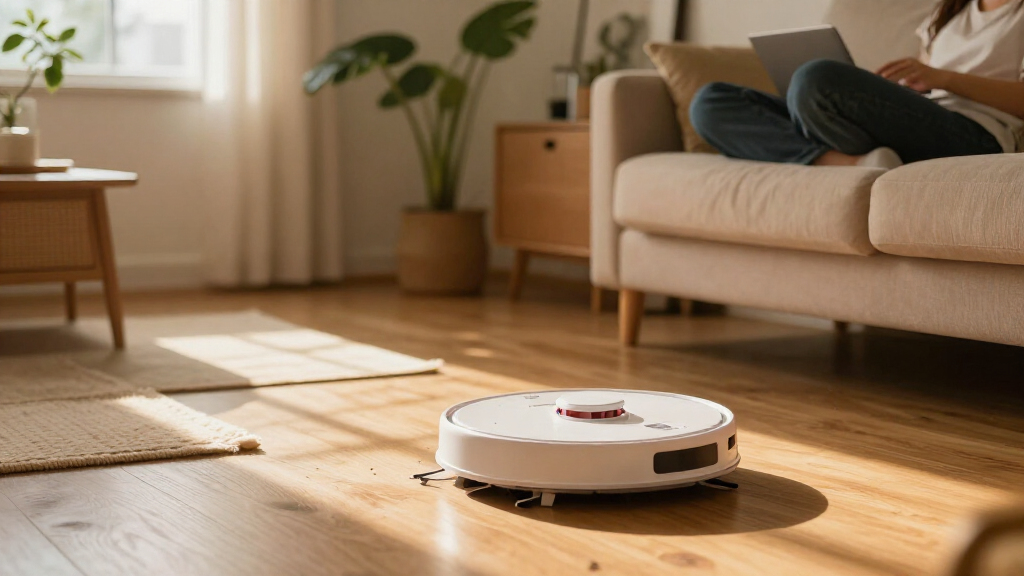
I ranked these robot vacuum cleaners by how well their feature sets answer common household needs: dependable routine floor care, useful navigation, practical handling of pet hair and mixed flooring, and the amount of work required after a cleaning run. I also weighed whether a model’s dock meaningfully reduces upkeep, whether its vacuum-and-mop setup adds useful versatility, and how clear its intended buyer is. Claimed suction numbers alone do not determine placement; a large figure cannot settle questions about navigation, maintenance, or everyday fit.
The higher positions go to models with a stronger balance of coverage, automation, and flexibility, rather than to products with one standout specification and major compromises elsewhere. The Qrevo models lead for buyers seeking more complete dock-based care; the Q7 M5+ and Shark self-emptying options rank well for buyers focused on reducing bin chores. Simpler and more narrowly equipped models appear lower because they suit specific needs, not because every household requires premium automation. I distinguish between closely related models by the features named in their configurations, and avoid treating unverified performance claims as proof of cleaning results.
| robot vacuum cleaner | Surfaces |
|---|---|
| Shark AI Ultra Robot Vacuum | Carpets and hard floors |
| Roborock Q7 M5+ Robot Vacuum a | Wood, tile, marble, and carpet |
| Roborock Qrevo S Pro Robot Vac | — |
| Roborock Qrevo 2 Pro Robot Vac | — |
| Tikom G8000 Max Robot Vacuum a | — |
| iRobot Roomba 105 Vac Robot Va | Carpet and hard floors |
| DREAME D20 Air Plus Robot Vacu | — |
| Lefant M210 Robot Vacuum Clean | Wood, hard floors, and low-pile carpet |
| Shark Navigator Robot Vacuum w | Carpet and hard floors |
| Roborock Q7 L5 Robot Vacuum an | — |
| eufy 11S Max Robot Vacuum Clea | Hard floors, tile, and medium-pile carpets |
| eufy E25 Robot Vacuum and Mop | — |
| Shark AV2501S AI Ultra Robot V | Carpets and hard floors |
| ILIFE V2 Robot Vacuum Cleaner | — |
| ROPVACNIC S1 Robot Vacuum and | Hardwood floors and low-pile carpets |
Factors to Consider When Choosing Robot Vacuum Cleaners
Before choosing a robot vacuum, I would start with the chores you want it to remove from your routine, not the longest feature list. The right choice depends on your floor plan, floor types, tolerance for maintenance, and whether mopping is a genuine need or just an appealing extra.
Match the Dock to the Chore You Want to Avoid
A dock can mean a basic charging point, a bin-emptying base, or a more involved station that supports mop care. Those options address different sources of work, so a self-emptying base does not automatically mean the robot will handle wet cleaning with little input. Think about the task you dislike most: emptying dust, refilling water, washing mop pads, or doing all of them. A larger station also needs a suitable place to sit and may add upkeep of its own. Avoid paying for automation you will not use, but do not expect a basic dock to deliver the same convenience as a multi-function station. Compare the listed dock functions directly before treating two models as equally hands-off.
Treat Mopping as a Separate Requirement
A vacuum-and-mop combo is useful when hard floors make regular light mopping part of your routine, but the word “mop” covers a range of setups. A robot with a water tank and attached pad still asks you to manage those parts, while a more automated dock can take on more of the maintenance. Consider how much hard flooring you have and whether you need routine damp wiping or a more intensive cleaning method. If most of your home is carpet, a mop feature may add complexity without much benefit. Check how the mop is fitted and what care it requires, rather than assuming every combo cleans the same way. Keep a manual mop for spills and stuck-on dirt; a robot is best treated as a routine-care tool.
Choose Navigation for Your Floor Plan
A robot’s ability to move through a home matters as much as its stated cleaning power. Open rooms are easier for many models to cover, while narrow passages, furniture legs, thresholds, and clutter can challenge route planning. Before buying, measure the tightest clearances and note areas where cords or small objects often collect. A compact, simpler robot may fit under low furniture, but a small body does not guarantee better navigation. Likewise, a model with more elaborate mapping is most useful when you want repeatable room coverage or targeted cleaning. If the product information does not specify a feature you need, such as room-level controls or obstacle handling, do not assume it is included.
Set Expectations for Pet Hair and Floor Types
Pet hair changes the work a vacuum must do: it can collect on brushes, gather in corners, and fill a dustbin faster than ordinary dust. Homes with shedding pets may benefit more from a self-emptying base and easy-to-clean brush access than from a single high suction claim. Check whether the robot is intended for carpets, hard floors, or a mix, and pay attention to how often filters and brushes need cleaning or replacement. For a home with several rugs, consider how the robot handles transitions and whether mopping can be kept away from carpeted areas. A model presented as suitable for pet hair is not maintenance-free. Plan for regular brush checks even if the dock reduces bin-emptying frequency.
Account for Ongoing Maintenance and Ownership
Robot vacuums shift cleaning work rather than removing every task. Dustbins, filters, brushes, sensors, water tanks, and mop pads all need attention, and the exact mix depends on the model. Before choosing a feature-rich robot, check which parts require routine cleaning and whether replacement supplies are easy to identify. A simpler vacuum may be easier to maintain, even if it asks you to empty its bin more often. A self-emptying dock can reduce one chore while adding a bag or container to monitor. The best fit is the model whose upkeep you will actually keep up with, not the one with the longest list of automated functions.
Pay for Useful Automation, Not Specs Alone
More features make sense when they remove a recurring chore or solve a real layout problem. A household with pets, mixed flooring, and frequent cleaning may gain more from self-emptying or better mop care than a small, mostly hard-floor apartment. By contrast, buyers who need occasional maintenance cleaning can often keep things simpler with a basic vacuum-focused model. Treat suction figures and advertised modes as clues, not a complete measure of home performance. Look for a clear match between the feature and your routine, such as a dock that addresses frequent emptying or a combo setup for regular hard-floor wiping. If you cannot name the chore a feature will save you, it may not be worth prioritizing.
Frequently Asked Questions
Should I choose a self-emptying robot vacuum or a model with a more automated mop dock?
Choose based on the task you want to handle less often. A self-emptying base primarily reduces how frequently you empty the robot’s dustbin, which can be especially helpful in homes that run the vacuum often or collect a lot of debris. A more involved mop dock is aimed at reducing parts of wet-cleaning upkeep, but it does not make every kind of floor care automatic. If you rarely mop, a self-emptying vacuum may be the more useful upgrade. If hard floors make mopping part of your regular routine, the extra dock functions may matter more.
Are the simpler eufy 11S Max, Lefant M210, or ILIFE V2 a sensible choice?
They can make sense for buyers who want straightforward vacuuming and do not need an advanced dock or an elaborate mop setup. These models are a better fit when your priority is routine floor pickup and you are comfortable handling more of the emptying and upkeep yourself. They are less suited to shoppers who want a more hands-off cleaning routine or a vacuum-and-mop system with extensive dock support. Check the model’s navigation and control details against your home before choosing one. A simpler feature set is a benefit only when it matches your needs.
Does a robot vacuum and mop combo replace a separate mop?
Usually, it is best viewed as a way to maintain hard floors between deeper cleans rather than a complete replacement. Robot mops are designed for repeated routine passes, while spills, dried-on marks, and corners may still need manual attention. The amount of work left to you also depends on whether the model has a basic water tank and pad or a dock that handles more mop upkeep. If your home is mostly carpet, the mop function may see little use. Choose a combo because you will regularly use its hard-floor cleaning, not just because it adds another mode.
What should pet owners prioritize besides suction?
Look at brush access, dustbin handling, filter care, and whether a self-emptying base fits your routine. Pet hair can wrap around brushes and fill a bin quickly, so easy maintenance may matter more day to day than a headline suction figure. Consider your flooring too: carpet, hard floors, and rugs create different cleaning demands. If you want mopping for hard floors, check whether the model’s mop setup requires frequent hands-on care. No robot removes the need to inspect brushes and filters regularly, especially in a shedding household.
When is a premium Qrevo-style model worth choosing over a Q7 or Shark option?
A Qrevo model is most compelling when you want a more complete vacuum-and-mop routine and expect to use the dock’s added functions. A Q7 M5+ or a Shark self-emptying model may be a better match if your main goal is reducing dustbin chores rather than automating mop care. The right choice also depends on whether you need mopping, how much hard flooring you have, and how much space you can give a dock. Do not pay for a more involved station if you will rarely use its mop functions. Compare the specific dock and cleaning features of the exact model, since the names alone do not tell the whole story.
Conclusion
For the strongest balance of vacuuming, mopping, and dock-based automation in this lineup, I recommend the Roborock Qrevo S Pro as best overall. My best value pick is the Roborock Q7 L5 for buyers who want a vacuum-and-mop combo without prioritizing a more involved dock; check its included functions against your needs. For the best premium fit, consider the Roborock Qrevo 2 Pro if its fuller dock setup matches the chores you want to reduce. The iRobot Roomba 105 Vac is my best beginner choice for shoppers who prefer a vacuum-focused option without adding mop maintenance. For pet-focused homes, the eufy E25 stands out as a specific-use option, while buyers who mainly want less bin-emptying should compare the Roborock Q7 M5+ with the Shark self-emptying models. Match the robot to the job you want it to do, then check its maintenance demands before deciding.