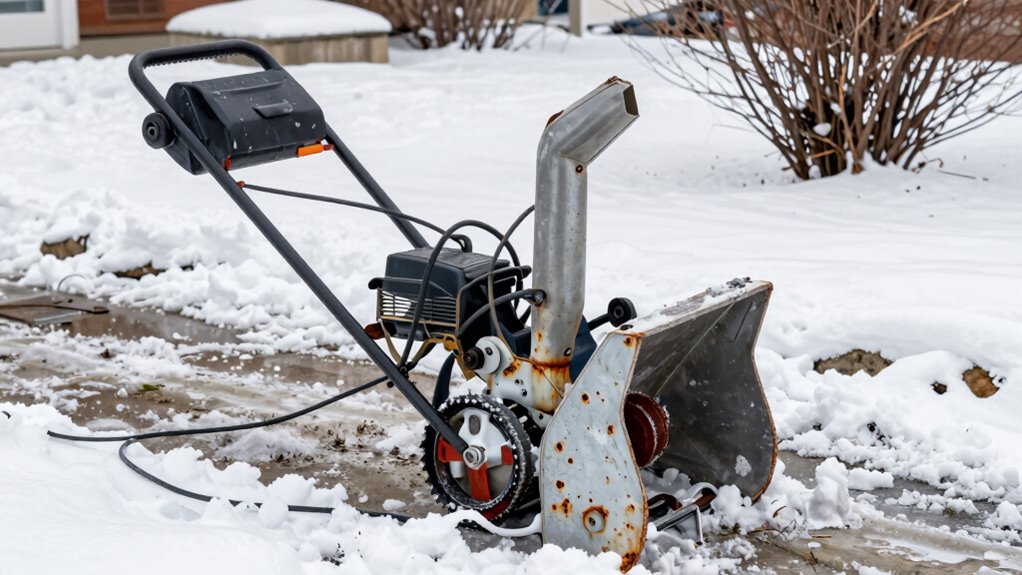

If you don’t properly store your snow blower, it can lead to fuel gumming, battery corrosion, and moisture buildup, all of which make it hard to start when needed. Neglecting to add fuel stabilizer, failing to clean and lubricate parts, or leaving it exposed to the elements can cause engine and component failures. Understanding these common mistakes can help guarantee your snow blower starts reliably when winter hits—keep going to learn more about proper storage practices.
Key Takeaways
- Old, untreated fuel causes gumming and carburetor clogging, preventing proper engine startup.
- Neglecting battery maintenance leads to dead or corroded batteries, hindering electrical system operation.
- Failure to clean and lubricate parts results in rust, corrosion, and mechanical failures.
- Using old oil or skipping oil changes during storage causes engine wear and difficulty starting.
- Improper outdoor storage without covering traps moisture, accelerating rust and internal damage.
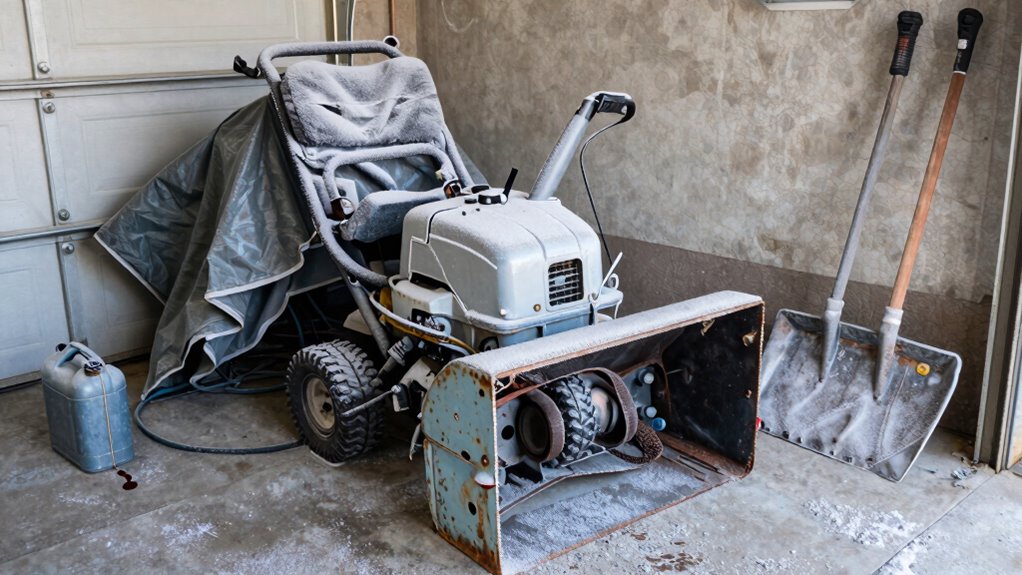
Storing your snow blower improperly can lead to costly repairs and reduce its lifespan. One of the most common mistakes is neglecting proper fuel stabilization. If you leave fuel sitting in the tank for months without treatment, it can break down and cause gumming or clogging in the carburetor, making the machine difficult or impossible to start when you need it most. To avoid this, always add a fuel stabilizer before storing your snow blower for the season. Run the engine for a few minutes to guarantee the stabilized fuel circulates through the system. This simple step keeps the fuel fresh and prevents the formation of deposits that can impair engine performance. Proper storage practices also include inspecting and maintaining the projector technology, which can prevent issues like misalignment or component wear that might affect operation later on.
Neglecting fuel stabilization can cause gumming and clogging, making your snow blower hard to start. Always treat fuel before storage.
Battery maintenance is equally vital. If your snow blower has a battery, failing to remove or properly maintain it during the off-season can lead to a dead battery or corrosion buildup. Remove the battery and store it in a cool, dry place, ideally on a trickle charger or maintain it with periodic charging sessions. This prevents it from losing its charge or deteriorating over time. If your model doesn’t have a battery, make sure that any electrical connections are clean and protected from moisture, which can cause corrosion and electrical issues when you try to start the machine again.
Another mistake is ignoring the importance of cleaning your snow blower before storage. Snow and ice can leave behind corrosive debris or dirt that may rust or damage parts over time. Wipe down the entire machine, paying close attention to the auger, chute, and impeller. Lubricate moving parts like shear pins, wheel axles, and control cables to prevent rust and maintain smooth operation when the season starts again. Additionally, covering the machine with a breathable tarp or storing it in a dry, sheltered area helps prevent moisture buildup, which can lead to rust and corrosion.
Failing to check and change the oil before storage is another common mistake. Old, contaminated oil can cause engine wear and reduce overall performance. Before storing, change the oil and run the engine briefly to circulate it through the system. This helps keep internal parts lubricated and in good condition. When it’s time to use the snow blower again, a fresh oil change will make startup smoother and extend the engine’s life.
Frequently Asked Questions
How Often Should I Service My Snow Blower During Storage?
You should service your snow blower at least once a month during storage. This involves proper lubrication of moving parts to prevent rust and ensure smooth operation. Also, check and maintain the battery to avoid starting issues later. Regular servicing keeps your snow blower ready for use, preventing common storage mistakes that can cause it to not start when you need it. Stay proactive to maintain peak performance.
Can Improper Fuel Storage Affect Starting Issues?
Did you know that poor fuel storage causes up to 30% of snow blower starting problems? Improper fuel storage can definitely affect starting issues, as degraded fuel reduces combustion efficiency. Using fresh, high-quality fuel guarantees ideal performance. Also, storing fuel with stabilizers prevents corrosion inside the engine, keeping your snow blower ready when you need it most. Proper fuel care is essential for reliable starts every winter season.
What Are Common Electrical Problems Caused by Winter Storage?
Winter storage can cause electrical problems like battery corrosion and wiring damage. You might notice corrosion buildup on terminals, which hampers power flow, or wiring that becomes brittle and cracks from cold temperatures. These issues prevent your snow blower from starting when you need it most. Regularly inspecting and cleaning the battery terminals, and checking wiring connections, helps prevent these common electrical problems and guarantees reliable operation during winter.
How Do I Troubleshoot a Snow Blower That Won’T Start After Storage?
Don’t throw in the towel just yet. Start by inspecting the fuel; if it’s old or clogged, drain and replace it. Check for carburetor issues—clean or rebuild if necessary. Make certain the spark plug is clean and properly connected. Sometimes, storage causes fuel clogging or carburetor gumming up, preventing the engine from starting. With a little troubleshooting, you’ll be back to clearing snow in no time.
Is It Necessary to Change Oil Before Winter Storage?
It’s a good idea to do an oil change before winter storage. Changing the oil guarantees your snow blower’s engine stays protected from moisture and contaminants during the off-season. Fresh oil prevents rust and corrosion, making it easier to start when winter ends. By taking this simple step, you’ll help your snow blower perform reliably and avoid unnecessary repairs, so it’s ready to go when you need it most.
Conclusion
Don’t let careless storage cause costly consequences. Double-check that you drain and dry, protect and preserve, and store your snow blower smartly. Proper preparation prevents problems and guarantees it’ll start when you need it most. By avoiding these mistakes, you’ll keep your equipment in excellent condition, ready to tackle winter’s worst with ease. Stay savvy, store smartly, and snow days will stay simple and smooth, never stuck or stranded when snow starts to fall.