To safely remove Christmas tree sap, gently scrape excess with a plastic card and use warm water with a touch of dish soap for initial cleaning. Apply a small amount of natural oils like coconut or olive oil to loosen the resin, then wipe away with a damp cloth. For stubborn spots, a vinegar-water solution can help dissolve the sap without damaging surfaces. Keep patience and gentle techniques in mind—if you want to explore more cleaning tips, there’s plenty to learn.
Listen free for 30 days with Audible
Thousands of audiobooks and originals — cancel anytime.
As an affiliate, we earn on qualifying purchases.
Key Takeaways
- Gently scrape excess sap with a plastic putty knife or credit card, avoiding metal tools to prevent surface scratches.
- Use warm water with a few drops of dish soap and a soft cloth to carefully blot and clean the sap.
- Apply natural oils like olive or coconut oil to loosen the sap, then wipe away with a damp cloth.
- For fabric or upholstery, test a vinegar-water solution on a small area before gently dabbing the stain.
- Patience and gentle cleaning are key; follow up with a damp cloth to ensure complete removal without damage.

After bringing your Christmas tree indoors, you might notice sticky sap beginning to appear on your hands, decorations, or furniture. Sap can be stubborn to remove, but with some DIY cleaning techniques and natural remedies, you can tackle it safely and effectively. The key is to act quickly before the sap sets and becomes more difficult to clean.
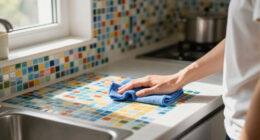
Start by gently scraping off any excess sap with a plastic putty knife or credit card. Avoid using metal tools, as they can scratch surfaces. Once you’ve removed the bulk, it’s time to treat the remaining residue. Many people turn to DIY cleaning methods because they’re affordable and tend to be gentle on your belongings. One popular natural remedy involves using a mixture of warm water and a few drops of dish soap. Dip a soft cloth into the solution, then gently blot the sap-stained area. This helps loosen the sap without damaging the surface. Be patient and repeat as needed, making sure not to rub too hard, which could spread the stain or damage the material.
Gently scrape excess sap with a plastic card, then blot with warm soapy water to loosen residues.
If the sap doesn’t budge with soap and water, try applying a small amount of natural oils, such as olive or coconut oil. These oils can help break down the sticky resin. Dab a tiny amount onto a cloth and gently work it into the sap stain. After a few minutes, wipe away the oil along with the sap using a clean, damp cloth. You might need to repeat this process a few times, but always ensure you’re gentle to prevent any damage.
Another effective natural remedy involves using vinegar. Mix equal parts of white vinegar and water, then dampen a cloth with the solution. Gently dab the affected area, allowing the vinegar to break down the sap’s stickiness. Follow up with a clean, damp cloth to remove any residue. Vinegar is a natural degreaser and can dissolve the sap without harsh chemicals, making it a safe option for cleaning decorations, furniture, or hands.
For fabric or upholstery, test any remedy on a small, hidden area first to avoid discoloration. You can also sprinkle baking soda on the stain, then spray with a mixture of water and vinegar. Let it sit for a few minutes before blotting with a clean cloth. This combination can lift the sap without damaging delicate fabrics. Additionally, using wax-based materials like soy or beeswax candles can help prevent sap from sticking as much in future seasons.
In all cases, always follow up with a clean, damp cloth to remove any leftover cleaning solution. Patience is key, and natural remedies are gentle yet effective when used correctly. With a little effort and the right approach, you can remove Christmas tree sap safely and keep your home looking festive and clean.
Frequently Asked Questions
Can I Remove Pine Sap From Delicate Fabrics?
Yes, you can remove pine sap from delicate fabrics if you act quickly. First, avoid rubbing the stain to prevent damage to fabric fibers. Gently scrape off excess sap, then apply a small amount of rubbing alcohol or a commercial stain remover designed for delicate materials. Always test on a hidden area first to prevent stain prevention issues, and wash the fabric according to care instructions to keep it looking its best.
Is Commercial Solvent Safe for All Surfaces?
Commercial solvents aren’t safe for all surfaces. Before using them, you should check the product’s label for surface compatibility and safety instructions. Some solvents can damage delicate materials like fabric, plastic, or painted surfaces, so test a small, hidden area first. Always follow manufacturer guidelines to avoid unintended damage. If you’re unsure, opt for a safer, surface-specific cleaner instead of risking harm with a harsh commercial solvent.
How Long Does Sap Removal Typically Take?
They say patience is a virtue, and when it comes to sap removal, it’s true. Usually, the cleaning time depends on the surface and sap amount, but it typically takes about 15 to 30 minutes. The sap removal duration can vary, so staying patient helps. You’ll want to gently work with your chosen cleaning method, giving each step enough time for the best results without rushing the process.
Are There Natural Alternatives to Chemical Removers?
Yes, you can try natural DIY solutions and household remedies to remove sap. Rubbing alcohol or vinegar diluted with water work well and are gentle on surfaces. You might also use baking soda paste or citrus-based cleaners, which break down the sap without harsh chemicals. Always test a small area first and gently scrub to avoid damage. These natural alternatives are effective, eco-friendly, and safe for your home.
Will Sap Removal Damage the Christmas Tree?
Think of sap removal as a gentle dance with your tree—done carefully, it won’t harm your Christmas tree. Using safe, natural methods guarantees you don’t damage the tree or risk chemical safety. When you choose gentle solutions like warm water, mild soap, or natural oils, you keep the tree healthy and vibrant. With care, you’ll remove tree sap effectively without turning your holiday into a forest fire of worries.
Conclusion
Just like Santa’s sleigh gliding smoothly through a winter night, your holiday season stays joyful when you handle that pesky sap with care. Remember, patience and the right techniques are your guiding stars—much like Rudolph’s bright nose. By following these simple steps, you’ll keep your home festive and spotless, ensuring your Christmas memories shine as brightly as the ornaments on your tree. Stay gentle, stay safe, and enjoy a sap-free holiday season!
Fall Picks
fall essentials
As an affiliate, we earn on qualifying purchases.