To prepare your home for allergy season, start by encasing your mattress and pillows in dust-mite-proof covers. Wash your bedding weekly in hot water and vacuum carpets with a HEPA filter to reduce allergens. In your living room, swap carpets for hardwood and invest in air purifiers. Keep windows closed during pollen season and stay updated on local forecasts. These steps can make a big difference, and there’s more you can do to enhance your home’s allergen protection.
Prime for Young Adults — start your free trial
Fast free delivery, streaming and member deals for eligible 18–24 year olds.
As an affiliate, we earn on qualifying purchases.
Key Takeaways
- Encapsulate mattresses and box springs in dust-mite-proof covers to reduce allergen exposure in bedrooms.
- Install hardwood or linoleum flooring throughout your home to minimize allergen accumulation from carpets.
- Use air purifiers with HEPA filters to enhance indoor air quality and capture airborne allergens effectively.
- Regularly wash bedding, curtains, and pet bedding in hot water to eliminate dust mites and dander.
- Keep windows closed during peak pollen times and monitor local pollen forecasts to minimize outdoor exposure.
Understanding Seasonal Allergies
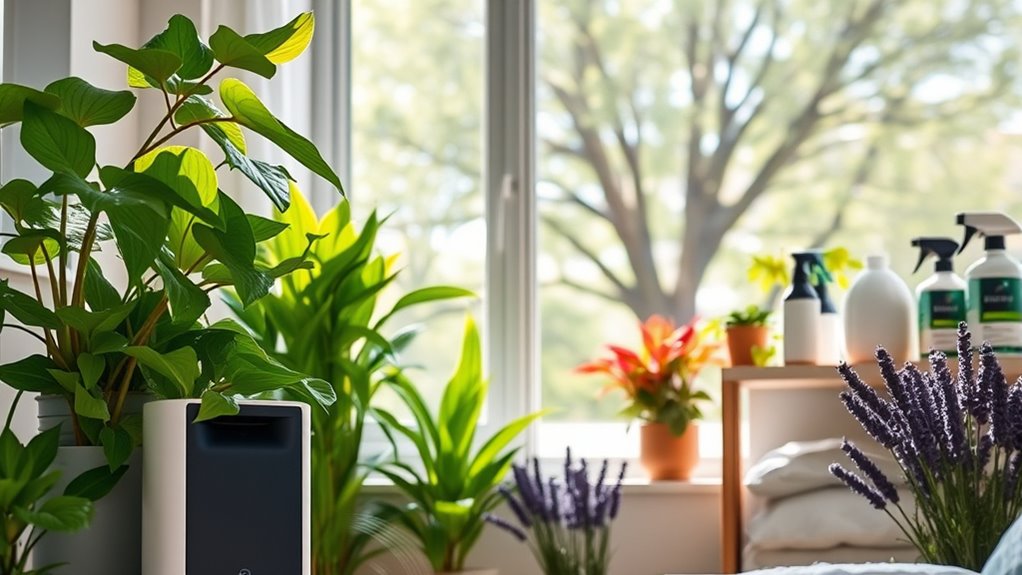
Seasonal allergies can be a real challenge, especially when you don’t know what triggers your symptoms. Your immune system reacts to allergens like pollen from trees, grasses, and weeds, leading to sneezing, runny nose, and itchy eyes.
Each allergy season brings different culprits; tree pollen dominates in spring, while grass pollen takes over late spring to early summer, and weed pollen rules in late summer to fall.
To manage exposure, keep an eye on local pollen forecasts, as levels peak in the morning and on windy days. By understanding your personal triggers and their timing, you can greatly enhance your quality of life and reduce asthma symptoms throughout allergy season.
Allergy-Proofing Your Bedroom
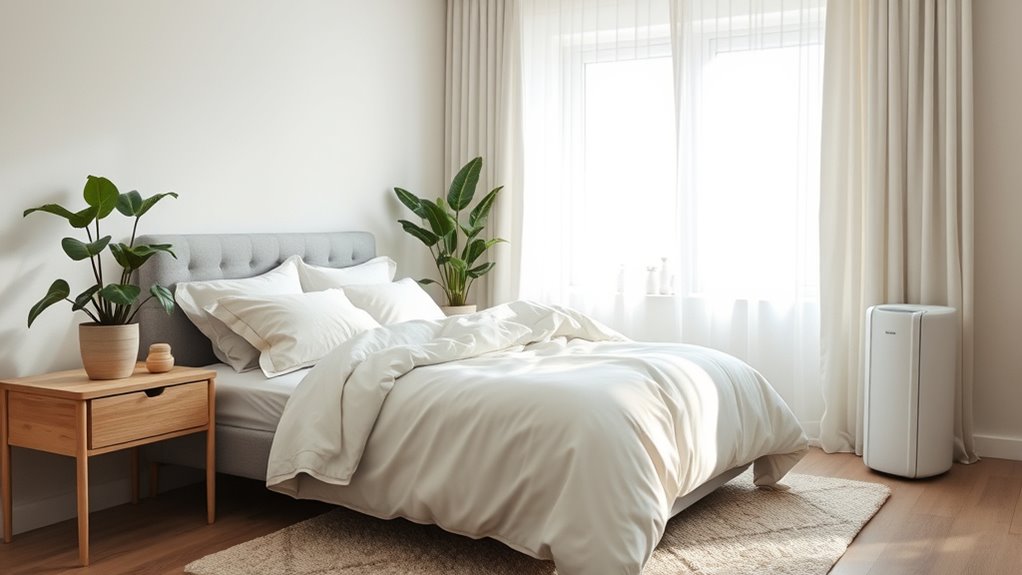
To guarantee a peaceful night’s sleep during allergy season, it’s essential to create an allergy-proof bedroom.
Start by encasing your mattress and box springs in dust-mite-proof covers to minimize allergen exposure. Wash sheets, pillowcases, and blankets weekly in hot water to effectively eliminate dust mites and other allergens.
Opt for hardwood or linoleum flooring instead of low-pile carpets, which can trap allergens. If you do have carpets, vacuum weekly with a HEPA filter to reduce dust accumulation.
Choose easy-to-clean furnishings made of leather, wood, or metal, and steer clear of upholstered furniture that can harbor allergens.
Finally, keep pets out of the bedroom and bathe them weekly to further reduce dander and allergy symptoms, ensuring clean air for restful nights.
Allergy-Proofing Your Living Room
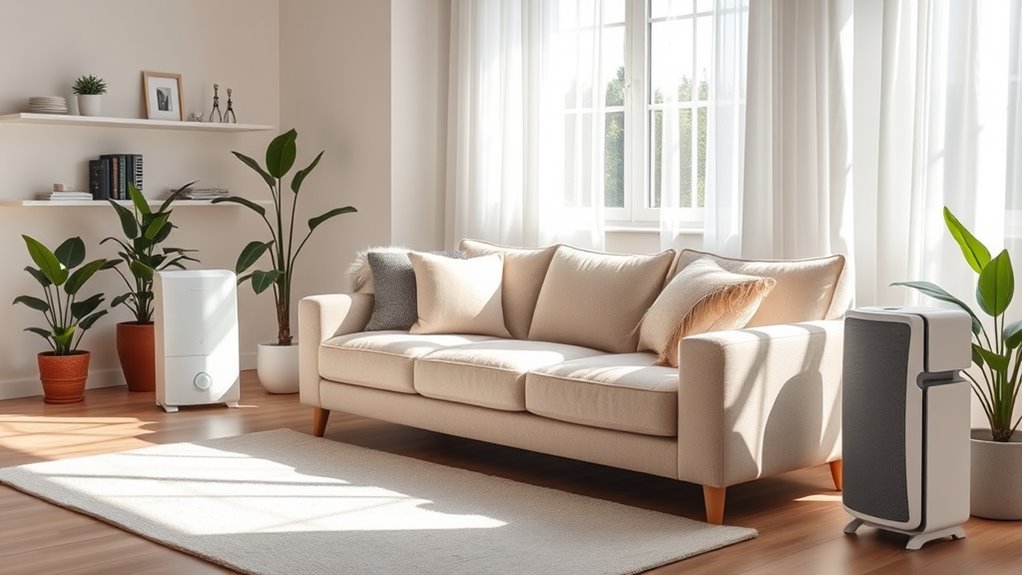
How can you create a living room that minimizes allergens and promotes comfort?
Start by removing carpeting and opting for hardwood or linoleum flooring. Use washable area rugs to help reduce allergens.
Choose leather, wood, metal, or plastic furniture instead of upholstered pieces to limit allergen accumulation and simplify cleaning.
Install washable cotton or synthetic curtains, and consider roller-type shades to prevent dust buildup.
Keep windows closed during pollen season to keep outdoor allergens out, and regularly clean mold from window frames to maintain indoor air quality.
Avoid wood-burning fireplaces, as they can release smoke and allergens. Instead, consider natural gas options for better respiratory health.
Finally, invest in air purifiers to further enhance your living space.
Allergy-Proofing Your Kitchen
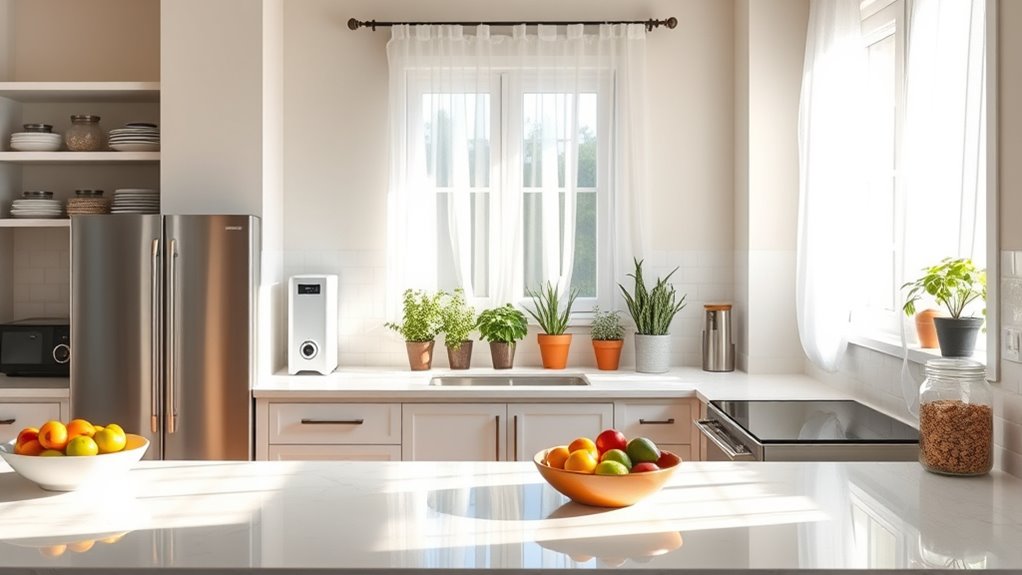
When you’re tackling allergy-proofing your kitchen, start by focusing on areas that can trap moisture and mold, as these are prime culprits for allergens. Install a vented exhaust fan to efficiently eliminate cooking fumes and reduce moisture. Regularly clean your refrigerator and verify rubber seals are mold-free. Store food in airtight containers to minimize exposure to mold and pests. Scrub sinks and faucets daily, as they can harbor hidden indoor allergens. Additionally, consider using an air purifier with HEPA filtration to capture airborne allergens effectively.
| Task | Frequency | Purpose |
|---|---|---|
| Clean countertops | Weekly | Trap and remove allergens |
| Clean refrigerator | Bi-weekly | Prevent mold buildup |
| Scrub sinks and faucets | Daily | Maintain cleanliness |
With these steps, your kitchen can become a healthier space.
Allergy-Proofing Your Bathroom
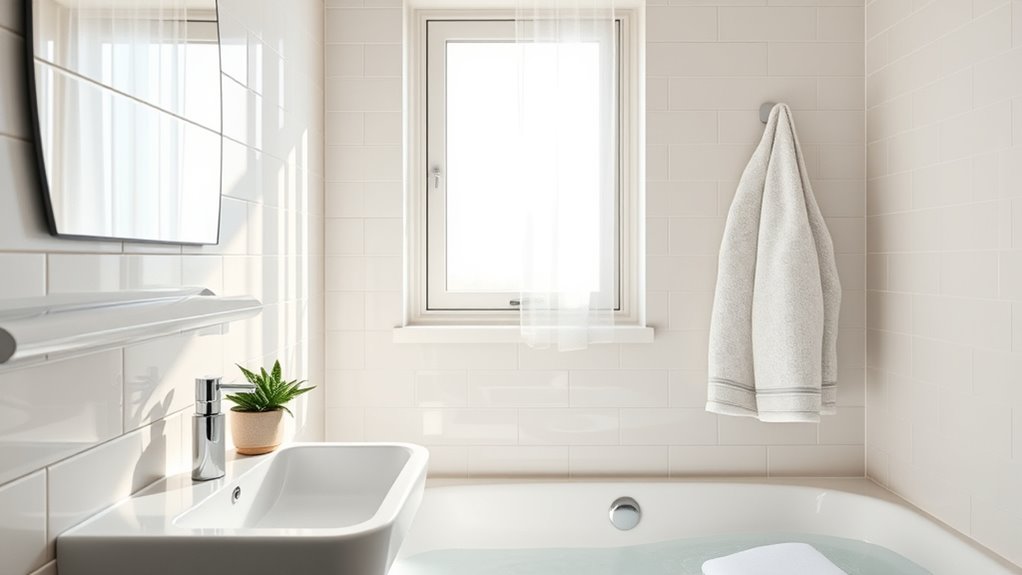
A clean and dry bathroom is essential for keeping allergies at bay. To combat allergens, install an exhaust fan to reduce moisture buildup, which can lead to mold growth.
Consider using mold-resistant paint on walls and ceilings to further prevent mold and mildew in your humid space. Wash your shower curtains and bathroom mats weekly in hot water to eliminate any accumulated mold spores.
Keep all surfaces clean by using appropriate cleaners and disinfectants, ensuring you minimize allergen presence. After each use, towel-dry the tub and enclosure to maintain dryness, and promptly fix any leaks to avoid moisture accumulation.
Tips for Maintaining Indoor Air Quality
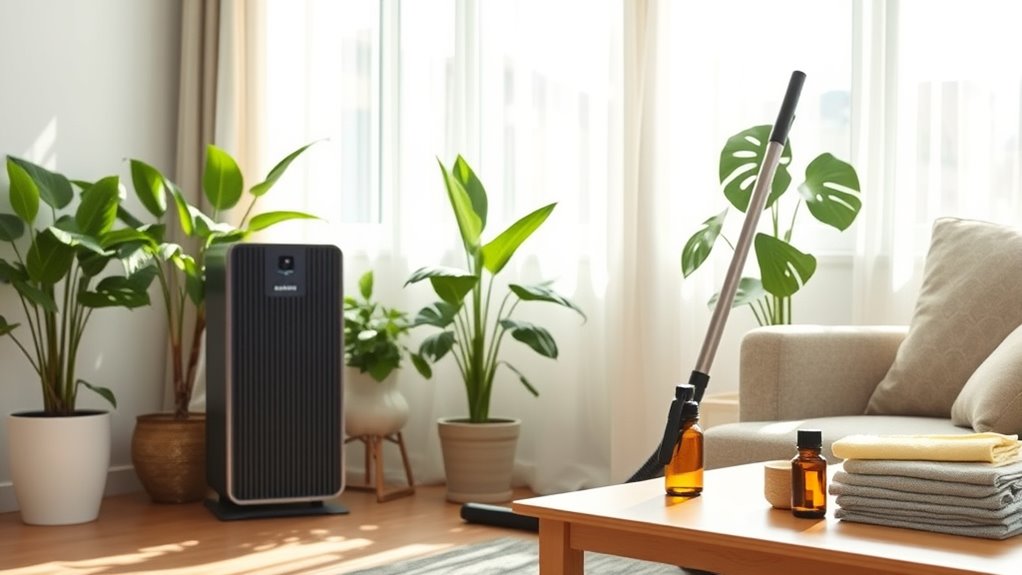
To keep your indoor air quality in check, regularly maintain your air filters and establish a consistent cleaning routine. Change your HVAC filters frequently to trap allergens and use a HEPA vacuum to clear dust and debris. Additionally, ensure proper airflow around your air purifier to enhance its performance. Consider using HEPA filters in your air purifiers, as they capture 99.97% of particles as small as 0.3 microns, providing you with cleaner air. Investing in a robot vacuum cleaner can further help in managing allergens by ensuring regular cleaning of your floors and hard-to-reach areas. Regular use of air purifiers can lead to improved respiratory health, particularly for those suffering from allergies and asthma.
Air Filter Maintenance
Maintaining your air filters is essential for keeping indoor air quality high, especially during allergy season.
Invest in high-efficiency particulate air (HEPA) filters for your air conditioning and heating systems; they can capture nearly 98% of airborne allergens and greatly reduce allergy symptoms.
Regularly check and change filters to guarantee peak performance and reduce allergens in your home.
Choose filters with a high Clean Air Delivery Rate (CADR) that match your room sizes for effective allergen removal.
Additionally, consider using air purifiers in high-allergen areas like bedrooms and living rooms to further improve indoor air quality.
Regular Cleaning Routine
Establishing a regular cleaning routine is key to keeping indoor air quality high and reducing allergens in your home.
Aim to vacuum carpets weekly with a HEPA filter vacuum, which effectively traps allergens like pollen. Using the best HEPA filter vacuums ensures thorough allergen removal. Regular cleaning of air purifiers is also essential for optimal performance.
Dust surfaces using a damp cloth to capture dust mites and mold instead of spreading them around. Additionally, consider using glycolic acid in your scalp care routine, as it can promote exfoliation and improve overall scalp health.
Don’t forget to wash bedding, pillowcases, and blankets in water at least 130°F (54°C) to eliminate dust mites.
Use allergen-resistant covers on pillows and mattresses to further safeguard against allergens.
Remember to regularly check and replace air filters in your HVAC system, choosing ones with a MERV of 13 or higher.
Finally, wash stuffed toys and fabric items weekly to minimize allergen buildup. Additionally, consider using an air purifier with HEPA filter technology to further enhance indoor air quality and reduce allergens.
Professional Consultation for Allergy Management
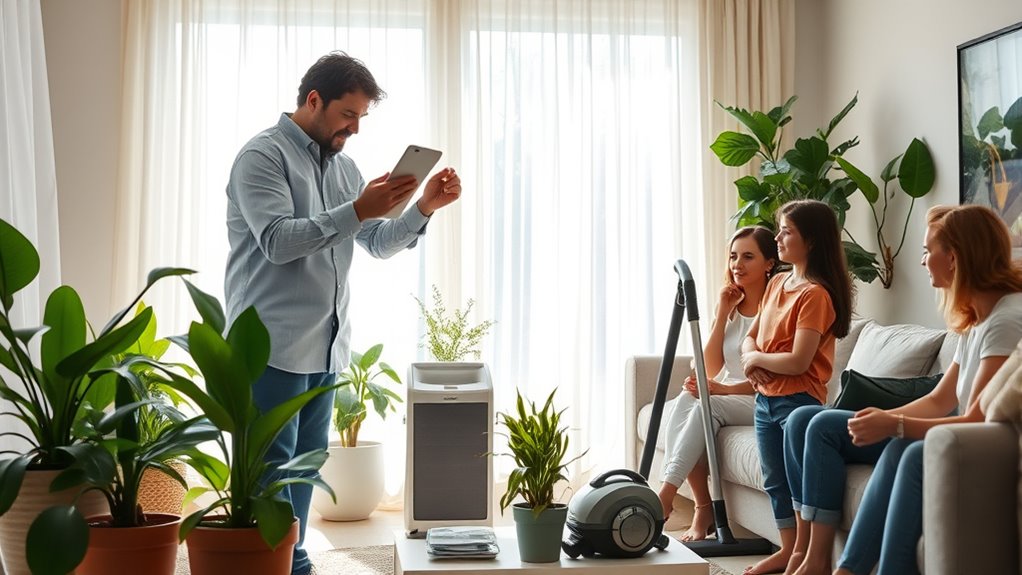
When it comes to managing allergies, seeking professional consultation can be a game changer. A board-certified allergist can help you identify specific allergens through testing, enabling you to develop personalized strategies for your allergy symptoms.
Regular check-ups allow for adjustments to your treatment plan, accommodating any changes in symptoms or environmental factors throughout allergy season. Allergists can guide you on medication options, advising you on the best times to start taking them—usually at least two weeks before symptoms hit.
Frequently Asked Questions
How Can I Make My Home More Allergy Friendly?
To make your home more allergy-friendly, start by encasing pillows and mattresses in dust-mite-proof covers.
Wash your bedding weekly in hot water to eliminate allergens.
Consider replacing carpeting with hardwood or linoleum for easier cleaning.
Install vented exhaust fans in kitchens and bathrooms to reduce moisture and prevent mold.
Use HEPA filters in air purifiers to capture airborne allergens, and keep indoor humidity below 50% with dehumidifiers for a healthier environment.
What Month Is Worst for Allergies?
The worst month for allergies depends on where you live, but you’ll often find March, April, and May to be the toughest for many.
In southern regions, February kicks off the pollen surge, while the Midwest typically faces high pollen counts in late spring.
You should keep an eye on local forecasts, as conditions can shift yearly.
Stay informed, track pollen levels, and prepare accordingly to minimize your allergy symptoms.
How Do I Stop Allergies in My House?
To stop allergies in your house, start by encasing pillows and mattresses in dust-mite-proof covers.
Keep a weekly cleaning routine that includes washing bedding in hot water and vacuuming with a HEPA filter.
Opt for hardwood or linoleum flooring instead of carpets, or choose low-pile carpets if necessary.
Close windows during high pollen seasons and use air conditioning to filter allergens, while regularly maintaining HEPA filters in air purifiers for better air quality.
How to Clean Pollen in a House?
To clean pollen in your house, start by vacuuming carpets and rugs with a HEPA filter vacuum to trap allergens effectively.
Wipe down surfaces with a damp cloth to capture pollen instead of spreading it.
Change your HVAC and air purifier filters regularly to maintain clean air.
Keep windows closed on high pollen days and wash bedding and curtains weekly in hot water to eliminate any trapped allergens.
Conclusion
As you prepare your home for allergy season, remember that nearly 50 million Americans suffer from allergies each year. By allergy-proofing your space and maintaining good indoor air quality, you can greatly reduce symptoms and enjoy a more comfortable environment. Don’t underestimate the impact of small changes, like using air purifiers and regularly washing bedding. With these strategies in place, you’ll be well-equipped to tackle allergy season head-on and breathe easier all season long!
Fall yard work Picks
leaf blowers
As an affiliate, we earn on qualifying purchases.