To keep your stovetop in top shape, wipe it daily after each use with a damp cloth or sponge, making sure it’s cool first. For a deeper clean weekly, remove grates, burners, and knobs, then scrub with a mild cleaner or baking soda paste. Prompt spill cleanup prevents buildup and staining. Consistent maintenance not only makes cleaning easier but also guarantees your stovetop stays safe and functions well—keep going, and you’ll discover more helpful tips.
Key Takeaways
- Wipe the stovetop surface daily with a damp cloth or sponge to remove splatters and crumbs.
- Allow the surface to cool before cleaning to prevent burns and damage.
- Use a gentle cleaner or warm water with dish soap for daily maintenance.
- Weekly, remove grates, burners, and knobs for thorough cleaning with a non-abrasive scrubber.
- Apply baking soda and water for tough spots, ensuring all parts are dry before reassembling.
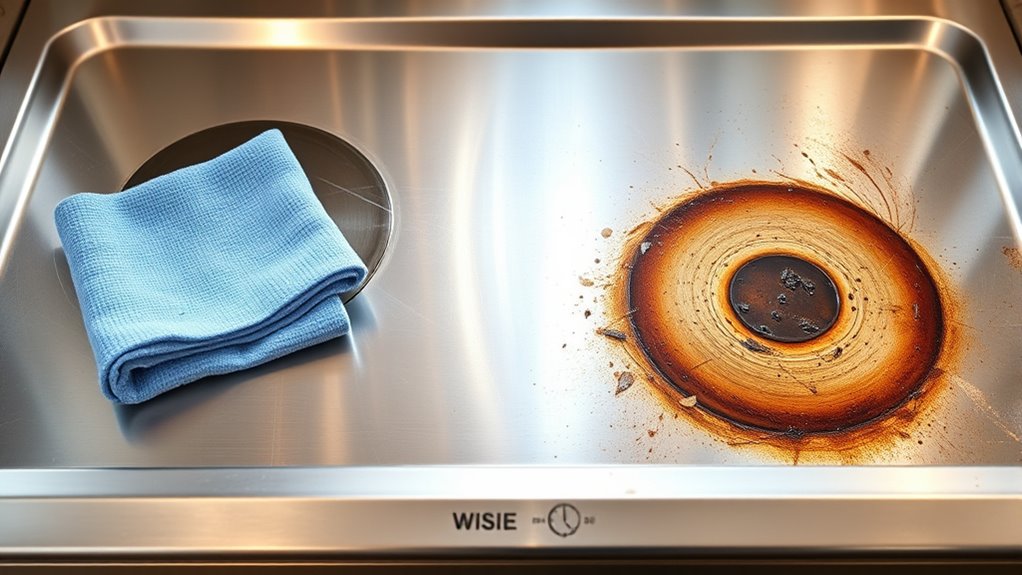
Cleaning your stovetop regularly keeps it looking new and guarantees safe cooking. When you stay on top of your routine, you not only keep your kitchen tidy but also extend the lifespan of your appliance. A vital part of this process is burner maintenance, which involves inspecting and cleaning your burners to guarantee they function properly. Dirty or clogged burners can cause uneven heating, which might lead to food spills or even hazards. By routinely checking the burners for debris and buildup, you prevent potential malfunctions and maintain peak performance. This proactive approach also helps with spill prevention, as a well-maintained burner is less likely to cause leaks or messes during cooking.
A daily wipe-down after each use is the simplest way to keep your stovetop in top shape. When you finish cooking, allow the surface to cool slightly, then use a damp cloth or sponge to remove splatters, grease, and crumbs. Focus on areas around the burners, as spills tend to accumulate there, and clean the knobs and control panel regularly to prevent grime buildup. Using a gentle cleaner or a mixture of warm water and dish soap minimizes the risk of damaging the surface while effectively breaking down grease. This quick daily routine ensures that spills don’t dry and harden, making weekly deep cleaning easier and more effective.
To further prevent spills, always practice spill prevention techniques. For example, use pots and pans of appropriate size for your burners, and avoid overfilling them. Using lids can also contain splatters, reducing messes on your stovetop. When you notice a spill, clean it up immediately rather than letting it sit and harden. This habit reduces the risk of buildup that can be difficult to remove later and prevents staining or damage to your stovetop surface.
Once a week, dedicate time to a deep clean. Remove grates, burners, and knobs to clean all parts thoroughly. Use a non-abrasive scrubber and a mild cleaner to eliminate stubborn grease and food residue. For tough spots, a mixture of baking soda and water can work wonders when applied with a soft brush. Reassemble everything carefully, ensuring all parts are dry before replacing them. Regular deep cleaning not only keeps your stovetop looking pristine but also improves safety by ensuring no hidden debris interferes with burner performance. By integrating both daily maintenance and weekly deep cleaning into your routine, you’ll enjoy a spotless, efficient, and safe stovetop that’s always ready for your next meal.
Frequently Asked Questions
Can I Use Vinegar on All Stovetop Surfaces?
You can use vinegar on many stovetop surfaces, but it’s important to contemplate vinegar safety and surface compatibility. Vinegar is generally safe for glass and ceramic tops, but avoid using it on sensitive materials like aluminum or natural stone, which can be damaged. Always test a small area first, and never use vinegar on igniters or electric components. Properly diluted vinegar helps keep your stovetop clean without risking damage.
How Do I Remove Stubborn Grease Stains Safely?
Did you know that 78% of homeowners struggle with stubborn grease stains? To remove them safely, start with a mixture of baking soda and water or a commercial degreaser. Use gentle grease removal techniques like soft scrubbing and avoid harsh abrasives. To prevent future stains, wipe spills immediately and maintain regular cleaning. These stain prevention tips keep your stovetop gleaming and make stubborn grease easier to tackle.
Are Natural Cleaning Methods Effective for Deep Cleaning?
Yes, natural cleaning methods can be effective for deep cleaning. You can use natural ingredients like baking soda, vinegar, and lemon to tackle stubborn grease and grime. These eco-friendly solutions break down dirt without harsh chemicals, making them safe for your home and the environment. With a little effort, natural ingredients can thoroughly clean surfaces, leaving them fresh and spotless while reducing chemical exposure.
How Often Should I Replace Stovetop Cleaning Tools?
You should replace your stovetop cleaning tools every few months to maintain effective cleaning and guarantee hygiene. Follow a regular cleaning schedule and inspect tools for wear or damage. Tool maintenance is key; for instance, replace scrub brushes or sponges when they show signs of deterioration or lingering odors. Doing so helps prevent bacteria buildup and keeps your stovetop sparkling. Regular replacements also ensure your cleaning tools work efficiently, making your routine more effective.
What Precautions Should I Take During Weekly Deep Cleaning?
Think of your stove as a delicate dance partner—you need to treat it with care. During weekly deep cleaning, prioritize cleaning safety by wearing gloves and eye protection. Make certain proper ventilation to avoid inhaling fumes, and always unplug or turn off the stove before cleaning. Use gentle cleaners and avoid abrasive tools. These precautions keep you safe and your stovetop sparkling, making your cleaning routine both effective and worry-free.
Conclusion
By giving your stovetop a gentle daily touch and a more thorough weekly refresh, you’re nurturing a space that feels inviting and effortlessly clean. Think of it as tending to a small garden—daily care keeps it vibrant, while deeper attention brings out its true beauty. With just a little effort, your stovetop will continue to shine softly, creating a warm, welcoming kitchen where every meal begins with a sparkle.