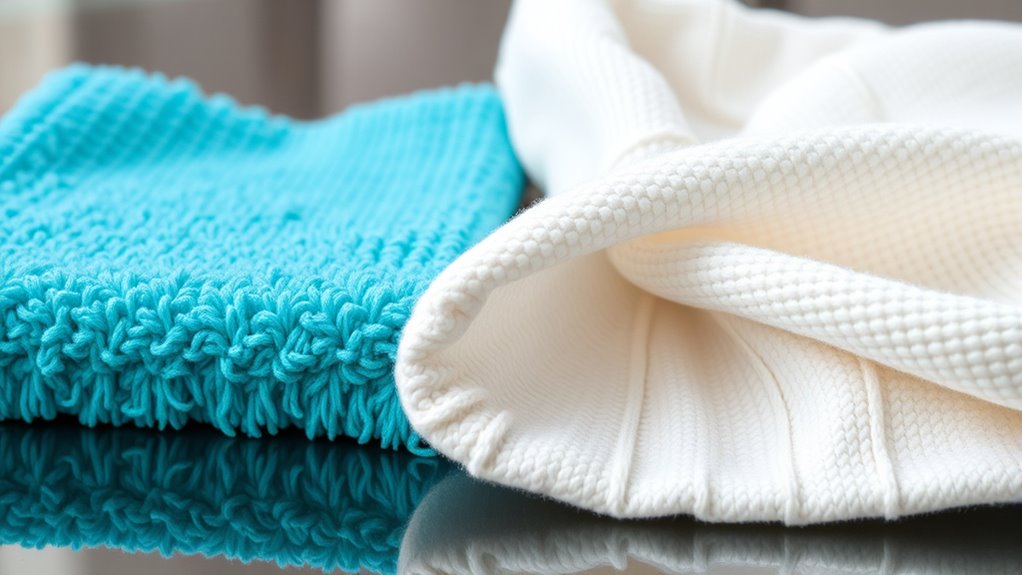

Microfiber cloths generally clean better than cotton because their tiny synthetic fibers trap dirt, oils, and dust more effectively, especially on delicate surfaces like glass and electronics. They often produce streak-free results and require less effort or cleaning agents. Cotton, while biodegradable and cheaper initially, may need more effort and products to achieve similar cleanliness. If you want to discover which option suits your needs best, keep exploring the details behind both materials.

Get cleaning gear delivered free — and shop member deals
- Fast, free delivery on millions of items
- Access to Prime Big Deal Days deals on October 6–7
- Prime Video, Amazon Music and more included
Key Takeaways
- Microfiber traps dirt, dust, and oils more effectively, providing a streak-free clean on surfaces like glass and electronics.
- Cotton is suitable for general wiping and spills but may require more effort and cleaning agents to achieve similar cleanliness.
- Microfiber offers superior cleaning performance and durability, making it more cost-effective long-term despite higher initial costs.
- Cotton is biodegradable and environmentally friendly, but it may need frequent replacement due to wear.
- The choice depends on cleaning needs, surface delicacy, and environmental priorities, with microfiber excelling in detailed cleaning tasks.
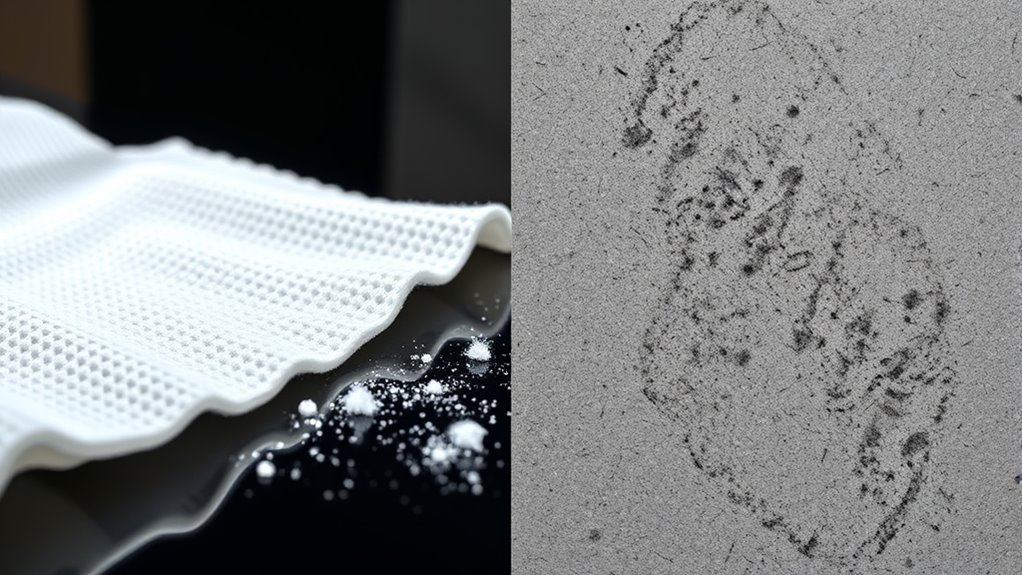
When it comes to cleaning and fabric choices, microfiber and cotton cloths each have their own advantages. As you decide between them, it’s important to consider not just cleaning efficiency but also the environmental impact and cost comparison. Microfiber cloths are made from tiny synthetic fibers, usually polyester and polyamide, which are designed to trap dirt and dust more effectively. Cotton cloths, on the other hand, are natural fibers that are biodegradable and tend to be gentler on delicate surfaces. When evaluating environmental impact, microfiber’s synthetic nature means it doesn’t decompose easily, contributing to microplastic pollution if not disposed of properly. Yet, because microfiber cloths often last longer and require fewer cleaning products, they can reduce waste and chemical use over time. Cotton cloths, being natural, break down faster in landfills, making them a more eco-friendly option in terms of biodegradability. However, cotton production requires significant water, land, and pesticide use, which can negatively impact the environment. This makes the overall environmental impact of cotton complex; it’s biodegradable but resource-intensive to produce. Additionally, advances in sustainable textile production are beginning to address these concerns.
Cost comparison is another key factor. Microfiber cloths tend to have a higher upfront cost but often prove more economical over their lifespan because they’re durable and washable many times without losing effectiveness. You might pay more initially, but fewer replacements mean savings in the long run. Cotton cloths are generally cheaper initially and can be washed and reused multiple times, but they tend to wear out faster, especially if used for heavy-duty cleaning. This means you might need to buy more cotton cloths over time, increasing your total expenditure. Considering both, microfiber might be the better investment if you want long-term savings and superior cleaning performance, especially for dust and streak-free surfaces.
In terms of cleaning performance, microfiber’s ability to pick up tiny particles and oils often outperforms cotton, making it ideal for streak-free glass and electronics. Cotton, while effective for general wiping and absorbing spills, may require more effort or cleaning agents for the same level of cleanliness. Ultimately, your choice depends on your priorities: if environmental impact and long-term cost savings matter most, microfiber could be your best bet. If biodegradability and initial affordability are more important, cotton might suit your needs better. Both fabrics have their place, but understanding these aspects helps you make an informed decision that aligns with your cleaning goals and values.
microfiber cleaning cloths for glass and electronics
As an affiliate, we earn on qualifying purchases.
As an affiliate, we earn on qualifying purchases.
Frequently Asked Questions
Are Microfiber or Cotton Cloths More Eco-Friendly?
When choosing between microfiber and cotton cloths, consider their eco impact and sustainability benefits. Microfiber cloths often require fewer cleaning chemicals and water, making them more eco-friendly in use. However, they are synthetic and may not decompose easily, raising sustainability concerns. Cotton cloths are biodegradable and renewable, but they may need more water and chemicals to produce. Your choice depends on balancing these factors for a more eco-conscious cleaning routine.
How Long Do Microfiber and Cotton Cloths Typically Last?
Think of microfiber and cotton cloths like trusty sidekicks—both can last quite a while if taken care of. Typically, microfiber cloths last around 100-500 washes, while cotton cloths tend to last longer, up to 200 washes. For durability, follow maintenance tips like washing in cold water and avoiding fabric softeners. Proper care guarantees your cloths stay effective and last for years, saving you money and reducing waste.
Can Microfiber or Cotton Cloths Be Used on Delicate Surfaces?
You can definitely use microfiber or cotton cloths on delicate surfaces. Both are great for gentle cleaning and help maintain surface safety. Microfiber is especially soft and effective at trapping dust without scratching, making it ideal for sensitive screens or glass. Cotton cloths are also gentle but may require a softer weave. Always test a small area first to make certain your chosen cloth won’t cause damage, and avoid harsh scrubbing.
Do Microfiber or Cotton Cloths Trap More Bacteria?
Imagine wiping away dirt and dust, then wondering if your cloth traps bacteria or just spreads it. Microfiber cloths excel at dirt removal and dust capture, trapping more bacteria because their fine fibers grab tiny particles better than cotton. Cotton may feel soft, but microfiber’s structure allows it to hold onto bacteria more securely. So, if sanitation’s your goal, microfiber cloths are the smarter choice for bacteria removal and overall cleanliness.
Which Cloth Type Is More Cost-Effective Over Time?
You’ll find microfiber cloths more cost-effective over time because they offer better durability and require fewer replacements. Their ability to withstand frequent washing saves you money in the long run, providing significant cost savings. Plus, microfiber’s durability means it keeps cleaning effectively longer than cotton, making it a smarter investment. So, even if microfiber costs a bit more upfront, its longevity and performance make it the more economical choice overall.
Conclusion
So, when it comes to cleaning, microfiber cloths are the superheroes that outshine cotton every time. They pick up dirt and grime like a magnet, making your chores way easier and faster. While cotton’s good for gentle wiping, microfiber’s superpowers make it the ultimate cleaning sidekick. Honestly, switching to microfiber could feel like upgrading from a bicycle to a rocket—your cleaning game will never be the same! Give it a try and see the magic happen.
Fall Picks
fall essentials
As an affiliate, we earn on qualifying purchases.