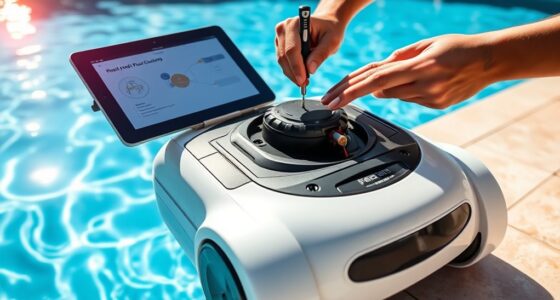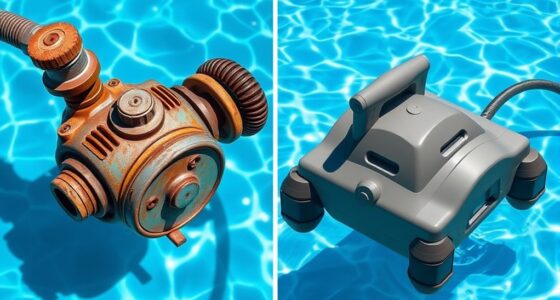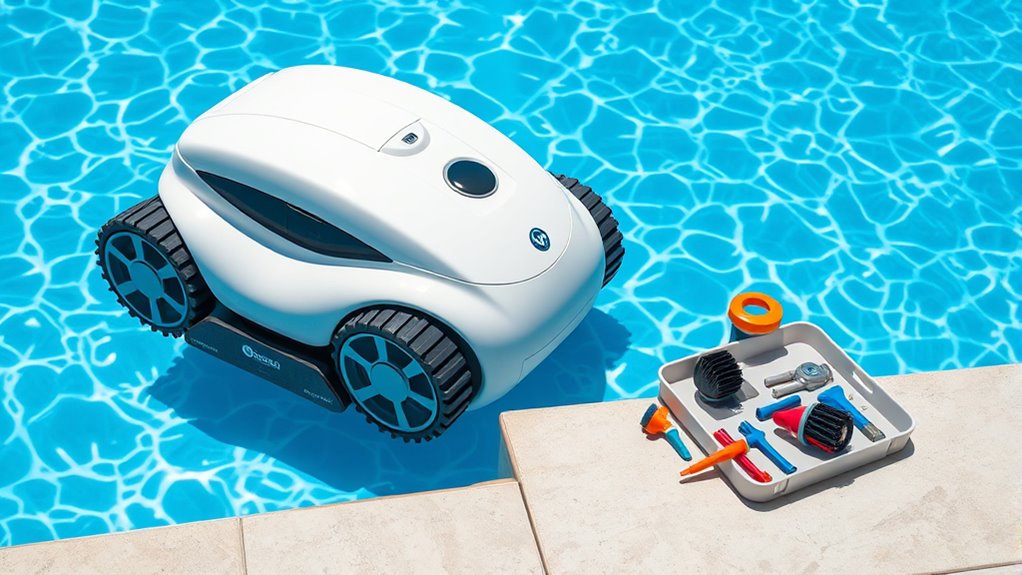

To keep your automatic pool cleaner working well, regularly inspect and clean brushes, skirts, filters, and ports for debris and damage. Check the navigation sensors and remote controls to guarantee accurate movement, and verify power cables are intact and properly connected. When not in use, store it in a cool, dry place after cleaning. Performing these routine checks will help you maintain peak performance and extend its lifespan—continue for more detailed tips.
Key Takeaways
- Regularly inspect and clean brushes, skirts, and wheels to prevent debris buildup and ensure optimal cleaning performance.
- Check and replace filters and filter components promptly to maintain water clarity and filtration efficiency.
- Test and calibrate navigation sensors, obstacle detection, and remote controls for accurate movement.
- Inspect power cables, connections, and storage conditions to ensure safety and prevent damage.
- Follow a scheduled maintenance routine including water chemistry checks and component inspections to extend device lifespan.

Commercial Heated Carpet & Upholstery Extractor Machine, 160 PSI Hot Water Cleaner, 1.34 HP Vacuum, 149°F Heater, 4.8-Gal and 5.3-Gal Dual Tanks for Auto Detailing, Furniture & Carpet
Heated Deep Cleaning Performance: Powered by a 1.34 HP (1000 W) vacuum motor and 160 PSI solution pump,...
As an affiliate, we earn on qualifying purchases.
Inspect and Clean the Brushes and Skirts
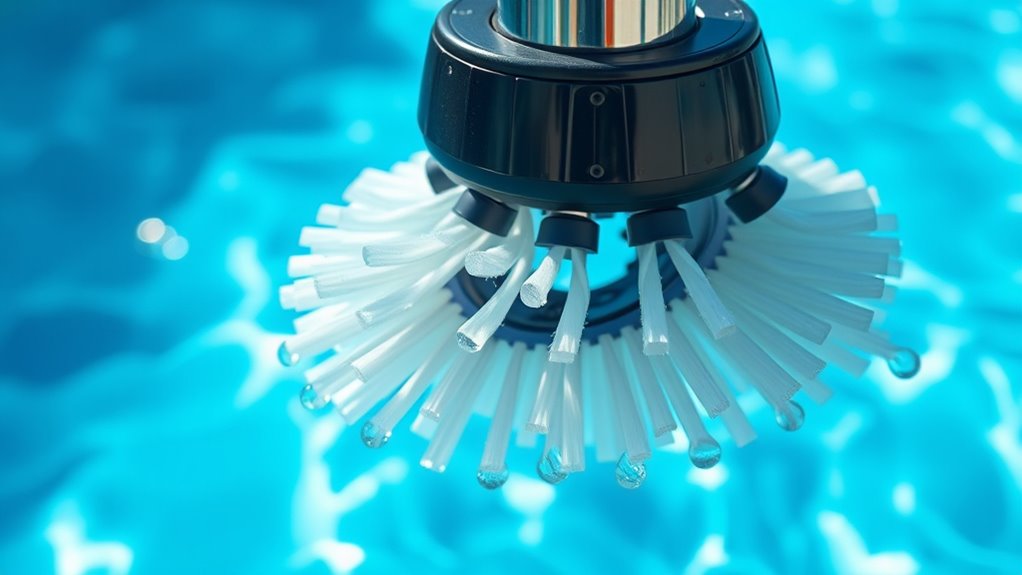
Regularly inspecting and cleaning the brushes and skirts on your pool cleaner is essential for ideal performance. Start with a thorough brush inspection to check for any signs of wear, damage, or debris buildup. Worn or damaged brushes won’t clean effectively, so replace them if needed. Next, focus on skirt cleaning—remove any dirt, algae, or debris that may have accumulated around the skirts. Clean skirts ensure a proper seal with the pool surface, which improves maneuverability and suction power. Use a brush or cloth to gently scrub stubborn dirt from the skirts, and rinse thoroughly with water. Keeping these parts clean and in good condition helps your pool cleaner operate smoothly, extending its lifespan and maintaining excellent cleaning efficiency. Regular maintenance of pool cleaning tools can also prevent costly repairs and ensure consistent performance. Additionally, inspecting the brushes and skirts regularly for signs of wear can help you address issues before they impact cleaning effectiveness. Incorporating routine inspections supports a methodical approach that can prevent larger problems down the line. Moreover, understanding the proper cleaning techniques and how different filter types affect cleaning can further enhance the longevity of your equipment.

Commercial Carpet Cleaner Extractor 10-Gal Solution Tank 8-Gal Recovery Tank, 18” Cleaning Path, Low Noise Powerful Carpet Cleaner for Hotels, Offices, Large Areas & Professional Use
Powerful Deep Cleaning – Equipped with a 900 RPM motor and 1400W power, this commercial-grade carpet extractor effectively...
As an affiliate, we earn on qualifying purchases.
Check and Clean the Filter Bag or Cartridge
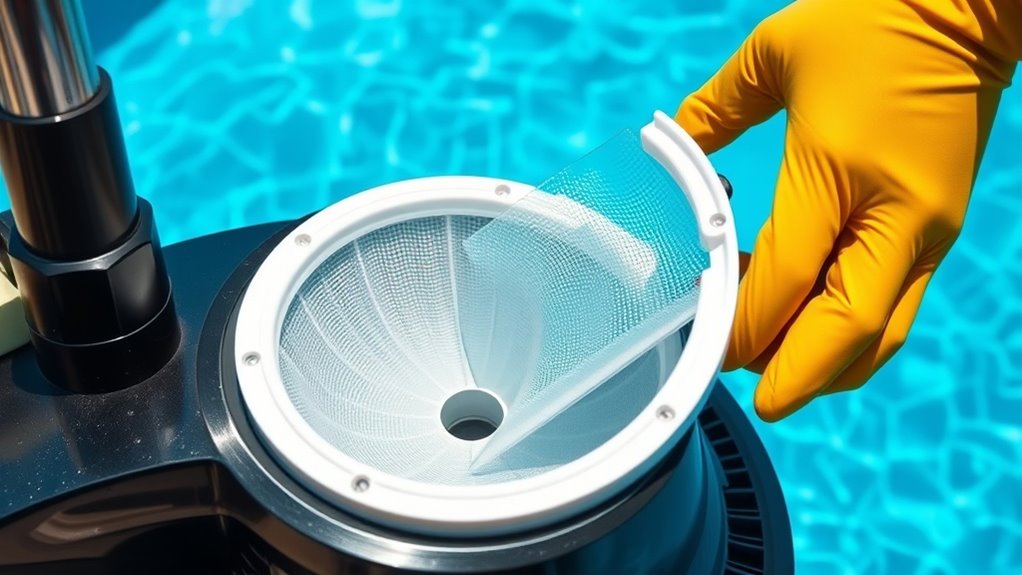
You should regularly inspect your filter bag or cartridge to guarantee it isn’t clogged or damaged. Cleaning it thoroughly removes debris that can hinder your cleaner’s performance. Keeping the filter in top shape helps your pool cleaner work efficiently and extends its lifespan. Additionally, monitoring the filtration system ensures optimal removal of debris and allergens from your pool water. Proper maintenance of the performance exhaust systems in your pool cleaner can also improve overall cleaning efficiency. Regularly checking and replacing your essential oils can prevent buildup of residues that might affect the cleaner’s function. To prevent clogs, inspecting the pool cleaner brushes regularly can help maintain effective cleaning action. Regular inspection of paint sprayer nozzles can also prevent blockages and maintain a consistent spray pattern.
Inspect Filter Regularly
Since a clogged filter can reduce your pool’s circulation and strain the pump, maintaining the filter bag or cartridge frequently is vital. Regular inspections help you catch debris buildup early, preventing clogs that hinder cleaning efficiency. When inspecting, check for signs that require filter replacement, such as tears or excessive wear. Also, inspect the seal around the filter to ensure it’s secure and intact; a damaged seal can cause leaks and reduce filtration performance. If you notice the filter is dirty or damaged, clean or replace it promptly. This routine helps keep your pool water clear and your automatic cleaner working efficiently. Proper filtration techniques are essential for maintaining water quality and extending the lifespan of your filter system. Additionally, ensuring that the airflow around the filter is unhindered can improve overall filtration performance. Regular filter maintenance can also prevent the buildup of biological contaminants, which is crucial for safe swimming conditions. Incorporating preventative maintenance practices can further enhance the longevity of your filtration system. Implementing regular cleaning schedules helps maintain consistent water clarity and system efficiency. By staying on top of filter inspections, you extend the lifespan of your filter system and maintain ideal pool circulation.
Clean Filter Thoroughly
To make certain your pool remains spotless and your cleaner functions effectively, it’s crucial to thoroughly clean the filter bag or cartridge. A dirty filter reduces suction and hampers cleaning performance. Remove the filter and inspect for debris or clogs. Wash the filter with a hose to remove dirt, algae, and other buildup. Regular cleaning helps prevent the need for filter replacement and maintains proper chemical balancing in your pool. Use a brush for stubborn grime. Check for tears or damage, and replace the filter if necessary. Proper filter maintenance ensures your cleaner works efficiently, saving you time and effort. Keeping a cleaning schedule for your filter helps maintain optimal performance and prolongs the lifespan of your equipment. Replace filters as recommended by the manufacturer to ensure consistent results. This will keep your pool healthy, clear, and inviting. Regular filter maintenance is also essential for vetted preparedness, as it ensures your equipment remains reliable in emergencies. Incorporating manufacturer guidelines and understanding filter replacement frequency can further optimize your pool maintenance routine. Additionally, staying informed about filter lifespan can help you plan timely replacements and avoid unexpected issues.

Bissell Commercial Bissell BigGreen Commercial BG10 Deep Cleaning 2 Motor Extractor Machine
Country Of Origin : China
As an affiliate, we earn on qualifying purchases.
Examine and Clear the Intake and Outflow Ports

Regularly examining and clearing the intake and outflow ports prevents clogs that can hinder your pool cleaner’s performance. During port inspection, look for debris buildup or obstructions that block water flow. Removing debris ensures smooth operation and prevents strain on the motor. Incorporating automation technologies into maintenance routines can further optimize your pool cleaner’s efficiency. Regularly inspecting and replacing worn parts helps maintain overall cleaning effectiveness and prolongs device lifespan. Key steps include: – Checking for debris removal from both ports – Removing any leaves, dirt, or hair lodged inside – Ensuring no cracks or damage are present. Performing routine preventative maintenance can significantly reduce unexpected breakdowns. A quick clean-up keeps your cleaner functioning efficiently and prolongs its lifespan. Regular maintenance of these ports helps maintain proper water flow and suction, preventing performance issues before they escalate. Keep an eye on these critical points to ensure your pool cleaner works seamlessly and keeps your pool sparkling clean.

Shark StainStriker Portable Carpet Upholstery & Area Rug Cleaner, Stain & Odor Remover, Perfect for Car Interiors, Nordic Blue, PX202BRN
Shark StainStriker is a portable carpet and upholstery cleaner with pet mess extractor, bonus XL tool, and full-size...
As an affiliate, we earn on qualifying purchases.
Test and Ensure Proper Movement and Navigation
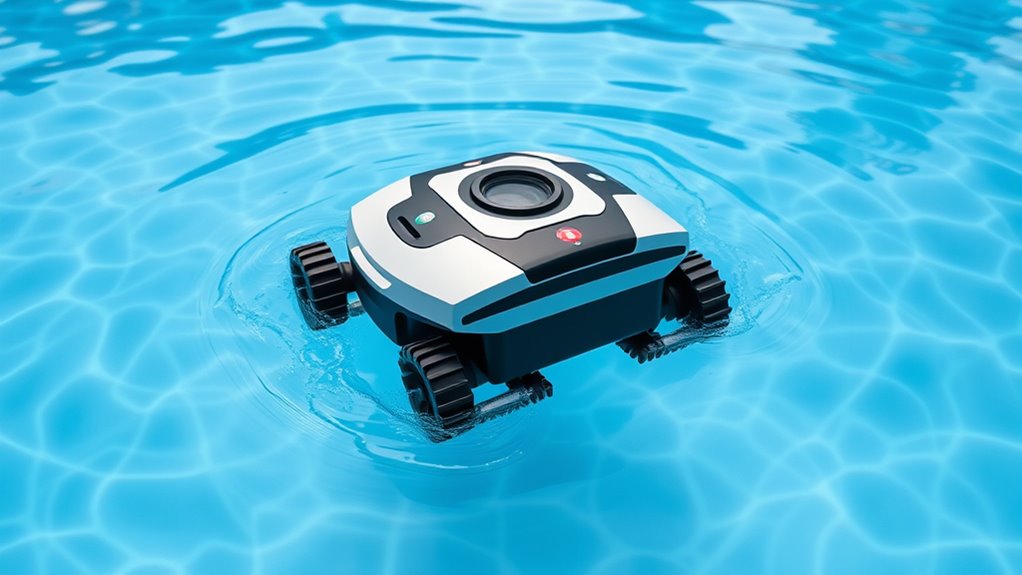
Ensuring your pool cleaner moves smoothly and navigates effectively is essential for thorough cleaning. Start by observing its movement across the pool surface, checking for consistent navigation accuracy. If it gets stuck or misses spots, it may need a reset or recalibration. Pay attention to obstacle detection—your cleaner should recognize and avoid objects like ladders, drains, or floating debris. Test its ability to change direction when encountering obstacles and verify it covers all pool areas. If it struggles with navigation or repeatedly hits barriers, clean the sensors or navigation wheels. Proper movement guarantees efficient cleaning and prevents unnecessary wear. Regularly testing and confirming your cleaner’s navigation helps maintain peak performance and extends its lifespan. Incorporating goal setting techniques can help you track and improve your maintenance routine for optimal results. Additionally, ensuring the air quality around your equipment is free from dust and debris can prevent sensor malfunctions that hinder navigation. Maintaining a clean environment also supports the effectiveness of pool cleaner components, ensuring they function properly over time. To further optimize performance, consider inspecting and maintaining navigation sensors regularly to ensure accurate obstacle detection and movement.
Review and Adjust the Power Supply and Cables
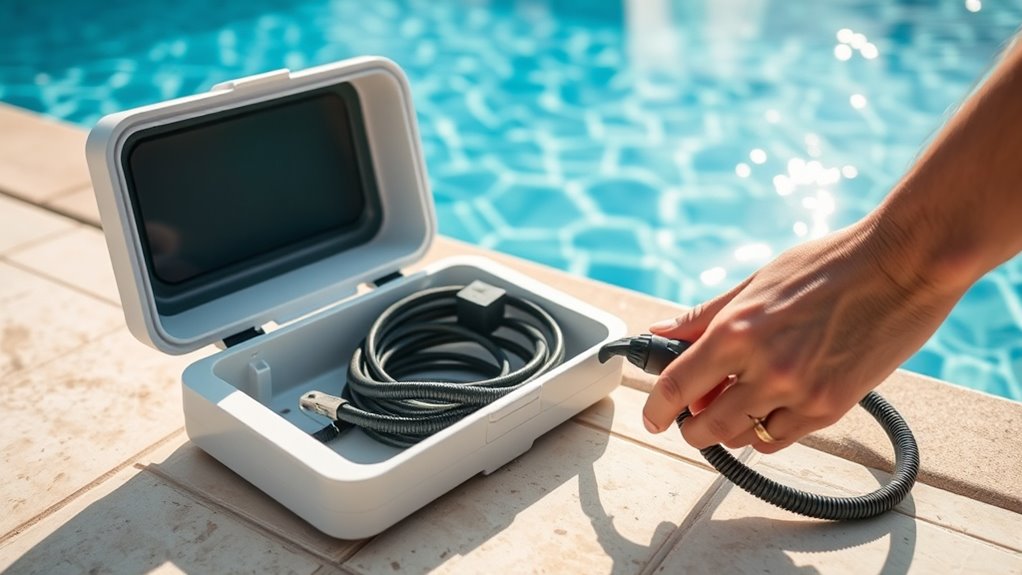
Start by inspecting your pool cleaner’s power supply and cables to verify they’re connected properly and undamaged. A secure connection ensures consistent power and best operation. Check for frayed or cracked cables that could compromise performance or safety. Proper cable management prevents tangling or snagging, which can impair movement. To maximize your setup, consider these tips:
- Keep cables neatly coiled and away from obstacles
- Ensure the power supply is plugged into a grounded outlet
- Regularly inspect for wear and replace damaged cables promptly
Good cable management not only prolongs cable life but also maintains smooth navigation. If you notice any issues with the power supply or cables, address them immediately to avoid disruptions during cleaning sessions. Staying vigilant helps your pool cleaner operate efficiently and safely.
Remove and Clean the Drive Tracks or Wheels

To keep your pool cleaner functioning smoothly, you need to remove and clean the drive tracks or wheels regularly. The drive mechanism relies on these components to move effectively across the pool surface. Start by detaching the wheels or drive tracks from the cleaner. Inspect them for debris, dirt, or mineral buildup, which can hinder movement. Clean them thoroughly with water and a soft brush, ensuring no obstructions remain. While cleaning, check wheel alignment to ensure proper contact with the track or surface. Misaligned wheels can cause uneven movement or damage the drive mechanism. Once clean and aligned, reattach the wheels or tracks securely. Regular maintenance of these parts helps prevent unnecessary wear and keeps your cleaner operating at peak efficiency.
Verify the Operation of the Remote Control and Sensors
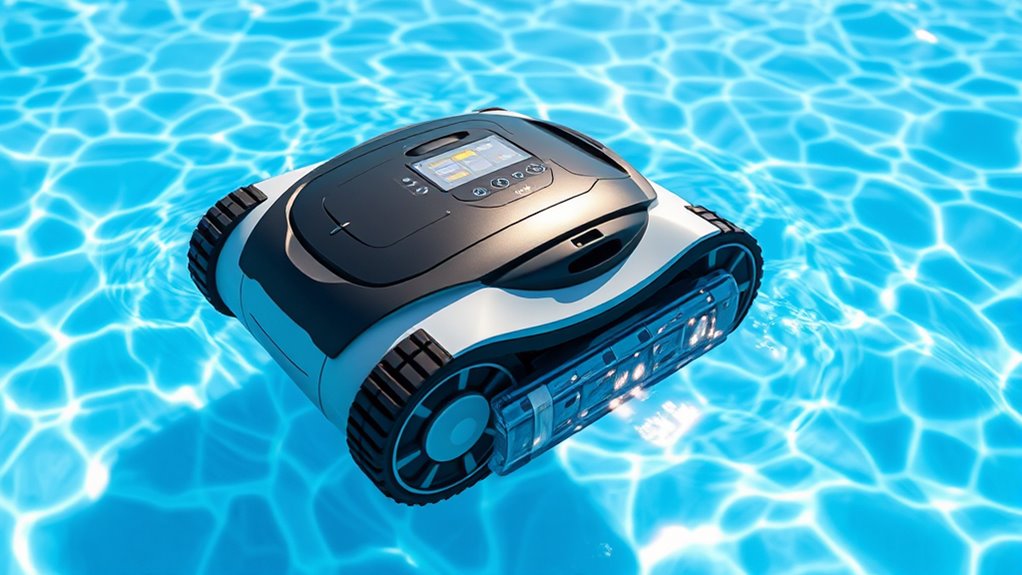
Start by testing your remote control to make certain it responds correctly at different distances. Next, check that the sensors detect the cleaner’s movements and obstacles properly. If issues arise, troubleshoot common problems like signal interference or dirty sensors to keep everything working smoothly.
Remote Control Functionality Check
Before performing maintenance on your pool cleaner, make certain the remote control and sensors are functioning correctly. Test the remote by pressing all buttons and confirming the cleaner responds accordingly. Check for any unresponsive controls that may need a battery replacement. Ensure your remote’s software is up to date, which can improve responsiveness and fix bugs. Verify the remote’s signal reaches the cleaner without obstructions. Additionally, inspect sensors for dirt or damage that could impede operation. Remember, a malfunctioning remote or outdated software can hinder your cleaner’s performance. To troubleshoot, replace the batteries if needed, perform a software update, and test again. Keeping these components in check ensures smooth, reliable operation during your pool cleaning sessions.
Sensor Response Validation
Ensuring that your pool cleaner’s sensors respond correctly is essential for peak performance. To do this, perform response time testing by observing how quickly sensors detect obstacles or boundary signals. Proper sensor calibration ensures accurate readings, preventing missed spots or collisions. Test sensors by placing objects at different distances and noting reaction times. If responses are delayed or inconsistent, recalibrate the sensors according to manufacturer instructions. Use the table below to compare sensor responses and calibration status:
| Sensor Type | Response Time | Calibration Status | Notes |
|---|---|---|---|
| Boundary Sensor | Immediate | Calibrated | No issues detected |
| Obstacle Sensor | Slight delay | Needs adjustment | Recalibrate if delayed |
| Water Level Sensor | Immediate | Calibrated | Functioning correctly |
| Remote Signal Sensor | Slight delay | Calibrated | Test with remote controller |
| Navigation Sensors | Slight delay | Needs adjustment | Check calibration settings |
Regular validation keeps your cleaner running smoothly.
Troubleshooting Common Issues
When troubleshooting common issues with your pool cleaner, verifying that the remote control and sensors operate correctly is a crucial first step. Malfunctioning sensors can cause navigation problems, while a faulty remote may prevent proper control. Check for the following:
- Confirm sensors are clean and free of debris, which can interfere with their response.
- Ensure the remote control has fresh batteries and is within range.
- Verify that pool water chemistry is balanced, as poor chemistry can lead to sensor misreadings or debris buildup.
Proper sensor operation prevents navigation errors, and maintaining balanced water reduces debris accumulation. If sensors aren’t responding, clean them thoroughly. Regularly inspect the remote control to avoid communication issues, ensuring your cleaner functions effectively and keeps your pool pristine.
Store the Cleaner Properly During Off-Season
To keep your pool cleaner in good shape for the next season, maintaining proper storage during the off-season is vital. Follow these storage tips to guarantee it remains in top condition during seasonal shutdown. First, thoroughly clean your cleaner, removing any debris, dirt, or algae. Rinse it well with fresh water to prevent buildup. Next, check for damage and repair any worn parts. Store the cleaner in a cool, dry place away from direct sunlight, which can degrade plastic components. Coil the power cord loosely to avoid damage. If your cleaner has a battery, charge it fully before storage. Proper storage helps prevent mold, corrosion, and mechanical issues, making sure your cleaner is ready to go when the swimming season resumes.
Troubleshoot Common Issues and Malfunctions
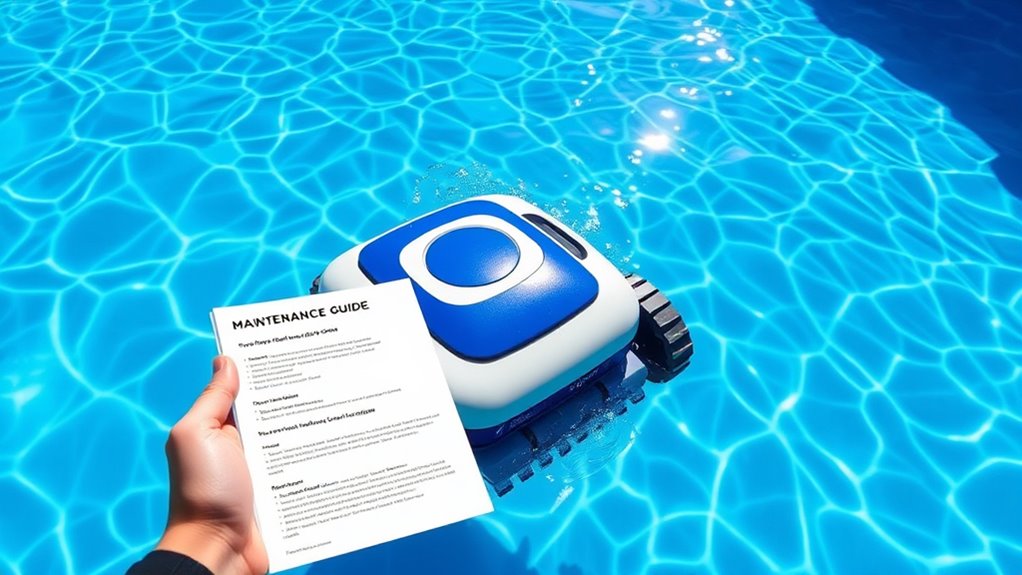
Even the best pool cleaners can encounter issues from time to time, but many common problems have simple solutions. If your cleaner isn’t operating smoothly, check these areas first:
- Ensure the water level is high enough; low water levels can hinder suction and movement.
- Maintain proper pool chemistry; imbalanced pH or chlorine levels can cause debris buildup or equipment corrosion.
- Inspect the brushes and wheels for debris or wear, which can affect cleaning efficiency.
Addressing these issues often solves most malfunctions. Regularly monitoring water level and pool chemistry helps prevent larger problems. Keep your cleaner in top shape by promptly troubleshooting these common concerns, ensuring it runs efficiently and keeps your pool pristine.
Schedule Regular Maintenance Checks

Regular maintenance checks are essential for keeping your pool cleaner functioning at its best. By scheduling routine inspections, you ensure the cleaner operates efficiently and prolong its lifespan. During these checks, assess your pool chemistry to maintain proper water balance, which helps prevent buildup and damage to the cleaner. Always follow safety precautions, such as turning off power before inspecting or servicing the device. Clean filters, brushes, and suction ports regularly to avoid clogs that hinder performance. Check for signs of wear or damage, and replace parts as needed. Keeping a maintenance schedule not only prevents unexpected malfunctions but also ensures your pool remains safe and inviting. Consistency in checks guarantees your automatic pool cleaner stays in top condition year-round.
Frequently Asked Questions
How Often Should I Perform Routine Maintenance on My Pool Cleaner?
You should perform routine checks and component inspections weekly to keep your pool cleaner in top shape. Regular maintenance helps identify issues early, ensuring peak performance and longevity. Clean brushes, filters, and hoses, and check for wear or damage. If you notice decreased cleaning efficiency, do a more thorough inspection. Staying consistent with these routine tasks prevents costly repairs and keeps your pool sparkling clean all season long.
Can I Use Chemical Cleaners to Disinfect the Cleaner’s Components?
Think of your pool cleaner as a trusty knight—its armor needs cleaning to keep it strong. You can use chemical cleaning for component disinfection, but be cautious. Avoid harsh chemicals that might damage parts. Instead, opt for gentle, approved cleaners to make certain all components stay in top shape. Regular chemical cleaning helps prevent buildup and maintains the cleaner’s efficiency, ensuring your pool stays sparkling and safe for use.
What Signs Indicate My Pool Cleaner Needs Professional Repairs?
If your pool cleaner malfunctions or makes abnormal noise, it’s time to seek professional repairs. Signs include persistent issues like the cleaner not moving properly, strange sounds, or frequent breakdowns despite routine maintenance. Abnormal noise often indicates motor problems or debris jams. Don’t overlook these signs, as timely professional intervention ensures your cleaner functions efficiently, extends its lifespan, and keeps your pool sparkling clean without further damage.
Is It Safe to Operate the Cleaner During Heavy Pool Use?
You might wonder if it’s safe to operate your cleaner during heavy pool use. For pool safety, it’s best to avoid running the cleaner when many people are swimming, as it can cause accidents or damage. Cleaner operation during busy times could also hinder pool users or interfere with filtration. To guarantee safety, run the cleaner during off-peak hours and always supervise its operation to prevent any mishaps.
How Do Environmental Factors Affect the Cleaner’S Performance?
Environmental factors like water pH levels and sunlight exposure substantially impact your pool cleaner’s performance. When water pH levels are balanced, your cleaner moves efficiently, tackling dirt and debris with ease. Too much sunlight exposure can cause surface algae or debris buildup, making cleaning harder. You’ll notice better results when you monitor and adjust pH levels regularly and limit excessive sunlight, ensuring your cleaner operates smoothly and keeps your pool pristine.
Conclusion
So, after all that effort, your pool cleaner keeps your pool pristine—yet somehow, it’s still the one thing that refuses to clean itself. Ironically, the more you maintain it, the less you’ll have to worry about it breaking down. But don’t get too comfortable—skipping these steps might turn your spotless pool into a swamp. Keep up with maintenance; your cleaner might just surprise you—and save you from endless scrubbing.