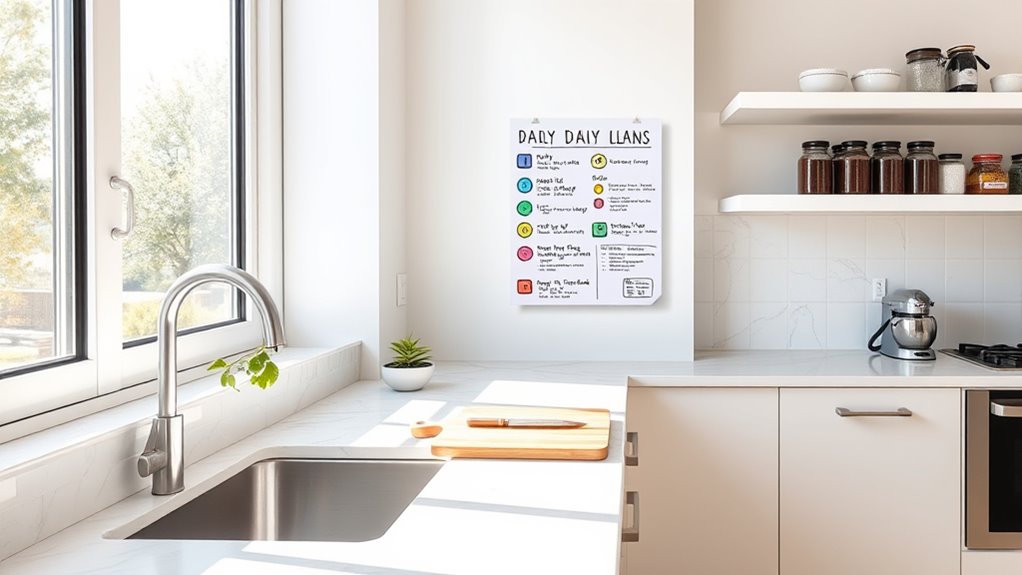

To keep your kitchen spotless, stick to a daily routine by wiping counters, washing dishes, and sweeping high-traffic areas. Once a week, clear expired foods, disinfect surfaces, and vacuum or mop the floor. Monthly, deep clean appliances, organize shelves, and wipe walls or baseboards. Use storage solutions and keep essentials handy for quick access. Maintain consistency, and you’ll find your kitchen stays clean and inviting—continue here to discover more ways to stay on top of your cleaning schedule.
Key Takeaways
- Implement daily tasks like wiping countertops, washing dishes, and quick tidying to maintain cleanliness.
- Schedule weekly chores such as refrigerator cleaning, surface disinfecting, and floor mopping.
- Conduct monthly deep cleaning, including pantry organization, appliance maintenance, and wall dusting.
- Use organized storage solutions and keep cleaning supplies accessible to streamline routine tasks.
- Establish a consistent cleaning routine across daily, weekly, and monthly intervals for a spotless kitchen.
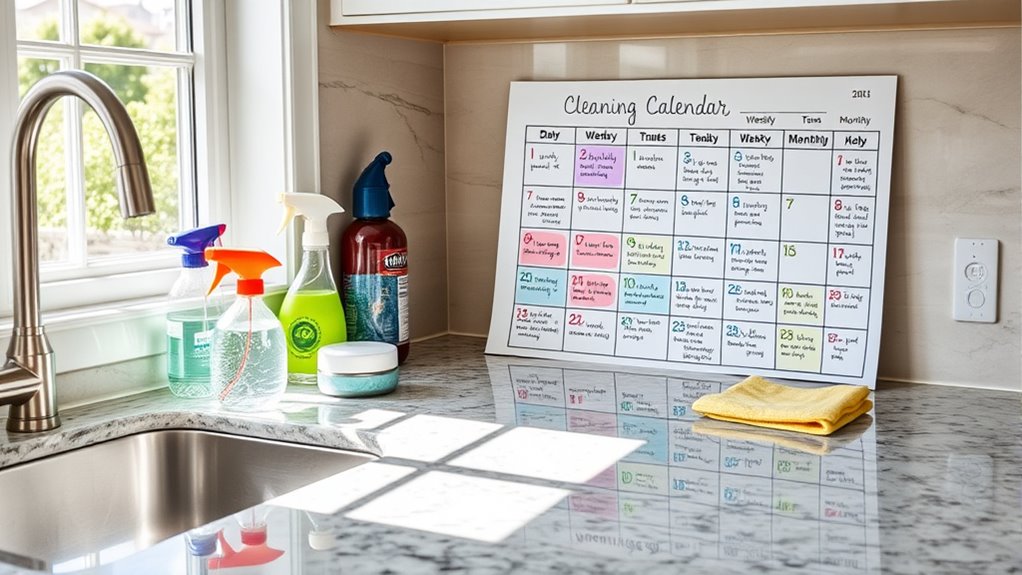
Are you tired of a cluttered, dirty kitchen that makes cooking less enjoyable? If so, establishing a solid cleaning plan is the key to transforming your space into a functional and inviting area. The foundation of an efficient cleaning routine starts with good kitchen organization. When your cabinets, drawers, and countertops are well-organized, you spend less time searching for tools or ingredients, and cleaning becomes much easier. Invest in clear storage containers, drawer dividers, and wall-mounted racks to keep everything in its place. This way, you can quickly spot when something’s out of order and address it before it turns into a bigger mess.
Having the right cleaning supplies within arm’s reach is equally important. Stock up on essentials like all-purpose cleaner, glass cleaner, disinfectant wipes, microfiber cloths, sponges, and a good scrub brush. Keep these supplies in a designated spot—preferably a portable caddy—so you’re always prepared to tackle messes immediately. Regularly checking and replenishing your cleaning supplies guarantees you’re never caught off guard when a spill or splatter happens. When your supplies are organized and accessible, you’re more likely to stick to your cleaning routine, preventing dirt and grime from building up.
A daily cleaning routine focuses on quick, consistent upkeep. Wipe down countertops and stove after each meal prep to prevent buildup of crumbs and grease. Wash dishes or load them into the dishwasher daily to avoid clutter. Take a few minutes to sweep the floor, especially in high-traffic areas, so crumbs and dirt don’t accumulate. These small daily tasks keep your kitchen looking tidy and reduce the need for more intensive cleaning later.
Weekly cleaning allows you to dig a little deeper. Clear out the refrigerator, tossing expired food and wiping down shelves. Clean your sink thoroughly and disinfect all surfaces, including cabinet handles and light switches, which often harbor germs. Wipe down appliances like the microwave, toaster, and coffee maker. Don’t forget to check your cleaning supplies, replacing or refilling as needed. Vacuum or mop the floor to remove dust and debris that may have settled. This weekly attention keeps your kitchen fresh and prevents messes from becoming overwhelming.
Monthly cleaning is your chance to give the entire space a thorough refresh. Empty and clean out pantry shelves, organizing items for easy access. Deep clean the oven and refrigerator coils to improve efficiency. Wipe down walls, baseboards, and light fixtures to remove dust and splatters. Take time to evaluate your kitchen organization system—rearrange items if necessary to optimize space. Replenish your cleaning supplies, ensuring you have everything you need for the upcoming month. With these monthly tasks, you’ll maintain a pristine kitchen that’s both functional and aesthetically pleasing, making cooking a true pleasure rather than a chore. Additionally, understanding the importance of contrast ratio can help you select the right lighting and window treatments to enhance your cleaning efforts and overall kitchen ambiance.

Commercial Carpet Cleaner Extractor 10-Gal Solution Tank 8-Gal Recovery Tank, 18” Cleaning Path, Low Noise Powerful Carpet Cleaner for Hotels, Offices, Large Areas & Professional Use
Powerful Deep Cleaning – Equipped with a 900 RPM motor and 1400W power, this commercial-grade carpet extractor effectively...
As an affiliate, we earn on qualifying purchases.
Frequently Asked Questions
What Eco-Friendly Cleaning Products Are Best for the Kitchen?
You should use eco-friendly detergents like plant-based or natural options that are free from harsh chemicals. These are safe for your family and the environment. Pair them with biodegradable sponges to reduce plastic waste. Look for products with eco labels and minimal packaging. By choosing these, you keep your kitchen clean while supporting sustainability efforts. They’re effective, safe, and better for the planet.
How Can I Organize Cleaning Supplies Efficiently?
To organize your cleaning supplies efficiently, you should use smart storage solutions like clear bins, labeled containers, and wall-mounted racks. Keep frequently used items within easy reach and store less-used supplies in a designated area. Establish cleaning schedules to stay consistent, ensuring each task gets attention without clutter. This approach helps you maintain an organized space, save time, and make your cleaning routine more effective.
What Are Quick Tips for Cleaning Greasy Stovetops?
Imagine you’re preparing dinner and notice stubborn grease on your stovetop. To tackle grease removal quickly, use a mixture of baking soda and dish soap, applying it with a sponge. Let it sit for a few minutes, then scrub gently. Regular stovetop maintenance prevents grease buildup, making cleaning faster over time. Keep a spray bottle of vinegar nearby for quick spot cleanings, maintaining a shiny, grease-free surface effortlessly.
How to Prevent Mold in the Kitchen?
To prevent mold in your kitchen, guarantee proper kitchen ventilation by using exhaust fans or opening windows during cooking and after to reduce moisture. Keep areas dry by wiping down counters, sinks, and appliances regularly. Fix any leaks promptly, and avoid overwatering plants or keeping damp cloths around. Good airflow and moisture control are key to mold prevention, helping you maintain a clean, healthy kitchen environment.
Are There Natural Remedies for Removing Stains?
Yes, you can try natural stain removal with homemade cleaning remedies. For example, mix baking soda and water to create a paste for scrubbing fabric stains or use lemon juice to brighten and remove marks on surfaces. Vinegar is also effective for many stains. These natural remedies are safe, affordable, and eco-friendly, making them great options for effective stain removal without harsh chemicals.

Commercial Heated Carpet & Upholstery Extractor Machine, 160 PSI Hot Water Cleaner, 1.34 HP Vacuum, 149°F Heater, 4.8-Gal and 5.3-Gal Dual Tanks for Auto Detailing, Furniture & Carpet
Heated Deep Cleaning Performance: Powered by a 1.34 HP (1000 W) vacuum motor and 160 PSI solution pump,...
As an affiliate, we earn on qualifying purchases.
Conclusion
By sticking to this daily, weekly, and monthly cleaning plan, your kitchen stays fresh and inviting, just like a well-tuned instrument. Think of it as tending a garden—regular care keeps everything thriving and beautiful. When you make cleaning a routine, it becomes easier and less overwhelming, transforming your kitchen into a space you love. So, stay consistent, and your kitchen will shine brighter than ever, turning chores into a satisfying part of your day.

Bissell Commercial Bissell BigGreen Commercial BG10 Deep Cleaning 2 Motor Extractor Machine
Country Of Origin : China
As an affiliate, we earn on qualifying purchases.

Mytee - Contractor’s Special Heated Carpet Extractor
Water Resistant Switches Water resistant switches add protection against dust and water intrusion.
As an affiliate, we earn on qualifying purchases.