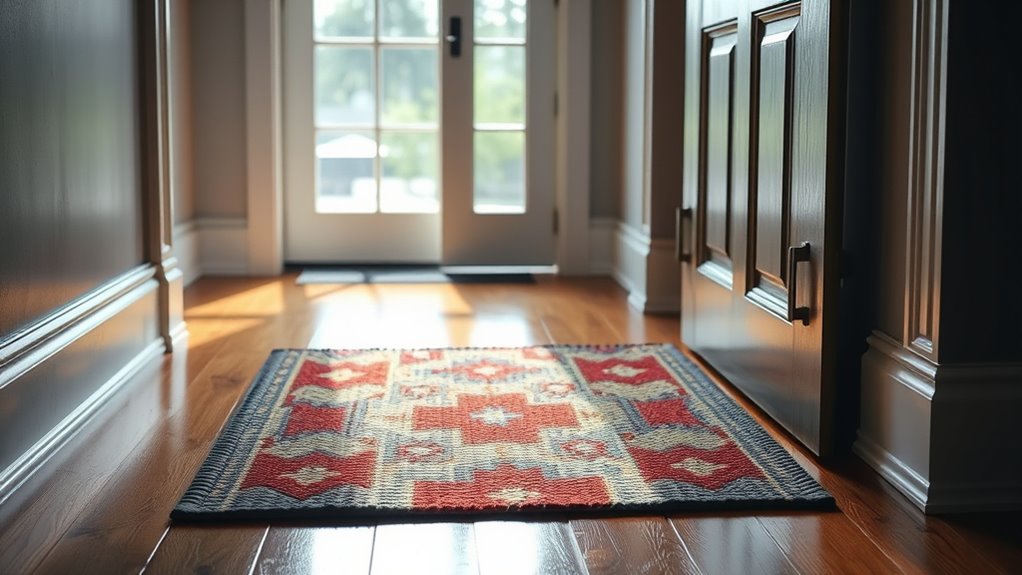

To keep floors cleaner, use entry mats that trap dirt, moisture, and debris before they spread inside. Choose durable mats made from materials like nylon, polypropylene, or coir that resist wear and effectively scrape shoes. Look for features like reinforced edges and non-slip backing to guarantee longevity and safety. Well-designed entry mats reduce cleaning time and protect your floors over time. Keep browsing to discover tips on selecting the best mats for your space.
Key Takeaways
-Entry mats trap dirt, moisture, and debris before they reach flooring, reducing cleaning frequency and maintaining cleanliness.
-High-quality, durable mats with reinforced edges and non-slip backing prevent shifting and fraying, ensuring consistent dirt removal.
-Selecting mats made of moisture-resistant materials like nylon, polypropylene, or coir enhances dirt and water trapping capacity.
-Regular maintenance and cleaning of entry mats remove accumulated debris, preventing it from spreading across floors.
-Properly positioned and size-appropriate mats maximize dirt collection and improve overall floor cleanliness.
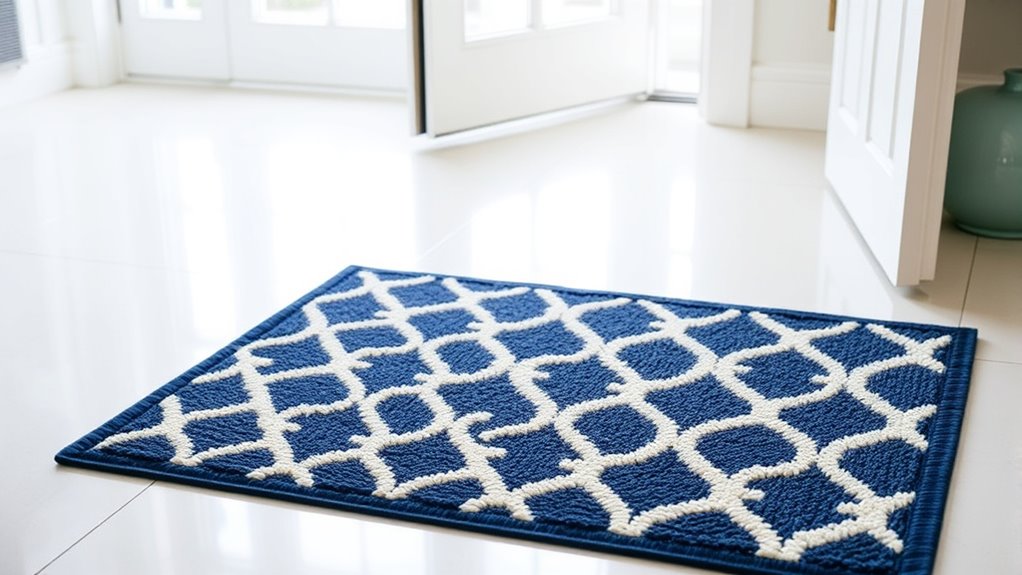
When it comes to protecting your floors and keeping your home or business clean, entry mats are an essential first line of defense. They catch dirt, moisture, and debris before they reach your flooring, reducing wear and tear over time. To guarantee your entry mats perform effectively, understanding the importance of durability testing and material selection is vital. Durability testing allows you to assess how well a mat withstands frequent use, foot traffic, and harsh conditions. It’s about choosing a product that won’t fall apart after a few weeks, no matter how busy or demanding your environment is. When evaluating mats, look for brands that conduct rigorous durability testing, which simulates long-term wear and tear. This process helps identify mats with strong fibers, sturdy backing, and resilient construction, so you won’t have to replace them often. Material selection plays a key role here too. The right materials can boost the longevity and effectiveness of your mats. For high-traffic areas, you want something made from durable fibers like nylon, polypropylene, or coarse coir. These materials are known for their strength, resistance to crushing, and ability to trap dirt. Nylon and polypropylene, in particular, are resistant to moisture and stains, making them ideal for outdoor or entryway use. Coir, derived from coconut husks, offers natural durability and excellent scraping ability, especially for outdoor mats. When selecting a material, consider your environment—whether it’s an indoor setting, an entrance that faces the elements, or a space with heavy foot traffic. The construction of the mat also matters. Look for features like reinforced edges, non-slip backing, and tightly woven fibers. These elements prevent fraying, enhance safety, and prolong the lifespan of the mat. Proper material choice combined with thorough durability testing ensures your entry mat can handle daily use without deteriorating quickly. Investing in high-quality mats made from suitable materials means fewer replacements and less maintenance over time, saving you money and hassle. It also means your floors stay cleaner longer, as a well-designed mat actively traps dirt and moisture at the door. Remember, the initial investment in a durable, well-made entry mat pays off in the long run by protecting your floors and maintaining a tidy, safe environment. Choosing wisely based on durability testing results and material selection guarantees that your entryway remains effective at keeping dirt out, no matter how busy or challenging your space gets. Additionally, understanding the significance of material selection can help you choose the best options for your specific needs and environment.
Frequently Asked Questions
How Often Should Entry Mats Be Replaced?
You should replace your entry mats when they show significant wear or mat replacement becomes necessary for effective dirt trapping. Typically, this is every 6 to 12 months, depending on foot traffic and mat lifespan. Regularly inspect your mats; if they’re frayed, stained, or less effective at cleaning shoes, it’s time for a new one. Proper maintenance guarantees your mats continue protecting your floors and extend their overall lifespan.
Are There Eco-Friendly Entry Mat Options Available?
Yes, eco-friendly entry mats are available. For example, consider a business that switched to mats made from biodegradable materials and recycled rubber, reducing waste and environmental impact. These mats not only help keep floors cleaner but also support sustainability. By choosing options crafted from recycled rubber and biodegradable materials, you’re making a positive difference while maintaining a clean, safe entryway.
Can Entry Mats Prevent Specific Types of Dirt or Germs?
Yes, entry mats can prevent specific types of dirt and germs. They excel at dirt filtration by trapping mud, dust, and debris before it reaches your floors, reducing overall mess. Additionally, mats with antimicrobial treatments help with germ prevention by inhibiting bacteria and viruses from spreading. Regularly cleaning and replacing mats guarantees they continue to effectively trap dirt and germs, keeping your floors cleaner and healthier.
How Do I Clean and Maintain Different Types of Entry Mats?
To keep your entry mats in good shape, regularly perform mat cleaning by shaking out debris, vacuuming, or hosing them down, depending on the type. For mat maintenance, check for wear and tear, replace when necessary, and guarantee they lay flat to prevent tripping hazards. Different mats require specific cleaning methods—rubber mats can be hosed, while fabric ones may need spot cleaning—so follow manufacturer instructions for maximum results.
What Size Entry Mat Is Suitable for High-Traffic Areas?
If you want to keep your floors spotless in high-traffic areas, you need a massive entry mat—think at least 4×6 feet or larger. Mat size selection is essential; bigger mats trap more dirt and moisture, making your cleaning efforts easier. For high traffic considerations, choose a durable, heavy-duty mat that can handle constant use without showing wear. Trust me, the right size makes a huge difference!
Conclusion
Imagine your floors are a garden; entry mats act like a protective barrier, stopping dirt and debris at the gate. I once saw a friend’s hardwood floor remain spotless simply because they used mats at every entry. Just like a gardener weeds out trouble before it spreads, a good mat keeps messes at bay, saving you time and effort. Investing in entry mats isn’t just smart—it’s like planting a shield to keep your home shining.