

To keep your dishwasher running smoothly, start by removing and cleaning the filter monthly with warm, soapy water to prevent clogs and odors. Run a hot cycle with a cup of white vinegar on the top rack to dissolve grease and sanitize. Follow with a baking soda rinse at the bottom for freshening. Check spray arms and door seals regularly, and use cleaning tablets every few months. Keep up with these steps to guarantee it stays fresh and efficient.

Get cleaning gear delivered free — and shop member deals
- Fast, free delivery on millions of items
- Access to Prime Big Deal Days deals on October 6–7
- Prime Video, Amazon Music and more included
Key Takeaways
- Remove and clean the filter monthly with warm, soapy water and a soft brush to prevent clogs.
- Run a hot water cycle with a cup of white vinegar on the top rack to dissolve grease and sanitize.
- Follow the vinegar cycle by adding a cup of baking soda at the bottom and run a short hot cycle to neutralize odors.
- Check and clear spray arms nozzles and wipe door seals regularly to ensure proper water flow and prevent grime buildup.
- Use cleaning tablets or powders every 1-3 months for comprehensive deep cleaning and maintenance.
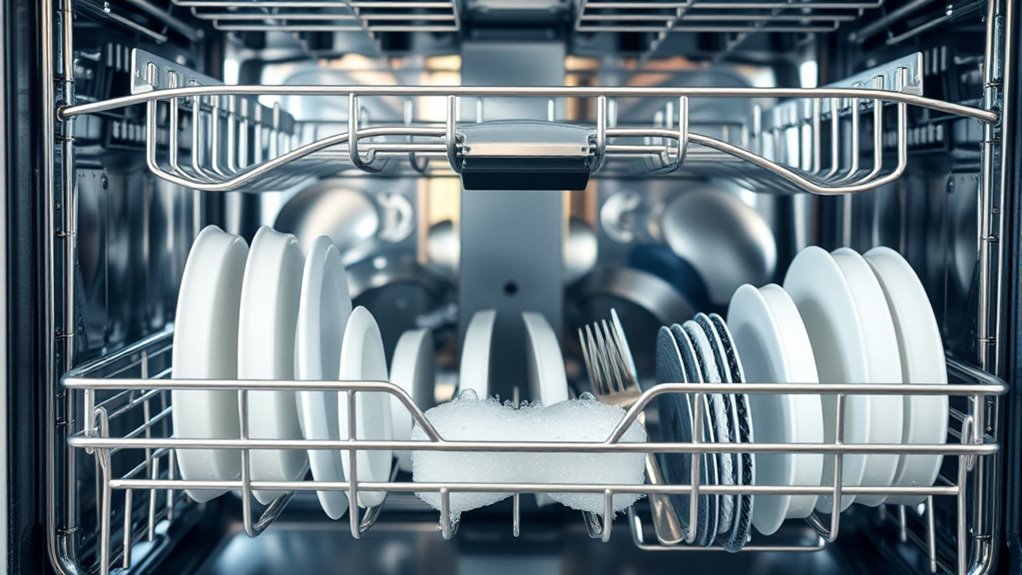
Regularly deep cleaning your dishwasher is essential to keep it running efficiently and prevent unpleasant odors. One of the most important aspects of this routine is filter maintenance. The filter traps food particles, grease, and debris that could clog the system or cause foul smells. Over time, this buildup can hinder water flow and reduce cleaning effectiveness. To maintain maximum performance, you should remove the filter every month, clean it thoroughly with warm, soapy water, and scrub away any stubborn residues with a soft brush. This prevents clogging and ensures your dishwasher continues to operate smoothly.
In addition to filter maintenance, vinegar cleaning is a simple yet powerful method to eliminate odors and mineral deposits. Vinegar acts as a natural disinfectant and descale agent, breaking down soap scum and hard water deposits that can accumulate inside your dishwasher. To perform a vinegar cleaning, pour a cup of white vinegar into a dishwasher-safe container and place it on the top rack. Run a hot water cycle without any dishes inside. This process helps dissolve grease, sanitize the interior, and remove lingering smells. For an extra boost, you can add baking soda after the vinegar cycle to further deodorize the unit. Sprinkle a cup of baking soda at the bottom of the dishwasher and run a short hot cycle to absorb odors and freshen the interior.
Along with filter maintenance and vinegar cleaning, it’s important to regularly check the spray arms for clogs. Remove any debris or mineral buildup from the nozzles to ensure water sprays evenly during cycles. Wipe down the door seals and edges with a damp cloth to remove grime and prevent mold growth. Regularly maintaining your appliance is also essential to prevent long-term issues and keep it functioning at peak efficiency. When running deep cleanings, consider using specialized dishwasher cleaning tablets or powders designed to break down grease and mineral deposits, especially if you notice your dishwasher isn’t cleaning as well as it used to.
Consistency is key to prolonging your dishwasher’s lifespan and maintaining its cleaning power. Set a reminder to perform thorough cleanings every one to three months, depending on your usage. Incorporating routine filter maintenance and vinegar cleaning into your schedule will keep your appliance smelling fresh, functioning efficiently, and free from blockages. By taking these simple steps, you’ll ensure that your dishwasher continues to serve you well, delivering spotless dishes every time and avoiding costly repairs down the line.
dishwasher filter cleaning tablets
As an affiliate, we earn on qualifying purchases.
As an affiliate, we earn on qualifying purchases.
Frequently Asked Questions
How Often Should I Deep Clean My Dishwasher?
You should deep clean your dishwasher at least once every three to six months, depending on your maintenance schedule and cleaning frequency. Regular maintenance helps prevent buildup of grime and guarantees peak performance. If you notice odors or residue, consider cleaning more often. Follow a deep cleaning routine that includes cleaning filters, spray arms, and run a cleaning cycle with a specialized cleaner to keep your dishwasher in top shape.
Can I Use Vinegar or Lemon for Cleaning?
Ever wondered if vinegar safety or lemon freshness can help clean your dishwasher? Yes, you can use vinegar or lemon for cleaning, but with caution. Vinegar is effective for removing buildup, yet it’s acidic, so don’t overuse it to avoid damaging components. Lemon provides a fresh scent and natural cleaning power. Just make certain you rinse thoroughly afterward. Using these natural options can keep your dishwasher fresh and functioning well.
What Tools Are Best for Cleaning Hard-To-Reach Areas?
To clean hard-to-reach areas in your dishwasher, you should use scrubbing brushes and flexible brushes. These tools help you reach tight spots, corners, and crevices effectively. You can use a small, stiff-bristled scrubbing brush for stubborn grime and a flexible brush for curved or awkward areas. Together, they guarantee thorough cleaning, removing buildup and making sure your dishwasher stays fresh and efficient.
Are There Any Risks to Using Bleach in My Dishwasher?
Are you aware of the risks when using bleach in your dishwasher? While bleach can effectively disinfect, it poses safety concerns like damaging seals and creating harmful fumes if not used properly. Bleach safety is vital; always follow manufacturer instructions. Consider cleaning alternatives like vinegar or baking soda, which are safer and eco-friendly. Do you want a thorough clean without risking damage? Opt for these safer options for peace of mind.
How Do I Prevent Future Build-Up and Odors?
To prevent future mold and odors, you should regularly run hot water cycles with vinegar or baking soda to eliminate buildup and freshen your dishwasher. Keep the door slightly open after each cycle to allow airflow and prevent moisture accumulation. Also, clean the filters and seals periodically to prevent mold growth. Consistent maintenance like this helps with odor elimination and keeps your dishwasher fresh and functioning efficiently.
Conclusion
Keeping your dishwasher clean is like tending a garden—you must regularly nurture it to keep it thriving. With this deep cleaning routine, you’ll prevent buildup and guarantee your machine runs smoothly, just like a well-oiled machine. Make it a habit, and your dishwasher will reward you with sparkling dishes and fresh smells every time. Remember, a clean dishwasher is the heartbeat of a spotless kitchen—keep it beating strong with these simple steps.
Fall Picks
fall essentials
As an affiliate, we earn on qualifying purchases.