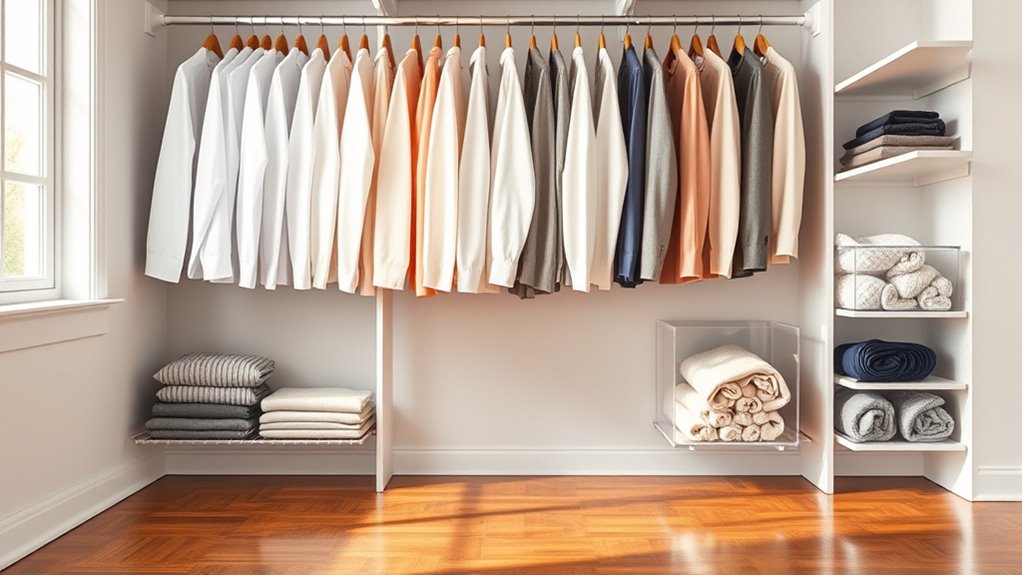

To clean out your closet and rotate seasonally, start by emptying everything and honestly evaluating each item. Remove clothing you no longer wear and organize your remaining pieces into zones or categories. Use clear bins for seasonal items, store off-season clothes elsewhere, and rotate your wardrobe regularly to keep things fresh and accessible. Staying consistent with these steps creates a calmer, more functional space—keep going to discover more tips for maintaining your ideal closet.
Key Takeaways
- Empty your closet to assess and remove unused or out-of-season clothing items.
- Group similar items and create designated zones for easier organization and access.
- Store off-season clothing in less accessible areas using clear bins or vacuum-sealed bags.
- Rotate seasonal wardrobe items by swapping out current clothes with stored off-season pieces.
- Regularly reassess and return items to their spots to maintain an organized, clutter-free closet.

Have you ever stood in front of your closet feeling overwhelmed by clutter or unsure of what to wear? If so, you’re not alone. A cluttered closet can make choosing an outfit a stressful chore instead of a simple, enjoyable task. The key to transforming your space lies in effective storage solutions and wardrobe organization. By implementing practical storage options, you can create a more manageable and accessible closet that makes seasonal rotation effortless. Start by evaluating what you have. Pull everything out, and be honest about what you wear regularly versus what’s just taking up space. Once you see the full extent of your wardrobe, you can better decide how to organize it.
A cluttered closet makes choosing outfits stressful; organize with practical storage and seasonal rotation for easier access.
One of the most effective ways to optimize your closet is to invest in versatile storage solutions. Use clear bins for seasonal items, so you can easily see what’s inside without rummaging through piles. Hanging shelves or tiered organizers help maximize vertical space, giving you extra room for accessories, shoes, or folded sweaters. Consider adding a double-hang rod, which doubles your hanging capacity for shorter items like shirts and pants. Drawer dividers can keep smaller items, such as underwear or jewelry, neatly separated and easy to find. The goal is to make everything visible and accessible, reducing the time you spend searching for outfits and preventing clutter from piling up. Additionally, understanding your storage needs and how to optimize available space is essential for maintaining an organized wardrobe.
Wardrobe organization also involves creating designated zones within your closet. Group similar items together, like all your t-shirts, dresses, or workout gear. This way, when you’re doing seasonal rotation, you know exactly where to look. As seasons change, you can swap out your wardrobe by storing off-season clothing in less accessible areas—perhaps under the bed or in a storage bin in the attic—and bringing forward the current season’s wardrobe. This process keeps your closet streamlined and prevents it from becoming overcrowded. When you rotate your clothing, it’s easier to see what you actually wear and identify any pieces that no longer serve you, making it simpler to donate or sell.
Incorporating these storage solutions and sticking to wardrobe organization principles not only simplifies the seasonal rotation process but also creates a sense of calm every time you open your closet. With a well-organized space, dressing becomes quick and stress-free, and your wardrobe remains functional year-round. Regularly reassess your storage methods to guarantee they continue to meet your needs, and keep your closet tidy by returning items to their designated spots after each use. Over time, this habit will make closet cleaning and seasonal rotation second nature, turning a once intimidating task into a simple routine that keeps your wardrobe fresh, organized, and ready for every season.
As an affiliate, we earn on qualifying purchases.
Frequently Asked Questions
How Often Should I Clean My Closet?
You should clean your closet every three to six months to maintain closet organization and clothing maintenance. Regular cleaning helps you spot items that need repairs or donations and keeps your space tidy. When you organize your closet, you’ll find it easier to choose outfits and extend the life of your clothes. Set a reminder, and stick to it—this way, your closet stays functional and clutter-free year-round.
What Are the Best Storage Solutions for Seasonal Clothes?
You should use vacuum storage bags for seasonal clothes, as they save space and protect your items from dust and pests. Fabric organizers are also great for keeping your wardrobe tidy, making it easy to access off-season pieces. Combine these solutions by storing clothes in vacuum bags and then organizing them with fabric bins or drawers, ensuring your seasonal wardrobe stays compact, accessible, and well-maintained throughout the year.
How Do I Identify Items to Donate or Discard?
You spot that shirt you haven’t worn in ages—should it stay or go? First, categorize your clothing to see what fits, flatters, or feels outdated. Use donation criteria: is it in good condition, still stylish, and something you’d wear today? If not, it’s time to let it go. Trust your instincts—if an item no longer sparks joy or serves a purpose, donate or discard it without hesitation.
Can I Safely Store Off-Season Clothing Long-Term?
Yes, you can safely store off-season clothing long-term if you guarantee fabric preservation and pest prevention. Clean and thoroughly dry your clothes before packing, using breathable garment bags or storage bins. Add natural pest repellents like cedar blocks or lavender sachets to prevent moths. Store in a cool, dark, and dry place to maintain fabric quality and avoid damage. Regularly check your stored clothes for any signs of pests or deterioration.
What Are Eco-Friendly Ways to Clean Closet Spaces?
To tidy your closet sustainably, start by selecting eco-friendly detergents that are gentle on the environment and safe for your fabrics. Use natural methods like vacuuming with reusable filters and wiping surfaces with plant-based cleaners. Incorporate sustainable practices such as air-drying clothes and repurposing old textiles for cleaning rags. These eco-friendly efforts not only keep your closet clean but also contribute to a healthier planet.
Conclusion
Now that you’ve mastered closet cleaning and seasonal rotation, your wardrobe will be transformed into a sanctuary of impeccable organization. Say goodbye to chaos and hello to a closet so pristine, it practically shines like a showroom. With every item perfectly in place, you’ll feel like the reigning monarch of style and order. Embrace this routine, and watch your closet become an unstoppable fortress of fashion brilliance—truly, a masterpiece of meticulous elegance.