To safely clean delicate items like chandeliers, antiques, and intricate decor, gently dust with a soft microfiber cloth or a feather duster, avoiding excessive pressure. Use mild, non-abrasive cleaners, spraying onto a cloth rather than directly on surfaces, and test in small areas first. Always dry thoroughly with a soft, lint-free cloth to prevent water spots. For specific material needs, consider consulting professionals—look deeper to learn more about preserving your fragile treasures.

Get cleaning gear delivered free with Prime
- Fast, free delivery on millions of items
- Prime Video, Amazon Music and more included
- Member-only deals all year
Key Takeaways
- Use soft brushes, microfiber cloths, and minimal pressure to gently remove dust from delicate items.
- Apply gentle, non-abrasive cleaners by spraying onto cloth, not directly onto fragile surfaces.
- Test cleaning solutions on small areas first to prevent damage or discoloration.
- Thoroughly dry items with soft, lint-free cloth to avoid water spots and streaks.
- Consult a professional conservator for delicate or valuable pieces to ensure proper care.

Cleaning fragile items like chandeliers, antiques, and delicate decor requires careful attention and proper techniques to prevent damage. These items often have intricate details, fragile materials, and sentimental value, so rushing or using the wrong approach can cause costly harm. Your goal is to maintain their beauty while ensuring they stay intact. To do that, you need to master dust removal and select appropriate cleaning solutions tailored to each item’s material and delicacy.
Start by gently removing dust from your fragile items. Dust can settle into crevices and build up over time, dulling their appearance. Use a soft, microfiber cloth or a gentle brush to dust surfaces. For chandeliers, a feather duster can reach into tight spots, but be very gentle. When dusting antiques or delicate decor, avoid applying too much pressure, which could cause breakage or dislodgment. For more stubborn dust, a handheld vacuum with a soft brush attachment can be effective, but always set the suction to low.
Gently dust fragile items with a soft cloth or brush to prevent damage and preserve their beauty.
When it comes to cleaning solutions, less is often more. Many delicate items require gentle, non-abrasive cleaners. For glass or crystal parts of chandeliers, a mixture of distilled water and a few drops of mild dish soap works well. Spray the solution onto a soft cloth rather than directly onto the item to prevent excess moisture from seeping into cracks or joints. For antique wood or painted surfaces, a damp cloth with plain water or a specialized wood cleaner is usually sufficient. Avoid harsh chemicals, ammonia, or abrasive scrubbers, as these can tarnish or damage fragile surfaces.
For heavily soiled areas, consider spot cleaning with a mild solution, but always test a small, inconspicuous area first. When cleaning delicate decor with intricate carvings or embroidery, use a soft brush dipped lightly in the cleaning solution to gently lift dirt from the surface. Be cautious with any porous materials—saturating them with liquids can cause warping, staining, or deterioration over time. Additionally, understanding the materials and construction of your items helps determine the safest cleaning methods.
Always dry your items thoroughly after cleaning. Use a soft, lint-free cloth to gently pat them dry, preventing water spots or streaks. Keep your cleaning tools clean and avoid cross-contamination, which could introduce dirt or residues. If you’re unsure about a cleaning method or solution, consult a professional conservator or specialist. Taking your time and using proper techniques not only preserves the beauty of your fragile items but also extends their lifespan, allowing you to enjoy them for years to come.
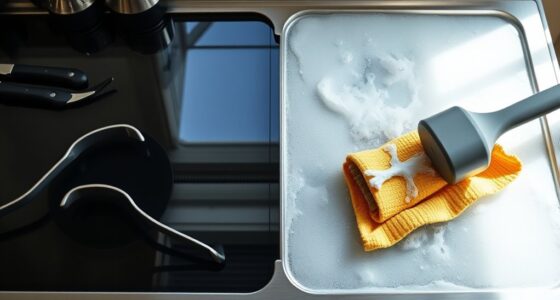
microfiber cloth for delicate cleaning
As an affiliate, we earn on qualifying purchases.
As an affiliate, we earn on qualifying purchases.
Frequently Asked Questions
Can I Use Regular Household Cleaners on Delicate Items?
You shouldn’t use regular household cleaners on delicate items because they can cause chemical stains or surface scratches. These cleaners often contain harsh chemicals that damage fragile surfaces, especially on antiques or glass chandeliers. Instead, opt for gentle, specialized cleaning solutions or plain water and soft cloths. Always test a small, hidden area first to prevent any unwanted damage, ensuring your delicate items stay pristine and safe.
How Often Should Fragile Items Be Cleaned?
You should clean your fragile items regularly to prevent dirt buildup and dust accumulation, which can cause damage over time. Typically, gentle cleaning every few months is enough, but items on display or in dusty environments may need more frequent attention. Always assess the item’s condition and use appropriate cleaning methods to avoid harm. Maintaining a consistent cleaning schedule helps preserve the beauty and integrity of your delicate decor.
Are There Eco-Friendly Cleaning Options for Antiques?
Did you know that over 70% of people prefer eco-friendly products? When cleaning antiques, you can choose eco-friendly polishes and natural cleaning solutions to protect both your treasures and the environment. These options are safe, effective, and free from harsh chemicals. By opting for natural cleaning solutions, you guarantee your antiques stay pristine without compromising eco-consciousness, making your cleaning routine both responsible and gentle on delicate surfaces.
What Tools Are Safest for Cleaning Intricate Designs?
When cleaning intricate designs, you should use gentle brushes and microfiber cloths to avoid damage. Gentle brushes help reach tiny crevices without scratching surfaces, while microfiber cloths pick up dust and dirt safely. Always choose tools with soft bristles and avoid harsh scrapers or abrasive materials. This way, you protect delicate details and keep your decor looking beautiful without risking harm.
How Do I Prevent Damage During Transportation of Fragile Decor?
To prevent damage during transportation, you should start with proper packing materials like bubble wrap, foam padding, and sturdy boxes. Make sure to cushion all delicate parts and secure items firmly to avert shifting. Follow transport precautions by labeling boxes as fragile, avoiding stacking heavy items on top, and choosing a secure vehicle. Taking these steps ensures your fragile decor arrives safely without scratches or breakage.
Conclusion
Treat your fragile items like delicate butterflies, handling them with gentle care and patience. With the right techniques, you can breathe new life into your chandeliers, antiques, and decor without risking damage. Think of cleaning as tending a fragile garden—each step preserves their beauty and history. By staying cautious and methodical, you’ll guarantee these treasures remain sparkling and safe for years to come, shining like precious gems in your home.
Halloween Picks
halloween
As an affiliate, we earn on qualifying purchases.