
To keep your bathroom clean, wipe surfaces daily, squeegee shower doors, and improve airflow to prevent mold. Once a week, disinfect fixtures, scrub grout, and verify for mold or mildew issues. Monthly, inspect caulk, deep clean tiles, and guarantee vents are clear. Staying consistent helps prevent buildup and prolongs fixture life. Keep up with these tasks regularly, and you’ll find more tips to maintain a hygienic, mold-free bathroom over time.
Key Takeaways
- Establish a daily routine for wiping surfaces, squeegeeing shower walls, and ventilating to prevent moisture buildup.
- Schedule weekly tasks such as disinfecting fixtures, cleaning grout, and inspecting for mold or mildew.
- Perform monthly deep cleaning of tiles, grout, and caulking, and check for leaks or water damage.
- Use mold-resistant products and maintain proper airflow to prevent mold growth and extend fixture lifespan.
- Regularly inspect and maintain grout, seals, and vents to ensure ongoing hygiene and prevent costly repairs.
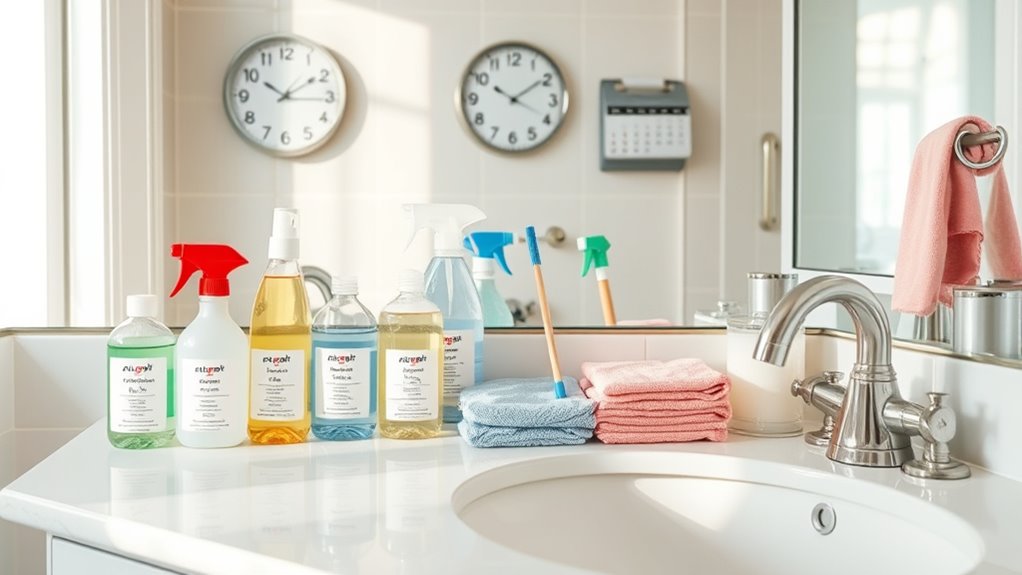
Ever wonder how to keep your bathroom spotless without feeling overwhelmed? The key is establishing a simple, consistent cleaning plan that covers daily, weekly, and monthly tasks. By sticking to this routine, you’ll prevent buildup, maintain hygiene, and extend the lifespan of your fixtures. Let’s start with daily habits. Each day, a quick wipe-down of surfaces like the sink, countertop, and toilet keeps grime at bay. Use a microfiber cloth or paper towels to remove water spots and soap scum, reducing the chances of mold prevention issues. After showers, it’s helpful to squeegee the glass doors or shower walls, which prevents soap scum and mildew from forming. Ventilate the bathroom well—turn on the exhaust fan or open a window—to reduce humidity, a major factor in mold growth. This daily effort minimizes the need for intensive scrubbing later. Additionally, ensuring proper airflow around fixtures can also help prevent moisture buildup and mold development.
Weekly cleaning is where you get into more detailed tasks. Focus on disinfecting the toilet, sink, and bathtub or shower stalls. Use a bathroom cleaner that tackles soap scum and grime, paying special attention to grout maintenance. Grout, being porous, can trap dirt and moisture, making it prone to mold if neglected. Scrubbing grout lines with a stiff brush and a grout cleaner keeps them clean and prevents mold buildup. It’s also a good idea to check for any signs of mold or mildew, especially in corners and behind fixtures. Clean mirrors, fixtures, and any shelving, making sure to wipe away water spots and soap residue. This weekly deep clean helps maintain a fresh, hygienic space and reduces the risk of mold spreading or grout deteriorating.
Monthly, you should perform a more thorough inspection and cleaning. Consider using a mold-resistant spray on grout lines and caulking to prevent mold growth altogether. Deep clean tiles and grout with a specialized tile cleaner or a mixture of baking soda and vinegar, which cuts through soap scum and stains. Pay attention to areas prone to dampness—caulk around the tub, shower, and sink—to ensure they’re sealed properly. Check for leaks or cracks that could lead to water damage or mold problems. If you notice any mold or mildew, address it immediately with a bleach-based cleaner or a commercial mold remover. Also, clean your bathroom vents and exhaust fans to keep humidity levels in check. Regularly maintaining grout and preventing mold from developing saves you time and effort in the long run, keeps your bathroom looking pristine, and promotes a healthier environment. Incorporating air quality considerations such as improving airflow and reducing humidity can significantly enhance your bathroom’s hygiene and mold prevention efforts.
Frequently Asked Questions
What Eco-Friendly Cleaning Products Are Best for Bathrooms?
You should choose eco-friendly bathroom cleaners like vinegar-based sprays or baking soda for effective cleaning without harsh chemicals. These products naturally combat soap scum and grime while being safe for the environment. Additionally, incorporate natural mold preventatives like tea tree oil or hydrogen peroxide to keep mold at bay. These options work well for regular maintenance and help you keep your bathroom fresh, clean, and eco-conscious.
How Can I Prevent Mold Buildup in the Bathroom?
When you nurture your bathroom’s health, mold prevention becomes second nature. Keep the space well-ventilated by running the exhaust fan or cracking a window after showers. Wipe down surfaces regularly to remove excess moisture, and consider using eco-friendly mold inhibitors. These simple habits foster a dry environment, making mold buildup less likely, so your bathroom stays fresh and inviting effortlessly.
Are There Natural Alternatives to Chemical Disinfectants?
Yes, you can use natural remedies and homemade solutions to disinfect your bathroom. Vinegar, baking soda, and tea tree oil are effective alternatives to chemical disinfectants. Spray vinegar or a mix of vinegar and water for surfaces, and sprinkle baking soda for scrubbing. Tea tree oil has antimicrobial properties and can be added to cleaning solutions. These natural options are safe, eco-friendly, and help keep your bathroom sanitized without harsh chemicals.
How Do I Organize Cleaning Supplies Effectively?
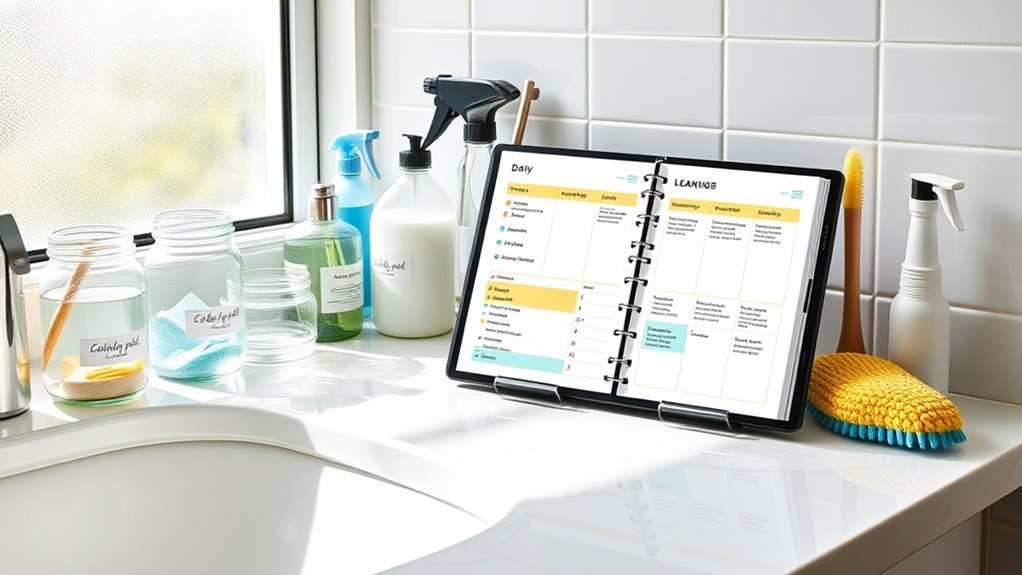
Think of your cleaning supplies as the keys to a well-oiled machine. To organize effectively, use clear storage solutions like labeled bins or shelves, keeping essentials within easy reach. Incorporate your cleaning schedules into this setup by designating specific spots for daily, weekly, and monthly items. This way, you streamline your routine, reduce clutter, and guarantee everything’s ready when you need it, making cleaning less of a chore.
What Are Quick Tips for Bathroom Cleaning on Busy Days?
On busy days, quick tips for bathroom cleaning include grabbing disinfectant wipes to swiftly clean surfaces and using a squeegee to clear mirror smudges. Keep a spray bottle handy for spot cleaning the toilet and sink. Focus on high-touch areas like faucets and doorknobs. Set a timer to stay efficient, and don’t forget to ventilate. These quick tips help you maintain cleanliness without taking up too much time.
Conclusion
So, you’ve got your bathroom cleaning schedule down—daily, weekly, monthly. Ironically, with all this effort, it’s probably the one room you end up neglecting the most. But hey, at least now you can confidently say you’re *always* prepared for surprise guests—or at least for when they peek behind the door. Keep up with your plan, and maybe someday, that mirror won’t be a reflection of your procrastination. Or so you hope.