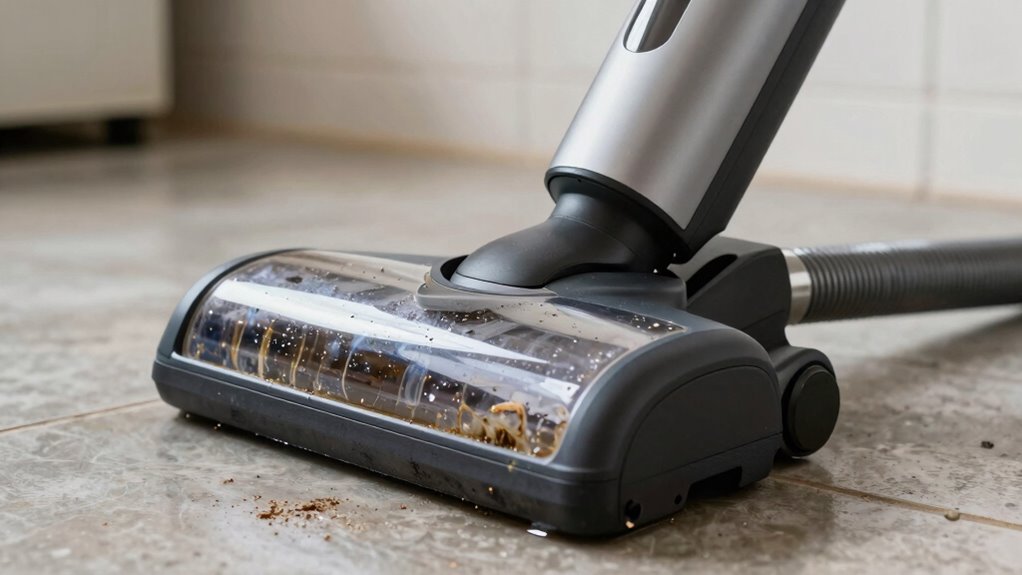
If you leave dirty water in your wet/dry vacuum’s recovery tank, funky odors and mold can develop, reducing cleaning power. To prevent this, empty the tank right after each use, rinse it thoroughly, and dry all components completely. Regularly inspect and clean filters, and store the vacuum in a cool, dry place to keep odors at bay. Keep in mind, taking these steps is key—there’s more to learn for peak maintenance.
Key Takeaways
- Failing to empty and clean the recovery tank after each use causes mold, bacteria growth, and foul odors.
- Leaving dirty water in the tank creates a breeding ground for odors and unpleasant smells over time.
- Not rinsing and thoroughly drying the recovery tank leads to residual moisture, promoting mold development.
- Neglecting regular filter cleaning allows trapped debris and odors to accumulate, worsening vacuum smell.
- Improper storage of the vacuum in damp or unventilated areas contributes to odor buildup and mold growth.
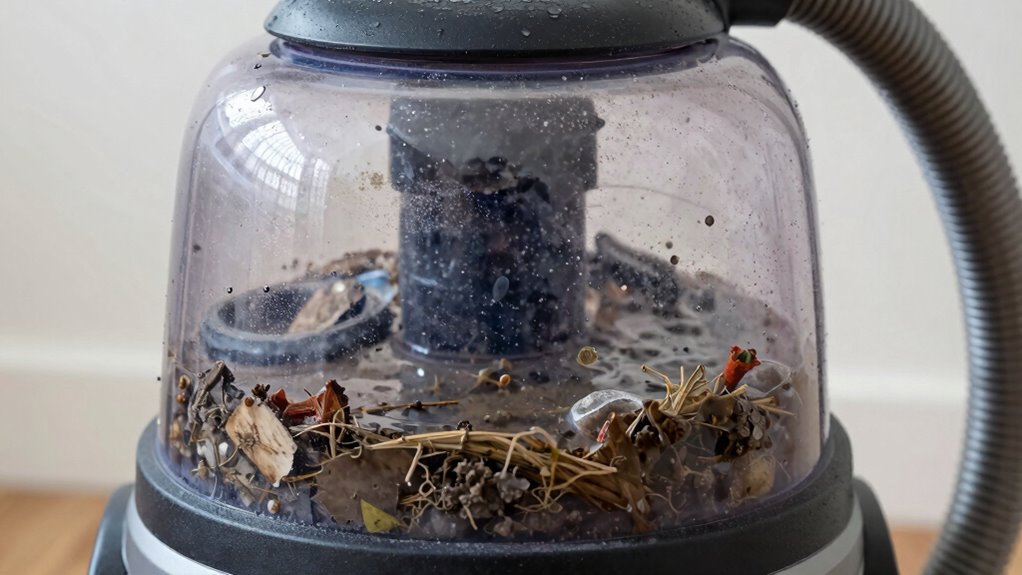
Wet/dry vacuums are versatile cleaning tools designed to handle both liquid spills and dry debris with ease. However, one common mistake that can lead to funky odors is neglecting the recovery tank, especially when it comes to filter maintenance and storage. When you leave dirty water sitting in the tank for too long, bacteria and mold can develop, producing unpleasant smells that spread whenever you use the vacuum again. To prevent this, you should empty the recovery tank immediately after each use. Rinsing it out with clean water and letting it dry thoroughly helps eliminate residual moisture that fosters odor-causing microbes. Regularly inspecting the filter is equally important; a clogged or dirty filter not only hampers performance but can also trap foul odors. Make sure to clean or replace filters according to the manufacturer’s instructions, as this keeps the vacuum smelling fresh and functioning efficiently.
Proper storage plays a significant role in odor prevention. After cleaning out the tank and filters, store your wet/dry vacuum in a cool, dry place. Avoid leaving it in damp areas or direct sunlight, as excess moisture can accelerate mold growth. If you won’t be using the vacuum for an extended period, take the time to fully dry all components, including the hose, filters, and recovery tank. This extra step prevents mold and bacteria from developing during storage. Additionally, some vacuums come with a designated storage compartment or hooks for the hose and attachments—use these to keep everything organized and off the floor, reducing the chance of dirt buildup and moisture retention.
Filter maintenance is essential not just for odor control but also for keeping your vacuum working at peak efficiency. Check the filters regularly; if they appear dirty or clogged, clean or replace them as needed. Many filters can be rinsed with water and dried thoroughly before reinstallation, but always follow the manufacturer’s guidelines. Doing so minimizes odor buildup and ensures ideal airflow. When storing your vacuum, consider using a sealed plastic bag for extra protection if you’re not planning to use it for a while. This prevents dust and moisture from settling on or inside the unit, further reducing the chances of funky smells developing over time.
wet dry vacuum recovery tank cleaner
As an affiliate, we earn on qualifying purchases.
As an affiliate, we earn on qualifying purchases.
Frequently Asked Questions
How Often Should I Clean the Recovery Tank to Prevent Odors?
You should clean the recovery tank after every use to prevent odors. Regular tank cleaning removes trapped debris and moisture that cause funky smells. Empty and rinse the tank thoroughly, then let it dry completely before the next use. This routine ensures odor prevention and keeps your vacuum smelling fresh. Skipping cleaning can lead to buildup, so make it a habit for maximum performance and odor control.
Can Using Scented Solutions Eliminate Odor Issues in the Tank?
Using scented solutions can help with odor elimination, but don’t rely on them as a magic fix. They might mask the smell temporarily, but if your recovery tank isn’t cleaned regularly, funky odors will just come back like a stubborn villain. For true freshness, clean your tank often and consider natural odor absorbers like baking soda. Scented solutions are a sweet bonus, but proper maintenance is your best defense.
Are Certain Recovery Tank Materials More Resistant to Odor Buildup?
Some tank materials offer better odor resistance than others. For example, tanks made from high-density polyethylene or polypropylene tend to resist odor buildup more effectively than cheaper plastics. You should look for vacuums with tanks specifically designed for odor resistance, as these materials prevent bacteria and mold growth. Choosing the right tank material helps you avoid funky smells and keeps your vacuum smelling fresh longer.
Does the Frequency of Vacuum Use Impact Odor Development?
Ironically, the more you use your vacuum, the less likely you are to face odor issues—if you practice proper vacuum maintenance. Frequent use can prevent odors by regularly flushing out debris and moisture, but neglecting it amplifies smell buildup. To guarantee odor prevention, clean the recovery tank often, dry it thoroughly, and inspect for mold or residue. Consistent maintenance keeps your vacuum fresh, no matter how often you run it.
What Are the Best Storage Practices to Prevent Odor Formation?
To prevent odor formation, store your wet/dry vacuum with the tank insulated and empty it regularly. Use odor neutralizers inside the tank to keep smells at bay. Make sure the tank is completely dry before storage to prevent mold and bacteria buildup. Keep the vacuum in a cool, dry place, and check for any lingering moisture or debris that could cause odors, ensuring your vacuum stays fresh and ready to use.
vacuum filter replacement kit
As an affiliate, we earn on qualifying purchases.
As an affiliate, we earn on qualifying purchases.
Conclusion
To keep your wet/dry vacuum smelling fresh, always empty the recovery tank promptly and clean it regularly. Did you know that a neglected tank can produce funky odors within just a few days? By staying on top of tank maintenance, you’ll not only enjoy a cleaner space but also extend your vacuum’s lifespan. A simple habit can make a big difference—so don’t overlook that recovery tank and keep odors at bay!
vacuum storage containers
As an affiliate, we earn on qualifying purchases.
As an affiliate, we earn on qualifying purchases.
odor eliminating vacuum accessories
As an affiliate, we earn on qualifying purchases.
As an affiliate, we earn on qualifying purchases.