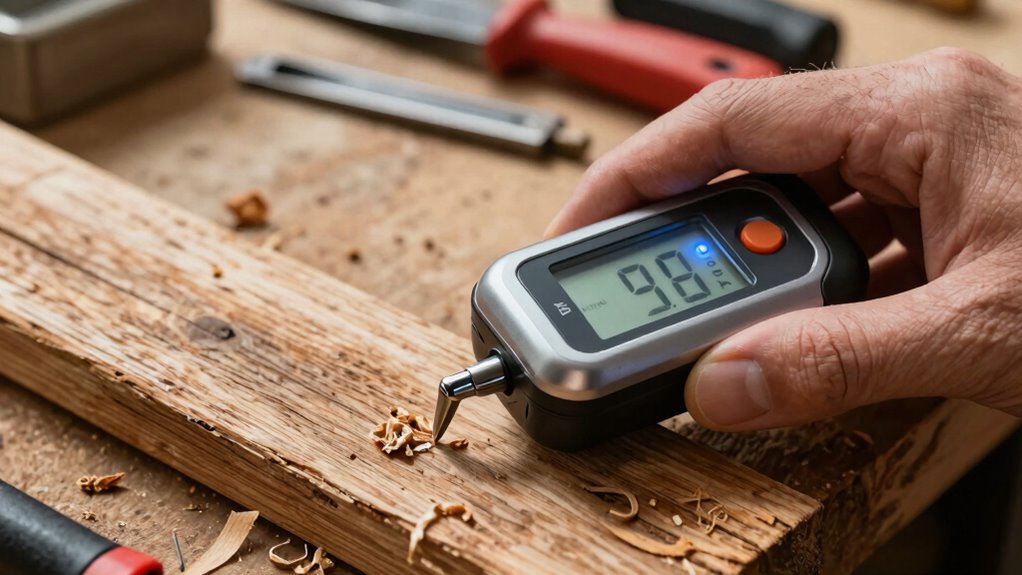

To avoid misreading your moisture meter, start by calibrating it according to the manufacturer’s instructions, using standards or reference materials. Make sure you fully and evenly insert the probes without applying excessive force, and place them perpendicular to the surface. Keep the device steady during measurements and double-check probe contact if results seem off. By maintaining proper technique and environmental conditions, you’ll get accurate results that support your project. Keep reading to discover more helpful tips.

Get cleaning gear delivered free — and shop member deals
- Fast, free delivery on millions of items
- Access to Prime Big Deal Days deals on October 6–7
- Prime Video, Amazon Music and more included
Key Takeaways
- Ensure the moisture meter is properly calibrated before use for accurate readings.
- Fully embed probes perpendicular to the surface, avoiding excessive force or uneven placement.
- Allow the material to reach room temperature and avoid measuring in high humidity or condensation.
- Keep the device steady during measurement and double-check probe contact if readings seem inconsistent.
- Interpret results according to material-specific guidelines and compare with acceptable moisture content levels.
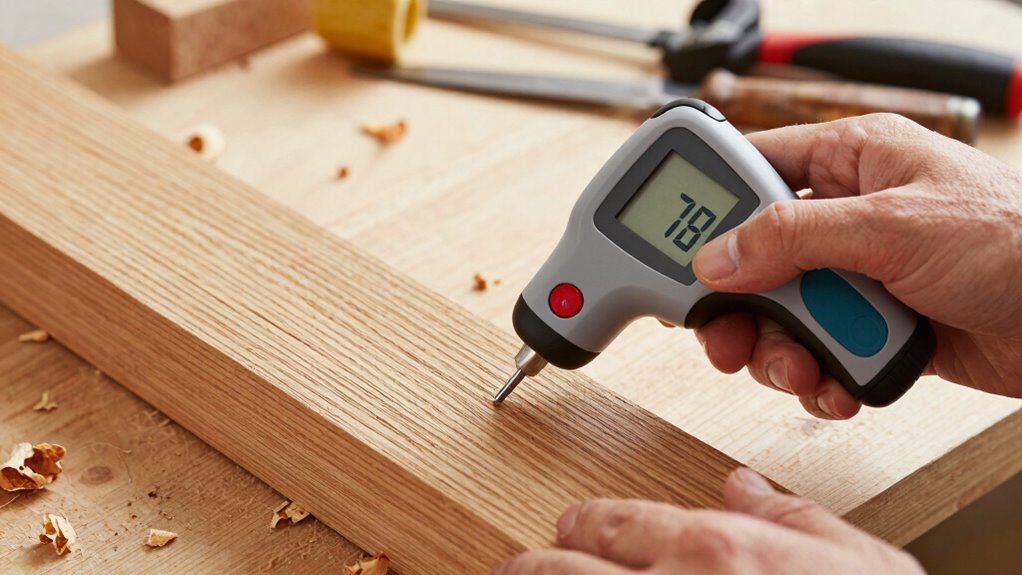
A moisture meter is an indispensable tool for accurately measuring the moisture levels in wood, drywall, or other materials. To get reliable readings, you need to understand how to calibrate the sensor properly and ensure proper probe placement every time. Sensor calibration is vital because it fine-tunes your device to match the material you’re testing. Before you start, check if your moisture meter requires calibration and follow the manufacturer’s instructions. Some meters come with calibration standards or reference materials—use these to verify your device’s accuracy. If calibration is off, your readings won’t reflect the true moisture content, leading to potential misjudgments about the material’s condition.
Proper probe placement is equally important. When you insert the probes into the material, make sure they are fully and evenly embedded without forcing them in too hard, which could damage the meter or the material. Position the probes perpendicular to the surface, ensuring good contact with the material’s core rather than just the surface. If your meter has multiple pins, space them adequately to avoid overlapping or short-circuiting, as this can skew results. Always insert the probes at the same depth and angle to maintain consistency across measurements. Remember, taking multiple readings from different spots can give a more thorough picture of the moisture distribution, especially in larger or uneven materials.
Temperature can also influence your readings. Moisture meters are sensitive to temperature variations, so let the material reach room temperature before testing if possible. If you’re working in a colder environment, consider adjusting your readings based on the manufacturer’s guidelines. Additionally, avoid measuring in areas with high humidity or condensation, as these conditions can temporarily alter moisture levels and give inaccurate results. Proper calibration and probe placement are essential for trustworthy measurements. Ensuring your measurement environment is stable and controlled can greatly improve the accuracy of your readings. In some cases, using a moisture meter with temperature compensation feature can help improve measurement accuracy under varying conditions. Also, be mindful of the material type, as different materials may require specific testing techniques or settings for accurate results.
When you take a measurement, hold the meter steady and avoid shifting it during the reading. Read the display carefully, and compare your results with the acceptable moisture content levels for the specific material. If your readings seem inconsistent or unusually high or low, double-check your calibration and probe placement. Regularly cleaning the probes with a soft cloth prevents dirt or corrosion from affecting contact quality. Keeping these practices in mind helps ensure your moisture meter provides precise, trustworthy readings, so you can make well-informed decisions whether you’re assessing a repair project or verifying material stability.
As an affiliate, we earn on qualifying purchases.
Frequently Asked Questions
Can Moisture Meters Be Used on All Types of Materials?
Moisture meters can’t be used on all materials because of material compatibility issues. Some meters are designed specifically for wood, drywall, or concrete, and may not accurately measure moisture absorption in other materials like plastics or metals. Using a moisture meter on incompatible materials can lead to misreading results. Always check the device’s specifications and confirm it’s suitable for the material you’re testing to get accurate and reliable readings.
How Often Should I Calibrate My Moisture Meter?
Thinking you’re in a sci-fi flick? Regular calibration is key! You should calibrate your moisture meter at least once a month or before major projects to guarantee measurement accuracy. Factors like temperature changes or rough handling can throw off readings, so keep a routine to avoid surprises. Proper calibration maintains your tool’s precision, helping you make informed decisions and avoid costly mistakes. Stay vigilant, and your measurements will stay reliable.
What Is the Ideal Moisture Level for Hardwood Floors?
The ideal moisture level for hardwood floors is between 6% and 9% for most environments. Maintaining proper wood moisture is vital for flooring maintenance, preventing issues like warping or gaps. Use a moisture meter accurately to monitor wood moisture levels regularly, especially during seasonal changes. Keep wood within this range to guarantee your hardwood floors stay stable, durable, and beautiful over time.
Do Temperature Fluctuations Affect Moisture Meter Readings?
Yes, temperature fluctuations can impact your moisture meter readings. Temperature sensitivity affects how accurately the device measures moisture levels, especially if it’s not calibrated for varying conditions. To avoid misreads, make sure your moisture meter is properly calibrated at the current temperature, and try to take readings in stable, consistent temperatures. This helps maintain calibration accuracy, giving you more reliable results regardless of environmental changes.
Can Moisture Meters Detect Hidden Water Damage?
Like a trusty detective, your moisture meter can detect hidden moisture caused by water intrusion. It gauges moisture levels beneath surfaces, revealing hidden water damage that’s not visible to the naked eye. Keep in mind, though, some meters might miss very localized or deep-seated water issues. Regularly testing suspect areas guarantees you catch hidden moisture early, preventing further damage and costly repairs. Stay vigilant and use your meter wisely!
Conclusion
Using a moisture meter accurately can prevent costly mistakes—did you know that improper moisture readings cause over 30% of flooring failures? By following the proper steps and calibrating your device regularly, you guarantee precise results every time. Remember, a reliable reading saves you time and money in the long run. So, stay attentive, double-check your readings, and you’ll confidently avoid misjudging moisture levels, keeping your projects on track and successful.
Fall Picks
fall essentials
As an affiliate, we earn on qualifying purchases.