To dry carpets faster without overheating your room, use strategically placed fans, including oscillating and ceiling fans, to boost airflow without direct, prolonged pointing at the carpet. Open windows on opposite sides to create a gentle cross-breeze, and keep doors open for better circulation. Use a dehumidifier to reduce excess moisture and maintain a comfortable temperature around 68-72°F. Balancing airflow, ventilation, and humidity helps speed up drying safely—stick around to learn more effective tips for peak results.

Get cleaning gear delivered free — and shop member deals
- Fast, free delivery on millions of items
- Access to Prime Big Deal Days deals on October 6–7
- Prime Video, Amazon Music and more included
Key Takeaways
- Use strategically positioned, oscillating fans to promote steady airflow without pointing directly at the carpet.
- Open windows on opposite sides to create cross-ventilation, enhancing drying without increasing room temperature.
- Maintain room temperature around 68-72°F (20-22°C) and use dehumidifiers to reduce humidity effectively.
- Avoid overheating by limiting the use of space heaters; focus on airflow and ventilation instead.
- Regularly monitor humidity levels and employ fans and ventilation to balance moisture removal and prevent room overheating.
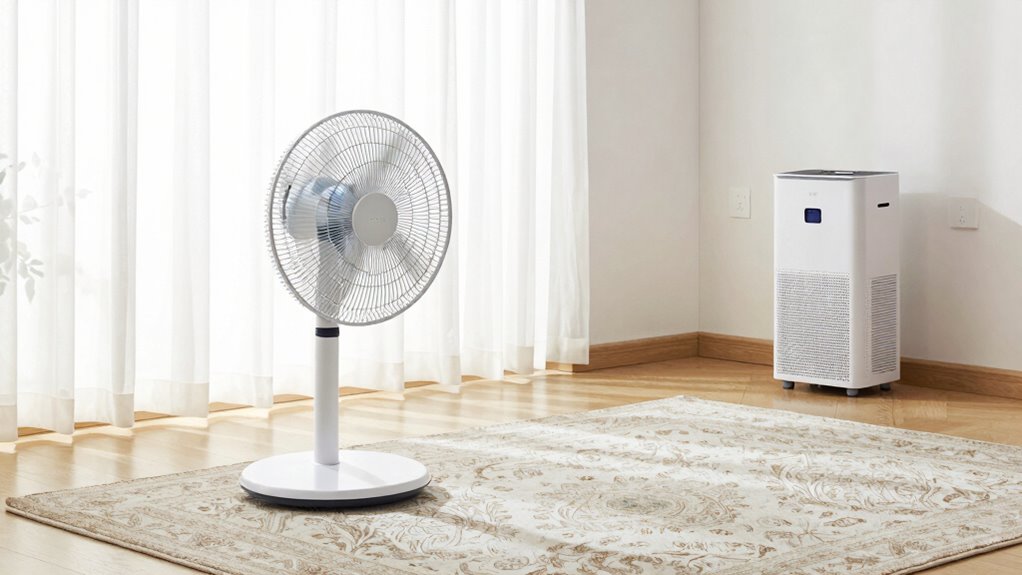
If you’ve ever had a damp carpet after a spill or cleaning, you know how important it is to dry it quickly to prevent mold and damage. The speed at which your carpet dries depends largely on understanding carpet fiber types and applying effective air circulation techniques. Different carpet fibers, like nylon, wool, or polyester, absorb moisture differently. For example, nylon tends to dry faster because of its synthetic nature, while wool retains more water due to its natural fibers. Recognizing your carpet’s fiber type helps you choose the right drying approach and avoid over-drying or damaging the material.
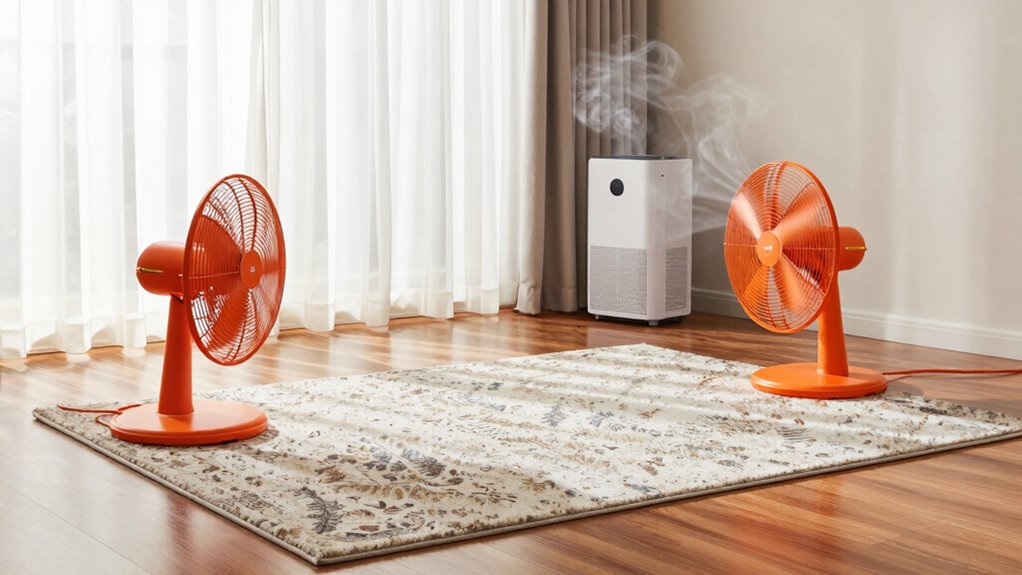
To accelerate drying without overheating the room, focus on improving air circulation. Use fans strategically, positioning them to create a steady airflow across the wet surface. Oscillating fans are especially effective because they cover more area uniformly, reducing damp spots. If you have a ceiling fan, turn it on to increase overall airflow, but make sure it’s rotating counterclockwise to push air downward. This helps circulate air within the room and promotes faster evaporation of moisture from the carpet fibers. Avoid pointing fans directly at the carpet for prolonged periods, as this can cause uneven drying or even damage delicate fibers.
Another key air circulation technique involves creating a cross-breeze. Open windows on opposite sides of the room to encourage consistent airflow, which speeds up evaporation without raising room temperatures excessively. If outdoor conditions permit, use a combination of fans and open windows to generate a gentle, continuous breeze—this prevents the room from overheating during the drying process. Also, keep doors open to adjacent rooms to facilitate air movement throughout the space. Additionally, understanding air circulation and how it influences moisture removal can significantly improve your drying efficiency. Ensuring proper airflow can further optimize the process and help prevent lingering dampness. Incorporating proper ventilation methods can also aid in maintaining optimal drying conditions and reduce the risk of mold growth. Being aware of humidity levels in the room can help you adjust your drying strategy to avoid excess moisture that hampers evaporation.
Monitoring room temperature and humidity levels closely is crucial, as extremes in either can hinder the drying process or cause damage. Overheating can cause furniture and flooring to expand or warp, so aim for a comfortable room temperature—around 68-72°F (20-22°C). Using a dehumidifier can further enhance the drying process by removing excess moisture from the air, ensuring that the room doesn’t become humid and slow down evaporation. Combining proper air circulation, understanding your carpet fiber type, and maintaining ideal room conditions will help you dry your carpet faster without risking overheating or damage. This balanced approach simplifies the process, keeps your space safe, and restores your carpet to its dry, fresh state efficiently.
oscillating fan for drying carpets
As an affiliate, we earn on qualifying purchases.
As an affiliate, we earn on qualifying purchases.
Frequently Asked Questions
Can Using Fans Damage the Carpet Fibers?
Using fans during carpet cleaning and drying can’t damage the fibers if you use them properly. Fans improve air circulation, helping the carpet dry faster and reducing mold risk. However, placing fans too close or on high settings for extended periods may cause some fibers to loosen or fray. Keep fans at a safe distance and use moderate settings to protect your carpet, ensuring efficient drying without damage.
Is It Safe to Use a Heater to Dry Carpets?
Using a heater to dry carpets can be safe if you take precautions. During carpet cleaning, a heater helps speed up drying, but you should guarantee good indoor ventilation to prevent excess heat buildup and humidity. Keep the heater at a safe distance to avoid damaging fibers, and monitor the room temperature. Proper ventilation and controlled heat make this method effective without risking damage or overheating.
How Long Does It Typically Take to Dry a Carpet Naturally?
The drying time for a carpet naturally varies, usually taking 12 to 24 hours depending on carpet material and room conditions. Thinner carpets tend to dry faster, while thicker, plush carpets might take longer. Factors like humidity, airflow, and temperature influence the drying process. To speed it up without overheating, increase ventilation and use fans. Keep in mind, patience is key to avoid mold or damage.
Can Excessive Drying Cause Mold Growth?
Yes, excessive drying can cause mold growth if moisture isn’t properly controlled. When carpets dry too quickly or unevenly, residual moisture can get trapped, creating a damp environment ideal for mold. To prevent this, focus on moisture control by using fans and dehumidifiers, and make sure proper mold prevention measures. Keeping the room well-ventilated helps avoid excessive drying and reduces the risk of mold development.
What Are the Best Products to Speed up Carpet Drying?
Did you know the right products can dramatically speed up your carpet drying? For effective carpet cleaning and drying techniques, use moisture-absorbing powders like baking soda or commercial dehumidifiers designed for carpets. Additionally, fans and air movers work wonders to circulate air and accelerate drying. These products help remove excess moisture quickly, minimizing mold risk and ensuring your carpet dries efficiently without overheating the room.
Conclusion
By using fans, opening windows, and employing strategic moisture absorption, you can dry your carpets quickly without overheating your room. Imagine a homeowner who needed her living room back in just a few hours — she followed these steps, used a few fans, and kept her windows open. Her carpet dried fast, and her room stayed cool. With these simple tips, you’ll have dry carpets in no time, hassle-free and comfortable.
Fall Picks
fall essentials
As an affiliate, we earn on qualifying purchases.