
When using a commercial drain snake, it’s vital to follow the ‘do not force it’ rule to avoid damaging your pipes. Use gentle, steady motions and stop if you feel resistance—pushing too hard can kink the cable or crack older pipes, leading to costly repairs. Patience and proper technique protect your system and extend equipment life. Stick with this approach, and you’ll find more tips that help keep your pipes safe and clear.
Key Takeaways
- Applying gentle, steady pressure prevents kinking or damaging the drain snake and the pipes.
- Stopping when resistance occurs avoids costly cracks or punctures, especially in older or fragile pipes.
- Reassess and reorient the cable rather than forcing it to navigate stubborn blockages safely.
- Using the correct equipment and combining mechanical and chemical methods enhances clog removal effectiveness.
- Following the ‘Do Not Force It’ rule prolongs equipment lifespan and maintains pipe integrity, saving repair costs.

Commercial drain snakes are essential tools for clearing clogged pipes quickly and efficiently in professional settings. Whether you’re dealing with a stubborn blockage or routine pipe maintenance, having the right equipment and techniques can make all the difference. One of the most critical rules to remember when using a drain snake is: do not force it. Pushing the cable too hard can damage your pipes, leading to costly repairs and prolonged downtime. Instead, patience and proper technique are your best allies in maintaining healthy plumbing systems.
Use a drain snake carefully—never force it—to avoid costly damage and ensure effective clog removal.
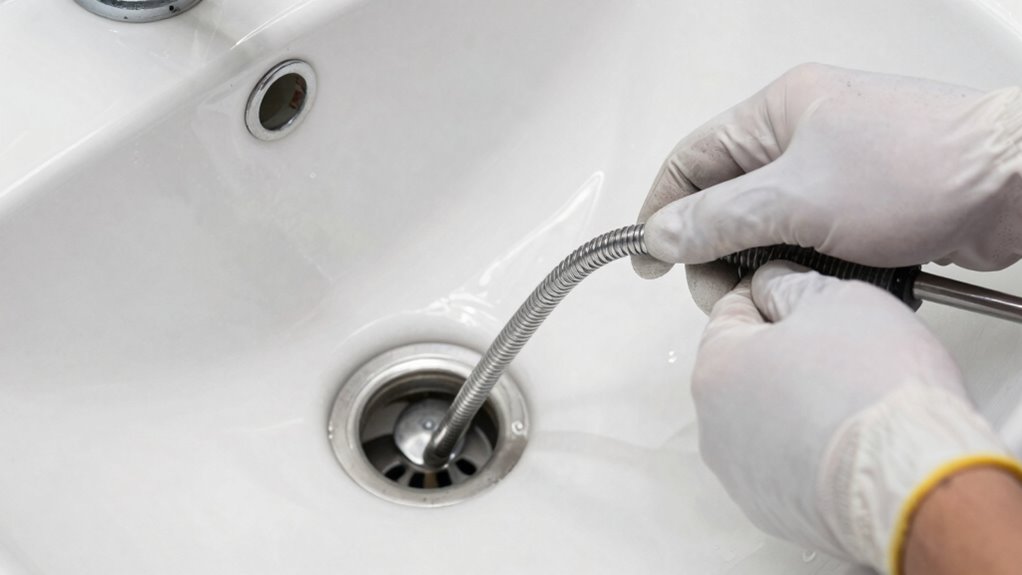
When you approach a clog, start with a gentle feed of the drain snake into the pipe. Use slow, steady motions, applying just enough pressure to advance the cable without forcing it. If resistance is met, resist the urge to push harder. Forcing the snake can cause the cable to kink, bend, or puncture the pipe, especially if you’re working with older or fragile piping materials. Instead, back off slightly, reorient the cable, and try again with a different angle or method. This careful approach not only protects your pipes but also ensures the snake can reach the blockage effectively.
Incorporating sound drain cleaning techniques into your routine is crucial for effective pipe maintenance. For example, when you encounter a stubborn clog, it’s often best to use a rotary or powered drain snake rather than a manual one. These tools provide more control and power, reducing the risk of damage. Also, consider combining mechanical methods with chemical or enzymatic cleaners for optimal results. These additives can help break down grease, hair, and organic matter, making the physical removal process smoother and less invasive.
Remember, patience is key. Rushing or forcing the snake can cause more harm than good, leading to cracked pipes or disconnected fittings. If you feel significant resistance, it’s better to stop, reassess your approach, and try a different technique or tool. Sometimes, a small adjustment or a fresh approach can save you a lot of trouble down the line. Regular pipe maintenance, including routine drain cleaning techniques, can prevent the build-up of debris that causes stubborn clogs in the first place. Properly maintaining your pipes and using the right tools can also help avoid damage to older or fragile piping materials, which is a common concern among professionals.
Ultimately, respecting the ‘do not force it’ rule helps protect your plumbing system, prolongs the lifespan of your equipment, and makes your work more efficient. With patience, proper technique, and the right tools, you can clear even the toughest blockages without risking damage—keeping your pipes in top shape and your clients happy.
Frequently Asked Questions
Can Drain Snakes Damage Old or Fragile Pipes?
Yes, drain snakes can damage old or fragile pipes if you’re not careful. Different pipe materials, like clay or cast iron, are more susceptible to harm from aggressive use. Using the wrong drain snake type or forcing it can cause cracks or punctures. Always choose the right drain snake type and follow the “do not force it” rule to prevent damaging delicate pipes and ensure effective clearing.
What Safety Precautions Should I Take When Using a Drain Snake?
When using a drain snake, you should wear safety gear like gloves and goggles to safeguard yourself. Always follow proper technique by applying gentle, steady pressure without forcing the snake, which prevents pipe damage. Keep your hands and clothing clear of moving parts, and work slowly to avoid accidents. By taking these precautions, you guarantee safe operation and avoid costly repairs or injuries.
How Do I Choose the Right Size Drain Snake?
To choose the right size drain snake, first consider your pipe material, as some materials are more delicate and require a smaller, flexible snake. Next, measure the length of the drain or pipe to select a snake long enough to reach the clog comfortably. Generally, a 25-50 foot snake works for most residential drains, but always match the snake’s diameter and length to your specific pipe and clog size to avoid damage.
Are There Environmentally Friendly Drain Snake Options?
Think of eco-friendly drain snakes as gentle giants, kind to your pipes and the planet. You can find options made from biodegradable materials that break down naturally, reducing environmental impact. These environmentally friendly drain snakes are designed with sustainable practices in mind, so you don’t have to sacrifice effectiveness for eco-consciousness. By choosing biodegradable options, you help protect waterways and reduce plastic waste, making your plumbing solutions more planet-friendly.
How Often Should I Professionally Inspect My Plumbing System?
You should have your plumbing system professionally inspected at least once a year to catch issues like pipe corrosion and leaks early. Regular inspections help identify potential problems through leak detection, preventing costly repairs later. If you notice slow drains, strange odors, or water stains, schedule an inspection sooner. Routine check-ups keep your plumbing in top shape, ensuring the longevity of your pipes and avoiding damage caused by corrosion or unnoticed leaks.
Conclusion
Remember, when tackling stubborn clogs, patience is your best tool. Forcing a drain snake might feel like trying to coax a reluctant garden vine, but gentle persistence maintains your pipes happy and healthy. Think of it as guiding a delicate butterfly onto a flower—small, mindful movements prevent damage and ensure a smooth escape. By respecting your tools and your pipes, you’ll keep the flow flowing and avoid any unnecessary tears in the plumbing’s delicate dance.