
To clean your cast iron cookware, avoid dishwashers; instead, wash with hot water and a stiff brush or coarse salt for stubborn bits. Dry immediately to prevent rust, and apply a thin layer of oil before baking it in a 450°F oven for about an hour to reseason. Regular seasoning with fats like bacon grease or vegetable oil helps maintain a non-stick surface and prevents rust. If you want to learn more about maintaining your cast iron, keep exploring these tips.

Get cleaning gear delivered free — and shop member deals
- Fast, free delivery on millions of items
- Access to Prime Big Deal Days deals on October 6–7
- Prime Video, Amazon Music and more included
Key Takeaways
- Hand wash cast iron with hot water and a stiff brush; avoid dishwasher to prevent rust and remove seasoning.
- Dry thoroughly immediately after cleaning by towel drying or low heat to prevent rust formation.
- Re-season by applying a thin layer of oil and baking in a preheated oven at 450°F for about one hour.
- Use coarse salt with water or oil for stubborn stuck-on bits without damaging the seasoning.
- Regularly maintain the seasoning layer to improve non-stick performance and protect against rust.
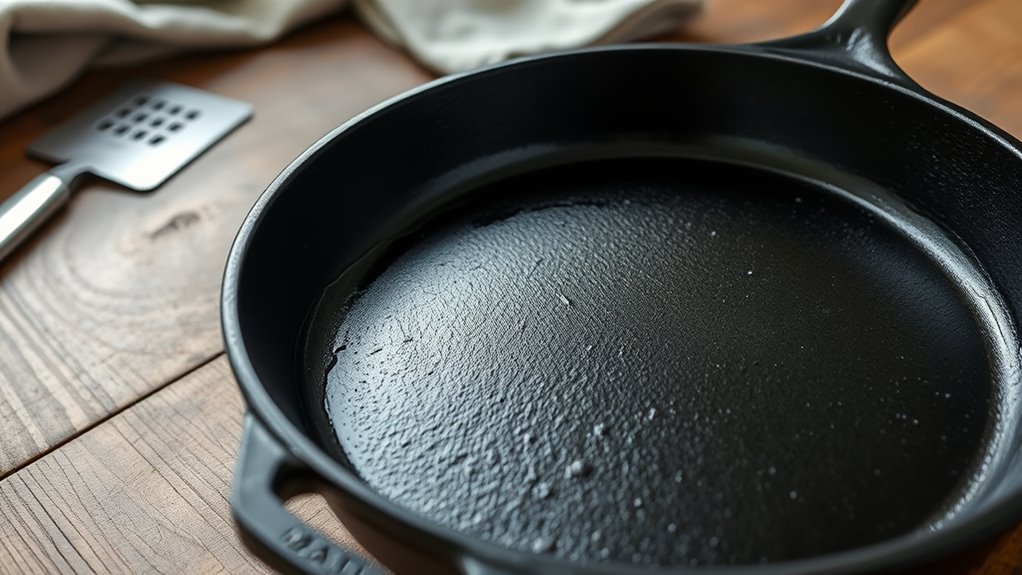
Wondering how to keep your cast iron cookware in top shape? The good news is, with proper cleaning and seasoning, your skillet can last a lifetime. One common concern is dishwasher safety. Many believe that washing cast iron in the dishwasher will damage it, but in reality, it’s best to avoid it. Dishwashers use harsh detergents and high heat that can strip away your seasoning and cause rust. Instead, opt for hand washing. Use hot water and a stiff brush or non-abrasive scrubber to clean off food residue. If you encounter stubborn stuck-on bits, a bit of coarse salt can act as an abrasive scrubber, helping lift debris without harming the surface. Avoid using soap except in rare circumstances, as it can remove the seasoning layer over time. After washing, dry your skillet immediately with a towel or place it on low heat to evaporate any remaining moisture, preventing rust.
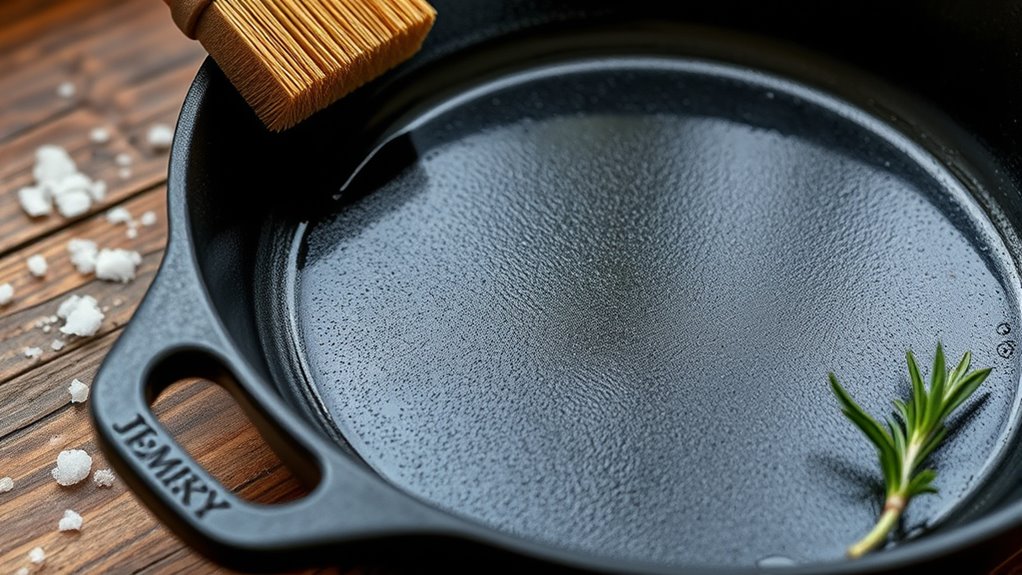
When it comes to maintaining your cast iron, seasoning is key. If your cookware starts to look dull or develops rust spots, it’s time to reseason. While traditional seasoning involves applying a thin layer of oil and baking it in the oven, there are seasoning alternatives worth trying. For instance, you can use bacon grease or lard, which have been trusted for generations. Some prefer flaxseed oil or vegetable oils that polymerize well under heat. The goal is to create a durable, non-stick coating that protects the metal and enhances cooking performance. To apply, wipe a small amount of oil all over the skillet’s interior, including the sides. Then, place it upside down in a preheated oven at around 450°F (232°C) with a sheet of foil on the rack below to catch drips. Bake for about an hour, then let it cool in the oven. This method helps build up a resilient seasoning layer.
cast iron skillet cleaning brush
As an affiliate, we earn on qualifying purchases.
As an affiliate, we earn on qualifying purchases.
Frequently Asked Questions
How Often Should I Re-Season My Cast Iron Skillet?
You should re-season your cast iron skillet when food starts sticking or the surface looks dull or rusty. Typically, seasoning frequency depends on how often you cook with it, but a good rule is every few months or when you notice signs of wear. Regular skillet maintenance keeps the seasoning intact, ensuring your pan remains non-stick and durable. Don’t wait too long—re-season promptly to maintain its best cooking performance.
Can I Use Soap When Cleaning Cast Iron?
Absolutely, you can use dish soap on your cast iron—believe it or not, it won’t ruin your seasoning! Modern dish soaps are gentle enough to clean away grime without stripping your skillet’s natural non-stick layer. Just remember, frequent use might require a quick re-season, but occasional soap is fine. So go ahead, give it a thorough scrub without fear, and maintain that perfect seasoning!
What’s the Best Method for Removing Rust?
To remove rust, you should scrub the affected area with steel wool or a rust eraser, applying firm pressure to lift the rust. Rinse thoroughly and dry completely. Afterward, re-season your skillet using proper seasoning techniques, like applying a thin layer of oil and baking it. This process restores the non-stick surface and protects against future rust, keeping your cast iron in top condition.
How Do I Prevent Sticking in Cast Iron Cookware?
To prevent sticking in your cast iron cookware, focus on proper seasoning techniques and oil selection. Make sure to apply a thin layer of high-smoke-point oil, like flaxseed or vegetable oil, after each use. Bake it in the oven to build a durable non-stick surface. Consistently maintaining this seasoning layer helps prevent food from sticking and keeps your skillet in excellent condition for years.
Is It Safe to Cook Acidic Foods in Cast Iron?
Cooking acidic foods in cast iron is safe, but it can impact cast iron safety over time. Acidic ingredients like tomatoes or vinegar can strip away the seasoning, potentially causing rust or damage. To protect your cookware, limit acidic foods or cook them briefly. Regularly reseason your cast iron to maintain its protective layer, ensuring safe and effective use for all types of dishes.
Conclusion
With proper cleaning and seasoning, your cast iron will become like a trusted old friend—reliable and seasoned to perfection. Think of it as tending a garden; with love and care, it’ll flourish and serve you well for years to come. Keep up the routine, and your cookware will develop a natural, non-stick surface that’s as resilient as a mountain. Stick with it, and your cast iron will reward you with countless delicious meals and memories.
Fall Picks
fall essentials
As an affiliate, we earn on qualifying purchases.