To clean your dishwasher filter and spray arms, start by locating and removing the filter at the bottom of your dishwasher and rinse it under warm water to remove debris. Use a soft brush to scrub away stubborn buildup. Next, check the spray arms for clogs in the holes, clearing any blockages with a toothpick or small brush. Reassemble everything securely, and you’ll keep your dishwasher running like new—discover more tips to guarantee peak cleaning performance.
Key Takeaways
- Locate and carefully remove the dishwasher filter following the manufacturer’s instructions, then rinse under warm water to clear debris.
- Use a soft brush or toothbrush to scrub the filter, paying attention to edges and crevices for stubborn buildup.
- Remove spray arms if possible, then inspect and clear clogged spray holes with a toothpick or small brush.
- Soak spray arms in vinegar and warm water to dissolve mineral deposits, then rinse thoroughly.
- Reinstall the filter and spray arms securely to ensure even water flow and optimal dishwasher performance.
Keeping your dishwasher running efficiently requires regular cleaning of its filter and spray arms. These components play a vital role in guaranteeing your dishes come out clean and spotless. Over time, debris, food particles, and mineral deposits can accumulate, hindering their performance. This is why routine dishwasher maintenance is indispensable. Proper appliance cleaning not only extends the lifespan of your dishwasher but also improves its cleaning power, saving you time and effort in the long run.
Regularly cleaning your dishwasher’s filter and spray arms keeps it running efficiently and ensures spotless dishes.
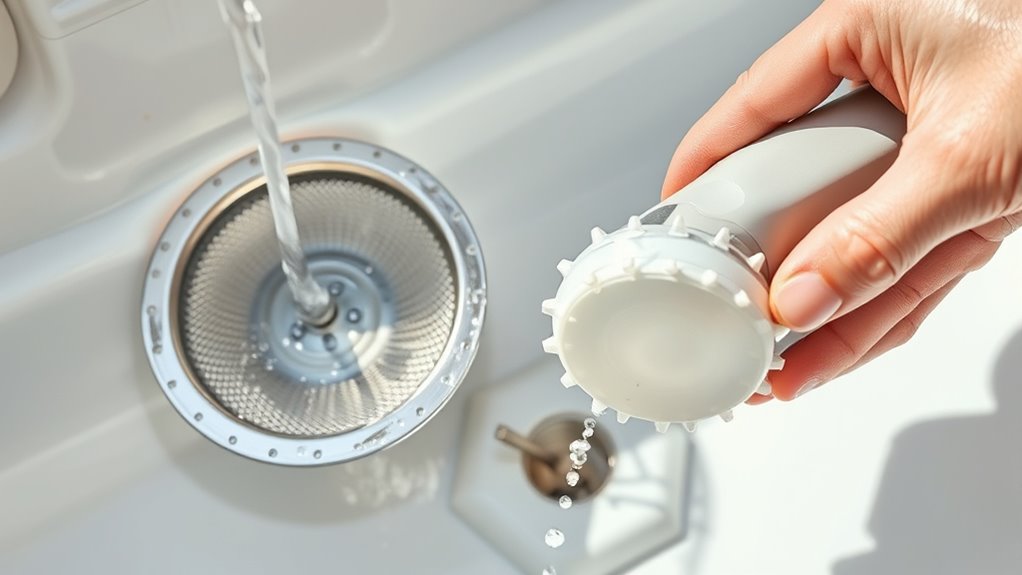
Start by locating the filter, which is usually at the bottom of the dishwasher. In some models, it’s a small, removable piece, while in others, it may be embedded within the sump area. Remove the filter carefully, following your manufacturer’s instructions. Once out, rinse it under warm water to wash away loose debris. Use a soft brush or an old toothbrush to scrub away any stubborn buildup, especially around the edges and small crevices. Make sure to check for any damage or cracks, as a compromised filter can let debris circulate back into the dishwasher. Regularly cleaning the filter is a straightforward part of appliance cleaning that helps maintain ideal dishwasher performance.
Next, focus on the spray arms. These are typically attached to the interior walls or the bottom rack. To clean them, remove the spray arms if possible—consult your user manual for guidance. Once detached, inspect the spray holes for clogs. Use a toothpick or a small brush to clear out any lodged debris or mineral deposits blocking the nozzles. Rinse the spray arms thoroughly under running water. For stubborn clogs, soaking the spray arms in a mixture of vinegar and warm water can help dissolve mineral buildup. After cleaning, reattach the spray arms securely. Properly maintained spray arms ensure even water distribution during cycles, which directly impacts your cleaning results. Additionally, mineral deposits from hard water can accumulate over time, reducing spray efficiency if not regularly addressed.
Incorporating routine appliance cleaning into your dishwasher maintenance schedule is simple but highly effective. Doing so prevents buildup that can reduce efficiency and cause unpleasant odors. Regularly cleaning the filter and spray arms not only improves cleaning performance but also reduces the risk of costly repairs down the line. Remember, a clean dishwasher is a happy dishwasher—keep these parts free of debris, and your appliance will reward you with sparkling dishes every time. By dedicating a few minutes to this essential maintenance, you guarantee your dishwasher stays in top shape, making your kitchen routines smoother and more effective.
Frequently Asked Questions
How Often Should I Replace My Dishwasher Filter?
You should replace your dishwasher filter every six to twelve months, depending on your usage and water quality. Regular filter replacement guarantees maximum cleaning and prevents buildup. In addition to filter replacement, cleaning frequency is key—clean the filter monthly to keep it functioning well. If you notice poor drainage or lingering odors, it’s a sign you need to replace or thoroughly clean the filter sooner. Maintain your dishwasher for best results.
Can I Use Vinegar to Clean Spray Arms?
Yes, you can use vinegar cleaning for spray arm maintenance. Vinegar effectively dissolves mineral buildup and grime, helping your spray arms spin freely and spray evenly. Simply remove the spray arms, soak them in a mixture of vinegar and water, then scrub any stubborn deposits. This simple step can dramatically improve your dishwasher’s performance, keeping it clean and efficient. Don’t underestimate the power of vinegar in maintaining your appliance’s health.
What Tools Are Best for Removing Stubborn Debris?
You’ll need a few tools for stubborn debris removal. A small brush or an old toothbrush works well to scrub away debris lodged in spray arms. A toothpick or pin helps clear out tiny holes, while tweezers can remove larger debris. Use a soft cloth or sponge for wiping the filter. These tools, combined with gentle debris removal techniques, make sure your dishwasher stays clean and runs efficiently.
Is It Necessary to Wear Gloves During Cleaning?
You don’t have to wear gloves during cleaning, but glove safety is recommended for protection, especially if you’re dealing with harsh cleaning agents or stubborn debris. Wearing gloves helps maintain cleaning hygiene by preventing contact with grease and grime, reducing the risk of skin irritation. Plus, gloves keep your hands clean and make the process more sanitary, ensuring you can handle other kitchen tasks afterward without worry.
How Do I Prevent Future Buildup in Filters and Spray Arms?
To prevent future buildup in your dishwasher, perform regular filter maintenance and spray arm inspection. Clean your filter monthly to remove debris and prevent clogs. Check the spray arms periodically for any blockages or buildup, and clear out any small objects or mineral deposits. Using a rinse aid can also help reduce mineral buildup. Staying consistent with these maintenance steps keeps your dishwasher running efficiently and prevents costly repairs down the line.
Conclusion
Now that you know how to clean your dishwasher filter and spray arms, you’re practically giving your appliance a spa day. Think of it like tending to a garden—regular care keeps everything blooming and running smoothly. I once ignored mine, and my dishes kept coming out cloudy. After a quick clean, everything sparkled again, reminding me that small efforts lead to big results. Your dishwasher will thank you with spotless dishes and a longer life.