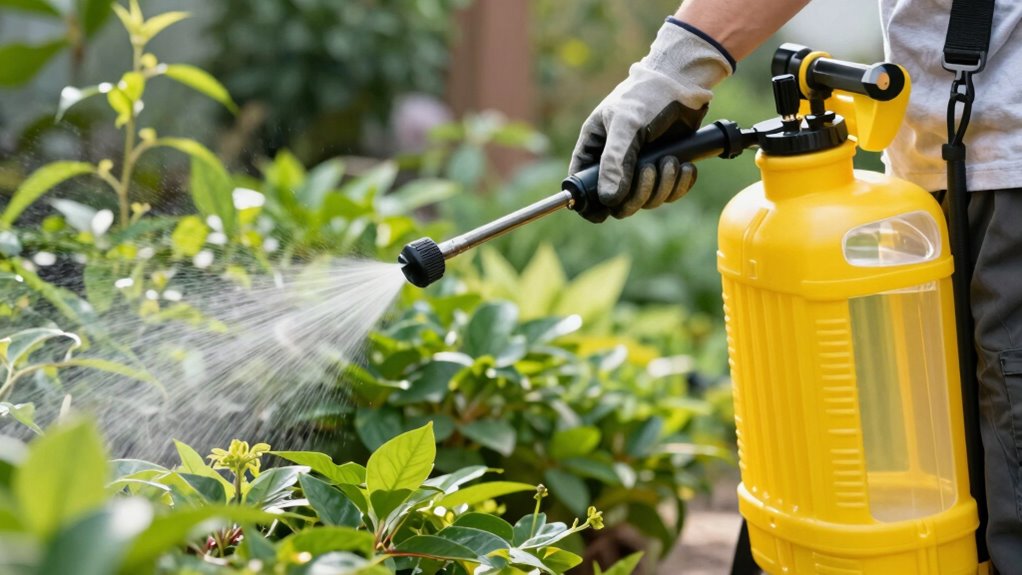
To calibrate your backpack sprayer for even coverage, start by checking that all hoses, nozzles, and seals are in good condition. Measure your desired spray volume and test the flow rate by filling the tank and timing how long it takes to dispense a set amount. Adjust the nozzle or pressure to match your target coverage, considering the chemical’s flow properties. Proper calibration maintains consistent spray patterns and saves chemical. Keep exploring for detailed tips on fine-tuning your sprayer for ideal results.
Key Takeaways
- Check and clean nozzles, hoses, and seals before calibration to ensure proper spray pattern and flow.
- Measure and adjust the spray volume by conducting a test spray on a marked surface.
- Use a calibration container to determine the output rate and adjust the pressure or nozzle settings accordingly.
- Select nozzles suitable for the chemical’s viscosity and flow characteristics to achieve even coverage.
- Regularly maintain equipment and verify chemical compatibility to prevent clogs and ensure consistent application.
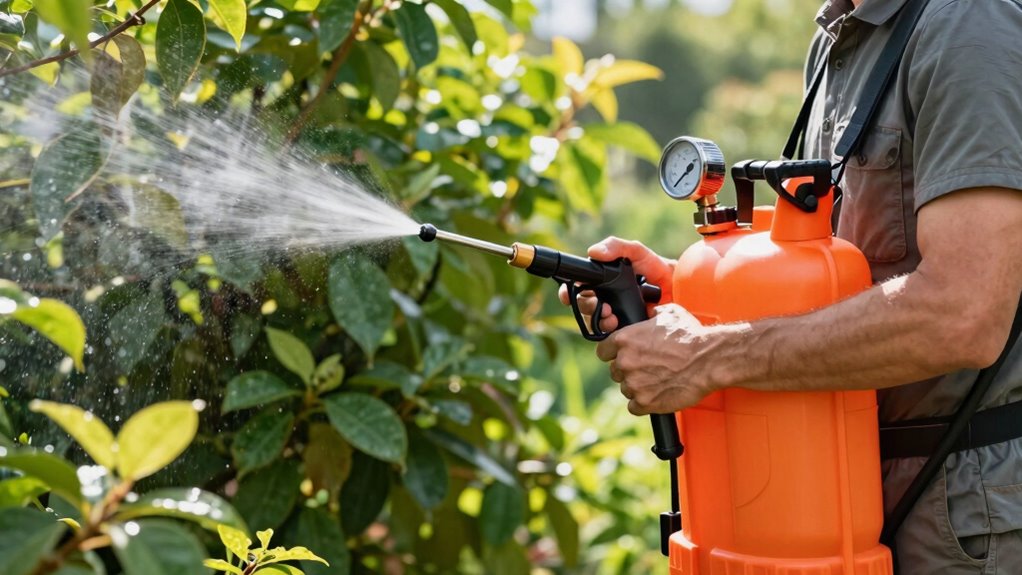
Calibrating your backpack sprayer guarantees you apply the correct amount of liquid, saving you time, money, and effort. Proper calibration ensures your coverage is even, which is essential for effective pest control, weed management, or fertilization. To achieve this, you need to pay attention to sprayer maintenance and chemical compatibility, two *key* factors that influence calibration accuracy. Regular sprayer maintenance keeps your equipment in top shape, preventing clogs and leaks that could skew your application rates. Check hoses, nozzles, and seals before each use, and clean them thoroughly after every job. Well-maintained equipment delivers a consistent spray pattern, making calibration more reliable. Additionally, understanding the flow characteristics of your chemicals helps in making precise adjustments for optimal coverage. Chemical compatibility also plays a *crucial* role in calibration. Different chemicals have varying viscosities and flow characteristics, which can impact how much liquid your sprayer dispenses per minute. Always read the label and follow manufacturer instructions to understand the chemical’s properties. Using incompatible or thick liquids without adjusting your calibration can lead to uneven coverage or waste. When mixing chemicals, *verify* they are compatible with your sprayer’s materials to prevent damage or corrosion. This step not only preserves your equipment but also *guarantees* that your calibration remains accurate over time.
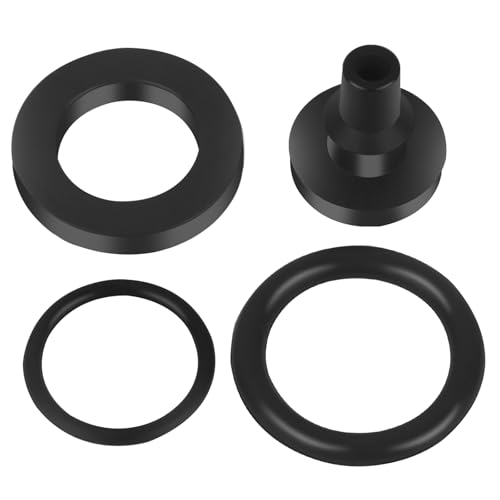
Backpack Sprayer Seal Gasket Kit 182656 for Smith Performance Sprayers
- Compatibility: Fits most 4-gallon Smith sprayers
- Complete Kit: Includes grommet, gasket, and Viton O-rings
- High-Quality Material: Made of durable Viton for longevity
As an affiliate, we earn on qualifying purchases.
As an affiliate, we earn on qualifying purchases.
Frequently Asked Questions
How Often Should I Calibrate My Backpack Sprayer?
You should calibrate your backpack sprayer at least once before each use, especially if you’re applying pesticides or fertilizers. Regular sprayer maintenance and calibration techniques ensure even coverage and prevent over-application. If you notice inconsistent spray patterns or after significant changes in solution viscosity, readjust sooner. Consistent calibration helps maintain accuracy, reduces waste, and keeps your application effective. Make it a routine part of your sprayer maintenance to achieve the best results.
Can I Calibrate a Sprayer for Multiple Chemicals?
Think of your sprayer like a chef’s toolbox—each chemical needs the right tools to mix perfectly. Yes, you can calibrate your sprayer for multiple chemicals, but first, verify chemical compatibility to avoid reactions. Adjust nozzle selection to match each chemical’s viscosity and droplet size. This ensures even coverage and prevents clogging, just like a chef chooses the right tool for each ingredient, making your application effective and safe.
What Safety Precautions Are Needed During Calibration?
During calibration, you need to wear proper personal protective equipment, like gloves, goggles, and a mask, to avoid chemical exposure. Make sure good ventilation in your work area to prevent inhaling fumes. Keep the sprayer away from children and pets, and work in an open space if possible. Always follow safety instructions on the chemical labels, and wash your hands thoroughly afterward to stay safe during calibration.
How Do Temperature and Humidity Affect Calibration Accuracy?
Temperature effects and humidity influence calibration accuracy by altering spray consistency. When temperatures rise, liquids may vaporize faster, causing uneven coverage. High humidity can cause droplets to clump, reducing spray precision. You should carefully consider climate conditions, adjusting your calibration to compensate for these environmental influences. Monitoring temperature and humidity helps you maintain meticulous, measurable, and matchless spray results, maximizing your backpack sprayer’s efficiency regardless of weather variations.
What Tools Are Required for Precise Calibration?
To calibrate your backpack sprayer precisely, you’ll need a reliable sprayer nozzle to control spray pattern and flow rate. Additionally, use calibration markers on your container or spray pattern to measure output accurately. These tools help you adjust your sprayer settings for even coverage. Make certain the nozzle is clean and working correctly, and mark your calibration points clearly to ensure consistent application each time.
Conclusion
Now that you’ve learned how to calibrate your backpack sprayer, you’re ready to achieve more even coverage with ease. Just like a seasoned gardener tending to their plants in a lush, Victorian greenhouse, your careful calibration guarantees your treatment is precise and effective. Remember, regular checks will keep your sprayer performing at its best. With a little attention, you’ll be sprouting success in your garden—no need for a time machine, just good technique!