To calibrate your backpack sprayer and avoid over-application, first check the manufacturer’s flow rate specifications. Spray into a measuring container for a set time, then record the volume to determine your output. Adjust the nozzle or pressure if needed to match your target flow rate. Regularly testing and fine-tuning guarantees even coverage without waste. If you want to master precise calibration techniques, explore the detailed steps ahead.
Key Takeaways
- Measure the sprayer’s flow rate by spraying into a container for a set time to establish baseline output.
- Adjust nozzle or pressure settings to match the recommended application rate for effective disinfection.
- Use manufacturer specifications to verify flow rates and ensure accurate calibration.
- Select and fine-tune nozzles to produce a uniform, fine mist that covers surfaces without over-application.
- Regularly recheck and calibrate the sprayer to maintain consistent, safe, and efficient disinfectant coverage.
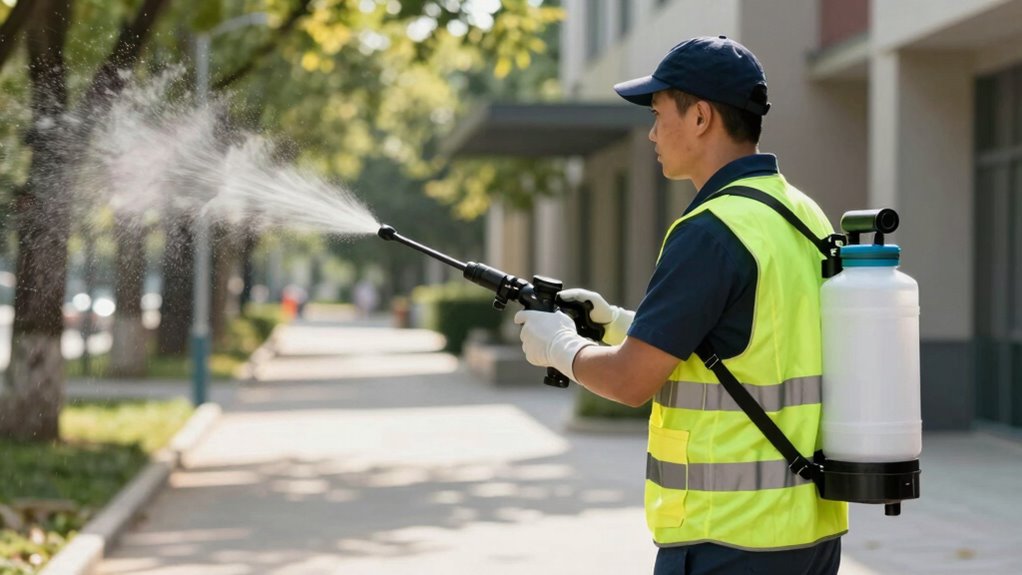
In today’s world, maintaining a clean and sanitized environment is more important than ever, and backpack sprayers for disinfection offer an efficient solution. To get the most out of your sprayer, understanding how to calibrate its output is vital to avoid over-application, which can be wasteful and potentially harmful. Proper calibration ensures you use the right amount of disinfectant, maximizing effectiveness while minimizing chemical waste. When setting up your sprayer, start by considering chemical compatibility. Not all disinfectants react well with every material, so check the manufacturer’s recommendations to prevent corrosion or damage to the tank and seals. Using incompatible chemicals could lead to leaks or reduced disinfectant efficacy, ultimately compromising your sanitation efforts.
Proper calibration and chemical compatibility are key to effective, safe disinfection with backpack sprayers.
Once you’ve confirmed chemical compatibility, focus on nozzle selection. Your nozzle determines the spray pattern, droplet size, and flow rate, all of which directly impact how much disinfectant is dispensed. For disinfection tasks, a nozzle that produces a fine, even mist typically provides the most uniform coverage, but it also influences the amount of chemical delivered per minute. Choosing the correct nozzle allows you to fine-tune your application rate and avoid over-spraying. Keep in mind that nozzles with adjustable flow settings give you greater control, making calibration easier and more precise.
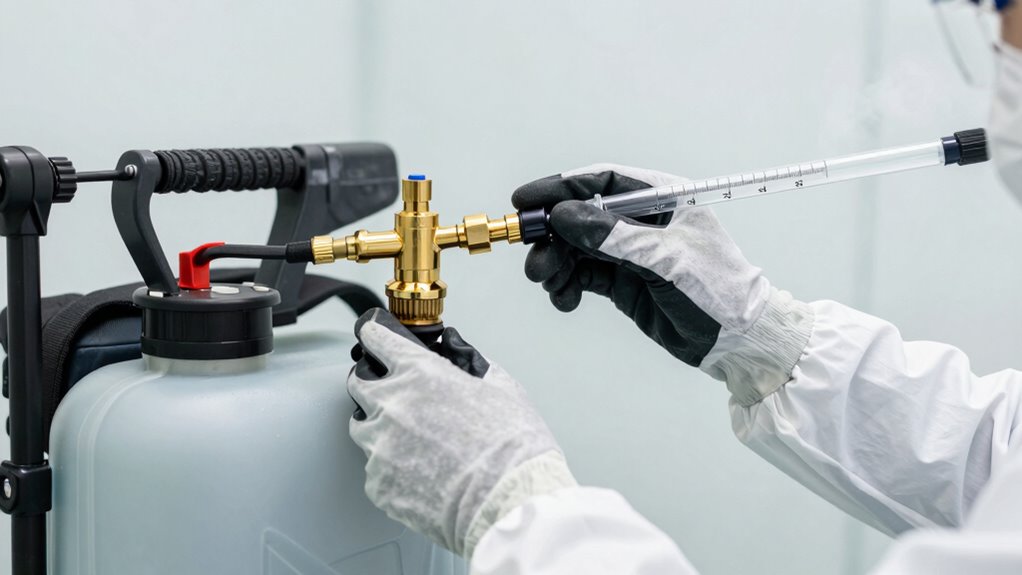
To calibrate your backpack sprayer effectively, start with the manufacturer’s specifications for flow rate and nozzle type. Measure the output by spraying into a container for a fixed amount of time—say, 30 seconds—and note the volume collected. This gives you a baseline flow rate. Adjust the nozzle or pressure if the flow exceeds your target application rate. You want to match your desired application rate based on the disinfectant’s recommended coverage per square foot. Regularly checking and adjusting your sprayer setup ensures consistent distribution and prevents over-application, which can lead to chemical runoff or unnecessary exposure.
It’s also vital to consider pressure settings because they influence flow rate and spray pattern. Increasing pressure generally increases flow, but it can also produce larger droplets or inconsistent coverage. By maintaining proper pressure and selecting the right nozzle, you’ll optimize your disinfection process. Keep in mind that different chemicals may require different flow rates and nozzle types, so always review the product instructions. Properly calibrating your backpack sprayer by paying close attention to chemical compatibility, nozzle selection, and pressure settings will save you chemicals, time, and effort while ensuring your environment is thoroughly disinfected without waste. Additionally, consulting reliable guidelines can help you stay aligned with safety standards and best practices for chemical application.
Frequently Asked Questions
Can I Use Any Disinfectant With My Backpack Sprayer?
You shouldn’t use any disinfectant with your backpack sprayer without verifying disinfectant compatibility. Some disinfectants may damage your sprayer or clog the nozzle, so always choose a compatible product. Also, select the right spray nozzle to ensure proper coverage and prevent over-application. Always read the manufacturer’s guidelines for both your sprayer and disinfectant to ensure safe and effective use.
How Often Should I Calibrate My Backpack Sprayer?
You should calibrate your backpack sprayer regularly, ideally before each use or at least once a month during heavy use. Follow maintenance tips to keep it functioning properly, and consult troubleshooting guides if you notice uneven spray or pressure issues. Consistent calibration ensures you apply disinfectant accurately, avoiding over-application or waste. Regular checks help maintain peak performance and extend the sprayer’s lifespan, making your disinfecting efforts more effective.
What Safety Gear Is Recommended During Disinfection?
You should wear suitable personal protective equipment (PPE) during disinfection to stay safe. This includes gloves, goggles, a mask or respirator, and long sleeves to safeguard your skin. Some might think PPE is overkill, but it’s essential for chemical handling precautions, especially with disinfectants that can irritate or harm. Always follow manufacturer instructions and local safety guidelines to ensure you’re protected and effective in your disinfection efforts.
How Do Weather Conditions Affect Spraying Effectiveness?
Weather conditions considerably influence spraying effectiveness. High humidity can improve disinfection by extending the solution’s contact time, but excessive moisture may cause runoff. Wind influence, especially strong gusts, can disperse the spray unevenly or carry it away, reducing coverage and risking contamination of unintended areas. You should always check weather forecasts, avoid spraying during windy conditions, and consider humidity levels to guarantee ideal disinfection results.
Can I Switch Between Different Disinfectants Easily?
Yes, you can switch between different disinfectants easily, but you need to check disinfectant compatibility first. Always read the labels for specific instructions and make certain the disinfectants are compatible with your sprayer to avoid damage. After switching, perform proper sprayer maintenance, like cleaning and flushing the system, to prevent residue buildup and ensure effective application. This helps maintain sprayer performance and extends its lifespan.
Conclusion
So, now you know how to calibrate your backpack sprayer—because over-application is just a charming way to turn your disinfecting effort into a costly soap opera. Remember, precision is key; after all, nobody wants to turn a simple spritz into a science experiment. Follow these tips, and you’ll be the hero who disinfects without wasting resources or drowning in your own overzealousness. Happy spraying—your sanitized reputation depends on it!