
TL;DR

Get cleaning gear delivered free with Prime
- Fast, free delivery on millions of items
- Prime Video, Amazon Music and more included
- Member-only deals all year
Hunker published a DIY guide to making a front-door wreath from cleaned pistachio shells, a wreath form, adhesive and paint. The shells are layered into flower shapes and attached to a base; the guide says the colors and hanging materials can be changed, but gives no tested durability or cost figures.
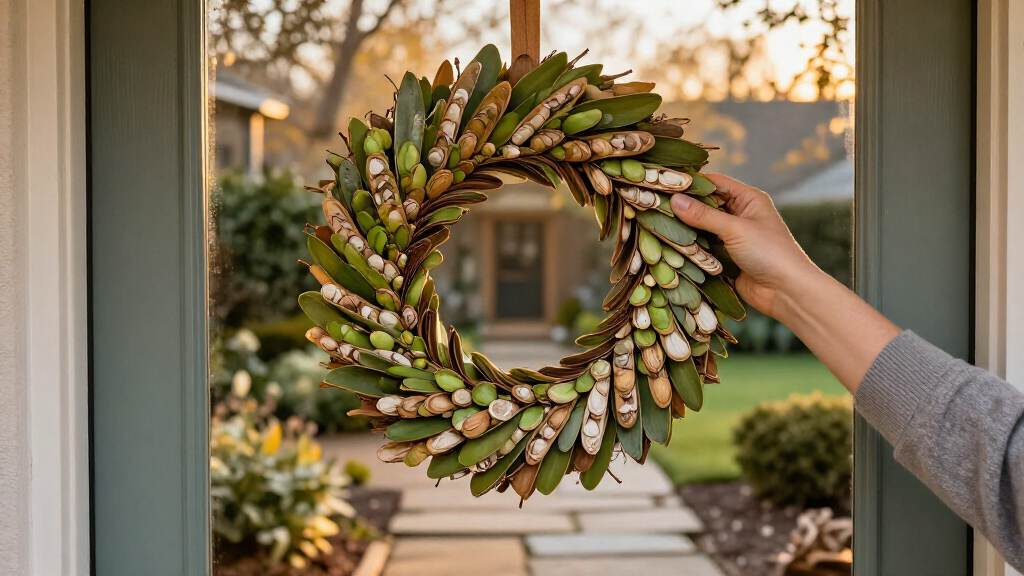
Hunker has published instructions for making a front-door wreath from pistachio shells arranged as flowers, presenting the project as a way to reuse the shells rather than buy fresh blooms or a standard wreath. The guide describes washing and painting the shells, gluing them in overlapping layers, then attaching the finished flowers to a wreath base.
The project calls for pistachio shells, a wreath base, adhesive, paint, and ribbon or twine. The base can be cut from cardboard, formed from a pool noodle, or adapted from an old wreath. Hunker suggests a cardboard ring about 24 inches across for a 36-inch-wide door, while noting that the size can be adjusted to suit the entryway.
Before assembly, the shells should be rinsed in hot water to remove residue and left to dry. The guide recommends painting them on both sides, either in one color or in separate shades. To form each flower, three or four shells are glued upright near the center of a small cardboard circle; additional shells are added around them in layers until the bloom reaches the desired size.
Once the flowers are dry and assembled, they are glued onto the wreath form. A ribbon can be tied at the top for hanging. Hunker suggests positioning the wreath about 14 inches below the top of the door and changing the paint colors or ribbon to fit a season or occasion. The report describes the craft as budget-friendly if shells are already available, but does not provide a materials budget or time estimate.
A Reusable Alternative to Fresh Blooms
The project offers readers a way to make a decorative item from a material that might otherwise be discarded. Its practical appeal is the combination of reuse and customization: the maker can choose the wreath’s size, shell colors and hanging ribbon instead of buying a finished design.
Hunker says the shell flowers should hold up better than fresh flowers, which can wilt in sun and rain, and describes them as suitable for use across seasons. That is the article’s characterization, not a result supported by testing data in the source. The guide does not specify how the paint or adhesive performs outdoors, so people planning to hang the wreath outside may want to check product labels and consider whether their entry is exposed to weather.
Products Worth Considering

Philips Hue Festavia 130-Foot Indoor/Outdoor Smart String Lights, 500 Color-Changing LEDs

Philips Hue White and Color Ambiance A19 Smart Bulb Starter Kit, 2-Pack

Samsung The Frame Pro LS03HW 65-inch Neo QLED TV with 27-Month Axiom Care
As an affiliate, we earn on qualifying purchases.
From Shells to Layered Flowers
The instructions follow a simple sequence: make or reuse a base, clean and dry the shells, paint them, assemble flowers, and attach the blooms. For a cardboard base, the guide suggests tracing a large circle, drawing a smaller circle inside it, and cutting out the center to create a ring. A pool noodle is offered as a quicker alternative, with its ends joined using duct tape and the form covered in twine or ribbon.
For the flowers, small cardboard circles act as backing. The shells are placed upright at the center and built outward, with adhesive applied along the lower edge of each shell. The report lists a glue gun, super glue or B7000 as possible adhesives, and a craft knife among the supplies. Because the shells are small and the project requires repeated placement and gluing, Hunker cautions that the detailed assembly takes time.
““All you have to do is glue the shells onto a wreath base in overlapping layers, and paint or tint them a little to turn them into gorgeous real-looking blooms.””
— Hunker report
Outdoor Wear and Project Costs
The source does not state when the report was published, how much the project costs, how many shells a wreath requires, or how long assembly takes. It also provides no test results for weather resistance or long-term durability. Although Hunker says the blooms can hold up season after season, actual performance may depend on the paint, adhesive, base and exposure to sunlight or rain. The guide does not specify an outdoor-rated product or give care instructions.
Choose Materials Before Assembly
The report gives a do-it-yourself process rather than announcing a product launch or scheduled follow-up. Anyone attempting it can first decide on the wreath diameter and color scheme, then collect and clean enough shells before starting the detailed flower assembly. Hunker’s instructions leave the final number of blooms and exact layout to the maker, so arranging the flowers on the base before gluing them down can help establish the design.
For a wreath intended for an exposed door, the next practical step is to check the labels for the selected paint and adhesive and determine whether they are suitable for the expected conditions. The source does not say whether Hunker plans to publish further testing or revisions to the project.
Key Questions
What materials does the pistachio shell wreath require?
The guide lists pistachio shells, a wreath base, adhesive, paint, and ribbon or twine. It also mentions cardboard or a pool noodle for the base and a craft knife for shaping materials.
How are the shells made into flowers?
After rinsing and drying the shells, paint both sides. Glue three or four shells upright at the center of a small cardboard circle, then add more shells in overlapping layers around them.
Can the wreath be made without a cardboard base?
Yes. Hunker suggests joining the ends of a pool noodle with duct tape and covering it with twine or ribbon. The guide also says an old wreath form can be reused.
Will the wreath hold up outdoors?
Hunker describes the shell blooms as able to hold up over time, but the source provides no durability tests or weather-resistance details. Performance may depend on the materials used and exposure to sun and rain.
How much time or money does the project require?
The guide calls the idea budget-friendly when shells are already on hand and warns that assembly takes time. It does not provide a price, shell count, or completion-time estimate.
Source: hunker.com