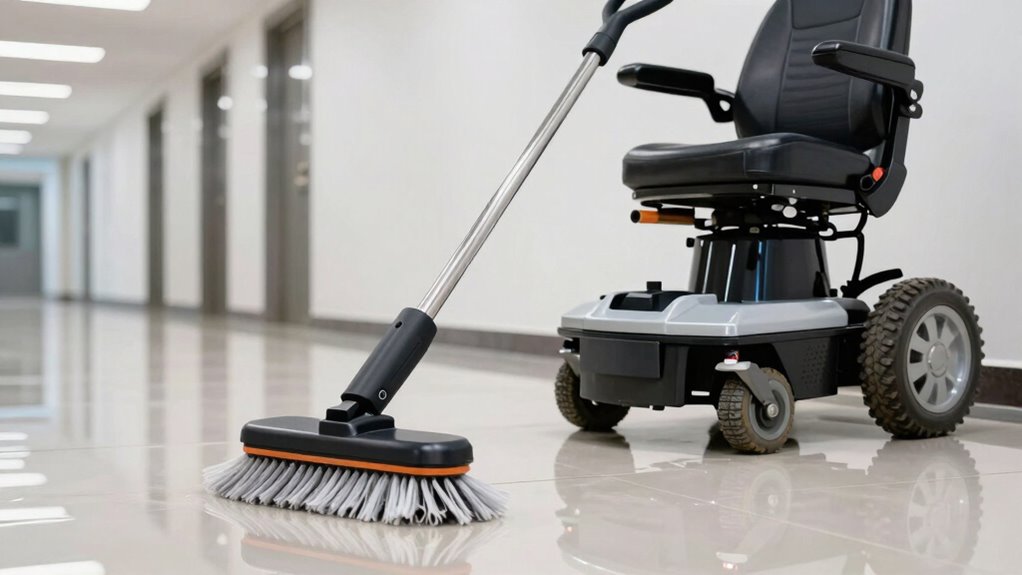

Choosing between walk-behind and ride-on floor scrubbers impacts your labor costs by affecting efficiency, maintenance needs, and operator training. Walk-behind models are simpler and quicker to train staff on, making them ideal for small or frequent cleanings. Ride-on scrubbers work best for large spaces, boosting throughput but requiring more maintenance and training time. Your facility size and cleaning volume will guide the best option. Keep exploring to understand how these choices can maximize your savings.
Key Takeaways
- Ride-on scrubbers increase productivity in large spaces, reducing cleaning time and labor costs compared to walk-behind models.
- Walk-behind units are easier to train on and maintain, lowering initial training and maintenance expenses.
- Larger facilities justify the higher investment in ride-on scrubbers due to higher throughput benefits.
- Smaller areas may be more cost-effective with walk-behind models, minimizing equipment and operational costs.
- Proper equipment selection based on space size and cleaning frequency optimizes labor efficiency and long-term expenses.
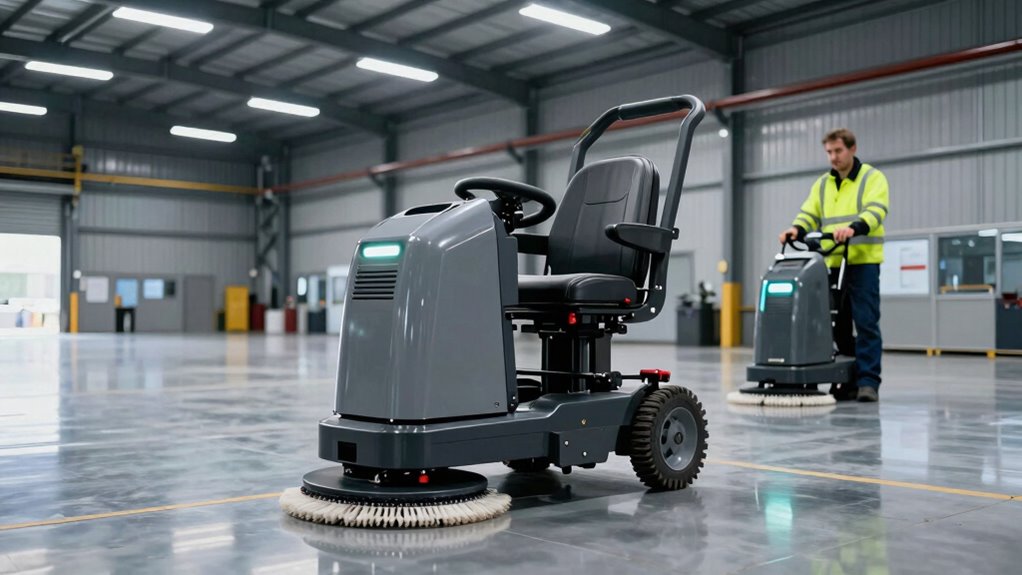
Choosing the right floor scrubber can considerably impact your labor costs, especially since the equipment’s efficiency and ease of use directly influence how much time and effort your staff need to clean effectively. When deciding between a walk-behind or a ride-on scrubber, understanding how each impacts maintenance frequency and operator training is crucial. Walk-behind models tend to be simpler and smaller, making them easier to maintain and requiring less frequent upkeep. These units generally have fewer moving parts, which means fewer breakdowns and lower maintenance costs over time. However, they may demand more manual effort from your staff, especially for larger areas, potentially increasing labor hours if not balanced with productivity.
Choosing the right scrubber impacts labor costs through maintenance needs and operator training requirements.
Ride-on scrubbers, on the other hand, are designed for larger spaces and higher cleaning volumes. They typically require more comprehensive maintenance due to their complex systems and larger components. The increased maintenance frequency can add to your operational costs if you don’t plan for regular upkeep. But, because of their efficiency, they can reduce the overall cleaning time per shift, which could offset maintenance expenses by saving labor hours. When it comes to operator training, ride-on models generally demand more extensive instruction. Your staff needs to be trained on operating advanced controls safely and efficiently, which might involve longer onboarding periods. Conversely, walk-behind scrubbers are usually more straightforward, making training quicker and less resource-intensive, especially for new or part-time employees.
The decision hinges on understanding how each type fits into your cleaning schedule and workforce skill level. If your facility requires frequent, rapid cleaning of smaller spaces, a walk-behind scrubber’s lower maintenance frequency and simple operation might be more cost-effective. But if you’re managing large, open areas with high throughput, investing in a ride-on model could pay off through faster cleaning times despite higher maintenance needs and longer training periods. You also need to consider how your staff adapts to new equipment; effective operator training can significantly reduce misuse and breakdowns, regardless of the machine type. Proper training minimizes downtime and extends the lifespan of your investment, ultimately impacting your labor costs.
In essence, the right choice balances initial costs, ongoing maintenance, operator proficiency, and your specific cleaning demands. Both options have their merits, but understanding how maintenance frequency and operator training influence your labor costs will help you select a floor scrubber that maximizes efficiency and minimizes expenses over the long run. A comprehensive understanding of equipment features can further assist in making an informed decision tailored to your operational needs. Additionally, considering the cost of maintenance and the availability of spare parts can influence the overall expense of each option. Being aware of equipment durability can also guide you toward a more reliable investment that withstands regular use.
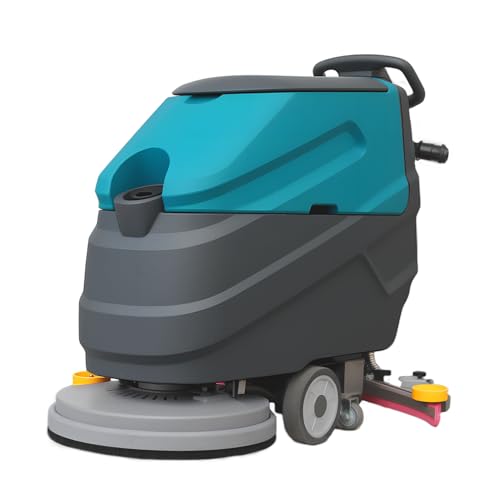
KARHDIR Walk-behind Floor Scrubber Machine, 22" Cleaning Width, 31.5" Suction Width, 18.5-gal Sewage Tank, 15.9-Clear water tank, 32000 Sqft/h, Complete Set of Parts
Efficient Cleaning Coverage: 22" cleaning width and 31.5" squeegee suction width for comprehensive floor coverage in a single…
As an affiliate, we earn on qualifying purchases.
As an affiliate, we earn on qualifying purchases.
Frequently Asked Questions
How Long Is the Typical Lifespan of a Floor Scrubber?
A floor scrubber’s lifespan typically spans 5 to 10 years, depending on usage and maintenance. Think of it as a reliable workhorse that keeps your cleaning efficiency excellent while minimizing environmental impact. Regular upkeep guarantees it runs smoothly, extending its life. When properly cared for, your scrubber continues to deliver peak performance, making it a smart investment that pays off through cleaner floors and eco-friendly operation.
What Maintenance Is Required for Walk-Behind Versus Ride-On Models?
You’ll find that walk-behind models generally require more frequent maintenance schedules, like battery checks and brush replacements, but parts are usually readily available. Ride-on models, on the other hand, need regular inspections of hydraulic systems and motor components, with spare parts often more specialized and possibly pricier. Both types benefit from routine cleaning and lubrication to guarantee peak performance and longevity, so stay on top of their maintenance to avoid costly repairs.
Are There Specific Industries That Prefer One Type Over the Other?
You’ll find hospitals often favor ride-on models for hospital sanitation because they cover large areas efficiently, saving time and labor costs. On the other hand, industrial cleaning industries prefer walk-behind scrubbers for their maneuverability in tight spaces and detailed work. It’s a case of apples and oranges, as each industry’s needs dictate the best choice, helping you keep your cleaning operations running smoothly and cost-effectively.
How Do Battery Life and Charging Times Compare?
Battery technology greatly influences battery life and charging times. You’ll find that newer batteries, like lithium-ion, offer longer runtime and quicker charging, boosting your efficiency. Charging efficiency is improved with fast chargers and smart systems that optimize power use, reducing downtime. If you want less interruption during cleaning shifts, choose equipment with advanced battery tech and efficient charging options, ensuring you maximize operational uptime and reduce labor costs.
What Safety Features Should I Consider When Choosing a Floor Scrubber?
Think of safety features as your floor scrubber’s shield in a battle. You should prioritize safety protocols like non-slip grips, clear warning lights, and intuitive controls. Emergency features such as an emergency stop button, alarms, and automatic shut-offs are crucial, too. These elements protect your team, prevent accidents, and guarantee smooth operation. Remember, a safe workspace is a productive one, turning safety into your best line of defense.

Battery Powered Ride-On Commercial Floor Scrubber Machine, 22" Brush, 31.5" Squeegee Width, 19 gal Solution Tank, 20 gal Recovery Tank, 5 hr Use 7 hr Charge, 200 RPM, 48,400 Sqft/H, Batteries Included
22” Cleaning Width for Maximum Coverage – The wide scrubbing path ensures efficient cleaning, covering large areas in…
As an affiliate, we earn on qualifying purchases.
As an affiliate, we earn on qualifying purchases.
Conclusion
Choosing between a walk-behind and ride-on floor scrubber is like selecting the right brush to paint a masterpiece—each stroke impacts the final picture. Your choice shapes the canvas of your labor costs, efficiency, and cleanliness. Think of your decision as planting a seed; a careful choice nurtures growth, saving resources and time. Ultimately, your floor scrubber becomes a symbol of your commitment to a cleaner, more cost-effective future—where every sweep reflects smart business decisions.
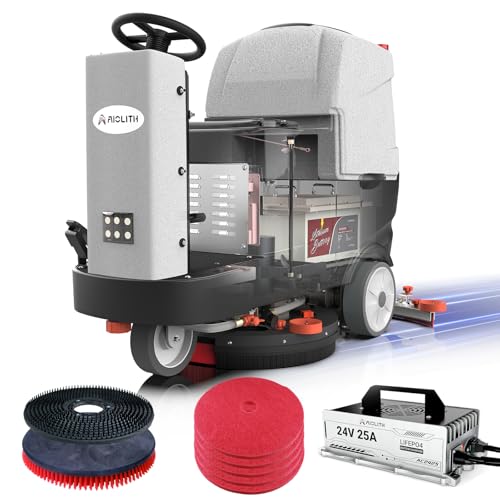
AIOLITH Micro Ride-On Floor Scrubber Dryer Kit, 22" Clean, 25 Gal, up to 55,000 ft²/h, Lithium Battery, Fast Charge, All Parts, Commercial Floor Cleaning for Daily Maintenance in Airport, Mall, School
Compact & Maneuverable: The Micro ride-on floor scrubber features a 22-inch cleaning path and a 48-inch turning radius,…
As an affiliate, we earn on qualifying purchases.
As an affiliate, we earn on qualifying purchases.

Battery Powered Walk Behind Floor and Carpet Scrubber Buffer Polisher Machine, 16" Brush, 21.5" Squeegee Width, 6.5 gal Tank, Brush Speed 200 RPM, Includes a Hard Brush Soft Brush and 3 Scouring pads
Three Scouring Pads Included: The floor buffer comes with three distinct scouring pads designed for various levels of…
As an affiliate, we earn on qualifying purchases.
As an affiliate, we earn on qualifying purchases.