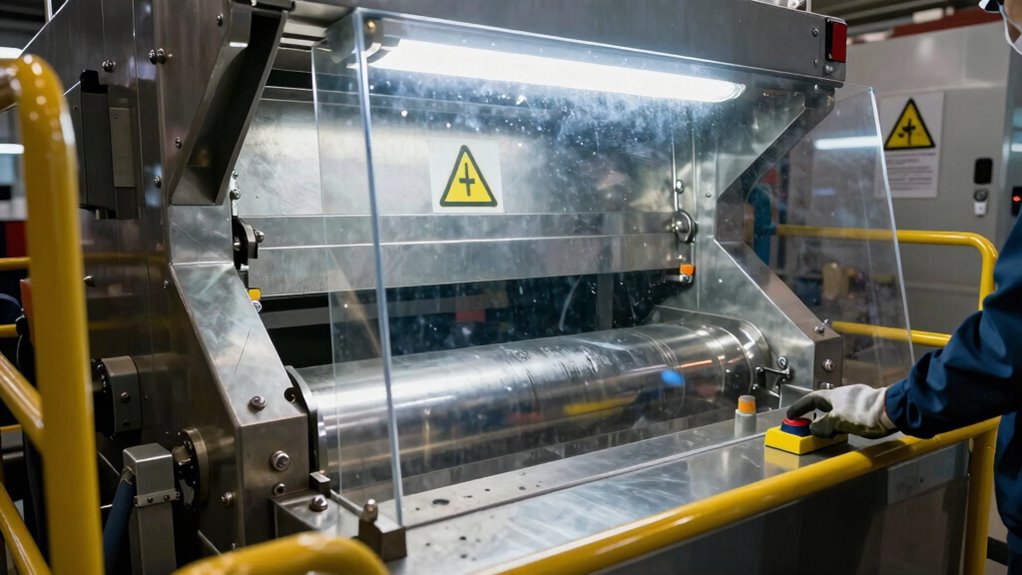

To prevent horrible accidents with your trash compactor, always unplug it before maintenance and never force the door open when it’s running or pressurized. Regularly inspect safety features like auto-reverse and keep safety hinges clear. Avoid overloading and never leave the unit unattended during use. Make sure all household members understand proper operation and safety protocols. Following these essential steps helps protect you and your family—keep going to discover more vital safety tips.
Key Takeaways
- Always unplug the compactor before performing maintenance or repairs to prevent electrical shocks and injuries.
- Keep the door securely closed during operation and never force it open to avoid mechanical damage or harm.
- Regularly inspect safety features like auto-reverse and manual emergency shutoff to ensure proper functioning.
- Educate all household members about safe usage practices and keep children and pets away during operation.
- Have a fire extinguisher nearby and know how to use it in case of electrical or fire hazards.
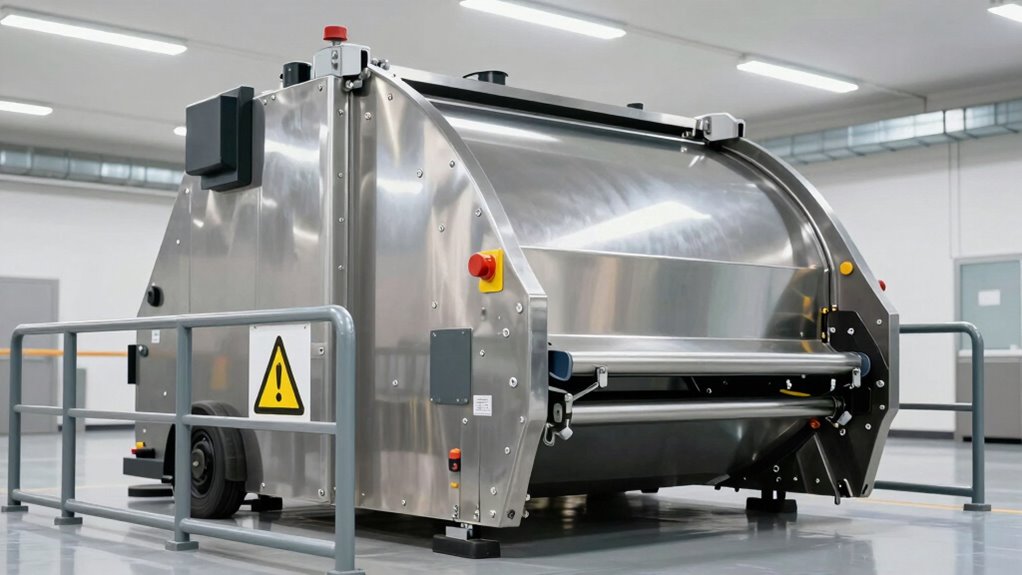
Are trash compactors safe to use in your home? Many people wonder about the risks involved with these handy appliances, but with proper safety measures, they can be used confidently. The key to safe operation starts with understanding emergency procedures and adhering to regular maintenance tips. Knowing what to do during an emergency can prevent accidents from escalating, while routine upkeep keeps the compactor functioning smoothly and safely.
First, familiarize yourself with the emergency procedures. Always unplug the compactor before performing any repairs or maintenance. If the compactor malfunctions or gets jammed, disconnect it immediately to avoid injury. Keep a clear, accessible manual nearby that details how to turn off the appliance quickly. In case of a fire or electrical issue, have a fire extinguisher rated for electrical fires within reach, and know how to use it. Never attempt to force open the compactor door while it’s running or under pressure, as this can cause mechanical damage or injury. Remember, safety hinges on quick, deliberate actions—if something seems off, turn off the power and seek professional help.
Maintaining your trash compactor is equally important for safety. Regular maintenance tips include inspecting for loose or frayed electrical cords and ensuring the door seal is intact to prevent leaks or jams. Clean the interior regularly to remove debris that could cause jams or unpleasant odors, which might lead to unsafe handling. Lubricate moving parts, such as hinges and the ram, according to the manufacturer’s instructions, to prevent unnecessary strain and mechanical failure. Don’t forget to check the safety features, like the auto-reverse mechanism, to ensure they’re functioning correctly. Proper maintenance not only prolongs the life of your compactor but also minimizes the risk of accidents caused by mechanical failure or improper use.
Additionally, always use the appliance as intended, avoiding overloading or putting non-compactor items inside. Keep children and pets away from the unit when in use, and never leave the compactor unattended while operating. Educate everyone in your household about safe operation protocols, emphasizing the importance of following instructions and understanding emergency procedures. Regularly reviewing safety guidelines ensures everyone remains aware of best practices, reducing potential hazards.
Frequently Asked Questions
How Often Should I Inspect My Trash Compactor for Safety Issues?
You should inspect your trash compactor weekly for safety issues. Follow a regular inspection schedule and use safety checklists to guarantee all parts are functioning properly. Look for loose or damaged components, and make sure safety features like the emergency stop are working. Consistent inspections help prevent accidents, so stay vigilant and address any issues immediately to keep your workspace safe and efficient.
Are There Specific Safety Certifications to Look for When Purchasing?
When buying a trash compactor, you should look for safety certification standards like UL or ETL marks, which indicate compliance with safety regulations. These compliance labels guarantee the unit meets industry safety requirements, reducing accident risks. Always verify that the product displays these labels before purchase. This way, you can confidently select a compactor designed with safety in mind, helping prevent potential hazards during use.
What Should I Do if the Compactor Makes Unusual Noises?
If your compactor makes unusual noises, stop using it immediately and perform compactor troubleshooting. Listen carefully to diagnose the noise, such as grinding or banging, which could indicate a mechanical issue. Check for jammed objects or debris causing the problem. If you can’t identify or fix the issue safely, consult the user manual or contact a professional technician. Avoid forcing the machine, as ongoing noise could lead to safety hazards or further damage.
Can Children Operate or Access the Trash Compactor Safely?
Children should never operate or access the trash compactor without adult supervision. To guarantee child safety, you must set clear access restrictions, such as keeping the compactor’s door locked or out of their reach. Educate kids about the dangers and explain why they shouldn’t play near it. Always supervise children nearby, and only allow them near the appliance when you’re present to prevent accidents.
What Is the Recommended Safety Gear for Maintenance and Cleaning?
You should always wear personal protective equipment (PPE) like gloves, safety goggles, and steel-toed boots during maintenance and cleaning. Follow maintenance safety protocols to prevent injuries, such as disconnecting power before starting work and avoiding loose clothing. Using the right PPE helps protect you from sharp edges, debris, or hazardous materials, ensuring your safety while maintaining or cleaning the trash compactor. Always prioritize safety to prevent accidents.
Conclusion
By following these safety steps, you’ll keep your trash compactor a secure tool rather than a hidden danger. Imagine the quiet hum turning into a sudden crunch, then a dangerous accident lurking behind the closed door. But with vigilance, you can prevent those nightmare scenarios—keeping your home safe and your mind at ease. Stay alert, respect the machine, and let safety be your guiding force in every use.