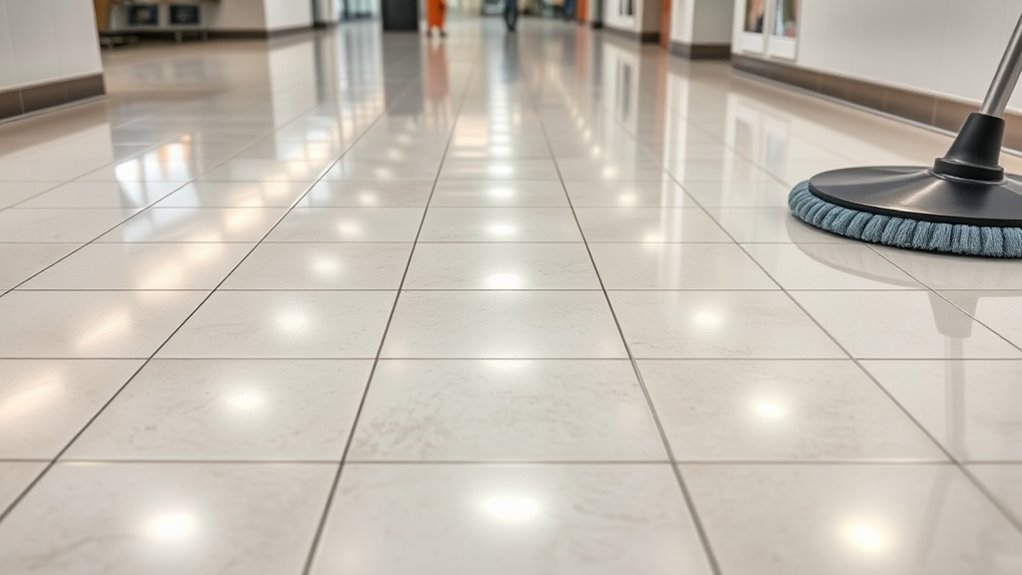
Maintaining tile and grout in your commercial space is essential for a professional look, safety, and hygiene. Regular sweeping, damp mopping with pH-neutral cleaners, and deep cleaning grout lines help prevent dirt buildup and mold. Inspecting and sealing grout periodically extends its life and keeps your floors looking fresh. Consistent upkeep and quick repairs protect against costly damages over time. Keep going to discover more effective tips for long-term tile and grout care.
Key Takeaways
- Implement daily sweeping and damp mopping with pH-neutral cleaners to remove surface dirt and prevent buildup.
- Conduct weekly deep cleaning of grout lines using specialized brushes and stain-breaking solutions.
- Regularly inspect tiles and grout for damage, cracks, or discoloration, and repair or replace as needed.
- Seal grout lines periodically to prevent moisture intrusion, staining, and ease future cleaning efforts.
- Establish consistent maintenance routines and avoid skipping regular cleaning to prolong tile and grout lifespan.
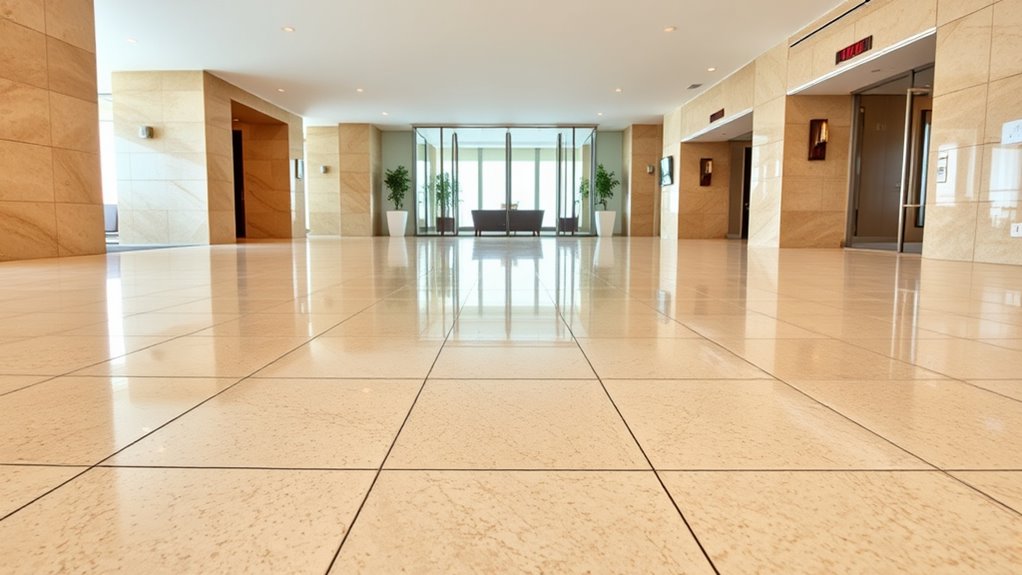
Maintaining clean and durable tile and grout is vital for the professional appearance and safety of any commercial space. When you prioritize proper maintenance routines and establish consistent cleaning schedules, you guarantee that your flooring remains attractive and safe for both employees and customers. Regular upkeep prevents dirt, grime, and bacteria from building up, which can compromise hygiene and cause deterioration over time. It’s essential to develop a tailored plan that fits the specific needs of your space, considering factors like foot traffic, type of tile, and environmental conditions.
Proper tile and grout maintenance ensures a professional, safe, and attractive commercial environment.
Your maintenance routines should include daily, weekly, and monthly tasks. Daily cleaning involves sweeping or vacuuming to remove surface debris, which helps prevent scratches and staining. Damp mopping using a mild, pH-neutral cleaner at least once a day will lift dirt embedded in the grout lines. This consistent approach keeps the tiles looking fresh and reduces the likelihood of mold or mildew growth in damp areas. For high-traffic zones, you might opt for more frequent cleaning to stay ahead of buildup and maintain safety standards.
Weekly or bi-weekly deep cleaning is equally important. This involves scrubbing grout lines with specialized brushes and cleaning solutions formulated to break down stubborn stains and restore the grout’s original color. Using appropriate cleaning tools prevents damage to tiles and ensures a thorough clean. If your space handles heavy foot traffic or experiences spills, you might consider more frequent deep cleans, or even implementing commercial-grade cleaning equipment to improve efficiency and results.
Monthly maintenance routines should include inspecting your tile and grout for signs of wear, damage, or discoloration. Promptly addressing issues like cracks, chips, or loose tiles prevents further damage and costly repairs. Consider periodic sealing of grout lines, especially in bathrooms and kitchens, to create a protective barrier against moisture and staining. Sealing extends the lifespan of your grout and simplifies ongoing cleaning routines by making it easier to wipe away dirt and spills. Additionally, exploring different tuning options such as engine remapping or suspension upgrades can help improve the overall performance and longevity of your vehicles, which indirectly supports your business if you operate a fleet or automotive service.
Incorporating these maintenance routines into your cleaning schedules guarantees your commercial flooring stays in top shape. Consistency is key—skipping regular upkeep can lead to dirt accumulation, mold growth, and damaged grout, all of which detract from your space’s professional look and safety. By establishing clear routines and sticking to them, you not only enhance the appearance of your floors but also prolong their lifespan, saving you money in the long run. Proper tile and grout care isn’t a one-time effort; it’s an ongoing process that pays off through a cleaner, safer, and more inviting environment.
Frequently Asked Questions
How Often Should Commercial Tile and Grout Be Professionally Cleaned?
You should schedule professional cleaning for your commercial tile and grout at least every 6 to 12 months, depending on foot traffic and usage. Regular cleaning frequency keeps your surfaces looking their best and prevents buildup. Incorporate maintenance scheduling into your routine to guarantee consistent care. This approach prolongs the lifespan of your tile and grout, maintains a professional appearance, and minimizes long-term repair costs.
What Are the Best Cleaning Products for Commercial Tile and Grout?
You should choose cleaning products that are both effective and safe. Eco-friendly solutions are your best option because they protect the environment and your staff’s health. For tougher stains, industrial cleaning agents work well, but always verify they’re compatible with your tile and grout. Test a small area first, and follow manufacturer instructions carefully. Combining eco-friendly products with industrial agents when needed ensures thorough cleaning without compromising safety.
Can Commercial Tile and Grout Be Restored After Severe Staining?
Yes, you can restore commercial tile and grout after severe staining. Focus on effective stain removal techniques, such as specialized cleaning agents or professional deep cleaning methods. These approaches help break down stubborn stains and improve surface appearance. Once stains are removed, surface restoration techniques like polishing or sealing can markedly enhance the look and longevity of your tiles and grout, giving them a fresh, clean appearance.
How Can I Prevent Mold and Mildew in Commercial Tile Grout?
If you want to keep mold and mildew at bay, act now. Start with proper ventilation to prevent excess moisture buildup, and regularly clean grout lines with a mold prevention solution. Mildew control hinges on keeping surfaces dry and disinfected. Don’t forget to seal grout to block moisture penetration. Consistent maintenance is your best defense—stay vigilant, and you’ll safeguard your commercial space from these unwelcome intruders.
What Are the Costs Associated With Professional Commercial Tile and Grout Cleaning?
You’ll find that professional commercial tile and grout cleaning costs vary based on pricing factors like the size of the area, the level of dirt, and the type of service package you choose. Typically, service packages range from basic cleaning to deep restoration, affecting overall costs. Expect to pay anywhere from $0.50 to $3 per square foot, with additional charges for special treatments or heavily soiled surfaces.
Conclusion
Keeping your tile and grout sparkling is like tending a lush garden—you must nurture it regularly to keep it thriving. With consistent care, your floors will shine like a beacon, guiding visitors and impressing clients. Think of your cleaning routine as a well-choreographed dance, where each step preserves beauty and durability. When you invest in proper maintenance, your commercial space transforms into a radiant showcase, inviting admiration and making every step a affirmation to your dedication.