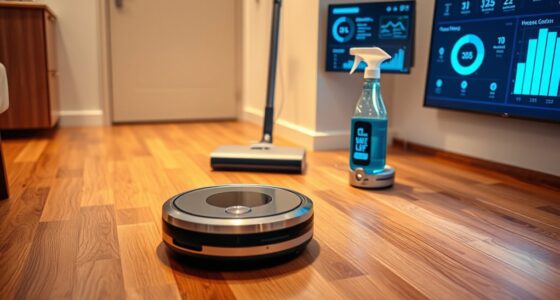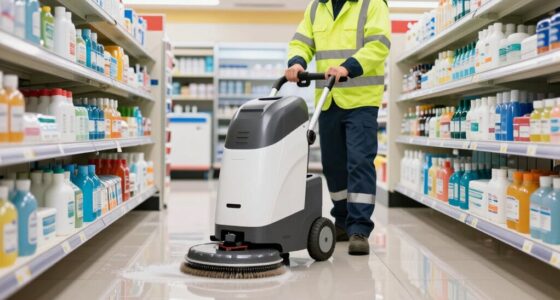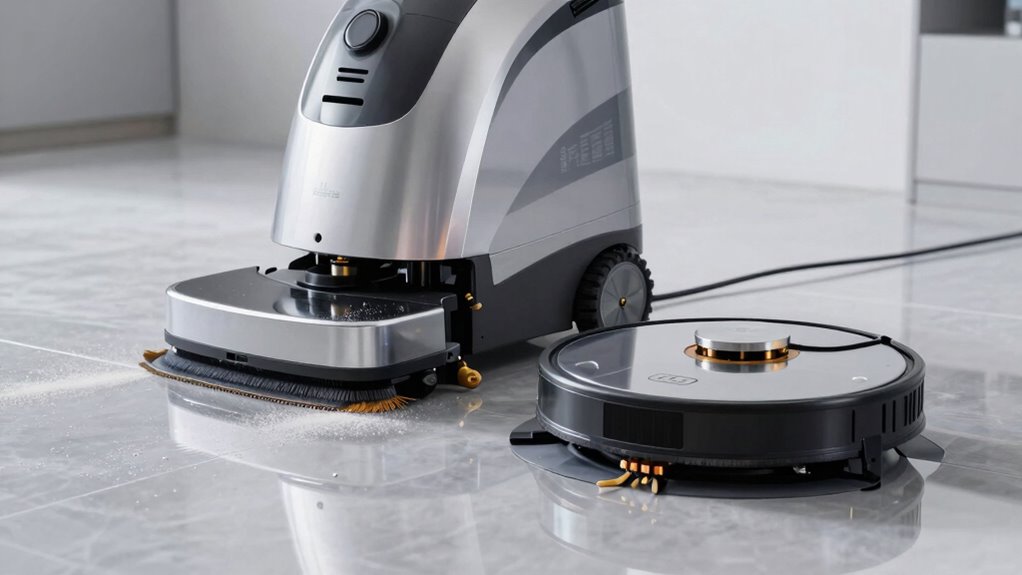
Using both sweepers and scrubbers together lets you clean large or high-traffic areas more efficiently. Sweepers quickly remove loose debris and dust, saving time, while scrubbers handle stubborn stains and deep cleaning, ensuring surfaces are truly sanitized. Combining these machines improves productivity and reduces downtime from maintenance. If you keep exploring, you’ll discover how pairing these tools can optimize your cleaning process and save you effort in the long run.
Key Takeaways
- Using both machines optimizes cleaning by combining quick debris removal and deep surface cleaning.
- Sweepers excel in large, lightly soiled areas, while scrubbers handle stubborn stains and detailed cleaning.
- Dual machine use increases overall efficiency but may raise maintenance and operational costs.
- Combining sweepers and scrubbers reduces downtime and enhances cleaning quality in high-traffic environments.
- Proper understanding of each machine’s strengths ensures effective, cost-efficient cleaning strategies.
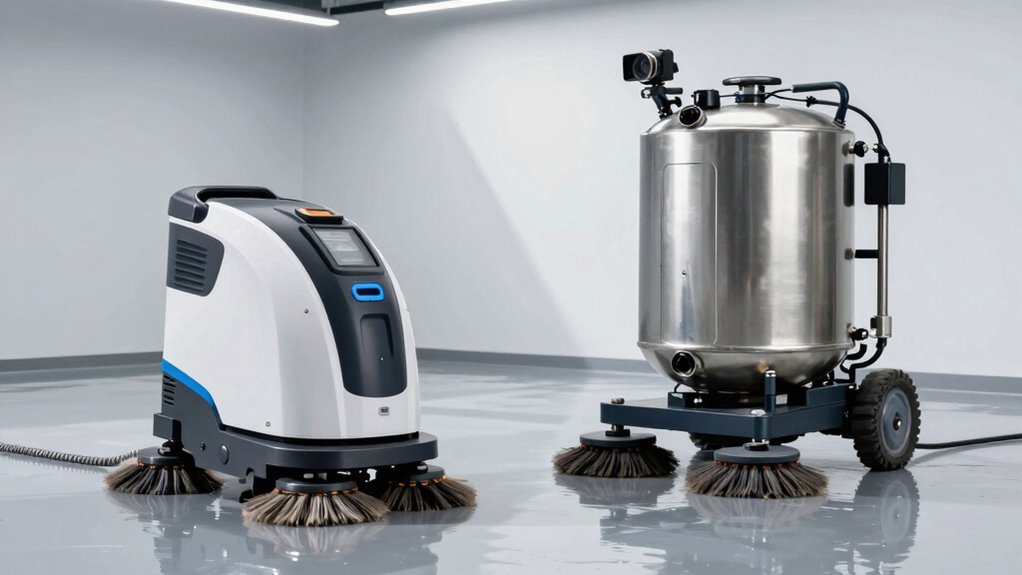
The debate over whether sweepers or scrubbers are more effective in cleaning large surfaces has gained momentum among facility managers and cleaning professionals. As you evaluate your options, it’s essential to contemplate how automation efficiency impacts overall cleaning productivity. Sweepers excel at quickly removing loose debris, dust, and light dirt from expansive areas, making them ideal for routine maintenance. They operate swiftly, often with minimal human oversight, allowing you to cover large spaces in less time. However, their automation efficiency can be limited when it comes to stubborn stains or sticky residues, which scrubbers are better equipped to handle. Scrubbers combine washing, scrubbing, and drying functions, providing a deeper clean that sweepers simply can’t achieve. This makes them invaluable in environments where cleanliness standards are high, or where floors require more than just surface-level debris removal. Additionally, advancements in cleaning technology continue to enhance the effectiveness of both machines, making the choice even more nuanced. Proper understanding of machine capabilities can help determine which equipment best suits your specific cleaning needs.
While pondering these benefits, you also need to weigh maintenance challenges associated with each machine type. Sweepers are generally simpler to maintain; they have fewer moving parts and require less frequent repairs, which can reduce downtime and operational costs. On the other hand, scrubbers involve more complex mechanisms—pumps, brushes, and tanks—that demand regular maintenance to keep them functioning at their best. If neglected, these components can lead to breakdowns, increased repair costs, and operational delays. Considering equipment durability can help in assessing long-term reliability, especially in high-use environments. You must factor in your team’s capacity for routine maintenance when choosing between the two, especially if you’re managing large fleets. Proper maintenance not only prolongs equipment lifespan but also ensures consistent cleaning performance, which is critical in high-traffic or hygiene-sensitive environments. The Automation efficiency of each machine can greatly influence overall operational success, especially in facilities with demanding cleaning schedules.

Emotor Walk Behind 15" Brush Floor Scrubber Machine, Battery Powered Hand-Push Commercial Industrial Floor Scrubber Machine 34.65''X22.83''X26.77'' (Blue)
👍[Intensive, Deep Scrubbing] Equipped with a 15 inch brush, the floor scrubber machine concentrated cleaning force to lift…
As an affiliate, we earn on qualifying purchases.
As an affiliate, we earn on qualifying purchases.
Frequently Asked Questions
How Do Sweeper-Scrubber Machines Impact Indoor Air Quality?
Sweeper-scrubber machines improve indoor air quality by reducing airborne pollutants and controlling dust containment. They efficiently pick up dust, dirt, and debris, preventing particles from becoming airborne and polluting the air you breathe. By maintaining a cleaner environment, they minimize health risks associated with dust and allergens. Regular use guarantees better air quality, making indoor spaces healthier and more comfortable for everyone.
What Are the Long-Term Maintenance Costs of Dual-Machine Systems?
You’ll likely face higher long-term maintenance costs with dual-machine systems due to cost escalation and increased mechanical complexity. As these systems have more parts and advanced features, they require regular upkeep, repairs, and potential replacements, which can add up over time. The complexity makes troubleshooting more challenging, often leading to longer downtime and higher labor costs, ultimately impacting your budget and operational efficiency.
Can Small Businesses Afford to Implement Double-Machine Cleaning?
Implementing double-machine cleaning is like juggling two balls at once—you need to weigh the benefits carefully. Small businesses can afford it if they conduct a thorough cost analysis, considering long-term savings and efficiency gains. However, training requirements might be higher, requiring staff to learn two machines. If the investment aligns with your budget and operational goals, it could be a worthwhile upgrade that enhances cleanliness and productivity.
Are There Environmental Benefits to Using Two Machines Simultaneously?
Using two machines simultaneously offers environmental benefits, such as reducing water and chemical usage, making cleaning more eco-friendly. It also minimizes noise pollution since the cleaning process is quicker and more efficient, allowing you to operate during less disruptive hours. By choosing eco-friendly alternatives in your cleaning equipment, you help protect the environment while maintaining a cleaner space. This approach promotes sustainability and creates a healthier environment for everyone.
How Do Operators’ Skill Levels Affect Machine Efficiency?
Imagine a well-oiled machine—your efficiency hinges on your skill. If your skill level varies, so does the machine’s performance, leading to inconsistent results. Operator fatigue can cause lapses, reducing effectiveness. Skilled operators understand ideal techniques, maintaining consistent efficiency. Conversely, less experienced ones might struggle, risking fatigue and errors. Your expertise directly influences how well the machine performs, making skill development essential for maximizing cleaning outcomes.

Battery Powered Walk Behind Mini Automatic Floor Scrubber Machine – Compact & Portable, 15” Cleaning Width, 90-Minute Runtime, 170 RPM – Ideal for Small Commercial Spaces, Offices, Retail & More
Compact & Efficient Cleaning – Designed for small commercial spaces, this mini automatic floor scrubber features a 15-inch…
As an affiliate, we earn on qualifying purchases.
As an affiliate, we earn on qualifying purchases.
Conclusion
In the end, choosing between a sweeper and a scrubber depends on your specific cleaning needs. Imagine a busy warehouse where a scrubber quickly tackles stubborn grime, while a sweeper efficiently clears debris during peak hours. Combining both machines might be the best approach, saving time and ensuring thorough cleanliness. So, consider your environment and priorities—you might find that using both machines together truly beats relying on just one.

VEVOR Walk-Behind Hand Push Floor Sweeper, 25.6" Sweeping Width Floor Sweeper Manual Non-Electric, 5-Gallon Waste Container, Angle & Height Adjustable Folding Handle for Walkway, Yard, Garage, Patio
Sweeping Faster and Smarter: VEVOR walk-behind hand push floor sweeper adopts human-powered sweeping mechanism, breaking free from the…
As an affiliate, we earn on qualifying purchases.
As an affiliate, we earn on qualifying purchases.
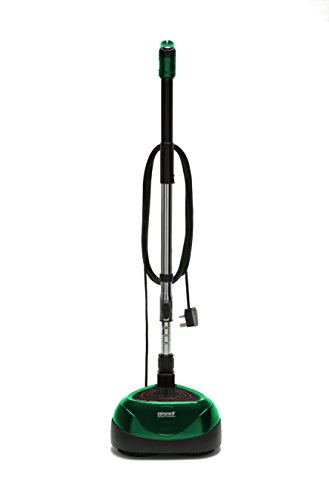
Bissell Commercial BigGreen BGFS650 Hercules Scrub and Clean Floor Machine, Green
Brush Speed (Rpm): 2200 Rpm
As an affiliate, we earn on qualifying purchases.
As an affiliate, we earn on qualifying purchases.