
By establishing regular cleaning routines that target high-touch surfaces like doorknobs and switches, and using EPA-approved disinfectants, you can greatly cut down germs in your office. Enhancing ventilation, investing in quality supplies, and encouraging good personal hygiene also help prevent illness spread. Proper training for your cleaning staff ensures effective sanitation. Implementing these strategies creates a healthier workspace, reducing sick days. Keep exploring to discover practical steps that will make your office safer and healthier.
Key Takeaways
- Regular disinfecting of high-touch surfaces minimizes germ spread and reduces employee illness.
- Using EPA-approved disinfectants with proper contact time enhances sanitation effectiveness.
- Improving air quality through dusting, ventilation, and air purification supports healthier indoor environments.
- Promoting personal hygiene practices like handwashing and sanitizer use complements cleaning efforts.
- Training staff on proper cleaning protocols ensures consistent, thorough sanitation to lower sick days.

Cleaning isn’t just about making your space look tidy—it directly impacts your health. When you prioritize effective cleaning practices in your office, you can considerably improve the air quality and reduce the spread of germs. Poor air quality can lead to respiratory issues, allergies, and overall discomfort, making it harder for your team to focus and stay productive. By adopting proper sanitation protocols, you create a healthier environment that minimizes airborne pollutants, dust, and allergens. Regularly dusting surfaces, using HEPA filters in air purifiers, and ensuring good ventilation are simple yet powerful steps to improve indoor air quality. When these practices are part of your routine, you’re not only making the space look cleaner—you’re actively supporting your employees’ health.
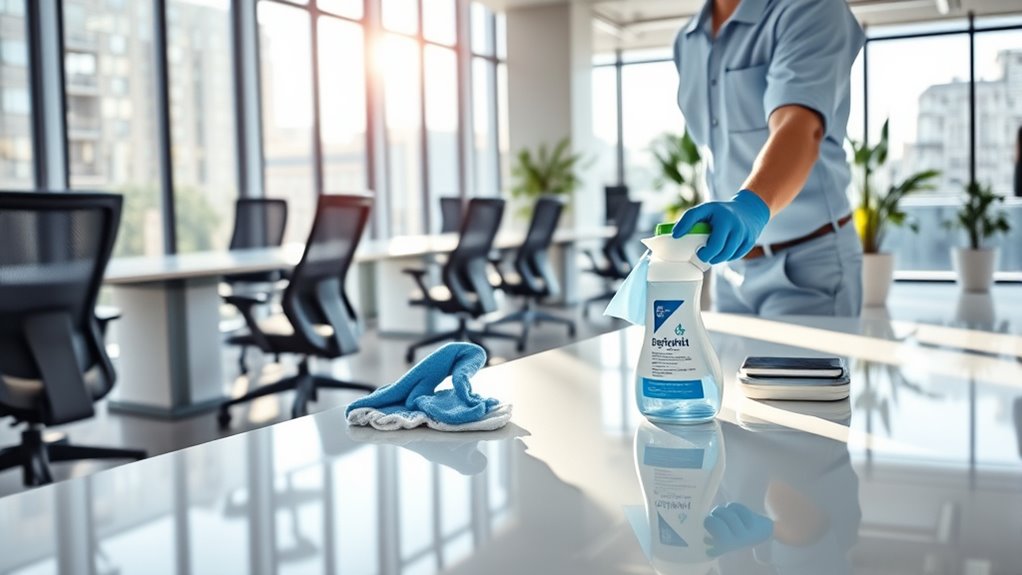
Implementing robust sanitation protocols is essential in preventing the spread of illnesses. This means more than just wiping down surfaces; it involves a systematic approach to disinfect high-touch areas like doorknobs, light switches, keyboards, and shared equipment. Using EPA-approved disinfectants correctly ensures germs are effectively eliminated, reducing the likelihood of sicknesses spreading among staff. You should also establish a cleaning schedule that emphasizes frequency and thoroughness, especially during flu season or outbreaks. Proper training for cleaning staff ensures they understand the importance of each step, from proper dilution to effective contact time, so that disinfectants do their job. When sanitation protocols are clear and consistently followed, you create a barrier against germs, cutting down the chances of employees getting sick and taking days off. Incorporating proper cleaning supplies**** and equipment can further enhance the effectiveness of your sanitation efforts.
Incorporating these practices into your daily routine doesn’t require a major overhaul—small, deliberate actions make a big difference. Encourage your team to maintain personal hygiene, like handwashing and using hand sanitizers, alongside professional cleaning efforts. Investing in quality cleaning supplies and equipment also pays off, as they tend to be more effective and safer for everyone in the office. Remember, a clean environment isn’t just about appearances; it’s about proactively safeguarding everyone’s health. When your office maintains high standards for air quality and rigorously follows sanitation protocols, you foster a space where people feel comfortable, healthy, and ready to perform at their best. Ultimately, cleaner workplaces lead to fewer sick days, higher morale, and greater productivity, making health-conscious cleaning a smart choice for your business.
Frequently Asked Questions
How Often Should Office High-Touch Surfaces Be Disinfected?
You should disinfect high-touch surfaces at least daily, especially in busy offices. Follow high touch surface protocols by increasing disinfection frequency during flu season or outbreaks. Regularly cleaning items like doorknobs, keyboards, and light switches helps prevent germs from spreading. If multiple people use these surfaces, consider disinfecting more often, even multiple times a day, to maintain a healthier workspace and reduce the risk of illness.
What Cleaning Products Are Safest for Reducing Indoor Allergens?
Imagine you’re an artist choosing the purest paint for your masterpiece. When selecting cleaning products, opt for eco friendly cleaning and allergen reducing products. These are like gentle brushes that erase dust and pet dander without harmful chemicals, creating a healthier indoor environment. By choosing these safer options, you protect yourself and your coworkers, reducing allergens and promoting a space where everyone can breathe easier and thrive.
How Can Offices Improve Ventilation Alongside Cleaning Practices?
You can improve air quality by upgrading your ventilation systems to guarantee proper airflow and filtration. Regularly maintain and replace filters, and consider adding air purifiers with HEPA filters for extra protection. Opening windows when possible also boosts ventilation. These steps work alongside cleaning practices to reduce airborne contaminants, allergens, and germs, creating a healthier office environment that minimizes sick days and boosts employee well-being.
Are There Specific Cleaning Techniques for Electronic Devices?
To clean electronic devices effectively, you should use microfiber cloths, which trap dust and minimize scratches. Avoid harsh chemicals; instead, opt for electrostatic sprays designed for electronics, as they disinfect without damaging sensitive components. Always power down devices before cleaning and avoid excessive moisture. This approach keeps your devices sanitized and functioning properly, reducing the risk of germs spreading through shared equipment in your office.
What Training Do Cleaning Staff Need to Ensure Health Standards?
Your cleaning staff needs top-tier training to meet health standards—it’s the backbone of a safe workspace. You should guarantee they obtain staff certification and master cleaning protocols, which cover proper disinfecting techniques, handling electronic devices, and recognizing high-touch areas. This training acts like a shield, drastically reducing germs and sick days. By investing in their education, you’re empowering your team to create a healthier, more productive environment.
Conclusion
By adopting better cleaning practices, you can turn your office into a fortress against germs, keeping your team healthier and happier. Think of it as giving your workspace a fresh coat of armor, ready to fend off illness. When you prioritize cleanliness, you’re not just tidying up — you’re building a safer, more productive environment where sick days become fewer and your team can thrive. Clean for health, and watch your office bloom!