
To create an effective cleaning scorecard for QA inspections, focus on clear, detailed tasks that guide staff through each step of the process, like wiping surfaces and disinfecting equipment. Keep the scorecard simple but thorough, emphasizing critical elements and specific criteria. Regularly update the checklist to reflect process changes and train your team on proper usage. Continuing will help you develop a reliable tool that improves cleaning consistency and standards.
Key Takeaways
- Focus on clear, detailed tasks to guide cleaning processes and ensure consistency during inspections.
- Include specific criteria for critical cleaning elements, such as disinfecting surfaces and equipment.
- Regularly review and update the scorecard to reflect process changes and safety standards.
- Train staff thoroughly on checklist use and the importance of each inspection step.
- Use the scorecard to identify recurring issues, areas for improvement, and ensure compliance.

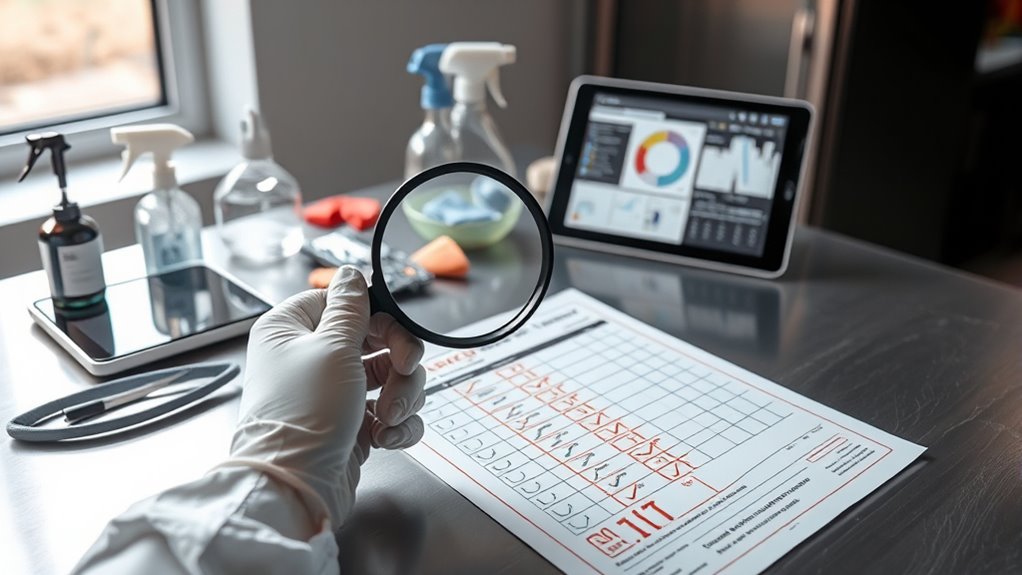
Have you ever wondered how companies guarantee their products meet quality standards? The answer often lies in the meticulous process of QA inspections, which include creating effective cleaning scorecards. These scorecards serve as essential tools to ensure cleaning protocols are consistently followed and maintain the highest standards of hygiene and safety. When developing a cleaning scorecard, you need to focus on clear, detailed inspection checklists that guide your team through each step of the cleaning process. These checklists are your roadmap, helping to verify that every surface, equipment, and tool is properly cleaned and sanitized. They simplify the inspection process by breaking it down into specific tasks, such as wiping down surfaces, cleaning machinery, and disinfecting high-touch areas. Regular use of quality control measures like checklists further enhances the consistency and effectiveness of your cleaning routines.
Using inspection checklists makes your QA inspections more consistent and thorough. Instead of relying on memory or subjective judgment, these checklists provide a standardized method for evaluating cleaning performance. Each item on the list is a checkpoint that must be verified, which minimizes the chances of missed spots or overlooked details. This consistency is crucial because it ensures every cleaning cycle adheres to established protocols, reducing contamination risks and enhancing product quality. When you incorporate these checklists into your routine, you’re also better equipped to identify recurring issues or areas where cleaning protocols may need refinement. This ongoing feedback loop helps you improve your cleaning procedures over time, leading to better compliance and safer products.
The key to creating an effective cleaning scorecard is to keep it simple yet thorough. Focus on the critical elements of your cleaning protocols, and include specific criteria for each task. For example, instead of a vague item like “clean equipment,” specify “wipe down conveyor belts with approved disinfectant and check for residue.” This level of detail ensures your team knows exactly what’s expected, and inspections become straightforward. Regularly review and update your checklists to adapt to changes in processes, new equipment, or updated safety standards. It’s also important to train your staff thoroughly on how to use these checklists, emphasizing the importance of each step to ensure compliance.
Frequently Asked Questions
How Often Should Cleaning Scorecards Be Reviewed and Updated?
You should review and update your cleaning scorecards regularly, ideally after each inspection or at least monthly, to guarantee accuracy. This inspection frequency helps you catch any issues early and keeps standards high. Consistent scorecard updates allow you to track progress over time, identify patterns, and implement improvements effectively. By maintaining a routine, you ensure your cleaning processes stay effective and aligned with your quality expectations.
What Tools Are Recommended for Tracking QA Inspection Results?
You should use digital dashboards and mobile apps to track QA inspection results effectively. Digital dashboards provide real-time data visibility, making it easy to monitor trends and identify issues quickly. Mobile apps allow you to record inspections on the go, ensuring data accuracy and timeliness. Together, these tools streamline your process, enhance communication, and help maintain high cleaning standards consistently.
How Do I Train Staff to Meet Cleaning Standards Effectively?
You should focus on staff motivation and training consistency to guarantee they meet cleaning standards effectively. Start by clearly demonstrating expectations and providing hands-on training, reinforcing proper techniques regularly. Recognize and reward good performance to boost motivation. Consistent training sessions help reinforce standards, and ongoing feedback keeps staff aligned with quality goals. When staff feels valued and well-trained, they’re more likely to maintain high cleaning standards consistently.
What Are Common Challenges in Implementing a Scorecard System?
You might face challenges like maintaining employee engagement and ensuring data accuracy. If staff don’t see the value or feel involved, their motivation drops, making it hard to implement the scorecard effectively. Additionally, inaccurate data entry or inconsistent scoring can skew results, undermining trust in the system. To overcome these issues, involve employees in the process and provide clear training on data collection and scoring methods.
How Can I Motivate Staff to Improve Cleaning Performance?
You can motivate staff to improve cleaning performance by recognizing their efforts through staff recognition programs and offering performance incentives. Celebrate achievements publicly to boost morale and encourage consistent effort. Implement rewards like bonuses or gift cards for top performers, and provide constructive feedback to help them improve. When staff see their hard work appreciated and rewarded, they’re more likely to stay motivated and maintain high cleaning standards.
Conclusion
By implementing a cleaning scorecard, you’ll easily spot areas needing improvement and maintain high standards. It might seem time-consuming at first, but once you get into the routine, it streamlines your inspections and boosts overall cleanliness. Don’t let the fear of extra work hold you back—this tool simplifies your process and guarantees consistent quality. With small daily efforts, you’ll create a cleaner, safer environment that everyone can be proud of.