
As a modern cleaning crew member, you should wear chemical-resistant gloves, long-sleeved aprons or coveralls, and safety goggles or face shields to protect against splashes and harmful substances. Use masks or respirators to prevent inhaling fumes or dust, making sure they fit properly. Regularly inspect and maintain your PPE to guarantee it’s in good condition. Proper PPE use not only keeps you safe but also shows your commitment to a safe work environment—learn more to stay protected.

Get cleaning gear delivered free with Prime
- Fast, free delivery on millions of items
- Prime Video, Amazon Music and more included
- Member-only deals all year
Key Takeaways
- Proper PPE includes chemical-resistant gloves, long-sleeved aprons or coveralls, and well-fitting garments free of tears or damage.
- Safety goggles or face shields are essential to protect eyes and face from chemical splashes and splattering liquids.
- Respiratory masks or respirators should be used based on the chemicals and hazards present, ensuring proper fit and seal.
- Regular inspection, cleaning, and timely replacement of PPE are crucial to maintain safety and effectiveness.
- PPE use should follow strict protocols for donning, doffing, and disposal, aligned with environmental and safety regulations.
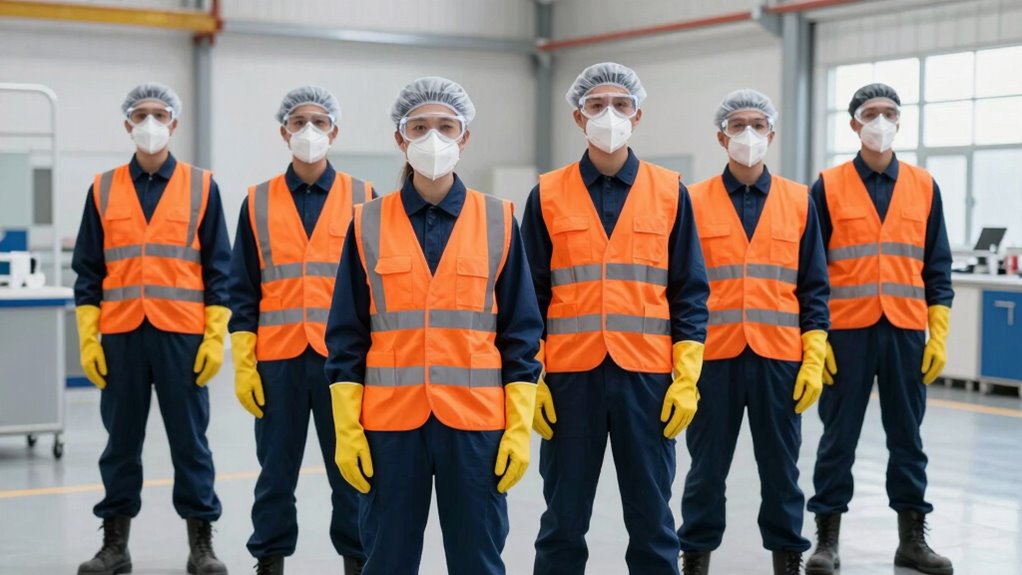
Cleaning crews must prioritize safety by wearing the proper personal protective equipment (PPE) at all times. This means understanding what protective clothing is necessary and how it aligns with safety protocols to keep you safe during every task. Proper PPE isn’t just about compliance; it’s about actively preventing injuries and exposure to hazardous substances. When you’re equipped with the right protective clothing, you create a barrier that shields your skin, eyes, and respiratory system from chemicals, contaminants, and biological agents.
Prioritize safety with proper PPE to prevent injuries and protect against hazardous substances during every cleaning task.
Your protective clothing should be appropriate for the specific cleaning environment and the substances you’ll encounter. This could include gloves made of durable, chemical-resistant materials, such as nitrile or neoprene, which prevent skin contact with harsh disinfectants or cleaning solutions. A long-sleeved, chemical-resistant apron or coveralls often forms an essential part of your safety protocols, especially when handling strong or toxic chemicals. These garments should fit well and be in good condition, with no tears or holes that could compromise your safety.
Eye and face protection are equally important, especially when spraying or working with splashing liquids. Safety goggles or face shields help prevent chemical splashes from reaching your eyes or face, which could cause serious injuries or irritation. Remember, safety protocols specify the importance of wearing protective eyewear consistently, not just when you think it’s necessary. Regularly training on PPE use ensures all crew members understand proper procedures and the importance of consistent use. Additionally, understanding the hazards associated with different chemicals can enhance safety measures and prevent accidents. Knowing about chemical hazards can also help in selecting the most effective PPE for each task, reducing risk further. Incorporating hazard communication protocols into training can further improve safety awareness among crew members.
Respiratory protection is another key component of proper PPE. Depending on the cleaning chemicals used, you might need masks or respirators to avoid inhaling fumes, dust, or biological aerosols. Fit-testing your mask ensures a proper seal, maximizing its effectiveness. Adhering to safety protocols means always selecting the right type of respiratory protection for the task at hand and using it correctly.
In addition to these core elements, guaranteeing that all PPE is properly maintained and stored is essential. Regularly inspect your protective clothing for damage, clean reusable items properly, and replace disposable gear when needed. Proper training on how to put on, take off, and dispose of PPE safely is fundamental. Safety protocols emphasize these practices because improper use can lead to contamination or injury.
Furthermore, understanding the importance of biodiversity in maintaining a healthy environment underscores the need for safe cleaning practices that minimize environmental impact. Proper disposal of cleaning chemicals and waste also helps protect local ecosystems. Ultimately, your commitment to wearing the right protective clothing and following safety protocols demonstrates your dedication to safety. It guarantees you’re protected from potential hazards and helps maintain a safe work environment for everyone on your cleaning crew. Proper PPE isn’t just a requirement—it’s an indispensable aspect of your professional responsibility and well-being.
chemical resistant gloves for cleaning
As an affiliate, we earn on qualifying purchases.
As an affiliate, we earn on qualifying purchases.
Frequently Asked Questions
How Often Should PPE Be Replaced or Sanitized?
You should replace or sanitize PPE regularly, ideally after each use or cleaning session, to guarantee safety. PPE material, like masks or gloves, can degrade over time or become contaminated, so inspecting it frequently is vital. The cleaning frequency depends on how often you work in contaminated environments. Always follow manufacturer guidelines and your company’s protocols, and replace PPE promptly if it shows signs of wear or damage to maintain effective protection.
Are There Specific PPE Requirements for Different Cleaning Environments?
Like a knight preparing for battle, you need specific PPE for different cleaning environments. For contaminated surfaces, you should wear gloves, masks, and eye protection to prevent exposure. In areas with hazardous chemicals, add aprons or coveralls. In sensitive spaces like healthcare, use higher-grade masks and full-body suits. Always assess the environment first, then select the appropriate personal protective equipment to guarantee safety and effective cleaning.
Can Cleaning Crews Reuse Disposable PPE Safely?
You can reuse PPE if it’s designed for multiple uses, like reusable masks or gloves, but always follow manufacturer guidelines for cleaning and disinfection. Properly sanitizing reusable PPE reduces waste and minimizes environmental impact, making it a sustainable choice. However, disposable PPE should be discarded after single use to prevent contamination. Always assess the condition of reusable gear and prioritize safety over reuse to protect yourself and others effectively.
What Training Is Necessary for Proper PPE Usage?
You need proper training on PPE usage, including how to inspect equipment for damage and proper storage when not in use. Make certain you understand how to don and doff PPE correctly to prevent contamination. Regularly check for tears, stains, or wear, and store PPE in a clean, dry place. This guarantees safety and maximizes PPE effectiveness, keeping you protected during cleaning tasks.
How Do PPE Protocols Differ During Pandemic Situations?
During pandemics, PPE protocols become more rigorous, with 80% of workers adopting enhanced measures. You prioritize PPE innovation, like upgraded masks and gloves, to protect yourself and others. Cultural compliance becomes essential, ensuring everyone follows safety rules consistently. You wear higher-grade gear, such as N95 masks, and adhere strictly to new guidelines, understanding that these changes are indispensable to reduce infection risks and safeguard your team’s health in crucial times.
Conclusion
Think of your PPE as your trusty shield in a battle against hidden hazards. Just like a knight wouldn’t face a dragon without armor, you shouldn’t clean without proper gear. It might seem simple, but it’s your best defense against unseen threats. When you gear up correctly, you’re not just protecting yourself—you’re safeguarding everyone around you. Wear your PPE confidently; it’s your armor in this essential fight for health and safety.
Halloween Picks
halloween
As an affiliate, we earn on qualifying purchases.