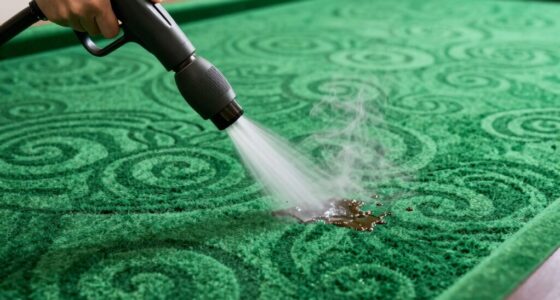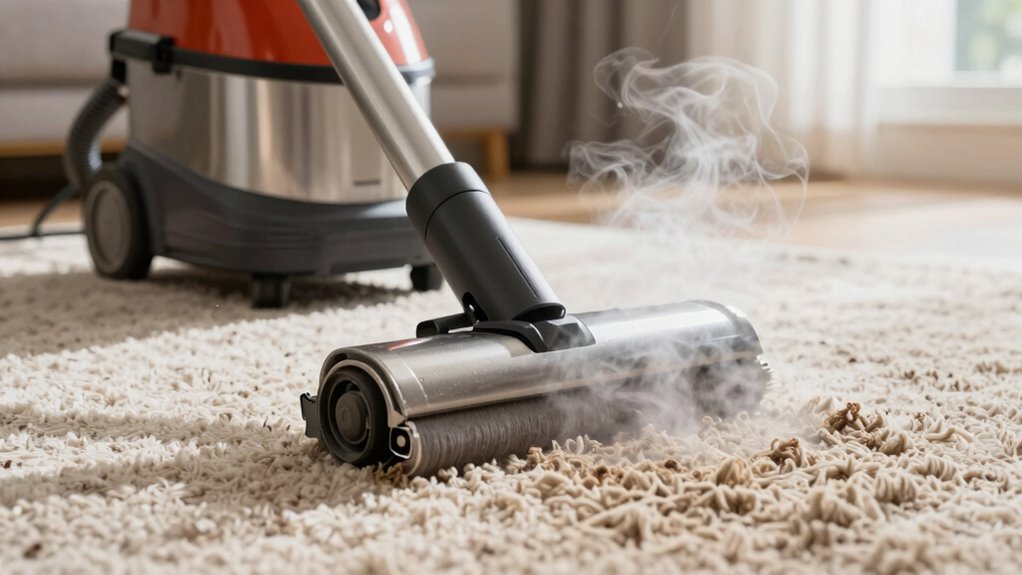
Heated carpet extractors boost cleaning by loosening dirt, stains, and bacteria more effectively, especially with hot water and steam. However, if the heat is too high or not well-regulated, it can damage delicate fibers, cause fading, or shrinkage. Using adjustable or automatic temperature controls helps you find the right balance, ensuring deep cleaning without harming your carpet. Stick around to discover how to maximize benefits while preventing damage with proper heat management.
Key Takeaways
- Heat enhances cleaning by loosening dirt and stains but can damage delicate fibers if too high.
- Proper temperature regulation ensures effective sanitization without risking carpet fiber deterioration.
- Adjustable settings allow tailoring heat levels to specific carpet types and soiling levels for optimal results.
- Excessive or unregulated heat can cause fading, shrinking, or fiber damage, reducing carpet lifespan.
- Starting with moderate heat and monitoring carpet response prevents harm while maximizing cleaning effectiveness.

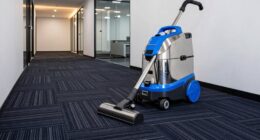
Heated carpet extractors are vital tools for deep cleaning and revitalizing your carpets. They combine powerful suction with the heat necessary to loosen dirt, grime, and stains embedded deep within fibers. When used correctly, they make your carpets look fresher, smell cleaner, and last longer. One of the key features that sets these machines apart is their ability to perform steam cleaning effectively. Steam cleaning involves using hot water and steam to break down dirt and bacteria, making extraction easier. The heat generated by the extractor enhances the cleaning process, but it’s not just about high temperatures—it’s about proper temperature regulation. When you have precise control over the heat, you can optimize cleaning without risking damage to your carpets or reducing the lifespan of the fibers.
Temperature regulation ensures that the heat stays within an ideal range to maximize cleaning power while preventing harm. Too much heat can cause the fibers to weaken, fade, or even shrink, especially with delicate carpets. Conversely, insufficient heat might not be enough to loosen stubborn stains or kill bacteria effectively. Modern heated carpet extractors come equipped with adjustable temperature settings, allowing you to tailor the cleaning process based on your carpet type and the level of soiling. For example, delicate wool carpets require lower temperatures, while heavily soiled synthetic fibers can withstand higher heat for a more thorough clean. This flexibility helps you avoid overexposing your carpets to heat, which can cause deterioration over time.
Additionally, temperature regulation can improve energy efficiency and reduce the risk of damage caused by overheating. In practice, you want to start with a moderate temperature and increase it gradually if necessary, observing how your carpet responds. Many professional-grade machines feature automatic temperature regulation, which helps maintain a consistent heat output throughout the cleaning cycle. This consistency is vital, as fluctuating temperatures can lead to uneven cleaning and potential damage. Proper steam cleaning with well-regulated heat also aids in sanitizing your carpets by killing germs and dust mites more effectively. The result is a cleaner, healthier environment and carpets that look newer for longer.
Frequently Asked Questions
Can Heated Carpet Extractors Damage Delicate or Synthetic Fibers?
Heated carpet extractors can cause fiber damage if you’re cleaning delicate or synthetic fibers, especially with high heat or excessive moisture. Synthetic sensitivity means the fibers may weaken, discolor, or fray when exposed to too much heat. To protect your carpets, always adjust the temperature settings appropriately, use gentle cleaning solutions, and test a small area first. This approach helps prevent damage while effectively cleaning your carpets.
What Safety Precautions Should Be Taken When Using Heated Extractors?
You should never forget safety gear and electrical safety when using heated extractors—they’re not optional fashion statements. Wear gloves, goggles, and non-slip shoes to protect yourself, and always keep the cord dry and away from water. Check the electrical connections for damage, and never operate the machine near wet outlets. Taking these precautions guarantees you won’t turn a cleaning task into a shocking experience—literally.
How Does Water Temperature Affect Drying Times?
Higher water temperature improves drying efficiency because it helps loosen dirt and evaporate moisture faster. When you use hot water, the carpet dries quicker since more moisture is released during extraction. However, if the water’s too hot, it can damage the carpet fibers or cause shrinkage, slowing down overall drying. So, maintaining ideal water temperature ensures effective cleaning without compromising drying times or carpet integrity.
Are Heated Extractors More Energy-Efficient Than Non-Heated Ones?
Heated extractors are generally more energy-efficient than non-heated ones because they use less water and dry carpets faster, reducing overall energy consumption. By speeding up the cleaning and drying process, they lower environmental impact through less electricity use and fewer emissions. If you’re looking to save energy and be eco-friendly, investing in heated extractors makes sense, especially for frequent or large-scale carpet cleaning jobs.
Can Heated Carpet Extractors Be Used on Upholstery?
Using a heated carpet extractor on upholstery is like trying to clean delicate glass with a rough sponge—it’s possible but risky. You can use heated extractors for upholstery cleaning, but only if the fabric is compatible and you follow proper upholstery cleaning techniques. Always check the manufacturer’s instructions, test a small hidden area first, and use gentle settings to avoid damage. When done right, heat can boost cleaning performance.
Conclusion
Using heated carpet extractors can boost cleaning efficiency by up to 50%, making your job easier and your carpets cleaner. However, remember that heat can sometimes damage delicate fibers if not used carefully. When used correctly, heat helps break down stains faster and dries carpets quicker. So, weigh the benefits against the potential risks, and you’ll find that knowing when heat helps or hurts makes all the difference in achieving spotless, long-lasting results.