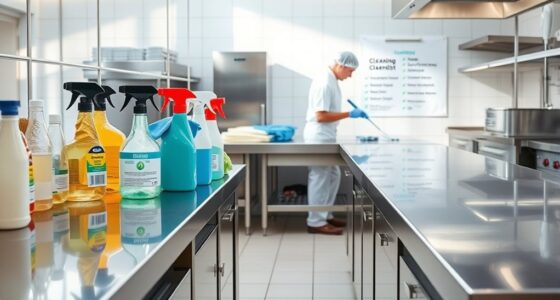
To maintain a clean gym or fitness center, you should implement strict protocols like regularly disinfecting equipment and high-touch surfaces, encouraging good personal hygiene, and providing accessible hand sanitizers. Schedule deep cleanings during off-peak hours and develop clear spill or biohazard procedures. Foster a culture of cleanliness through signage and staff training, ensuring everyone understands their role in hygiene standards. Continue exploring ways to keep your facility safe and sanitized for all members and staff.
Key Takeaways
- Implement routine cleaning and disinfection of equipment, focusing on high-touch surfaces after each use.
- Encourage personal hygiene practices and provide accessible hand sanitizers throughout the facility.
- Schedule regular deep cleaning sessions during off-peak hours for comprehensive sanitation.
- Develop clear protocols for spill response, injuries, and biohazard situations, with staff training.
- Promote a culture of cleanliness through signage, policies, and consistent communication with staff and members.
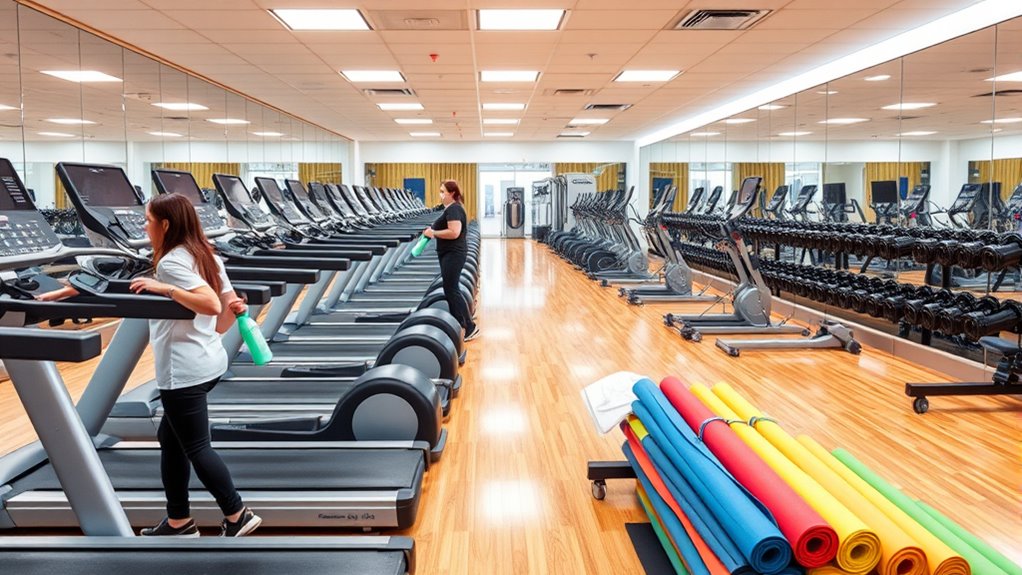
Maintaining a clean gym or fitness center is essential for ensuring the safety and health of all members. When you prioritize cleanliness, you create an environment where everyone can work out confidently, knowing that hygiene standards are being upheld. One of the most critical aspects of this is equipment sanitation. Gym equipment, like treadmills, weights, and mats, are touched constantly, making them hotspots for germs and bacteria. Regularly disinfecting these surfaces prevents the spread of illnesses and keeps your members safe. You should establish a routine where staff wipe down all equipment after each use, using effective cleaning agents that eliminate germs without damaging equipment. This not only ensures a hygienic environment but also prolongs the lifespan of your gear.
Prioritize equipment sanitation to ensure safety and prolong gear lifespan.
In addition to equipment sanitation, implementing strong hygiene practices is vital. Encourage your staff and members to practice good personal hygiene by providing accessible hand sanitizers and encouraging handwashing before and after workouts. Display clear signage reminding everyone to wipe down equipment after use and to avoid touching their face during exercise. Make it a policy that all staff are trained on proper cleaning techniques, including the correct use of disinfectants and the importance of thorough cleaning. This reduces cross-contamination and reinforces a culture of cleanliness. Moreover, understanding the importance of color accuracy in maintaining a professional appearance can contribute to a welcoming environment.
You should also consider scheduling regular deep cleaning sessions, especially during off-peak hours, to sanitize areas that might be overlooked during daily routines. Focus on high-touch surfaces like door handles, locker room benches, and water fountain buttons. Keep cleaning supplies well-stocked and visible so that both staff and members feel comfortable participating in maintaining hygiene standards. Promoting a clean environment involves consistent effort and clear communication about expectations.
Furthermore, creating a protocol for handling spills, injuries, or any biohazard situation is crucial. Train your team to respond promptly and correctly, using appropriate PPE and cleaning procedures. This minimizes potential health risks and demonstrates your commitment to member safety. Remember, the key to effective gym cleaning protocols lies in routine, vigilance, and education. When you make hygiene practices an integral part of your daily operations, you foster a safer, healthier space where members can focus on achieving their fitness goals without worry. Ultimately, a well-maintained, sanitized gym not only improves member satisfaction but also enhances your facility’s reputation and compliance with health standards.
Frequently Asked Questions
How Often Should Gym Equipment Be Sanitized During Peak Hours?
During peak hours, you should sanitize gym equipment every 30 minutes to maintain proper equipment maintenance and guarantee customer awareness of hygiene practices. This frequent cleaning helps reduce the risk of germs spreading and keeps your facility safe. Encourage your staff to remind clients to wipe down machines after use, fostering a culture of cleanliness. Regular sanitization not only protects members but also enhances their confidence in your gym’s commitment to health.
Are There Specific Disinfectants Recommended for Sensitive Gym Equipment?
You should use gentle disinfectants and equipment-specific cleaners on sensitive gym equipment. These products effectively sanitize without damaging delicate surfaces. Always check the manufacturer’s recommendations to guarantee compatibility, and avoid harsh chemicals that could cause wear or corrosion. By selecting the right disinfectants, you protect your equipment’s longevity while maintaining a hygienic environment for your members. Regularly disinfect with these safe options to keep your gym clean and equipment in top shape.
What Training Do Staff Receive for Cleaning and Sanitation Procedures?
You’ll find that staff receive thorough sanitation training and obtain certification to guarantee they follow proper cleaning procedures. This training emphasizes the importance of using approved disinfectants, maintaining hygiene standards, and correctly sanitizing equipment after each use. Certified staff understand the latest protocols, which helps prevent cross-contamination and ensures a safe environment. Regular refresher courses keep their skills sharp, reinforcing the critical role of proper cleaning in gym safety.
How Do Cleaning Protocols Differ for Different Types of Gym Flooring?
You should modify cleaning techniques based on the types of flooring you have. For rubber or foam floors, use gentle mops and avoid harsh chemicals to prevent damage. For hardwood or laminate, opt for damp mops and specialized cleaners to maintain the surface. Tile or concrete floors require regular sweeping combined with disinfectant mopping. Always follow manufacturer guidelines for each flooring type to ensure proper cleaning and longevity.
What Measures Are in Place for Preventing Cross-Contamination Between Users?
Did you know gyms can harbor 5 times more bacteria than a bathroom? To prevent cross-contamination, you implement hygiene barriers like disinfectant stations and encourage users to wipe down equipment. Managing user flow with clear signage and designated entry and exit points minimizes contact. These measures help keep everyone safe, ensuring a cleaner, healthier environment where you can focus on your workout without worries about germs.
Conclusion
Maintaining strict cleaning protocols is essential to keep your gym safe and inviting. Did you know that surfaces in fitness centers can harbor bacteria up to 10 times more than a toilet seat? By following thorough cleaning routines, using disinfectants regularly, and encouraging members to wipe down equipment, you considerably reduce health risks. Stay consistent with your efforts—cleanliness not only protects everyone but also boosts member confidence and satisfaction. Keep your gym a safe, healthy space for all!