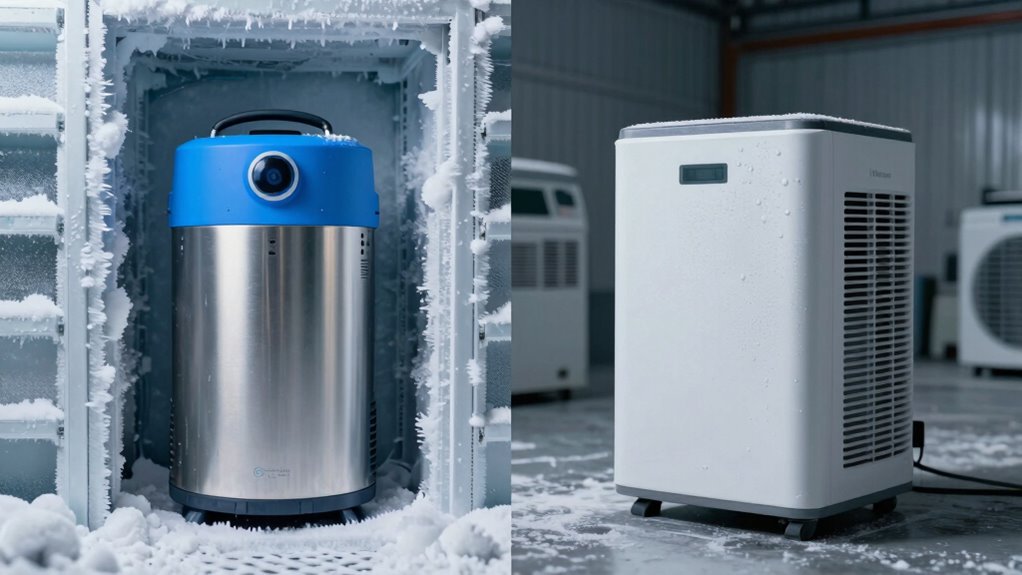

In cold spaces, desiccant dehumidifiers are the better choice because they maintain energy efficiency, require less maintenance, and operate reliably without losing performance. Unlike refrigerant models that struggle with low temperatures and often need extra heating, desiccants absorb moisture effectively in chilly conditions. They are ideal for unheated areas like basements and storage rooms. To discover more about how these systems compare and pick the right one, keep exploring the details.
Key Takeaways
- Desiccant dehumidifiers operate efficiently in cold environments due to no reliance on refrigeration cycles.
- They typically require less maintenance, making them suitable for unheated or hard-to-access spaces.
- Refrigerant models’ performance drops in cold temperatures, often necessitating additional heating and increasing costs.
- While initially cheaper, refrigerant units may incur higher long-term energy and maintenance expenses in cold settings.
- Overall, desiccant dehumidifiers are more effective and cost-efficient for dehumidifying cold, unheated spaces.
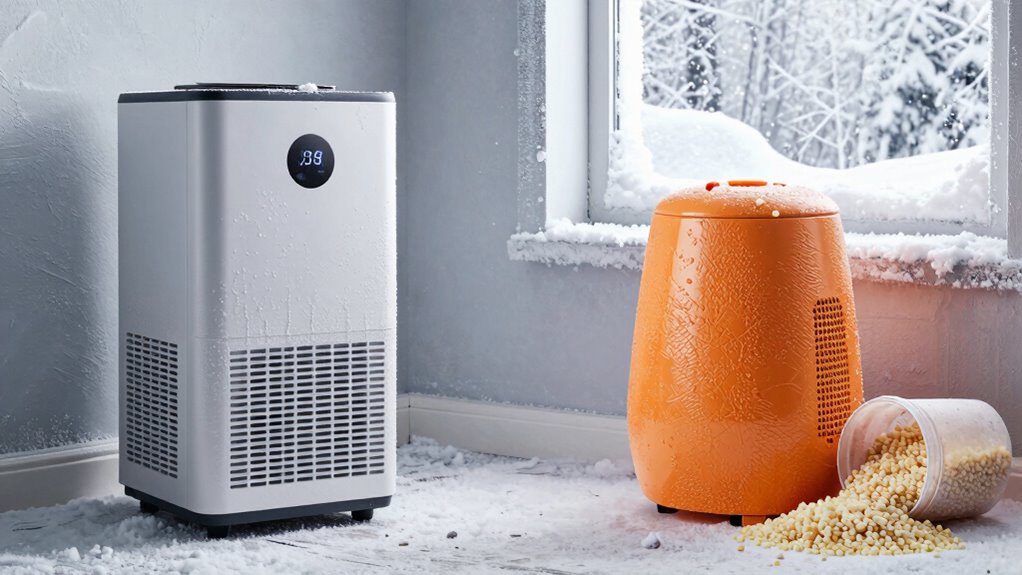
When choosing a dehumidifier, understanding the differences between desiccant and refrigerant models is essential. One of the key factors to consider is energy efficiency, especially if you’re looking to keep operating costs low. Desiccant dehumidifiers tend to be more energy-efficient in colder environments because they don’t rely on refrigeration cycles that struggle at low temperatures. Instead, they use a moisture-absorbing material that pulls humidity from the air, which requires less energy when temperatures drop. Refrigerant models, on the other hand, use compressors and coils that are less effective and consume more power in cold spaces since their performance diminishes as temperatures fall below a certain point. If energy efficiency in cold conditions is your top priority, a desiccant dehumidifier offers clear advantages. Additionally, advances in European cloud technology are making energy-efficient appliances even more accessible and sustainable for various settings.
Desiccant dehumidifiers excel in cold environments with better energy efficiency and lower maintenance needs.
Maintenance requirements also differ markedly between these two types. Desiccant units generally have fewer moving parts, which means less wear and tear over time. They often require minimal maintenance—just occasional cleaning of filters or the desiccant wheel to keep performance ideal. Refrigerant dehumidifiers, however, involve more complex components like compressors, fans, and coils. These parts need regular upkeep, such as cleaning coils to prevent dust buildup, checking refrigerant levels, or servicing the compressor, which can become costly and time-consuming. If you prefer a device with lower maintenance needs, a desiccant model might be more suitable, especially in environments where frequent servicing isn’t feasible.
Another aspect to consider is how each model handles continuous operation. Desiccant dehumidifiers are typically quieter and can operate continuously without performance loss in colder temperatures, making them ideal for unheated basements, storage rooms, or industrial settings. Refrigerant units often turn off or become less effective when temperatures dip, meaning they may require additional heating solutions to function properly in cold spaces. This not only impacts energy consumption but also complicates installation and ongoing operation.
In terms of initial costs, refrigerant dehumidifiers are usually less expensive upfront but can incur higher operating and maintenance costs over time, especially in cold environments. Desiccant models tend to have a higher initial price but may save you money in the long run due to their efficiency and lower maintenance needs in low-temperature conditions. When choosing between these two, consider your space’s temperature range, your budget, and how much time you’re willing to dedicate to upkeep. Overall, for cold spaces, desiccant dehumidifiers often provide better efficiency and easier maintenance, making them the smarter choice for many applications.
Frequently Asked Questions
How Do Maintenance Costs Compare Between Desiccant and Refrigerant Dehumidifiers?
You’ll find that desiccant dehumidifiers typically have higher maintenance costs due to more frequent repairs and shorter operating lifespan. They require regular replacement of desiccant materials and more upkeep, whereas refrigerant units tend to have lower repair frequency and longer durability. Over time, refrigerant dehumidifiers usually save you money on maintenance, making them more cost-effective in the long run, especially if you prioritize longevity and fewer repairs.
Which Dehumidifier Type Is More Energy-Efficient in Extreme Cold Conditions?
Ever wonder which dehumidifier is more energy-efficient in extreme cold? You’ll find that desiccant dehumidifiers typically consume less energy and offer better power efficiency in freezing temperatures. They operate effectively without needing to warm the air, unlike refrigerant units that struggle with ice buildup and higher energy use. So, if you’re battling cold conditions, a desiccant dehumidifier might be your best choice for saving energy.
Can Both Dehumidifier Types Operate Effectively in High Humidity Environments?
Yes, both dehumidifier types can operate effectively in high humidity environments, helping you maintain ideal humidity control and moisture removal. Refrigerant dehumidifiers work well in warmer conditions, quickly reducing moisture, while desiccant models excel in colder or more humid spaces, offering consistent performance. By choosing the right type for your environment, you guarantee efficient moisture removal and a more comfortable space.
Are There Specific Safety Concerns Associated With Each Dehumidifier Type?
You should be aware that desiccant dehumidifiers pose minimal electrical safety risks but may contain hazardous chemicals in their adsorbent materials. Refrigerant dehumidifiers, on the other hand, use refrigerants that can leak if damaged, posing chemical hazards. Always guarantee proper maintenance and avoid exposure to leaks. Both types require careful handling to prevent electrical hazards, especially in damp environments, making safety precautions essential for safe operation.
How Does the Initial Purchase Cost Differ Between Desiccant and Refrigerant Units?
When comparing the initial investment, desiccant dehumidifiers generally cost more upfront than refrigerant units. The cost comparison shows that desiccant models have a higher purchase price due to their specialized materials and design, making the initial investment steeper. However, refrigerant dehumidifiers tend to be more affordable initially, but their efficiency drops in colder environments. Your choice depends on balancing upfront costs with long-term performance needs.
Conclusion
So, whether you choose a desiccant or refrigerant dehumidifier, it’s funny how both promise to dry out your space—yet neither can escape the chill. In cold rooms, you might think one’s a clear winner, but in reality, they both struggle just enough to keep things interesting. So, embrace the irony: your perfect dehumidifier might just be the one that confounds your expectations. Who knew drying out could be so complicated?