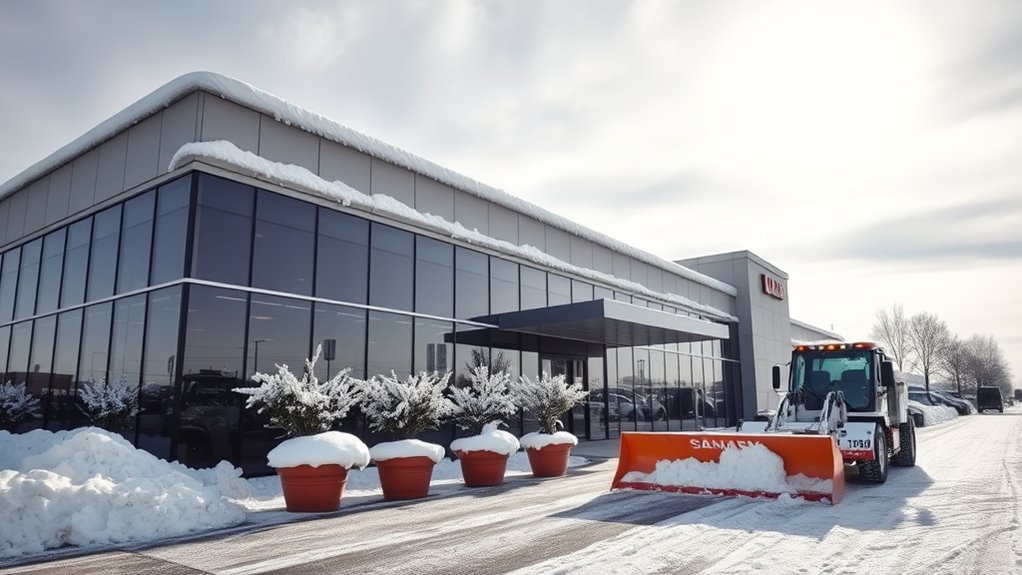

As winter approaches, you should develop a detailed snow removal plan, regularly clearing walkways, entrances, and parking lots to prevent slips. Inspect your roof for damage, clean gutters, and consider installing roof heating cables. Maintain proper drainage and insulation to avoid ice dams, and ensure good attic ventilation. Scheduling professional inspections beforehand guarantees your building’s readiness. Staying proactive now helps you stay ahead of winter challenges—continue to discover more ways to prepare effectively.
Key Takeaways
- Develop and implement a comprehensive snow removal plan for walkways, entrances, and parking lots.
- Conduct roof inspections and maintenance to prevent leaks, collapses, and ice dams during heavy snowfall.
- Ensure proper drainage and install heating cables to reduce ice buildup and facilitate snow melting.
- Optimize attic insulation and ventilation to minimize heat loss and prevent ice dam formation.
- Schedule professional inspections and upgrades to address vulnerabilities and reinforce building resilience against winter weather.
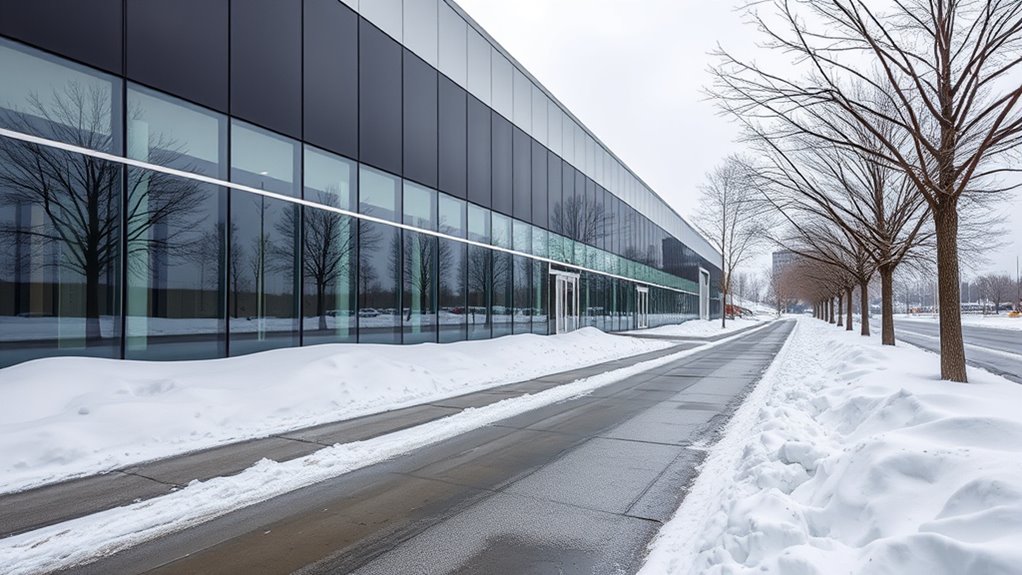
As winter approaches, it is vital to prepare your commercial building to withstand the colder months and prevent costly issues. Snow and ice can cause serious damage if you’re not proactive. The first step is to develop a solid snow removal plan. Regularly clearing snow from walkways, entrances, and parking lots ensures safety for employees and visitors while also preventing snow buildup that can strain your building’s infrastructure. Keep a stock of shovels, snow blowers, and salt or ice melt on hand, and schedule frequent checks during storms to stay ahead of accumulating snow. Prompt removal reduces the risk of slips and falls, which could lead to liability issues, and helps maintain access to your property.
Develop a snow removal plan to ensure safety and protect your property during winter.
Equally important is focusing on roof maintenance. Your roof bears the brunt of winter’s weight, and neglecting it can lead to leaks, structural damage, or even collapse under heavy snow loads. Before the first snowfall, inspect your roof thoroughly. Look for any damaged or missing shingles, cracks, or areas where water might seep through. Clear any debris, such as leaves or branches, that could trap moisture and accelerate deterioration. Installing or checking roof heating cables can help melt snow and ice, preventing ice dams that can cause water to back up under shingles. If your roof has gutters, ensure they are clean and free of obstructions. Proper drainage is essential to avoid ice buildup that can cause leaks or damage the roof’s surface. Additionally, understanding snow load capacity is crucial for preventing structural issues during heavy snowfalls.
Don’t forget to check your building’s insulation and ventilation systems. Proper insulation minimizes heat loss, which reduces the formation of ice dams, while good ventilation helps keep the attic dry and prevents excessive moisture buildup. Address any existing insulation gaps or ventilation issues now to avoid more significant problems once the cold sets in.
Finally, consider scheduling a professional inspection before winter hits full force. Experts can identify potential vulnerabilities in your roof or drainage system that you might overlook. They can also recommend necessary repairs or upgrades, such as reinforcing the roof structure or installing additional drainage solutions. Remember, taking these proactive steps not only ensures the safety and functionality of your commercial building but also saves you money by avoiding emergency repairs and minimizing downtime during the winter months. Proper snow removal and roof maintenance are essential parts of winter prep that keep your property secure and operational, no matter what the season throws your way.

Hoover PowerScrub Deluxe Carpet Cleaner Machine, Deep Cleaning Carpet Shampooer Machine, SpinScrub Brushes, HeatForce Drying, Pet & Upholstery Tools, Pair with Hoover Carpet Cleaner Solution
PROFESSIONAL-LEVEL STAIN REMOVAL AT HOME: Achieve pro results without the cost with the Hoover PowerScrub. Five counter-rotating SpinScrub...
As an affiliate, we earn on qualifying purchases.
Frequently Asked Questions
How Early Should Maintenance Begin Before the First Snowfall?
You should start your maintenance well before the first snowfall, ideally 2 to 4 weeks in advance. Conduct timely inspections of your roofing, gutters, and heating systems to identify potential issues. Use proactive planning to guarantee snow and slush don’t cause damage or safety hazards. Early preparation helps you address minor problems before they worsen, keeping your commercial building safe, functional, and ready for winter’s challenges.
What Are the Best Materials for Snow-Resistant Roofing?
Did you know that choosing the right roofing materials can increase snow resistance by up to 50%? When selecting roofing materials, opt for metal, clay tiles, or rubber membranes, as they excel in shedding snow and resisting ice buildup. These materials are durable, lightweight, and offer excellent snow resistance, helping prevent leaks and structural damage during winter storms. Prioritize these options to keep your commercial building safe and snow-free.
How Can I Prevent Ice Dams on Commercial Roofs?
To prevent ice dams, you should focus on effective roof insulation techniques that keep heat from escaping your building. This reduces snow melt and refreezing at the roof’s edge. Additionally, implement ice dam prevention strategies like ensuring proper ventilation and sealing gaps. Regularly clear gutters and downspouts to prevent water backup. These steps help maintain consistent roof temperatures, reducing the risk of ice dams forming and causing damage.
What Safety Protocols Should Staff Follow During Snow Removal?
Did you know over 60% of snow removal accidents involve falls? During snow removal, you should follow strict safety protocols. Always wear proper safety equipment like harnesses and non-slip boots. Follow clear de-icing procedures to prevent slips and falls, and avoid rushing. Use appropriate tools and communicate with your team. Staying vigilant and prepared minimizes risks, ensuring everyone stays safe while keeping your building accessible during winter storms.
How Do Parking Lot Designs Impact Snow and Slush Management?
Your parking lot design considerably impacts snow and slush management. Well-planned drainage systems prevent water from pooling, reducing slush accumulation and ice formation. Proper slope directs melting snow away from walkways and entrances, ensuring safety. Incorporate permeable materials or gravel to allow better drainage and minimize runoff. By optimizing drainage and slope, you’ll improve safety, reduce maintenance costs, and keep your parking lot functional during winter’s worst conditions.

BISSELL Little Green Mini Portable Carpet and Upholstery Deep Cleaner, Car/Auto Detailer, with HydroRinse Self-Cleaning Tool and 4" Tough Stain Tool, Tea Green, 4075
EVERY PURCHASE SAVES PETS. Every purchase makes it possible for BISSELL to continue our support of BISSELL Pet...
As an affiliate, we earn on qualifying purchases.
Conclusion
Don’t let winter catch you off guard. Preparing your commercial building for snow and slush isn’t just about avoiding slips and falls—it’s about keeping your business running smoothly. Some might think it’s a hassle or costly, but the investment in proper maintenance pays off by preventing costly repairs and downtime. Stay proactive, clear walkways, and check your heating systems. With a little effort now, you’ll stay ahead of winter’s worst and keep everyone safe and comfortable.
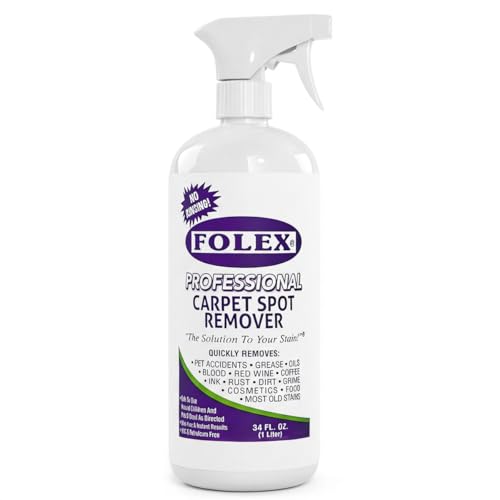
FOLEX - Professional Carpet Cleaner Spray 34 oz - Pet Stain Removal - Instant Stain Removal - No Rinsing Required - Safe for Pets - Works on All Fabrics
INSTANT RESULTS: No rinsing, vacuuming or waiting to see results; Spots vanish before your eyes; Amazing surfactant action...
As an affiliate, we earn on qualifying purchases.

BISSELL ProHeat 2X Revolution Pet Pro Plus, 3588F, Upright Deep Cleaner, 30-minute Dry Time, Dual Dirt Lifter Powerbrush, Hose & Tool Attachment, Pet Upholstery and Tough Stain Tool Included
PROFESSIONAL DEEP CLEANING FOR PET MESSES: Removes the toughest pet stains & odors.
As an affiliate, we earn on qualifying purchases.