To prevent cross-contamination, you should implement a color-coding system for cloths and mops, designating specific colors for different areas like bathrooms, kitchens, and patient rooms. Always store tools in clearly labeled, separate containers and thoroughly clean or disinfect them after each use. Proper organization and staff training are key to success. If you keep exploring, you’ll find more essential tips to keep your cleaning routines safe and effective.
Key Takeaways
- Assign specific colors to cloths and mops for different areas to prevent cross-contamination.
- Store tools in designated, clearly labeled containers to maintain organization and hygiene.
- Train staff regularly on the importance and proper use of color-coded cleaning tools.
- Rinse and disinfect cloths and mops after each use to eliminate germs before storage.
- Regularly inspect and replace worn or damaged tools to ensure effectiveness and safety.
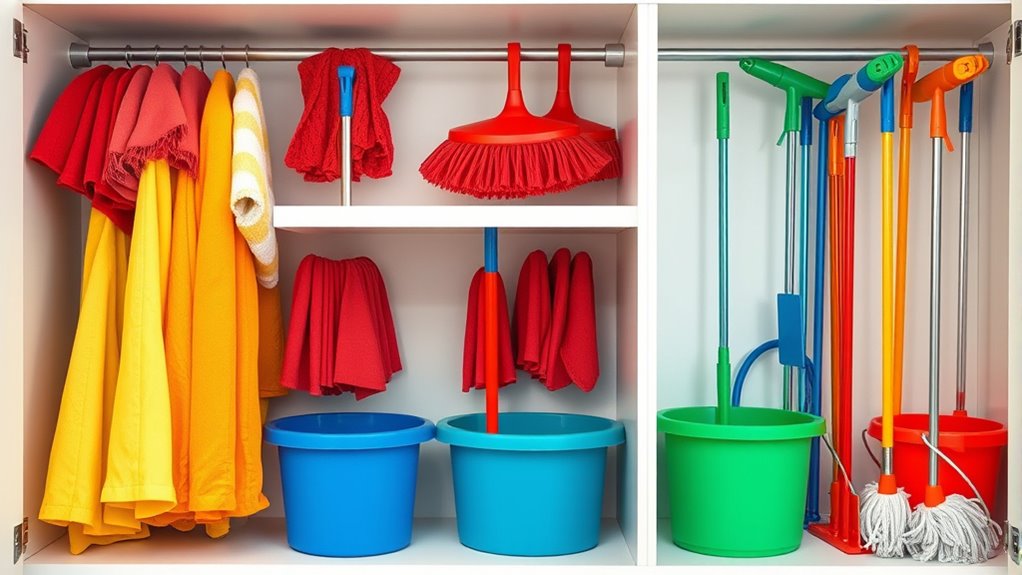
Color-coding cloths and mops is an effective way to prevent cross-contamination and keep your cleaning routines safe and organized. When you implement a color-coding system, it’s vital to follow proper storage practices to maintain the integrity of the color codes and guarantee that each cloth or mop stays designated for its specific area. Store cleaning tools in clearly labeled containers or designated storage areas, separating them by color. This prevents accidental mixing and helps staff quickly identify which tools to use for each task. Proper storage also includes drying cloths thoroughly before storage to prevent bacteria growth, and avoiding overcrowding in storage spaces, which can cause cross-contamination.
Training staff on color codes is a fundamental step in making this system effective. When your team understands the significance of each color, they’re more likely to follow the protocol consistently. Conduct regular training sessions, demonstrating how to select the right cloth or mop for each job and emphasizing the importance of adhering to the designated color scheme. Make sure staff know that using the correct color-coded tools reduces the risk of spreading germs from one area to another, especially in settings like healthcare facilities, food service, or any environment where hygiene is critical. Reinforce the training with visual aids, like posters or charts, that clearly display the color assignments and proper handling procedures.
In addition to training, establish clear procedures for cleaning and disinfecting cloths and mops. After use, staff should rinse and disinfect tools appropriately, then store them in their designated areas. This routine helps maintain the effectiveness of the color-coding system and minimizes the chance of contamination. Regularly review these practices with your team, addressing any challenges or misunderstandings that may arise. You might also want to implement a schedule for replacing worn-out cloths and mops, ensuring that all tools remain in good condition and continue to serve their purpose effectively.
Frequently Asked Questions
How Often Should Color-Coded Cloths and Mops Be Replaced?
You should replace color-coded cloths and mops regularly, ideally every 3 to 7 days, depending on usage and contamination risks. Frequent replacement minimizes bacterial buildup and reduces cross-contamination risks. If they become visibly dirty or start to smell, replace them immediately. Always follow your facility’s guidelines for replacement frequency to ensure cleanliness and safety. Regularly changing your cleaning tools helps maintain a hygienic environment and prevents the spread of germs.
Are There Industry Standards for Color-Coding in Different Sectors?
Think industry standards are just a suggestion? Think again. You’ll find sector-specific guidelines and industry compliance requirements that mandate color-coding cloths and mops to prevent cross-contamination. From healthcare to food service, these standards ensure safety and hygiene. Ignoring them isn’t just risky; it’s a direct path to fines and reputational damage. Stick to the color codes, follow the guidelines, and keep contamination out of your business—because standards matter.
Can Color-Coding Be Combined With Other Contamination Prevention Methods?
Yes, you can combine color-coding with other contamination prevention methods. By integrating color-coding with PPE, you guarantee staff use designated cloths and mops for specific areas, reducing cross-contamination risks. Combining this system with chemical controls enhances effectiveness, as you use appropriate disinfectants for each zone. Together, these strategies create an all-encompassing approach, markedly boosting hygiene and safety in your facility.
What Materials Are Best Suited for Color-Coded Cleaning Tools?
You should choose cleaning tools made from durable synthetic fibers, as they effectively trap dirt and microbes. Look for mops and cloths with antimicrobial coatings, which help inhibit bacteria growth on the surface. These materials are ideal for color-coded systems because they withstand frequent washing, maintain their effectiveness, and reduce cross-contamination risks. Combining synthetic fibers with antimicrobial coatings guarantees your cleaning tools stay hygienic and reliable for various areas.
How Do I Train Staff Effectively on Color-Coding Protocols?
You train staff effectively by providing hands-on demonstrations, reinforcing proper techniques, and showing how color-coding prevents cross-contamination. You guarantee they understand protocols through regular refresher training, addressing questions, and reviewing procedures. You encourage active participation, monitor performance, and give immediate feedback. You foster accountability by emphasizing importance, and you maintain consistency by staying updated with best practices, making sure everyone follows the same standards confidently.
Conclusion
By color-coding your cloths and mops, you prevent cross-contamination and keep your space safer. For example, imagine using blue for bathroom cleaning and green for kitchens—this simple step guarantees germs don’t spread from one area to another. When you stick to these color codes, you create a clear, efficient system that protects everyone. It’s an easy, effective way to maintain hygiene and promote health in your environment.