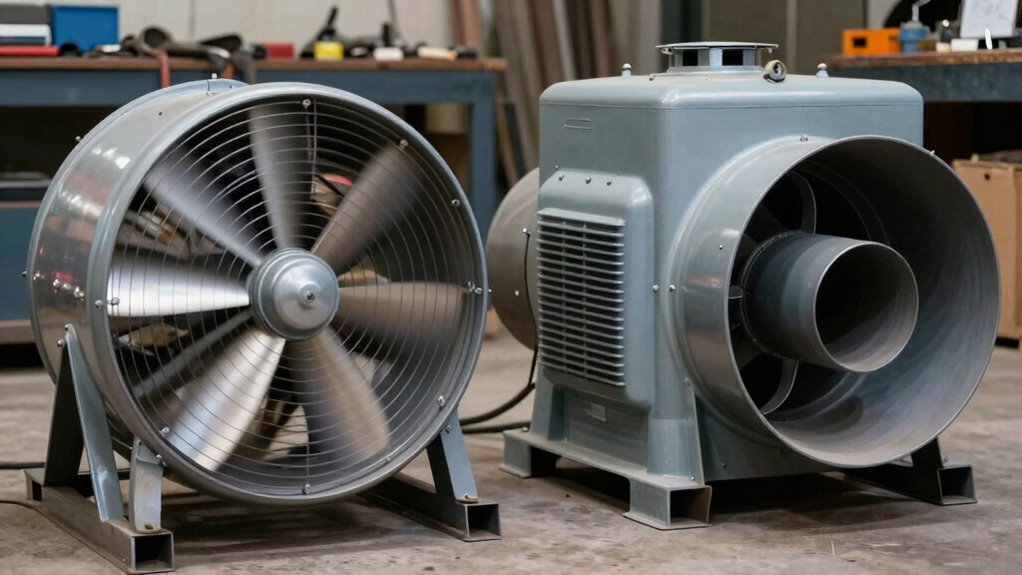

Choosing the wrong air mover type can slow down your drying or ventilation process and boost your costs. If you pick axial models for high-pressure tasks, they’ll wear out faster and use more energy, while centrifugal units won’t move enough air quickly enough. On the other hand, using centrifugal fans for large open areas might prolong drying times. Stick with the right kind, and you’ll boost efficiency—keep going to learn more about making the best choice.
Key Takeaways
- Choosing an axial fan for high-pressure drying wastes energy and causes faster wear, delaying results.
- Using a centrifugal fan for large-area airflow reduces drying speed and efficiency, prolonging project timelines.
- The wrong fan type increases operational costs due to higher energy consumption and maintenance needs.
- Selecting the appropriate fan based on airflow and pressure requirements ensures faster, more effective drying.
- Mismatched fans and applications lead to inefficiency, delays, and higher overall costs in drying or ventilation tasks.

When choosing between axial and centrifugal air movers, understanding their differences is essential to selecting the right tool for your specific needs. These two types of fans are designed for different applications, and making the wrong choice can lead to inefficiency and frustration. One of the first factors to contemplate is noise levels. Axial air movers tend to produce more noise because their blades spin at higher speeds, pushing air directly in a straight line. If you’re working in a space where noise can be a concern—such as a residential area or a commercial environment where quiet operation is valued—centrifugal models might be the better option. They typically operate more quietly due to their enclosed designs and different blade configurations, allowing you to work longer without fatigue or disturbance. Additionally, the fan technology used in each type influences efficiency, durability, and maintenance requirements, which are important considerations for long-term use. Energy efficiency is another critical factor. Axial fans generally consume less power to move large volumes of air at lower pressure, making them more energy-efficient for applications requiring high airflow over a wide area. They’re ideal for drying large spaces or ventilating open areas where the goal is to circulate air quickly. On the other hand, centrifugal air movers are more energy-efficient when you need to generate higher pressure to move air through filters, ducts, or confined spaces. They’re better suited for tasks that demand focused airflow, such as drying behind walls or in tight corners, because their design concentrates airflow in a specific direction. Choosing the wrong type can cause delays and higher operational costs. For example, opting for an axial fan in a situation that requires high-pressure airflow might result in the fan working harder than necessary, increasing energy bills and wearing down the motor faster. Conversely, selecting a centrifugal model for large-scale airflow might mean you’re not moving enough air quickly enough, prolonging drying or ventilation processes. It’s important to assess your specific airflow needs, space constraints, and noise sensitivity before making a decision.

MOUNTO AM20DF 1/5 HP 1800 CFM Axial Air Mover Blower Fan – Powerful Down Draft Fan for Drying, Cooling, and Ventilation
- Powerful Motor: 115V, 1/5 HP sealed motor
- High Airflow: 1800 CFM at high setting
- Lightweight Design: Weighs only 15 lbs
As an affiliate, we earn on qualifying purchases.
As an affiliate, we earn on qualifying purchases.
Frequently Asked Questions
How Do I Determine the Best Air Mover for My Specific Job?
To determine the best air mover for your job, consider its air flow efficiency and power consumption. You want a unit that moves enough air quickly without wasting energy, so compare models based on airflow rates and energy use. Think about your space size and drying needs—axial for large, open areas, centrifugal for focused, high-pressure tasks. Choosing wisely saves time and reduces operating costs.
Are There Safety Concerns When Using Axial or Centrifugal Air Movers?
Coincidentally, safety concerns are vital when using axial or centrifugal air movers. You should always check for electrical hazards and guarantee proper grounding to prevent shocks or fires. Both types can pose risks if not properly maintained or used in wet environments. Always follow manufacturer instructions, inspect cords and plugs, and keep the units dry. Prioritizing safety minimizes accidents and keeps your work environment secure.
Can These Air Movers Be Used Outdoors Effectively?
Yes, you can use axial and centrifugal air movers outdoors effectively, but only if they have good outdoor durability and weather resistance. Look for models specifically designed to withstand rain, humidity, and dust. Make certain they have sealed motors and rugged housings. Without these features, exposure to the elements can damage the units and reduce their lifespan. Always verify outdoor ratings before deployment to ensure peak performance and longevity.
What Maintenance Is Required for Axial Versus Centrifugal Models?
Imagine dust buildup creeping into your air mover’s vents, slowly choking its performance. To keep it running smoothly, you’ll need to regularly clean dust from filters and vents. For both axial and centrifugal models, check motor lubrication—some require oiling, others don’t. Ignoring these steps leads to overheating and failure. Stay vigilant, perform routine maintenance, and your air mover will keep delivering powerful airflow without unexpected downtime.
How Do Noise Levels Compare Between the Two Types?
You’ll find that axial air movers generally produce higher noise levels, making sound level differences noticeable, especially in quiet environments. Centrifugal models tend to operate more quietly, with lower decibel readings. If noise comparison matters for your space, choose centrifugal units for quieter operation. Keep in mind that axial fans may be louder due to their design, so consider your environment and noise sensitivity when selecting the right air mover.
Conclusion
Choosing the right air mover makes all the difference—you don’t want to wait forever for drying. Did you know that axial air movers typically move over 3,000 CFM, making them ideal for large spaces, while centrifugal models excel at directed airflow? Selecting the wrong type can extend drying times by up to 50%. So, assess your needs carefully; the right choice ensures quicker results and saves you time and money.