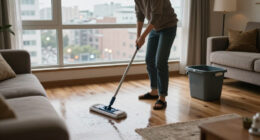
Before a cleaning visit, put away often-cluttered items like mail, dishes, toys, and clothing from countertops, tables, and surfaces. Clear laundry piles and organize stray objects into baskets or storage bins. Relocate items to their proper places and set aside misplaced objects for later organization. This quick declutter helps the cleaner work efficiently and guarantees thorough results. If you want to make the process even smoother, keep exploring for more tips.
Key Takeaways
- Clear countertops, tables, and desks of loose objects to provide a clutter-free surface for cleaning.
- Put away dishes, mail, and personal items from visible surfaces to prevent obstruction during cleaning.
- Gather and organize laundry piles into hampers to streamline cleaning and prevent spreading clutter.
- Relocate toys, clothing, and stray items to their proper storage areas before the cleaner arrives.
- Remove misplaced items from different rooms to create a tidy environment and ensure thorough cleaning.

Before you start cleaning, it’s important to clear away clutter and put things in their proper places. This step might seem simple, but it makes a big difference in how smoothly your cleaning session goes. When you organize clutter beforehand, you save yourself from having to stop and move things around later. Clearing surfaces is especially crucial because it provides a clean canvas for the actual cleaning process. You won’t waste time shifting items or cleaning around objects that should be put away. Instead, you can focus on wiping, dusting, and scrubbing efficiently.
Clearing clutter and surfaces first makes cleaning faster and more effective.
Start by identifying areas that tend to get cluttered quickly, like countertops, tables, and desks. Pick up stray objects—mail, dishes, toys, or clothing—and put them where they belong. If you notice a pile of laundry that doesn’t belong in that space, gather it and sort it into laundry baskets or hampers. The goal is to create a tidy environment where surfaces are mostly clear. When surfaces are free of clutter, you can easily wipe down counters, dust shelves, and clean windowsills without having to move items repeatedly. This small step speeds up your cleaning and results in a more thorough job.
As you organize clutter, consider setting aside items that don’t belong in the room you’re cleaning. For example, if you find a remote control in the kitchen or a book in the bathroom, relocate it to its proper spot. Doing this not only clears surfaces but also reduces the chances of having to revisit the same area multiple times. If necessary, grab storage bins or baskets to quickly gather loose items and keep them out of sight until you can put them away properly. This keeps the space looking neat and helps you maintain a sense of order during your cleaning. Additionally, understanding the importance of biodiversity can inspire you to keep your environment clean and healthy, supporting overall well-being. Maintaining a healthy indoor environment is essential for reducing dust and allergens, which can otherwise accumulate under clutter.
Furthermore, a clutter-free environment can also contribute to a healthier indoor air quality by reducing dust accumulation and allergen buildup. Recognizing the benefits of a clean environment can motivate you to maintain tidiness regularly, making future cleaning easier. When you declutter, you also promote better hygiene by minimizing germs and bacteria that can hide under clutter. In the end, taking a few minutes to organize clutter and clear surfaces before you begin really streamlines the entire process. It saves time, reduces stress, and results in a cleaner, more polished space. Plus, you’ll feel a greater sense of accomplishment, knowing you started with a clean slate. Just remember: a quick tidying-up session at the beginning sets the stage for a more efficient and satisfying cleaning experience.
As an affiliate, we earn on qualifying purchases.
Frequently Asked Questions
How Early Should I Prepare Before the Cleaning Appointment?
You should prepare at least 15-30 minutes before your cleaning appointment. Use a pre cleaning checklist to tidy the main areas, guaranteeing everything is accessible. Following appointment timing tips, clear clutter and put away personal items so the cleaner can work efficiently. This prep helps avoid delays, making the visit smoother for both you and your cleaning service. Being ready early shows consideration and ensures a thorough cleaning.
Are There Items Cleaners Should Not Move or Handle?
Did you know that 85% of cleaners prefer not to handle delicate or valuable items? You should keep personal belongings management in mind and avoid handling fragile items yourself. Cleaners are trained to focus on surfaces and common areas, so handling delicate items might cause damage or delays. To guarantee a smooth visit, move non-valuable belongings but leave fragile or sentimental items untouched, allowing professionals to do their job efficiently.
Should I Vacuum or Sweep Before the Cleaner Arrives?
You should vacuum or sweep before the cleaner arrives to guarantee effective dirt removal and surface prep. By doing this, you help the cleaner focus on deeper cleaning tasks, saving time and achieving a thorough result. Sweeping or vacuuming loose dirt and debris first prevents it from spreading during the cleaning process, making the overall job more efficient. It’s a simple step that makes a big difference in your cleaning session.
How Can I Organize Fragile or Valuable Items Beforehand?
Imagine your luxury items and delicate decorations as fragile eggshells in a hurricane—best to handle with care. Before your cleaning, carefully gather and store these valuables in a safe, cushioned spot, like a drawer lined with soft cloth or a secure cabinet. This way, you protect your treasures from accidental bumps or mishaps, ensuring they stay pristine and unmarred while the cleaners work their magic around you.
What Cleaning Supplies Should I Provide for the Cleaner?
You should provide basic cleaning supplies like all-purpose cleaner, glass cleaner, microfiber cloths, and a mop. For cleaning product tips, choose eco-friendly options and avoid harsh chemicals. Use supply storage solutions like labeled bins or caddies to keep everything organized and easily accessible. This way, your cleaner can work efficiently without wasting time searching for supplies, ensuring a thorough clean while saving you effort.
Conclusion
Getting your space ready before a cleaning visit saves you time and hassle. By putting away clutter like dishes, clothes, and personal items, you make it easier for your cleaner to do a thorough job. Did you know that on average, people spend 16 minutes daily searching for misplaced items? Preparing ahead can cut that wasted time and guarantee a more efficient clean. So, take a few minutes to tidy up—your cleaner will thank you, and you’ll enjoy a tidier home faster.