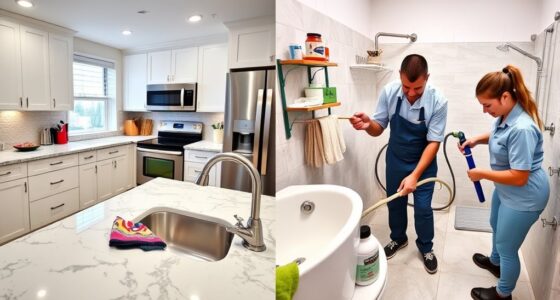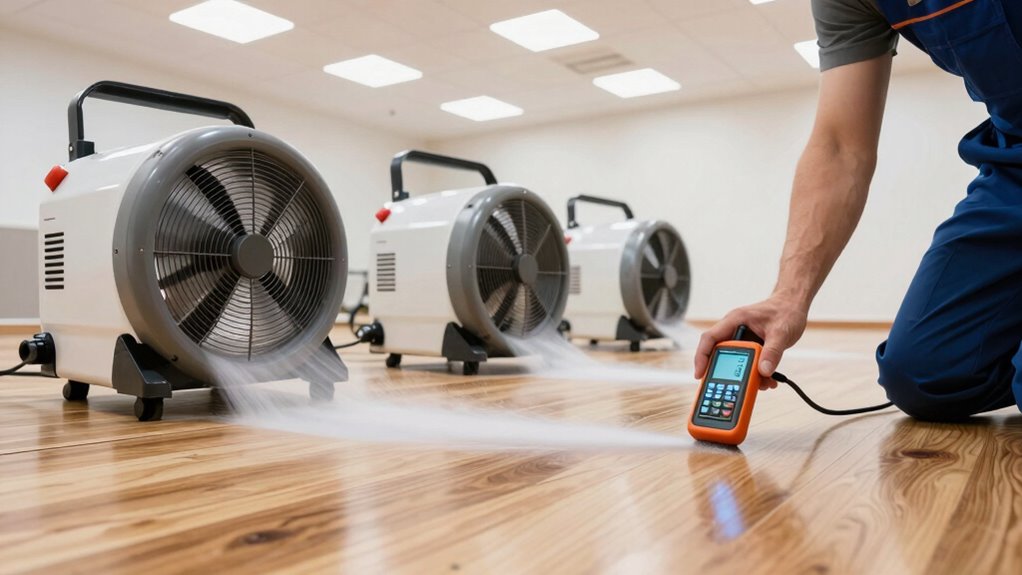
When the cleaning team uses moisture meters and drying equipment, you can expect a detailed assessment of your property’s moisture levels. They’ll scan walls, floors, and hidden areas to detect moisture below surfaces. The team will then position industrial fans and dehumidifiers to circulate dry air effectively. Throughout the process, they monitor progress and make adjustments to guarantee everything dries thoroughly, preventing future issues. Keep going to discover the full benefits of this precise drying approach.

Get cleaning gear delivered free — and shop member deals
- Fast, free delivery on millions of items
- Access to Prime Big Deal Days deals on October 6–7
- Prime Video, Amazon Music and more included
Key Takeaways
- The team will scan walls, floors, and hidden areas with moisture meters to assess moisture levels accurately.
- You’ll see real-time readings guiding the drying process and pinpointing remaining moisture.
- Industrial drying equipment like air movers and dehumidifiers will be strategically positioned to speed up drying.
- Ongoing monitoring ensures moisture levels decrease evenly and adjustments are made as needed.
- The team will perform final moisture checks to confirm your property is thoroughly dry and safe.
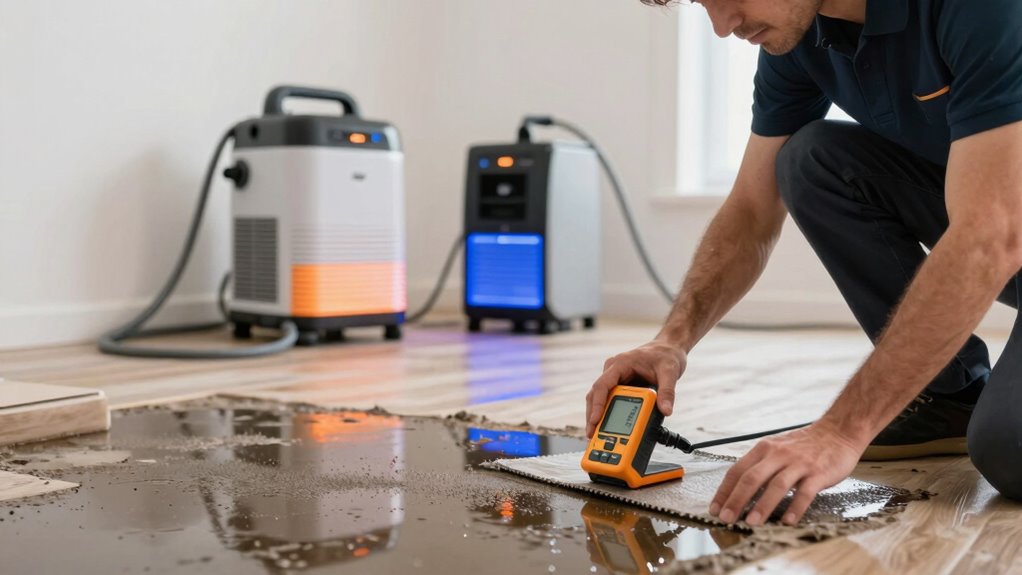
When it comes to effective cleaning and restoration, the cleaning team relies heavily on moisture meters and specialized drying equipment to guarantee thorough results. This technology plays a pivotal role, especially when dealing with water damage, because it allows the team to accurately assess moisture levels in various materials. Water damage can be deceptive; even if surfaces appear dry to the eye, hidden moisture might still be lurking beneath the surface. Moisture detection tools help identify these hidden pockets, preventing future issues like mold growth or structural deterioration. As a result, you can trust that the team isn’t just cleaning the visible mess but also addressing the root cause of potential problems.
Moisture meters ensure thorough drying, preventing hidden damage and future mold or structural issues.
During the process, a technician uses a moisture meter to scan different surfaces—walls, floors, ceilings, and even behind paneling or drywall. The device provides immediate readings, indicating whether moisture levels are within safe ranges or if further drying is necessary. This precise measurement guides the team’s decisions, ensuring they don’t prematurely stop drying efforts or waste time on areas that aren’t affected. Moisture detection is especially essential in water damage scenarios, where early intervention can considerably reduce repair costs and health risks. The team’s goal is to reach moisture levels that are consistent with unaffected areas, which indicates thorough drying. Additionally, understanding moisture levels helps prevent long-term problems like mold growth and structural issues. Incorporating moisture measurement into the process ensures that the team can effectively monitor progress and adapt as needed.
Once the moisture levels are identified, the team employs specialized drying equipment such as industrial-grade air movers, dehumidifiers, and heat dryers. These tools work together to circulate dry air, remove excess moisture from the environment, and accelerate drying. You’ll notice the strategic placement of these machines around affected spaces, often in a pattern designed to maximize airflow and efficiency. The team continuously monitors moisture levels throughout the drying process, adjusting equipment settings as needed. This ongoing assessment ensures that moisture detection remains accurate, and the environment dries uniformly. Properly managing drying techniques is critical to achieving optimal results and preventing residual moisture from causing future complications.
Furthermore, the use of appropriate drying methods can significantly reduce the overall time required for complete moisture removal, making the restoration process more efficient. Throughout the process, communication is key. The team will keep you informed about progress and any adjustments made based on moisture readings. You can expect an all-encompassing approach that not only addresses water damage but also prevents long-term issues like mold growth or structural weakening. When the team concludes, they’ll perform a final assessment with moisture meters to confirm that all affected areas are thoroughly dry. This meticulous attention to detail guarantees that your property is restored to a safe, healthy condition, minimizing future risks and giving you peace of mind.
As an affiliate, we earn on qualifying purchases.
Frequently Asked Questions
How Accurate Are Moisture Meters in Detecting Hidden Water Damage?
Moisture meters are quite accurate for water detection, especially when used correctly. They measure the moisture content in materials, helping you identify hidden water damage. However, measurement accuracy depends on factors like the type of meter used and proper calibration. Keep in mind, moisture meters provide a good indication, but for complete assurance, combining their readings with visual inspections and professional assessments offers the most reliable results.
Can Drying Equipment Cause Further Damage to Delicate Surfaces?
Ever wonder if drying equipment might harm delicate surfaces? It’s a valid concern. While modern drying tools are designed with surface sensitivity and equipment safety in mind, aggressive use or incorrect settings can cause damage. Always trust trained professionals who adjust the equipment properly, ensuring the drying process is safe and effective. They know how to balance moisture removal without risking unnecessary harm to sensitive surfaces.
How Long Does the Drying Process Typically Take?
The drying process usually takes anywhere from a few hours to several days, depending on humidity levels and the extent of moisture. Your cleaning team uses effective drying techniques tailored to the situation, which speeds things up. They monitor humidity levels closely, adjusting equipment as needed. Expect faster drying in well-ventilated spaces, but be patient if moisture is deeply embedded, as thorough drying is essential to prevent mold.
Are Moisture Meters Safe to Use Around Electrical Outlets?
Moisture meters are generally safe around electrical outlets if used correctly, but you should always prioritize electrical safety. Keep the device away from water or wet surfaces and avoid contact with live electrical parts. Moisture detection is precise, helping identify hidden moisture without risking electrical hazards. If you’re unsure, ask the cleaning team to demonstrate safe usage or consult a professional to guarantee safety during the process.
What Are Signs That Moisture Is Still Present After Drying?
You’ll notice signs of residual moisture if surfaces aren’t fully dry, such as dampness, musty odors, or visible water spots. Check for surface dryness by feeling for dampness, and if surfaces still feel moist or cool, residual moisture remains. Persistent moisture can lead to mold growth or damage, so it’s vital to confirm that all areas are completely dry after the drying process, using moisture meters for verification.
Conclusion
When your cleaning team brings out moisture meters and drying equipment, you’re witnessing a battle against hidden water damage that’s more intense than a hurricane. You can expect meticulous precision and swift action, ensuring every drop of moisture is tracked and eradicated. This high-tech arsenal transforms what could be a tedious cleanup into a seamless process, leaving your space dry, safe, and restored faster than you ever thought possible. Trust the experts—they’ll make moisture vanish before your eyes!
Fall Picks
fall essentials
As an affiliate, we earn on qualifying purchases.