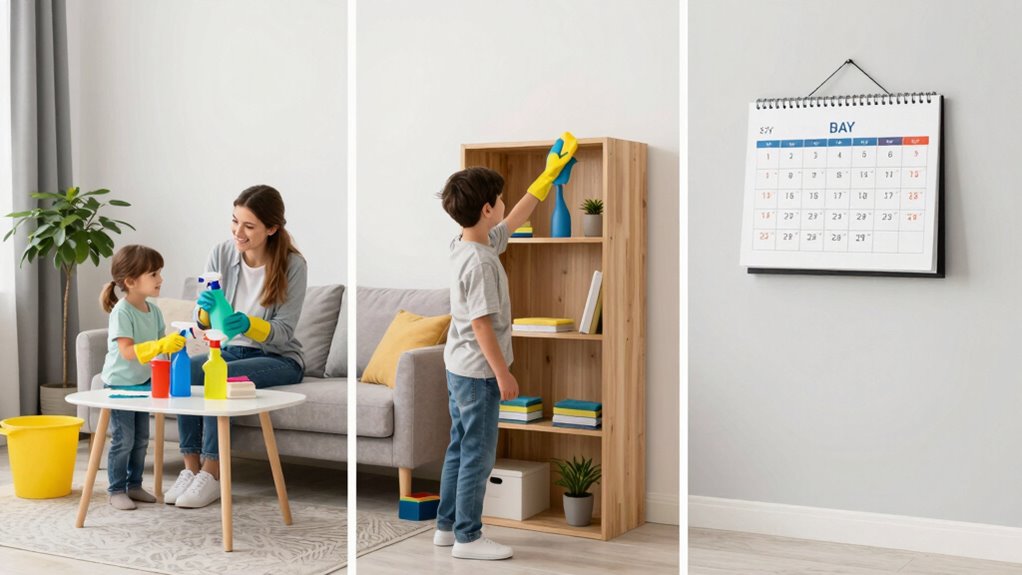

To decide between weekly, biweekly, and monthly cleaning, consider your household size, activity level, and how quickly dirt and germs accumulate. Larger families or homes with pets may need weekly cleaning, while smaller households can stretch to biweekly or monthly schedules. High-traffic areas like kitchens and bathrooms require more frequent attention. Balancing hygiene with your routine guarantees a welcoming home. Keep exploring to find out how to tailor your cleaning plan effectively.
Key Takeaways
- Consider household size, activity level, and presence of pets to determine cleaning frequency needs.
- Prioritize high-traffic areas like kitchens and bathrooms for weekly cleaning to maintain hygiene.
- Use less frequently used spaces, such as guest bedrooms, for biweekly or monthly cleaning.
- Balance routine cleaning with professional services for thoroughness and time savings.
- Adjust schedules based on dirt accumulation, lifestyle changes, and personal preferences for optimal maintenance.

Ever wondered how often you should clean different areas of your home to keep it spotless without overdoing it? The answer depends on your lifestyle, household size, and personal preferences. To make an informed decision, consider how frequently each space gets used and how quickly dirt and grime accumulate. For instance, kitchens and bathrooms tend to need more regular attention because they’re hotspots for bacteria and spills. Using eco friendly products can help you clean effectively while minimizing environmental impact, especially if you’re concerned about chemical exposure or sustainability. If you’re busy or prefer a more hands-off approach, professional cleaning services can be a great option—they bring expertise, efficiency, and eco-conscious cleaning methods to keep your home pristine without the hassle. Additionally, opting for eco friendly cleaning products can enhance your cleaning routine by reducing chemical residues and supporting environmental health.
Adjust cleaning frequency based on space use, focusing more on kitchens and bathrooms for a healthier home.
For high-traffic areas like kitchens, bathrooms, and entryways, weekly cleaning is often ideal. This frequency prevents buildup of dirt, mold, and bacteria, keeping your home healthier and more inviting. If you want to maintain a cleaner home but don’t want to spend hours on chores, scheduling professional cleaning services on a weekly basis can save you time and stress. These services often use eco friendly products, ensuring your space is not only spotless but also healthier for you and the environment. Regular cleaning can also help improve indoor air quality, which is essential for maintaining a healthy living environment. Incorporating household routines can further streamline your cleaning efforts and ensure consistency. Establishing a consistent routine can also help you stay on top of maintenance tasks, preventing small issues from becoming major problems. For less frequently used spaces, like guest bedrooms or rarely visited living rooms, biweekly or even monthly cleaning might suffice. Regular but less frequent cleaning helps balance hygiene with your busy schedule, ensuring your home remains welcoming and tidy without becoming a chore.
Deciding between weekly, biweekly, or monthly cleaning also depends on your household size and activity level. Larger families or homes with pets tend to need more frequent cleaning because of increased mess and allergens. Conversely, if you live alone or in a small apartment, you might get away with cleaning less often. Remember, a consistent schedule keeps dirt from piling up, making each cleaning session more manageable. Incorporating eco friendly products into your routine not only protects the environment but also improves indoor air quality, especially when cleaning frequently. If you’re unsure about how to keep everything spotless, consider hiring professional cleaning services—they can customize a cleaning plan based on your needs, ensuring your home stays clean without you having to lift a finger.
As an affiliate, we earn on qualifying purchases.
Frequently Asked Questions
How Do I Determine the Right Cleaning Frequency for My Home?
To determine the right cleaning frequency, consider your home’s size, lifestyle, and how quickly it gets dirty. Think about your preferred cleaning products and whether they work best with frequent or less frequent cleaning. You also want scheduling flexibility—weekly helps maintain a tidy space, while biweekly or monthly might suit a busier schedule. Adjust the plan as needed to keep your home fresh and manageable.
Can I Customize Cleaning Schedules Based on Specific Rooms or Needs?
Yes, you can definitely customize cleaning schedules based on specific rooms or needs. For example, you might prioritize frequent cleaning for the kitchen or bathrooms, where messes and germs accumulate quickly, while scheduling less frequent cleanings for bedrooms or storage areas. Room-specific, custom cleaning allows you to address your home’s unique requirements, ensuring high-traffic areas stay fresh and clean without overextending your resources.
What Are the Costs Differences Between Weekly, Biweekly, and Monthly Cleaning?
Think of cleaning schedules like gym memberships—more frequent visits cost more. Weekly cleaning typically costs more per session but keeps your home consistently spotless, while biweekly or monthly plans reduce costs per visit. Service packages often provide discounts for longer commitments. For example, if you opt for a monthly package, you’ll pay less overall than paying for individual sessions, making it budget-friendly while maintaining cleanliness.
How Do I Coordinate Cleaning Schedules With Multiple Household Members?
You coordinate cleaning schedules by establishing clear shared responsibilities, making certain each household member understands their tasks. Use a shared calendar to promote scheduling flexibility, allowing everyone to adjust as needed. Regular communication is key—discuss preferences and conflicts openly. By dividing chores fairly and keeping the schedule adaptable, you guarantee a clean home without stress, fostering teamwork and accountability among all members.
Are There Advantages to Combining Different Cleaning Frequencies?
Imagine your cleaning routine as a well-orchestrated symphony—combining different frequencies can boost cleaning efficiency and save costs. For instance, you might schedule weekly deep cleans for high-traffic areas, while biweekly or monthly touches keep the rest in check. This approach optimizes resources, reduces costs, and maintains a consistently fresh home. Mixing frequencies guarantees thoroughness without overextending your effort or budget.
Conclusion
Choosing the right cleaning schedule isn’t just about convenience—it’s about understanding your lifestyle and needs. Some say daily cleaning is the secret to a perpetually spotless home, but research shows even a little regular upkeep reduces stress and allergens. Whether you opt for weekly, biweekly, or monthly, consistency is key. Think of it like a workout: small, regular efforts pay off more than sporadic, intense sessions. Find what works for you, and stick with it for a happier, healthier space.