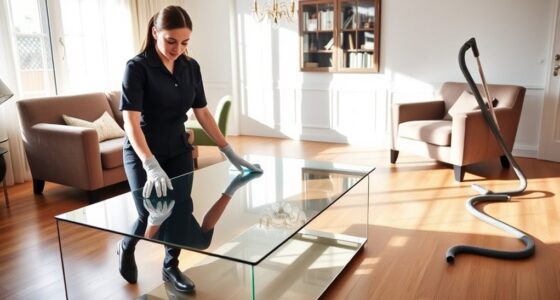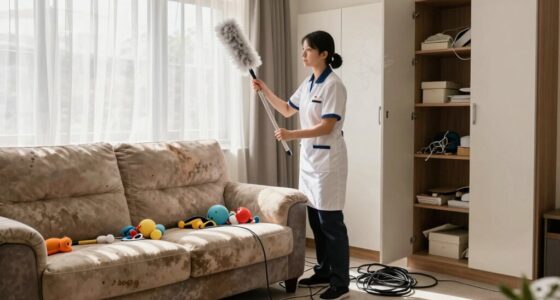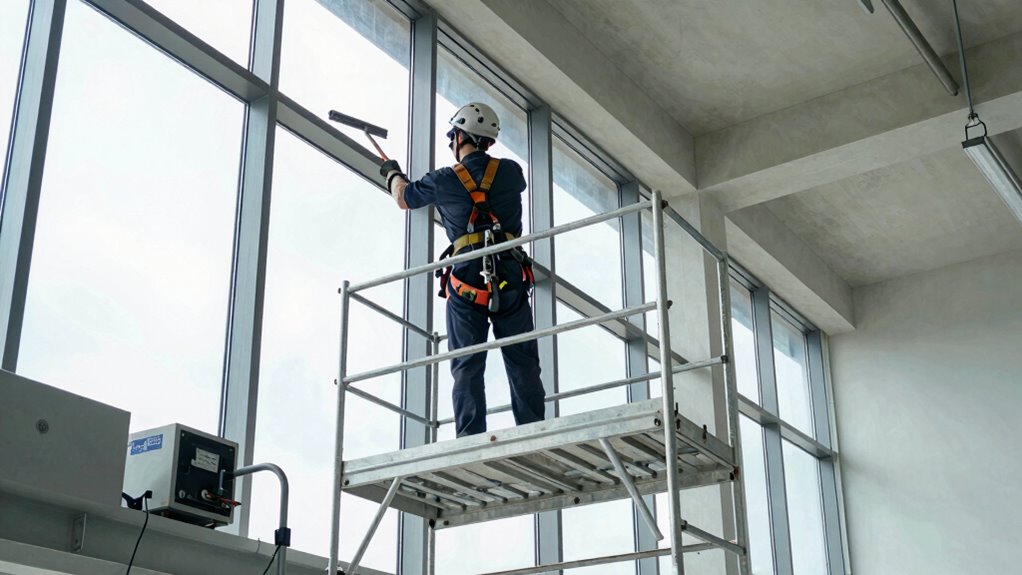
Before approving high-reach cleaning, guarantee safety protocols meet OSHA standards, with proper fall arrest systems and guardrails in place. Confirm your technicians are trained and certified for working at heights, and that equipment is regularly inspected and compliant with safety standards. Verify a clear emergency response plan exists, and that workers are trained on it. Also, review insurance coverage to protect against liabilities. To learn all the key questions to ask, keep exploring these safety essentials.

Get cleaning gear delivered free — and shop member deals
- Fast, free delivery on millions of items
- Access to Prime Big Deal Days deals on October 6–7
- Prime Video, Amazon Music and more included
Key Takeaways
- Verify OSHA compliance and that safety protocols, such as harnesses and guardrails, are strictly followed before work approval.
- Ensure technicians have specialized training, certifications, and ongoing safety education for high-reach equipment operation.
- Confirm equipment is well-maintained, suitable for the environment, and meets safety standards through regular inspections.
- Review emergency procedures, including accident handling and worker training, to ensure quick, effective incident response.
- Check that comprehensive insurance and liability coverage are current and sufficient to mitigate potential risks.
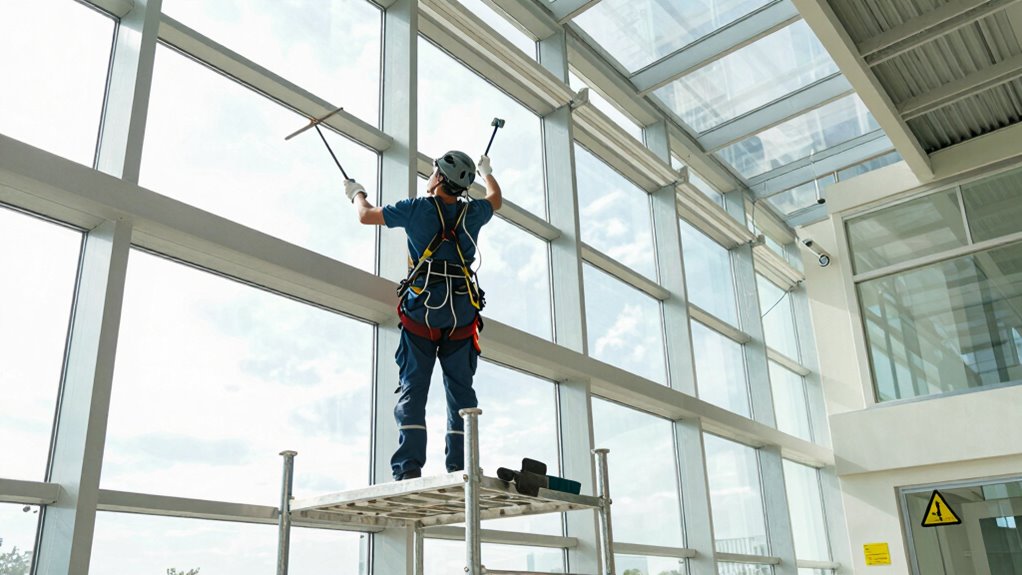
Before approving high-reach cleaning work, it’s crucial to ask the right questions to guarantee safety, effectiveness, and compliance. High-reach cleaning involves working at significant heights, which introduces risks that can’t be overlooked. Confirming proper safety protocols are in place is your first priority. Ask the service provider about their safety measures—do they follow OSHA standards? Are safety harnesses, guardrails, and fall arrest systems used consistently? It’s essential to verify that safety isn’t just an afterthought but a core part of their operational procedures.
Prioritize safety by verifying OSHA compliance, safety gear use, and core safety protocols before high-reach cleaning.
Equally important is the technician training. Do the workers have specialized training for high-reach equipment? Are they certified to operate lifts, scaffolds, or aerial work platforms? Proper training reduces the likelihood of accidents and ensures the job gets done efficiently. Don’t hesitate to request proof of certification or ask about ongoing training programs. Well-trained technicians are more likely to follow safety protocols diligently and handle equipment competently, minimizing risks to themselves and your property.
You should also inquire about the equipment they plan to use. Is it well-maintained and suitable for the specific height and environment? Outdated or poorly maintained equipment can pose serious safety hazards. Confirm that the tools and machinery meet safety standards and are appropriate for the scope of work. Understanding the equipment’s condition and capacity helps you assess whether the work will be performed safely and effectively. Additionally, understanding the safety standards that equipment adheres to is vital to ensure compliance and safety. It’s also beneficial to ask how they keep their equipment updated and inspected regularly, as this is key to maintaining equipment safety.
Another critical aspect is the company’s risk management and emergency procedures**. Ask how they handle accidents or equipment failures if they occur. Do they have a clear emergency response plan? Are their workers trained to respond quickly and appropriately? Knowing they’re prepared for unforeseen incidents provides peace of mind that safety remains a priority throughout the project. Additionally, understanding their safety compliance documentation** ensures that all necessary safety regulations are being met and maintained consistently.
Finally, review any liability insurance and workers’ compensation coverage. Adequate insurance protects you from potential liabilities if an accident happens on-site. Confirm that the contractor’s insurance policies are current and sufficient to cover accidents or damages related to high-reach work.
OSHA safety harness for high-reach work
As an affiliate, we earn on qualifying purchases.
As an affiliate, we earn on qualifying purchases.
Frequently Asked Questions
What Certifications Should a High-Reach Cleaning Technician Have?
You should guarantee your high-reach cleaning technician has certifications meeting industry standards, like OSHA or ANSI. These certification standards prove they understand safety protocols and equipment operation. Additionally, look for skill assessments that demonstrate their practical ability to handle high-access tasks safely and efficiently. Confirming these certifications assures you that your technician is qualified, reducing risks and ensuring quality work in challenging high-reach or high-access cleaning situations.
How Long Does High-Reach Cleaning Typically Take?
High-reach cleaning usually takes between one to three hours, depending on the area size and accessibility. You’ll want to make certain the technicians have the right equipment, like extension poles and lifts, and employ proper cleaning techniques to be efficient and safe. Factors like high ceilings or intricate fixtures can extend the process, so ask about the scope beforehand to set realistic expectations.
What Are the Insurance Requirements for High-Access Work?
You should guarantee your contractor has extensive insurance coverage, including liability requirements, to protect against accidents or damages. Some clients worry about increased costs, but proper insurance safeguards your investment and minimizes legal risks. Verify that their policy covers high-reach or high-access work specifically, and ask for proof of current certificates. This way, you’re confident that your project is protected against unforeseen incidents.
How Is Safety Monitored During High-Reach Cleaning?
During high-reach cleaning, you monitor safety by conducting a thorough risk assessment before work begins. You guarantee that safety protocols are strictly followed, such as proper harness use, stable ladders, and secure anchoring. Regularly, you check that equipment is in good condition and that workers adhere to procedures. Continuous supervision helps identify hazards early and enforces safety measures, ensuring everyone stays safe throughout the high-access cleaning process.
What Is the Cost Range for High-Reach Cleaning Services?
A preliminary cost estimate for high-reach cleaning services typically falls between $300 and $1,200, depending on the service scope and building size. Larger or more complex projects may require a tailored quote. Keep in mind, factors like height, accessibility, and cleaning frequency influence pricing. To guarantee clarity, request a detailed proposal that outlines the scope of work and associated costs, helping you make an informed decision.
Conclusion
Before approving high-reach cleaning, remember to ask the right questions to guarantee safety and efficiency. Verify the equipment, training, and safety measures in place. Don’t rush decisions—“Look before you leap,” as the saying goes. Taking these steps protects your team and property, preventing accidents before they happen. Prioritize safety above all, because a thorough check now can save you from costly regrets later.
Fall Picks
fall essentials
As an affiliate, we earn on qualifying purchases.